

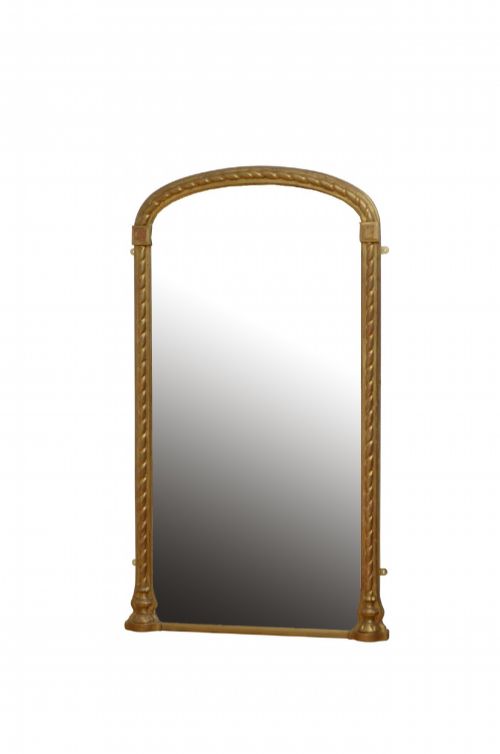
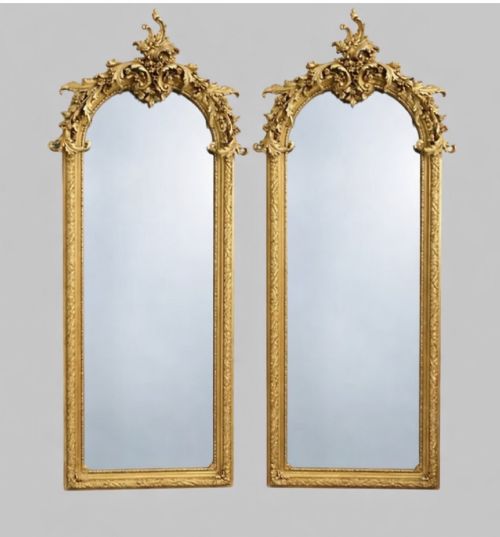

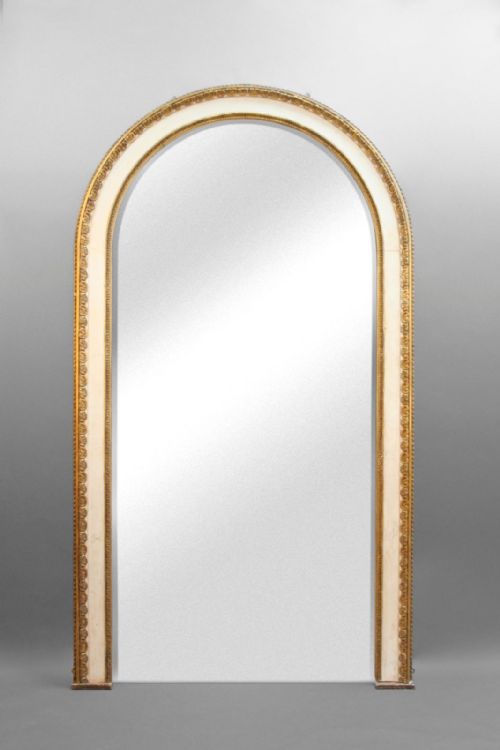


Tall Arched Pier Mirror
A tall arched pier mirror brings height and a strong vertical focal point to a room, historically designed to hang on the narrow wall space between windows.
Tall Arched Pier Mirror
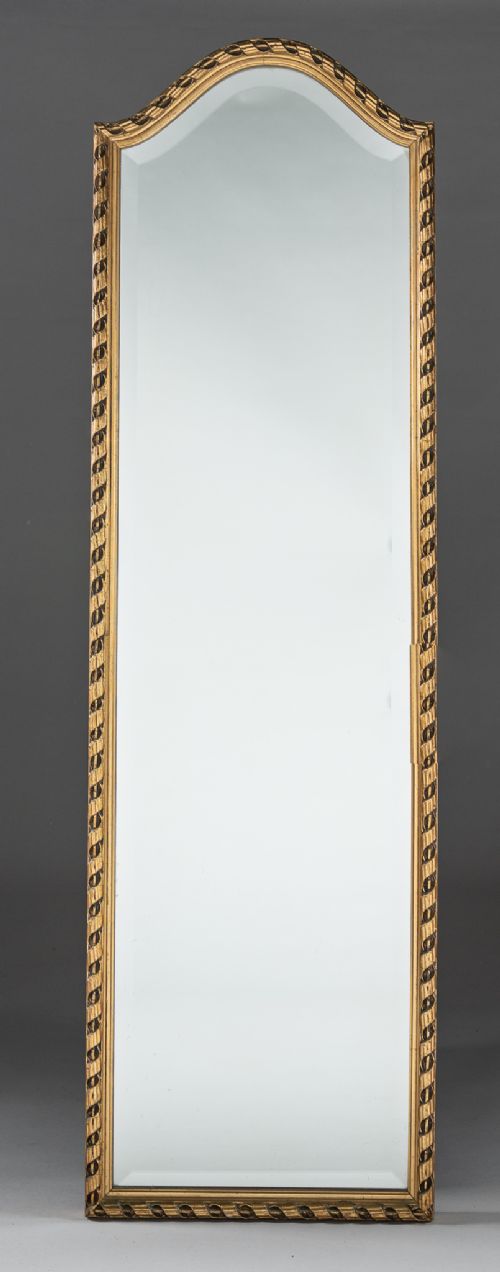
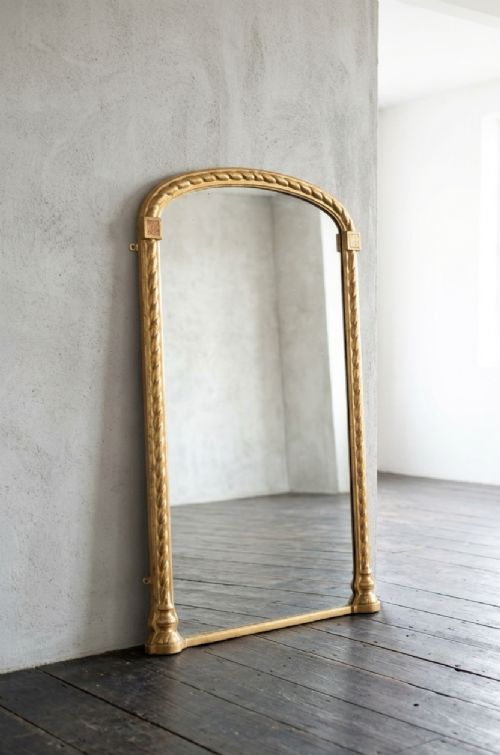
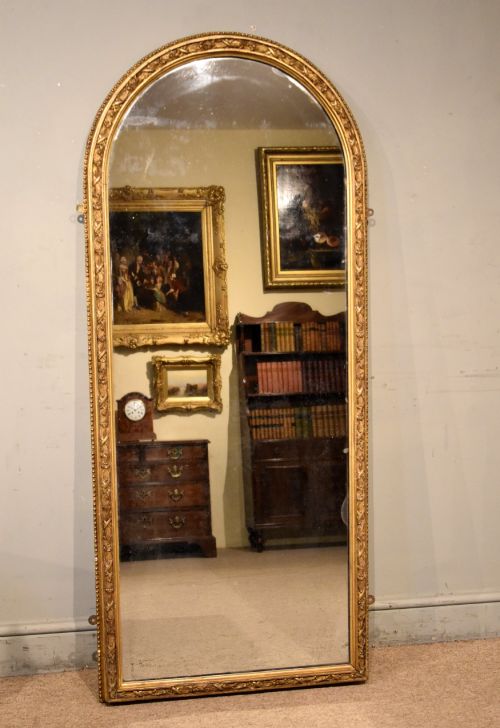
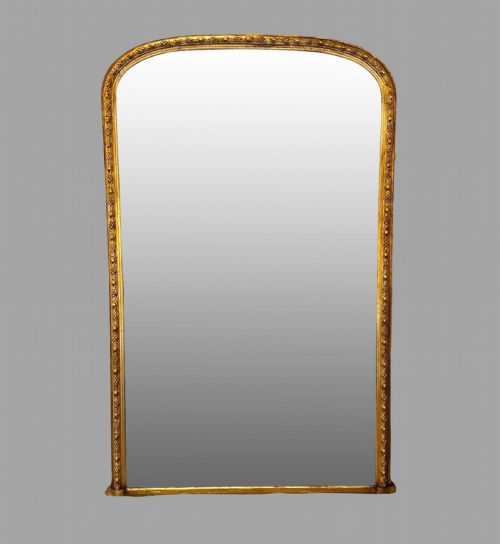
A tall arched pier mirror is a grand vertical looking glass designed to stand between windows or above low console tables in formal rooms. The pieces gathered here belong predominantly to the nineteenth century, spanning Victorian, Georgian, and various revival styles.
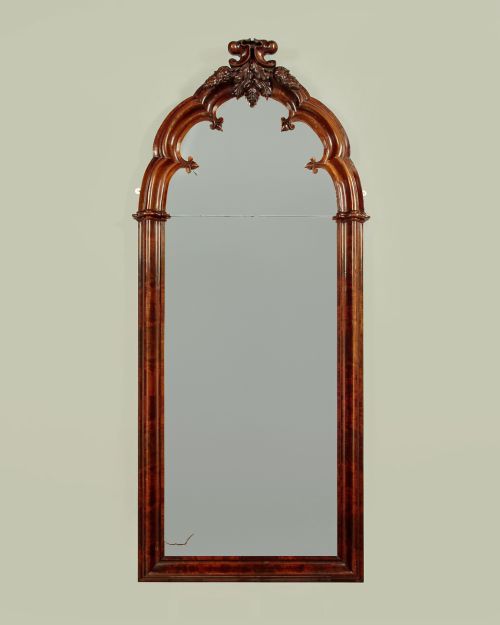
Most examples you encounter feature imposing dimensions, often exceeding one hundred and fifty centimetres in height to reflect maximum light into nineteenth-century interiors. Forms range from French Louis Philippe styles to English rope-carved frames and striking Gothic revival designs.
Makers and craftsmen of the period constructed these tall glasses to fulfill both functional dressing needs and architectural decorative schemes. Their slender proportions distinguish them from broader landscape overmantel mirrors.
How They Were Made
Makers built the foundational frames of these mirrors using timber such as walnut, mahogany, or birch, upon which they applied layers of gesso to create crisp mouldings and relief decoration. Giltwood finishes were achieved by laying thin sheets of gold leaf over the prepared gesso surfaces.
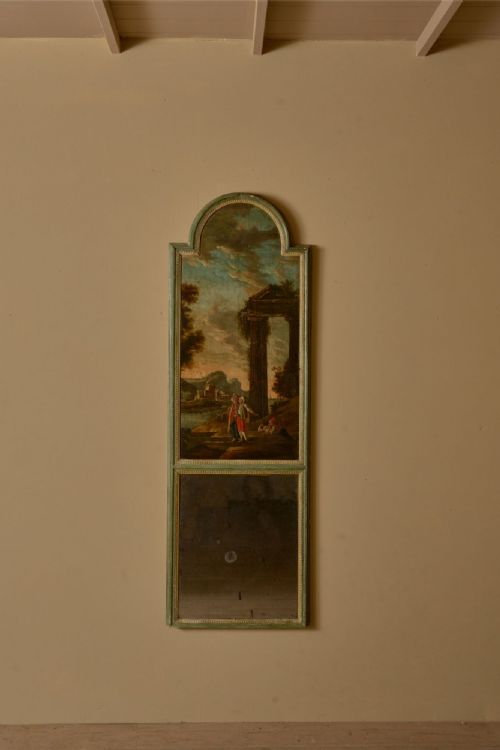
Many French and English examples incorporate carved wood elements alongside painted or eglomise panels, where reverse-painted glass adds subtle colour and border detail. Original mirror plates frequently display foxing, showing the gentle age of early mercury or silvering techniques.
Tall Arched Pier Mirror Retail Price Guide 2026
Typical asking prices for tall arched pier mirror among the pieces listed under this phrase on Sellingantiques today, from the lower quarter to the upper quarter. They describe what is for sale here now, not the wider market.
Materials documented across the collection include giltwood, gesso, eglomise, lacquered wood, birch, walnut, and original mirror glass.
What Varies in Quality
The sophistication of the carved wood and gesso ornamentation dictates much of the distinction between standard and superior examples. Crisp relief work on rope carving, acanthus leaves, or crestings demonstrates superior workshop skill.
The preservation of original surfaces, whether gold leaf, paint, or eglomise glass, defines the integrity of a piece. Better mirrors retain their original tall proportions without structural timber distortion along the vertical frame.
The Tall Arched Pier Mirror Glossary
- Pier glass
- A tall mirror specifically proportioned to hang on the narrow pier of wall between two windows. It often sat directly above a pier table.
- Gesso
- A plaster-like mixture applied to wooden frame foundations as a smooth base for gilding and fine carved details. Artisans modeled intricate relief patterns directly into this material.
- Eglomise
- A technique involving cold painting and gilding on the rear face of glass to produce a decorated panel. It frequently appears as a frieze above the main mirror plate.
- Foxing
- The natural age spots and dark speckling that develop within antique mirror glass as the silver backing oxidises over decades. Collectors value genuine foxing as proof of age.
- Rope carving
- A decorative twisted rope motif carved into the wooden or gesso frame moulding. It is a common detail on nineteenth-century English mirrors.
Tall Arched Pier Mirror: Frequently Asked Questions
Where should I hang a tall arched pier mirror?
These mirrors suit narrow wall spaces between tall windows, narrow hallway partitions, or above low console tables and sideboards. Their vertical height helps to draw the eye upward and bounce daylight deeper into reception rooms.
Ensure the wall construction can safely support the considerable weight of a large nineteenth-century timber and glass frame. Professional mirror fixings secured directly into wall studs provide the necessary stability.
How do I distinguish French styles from English ones?
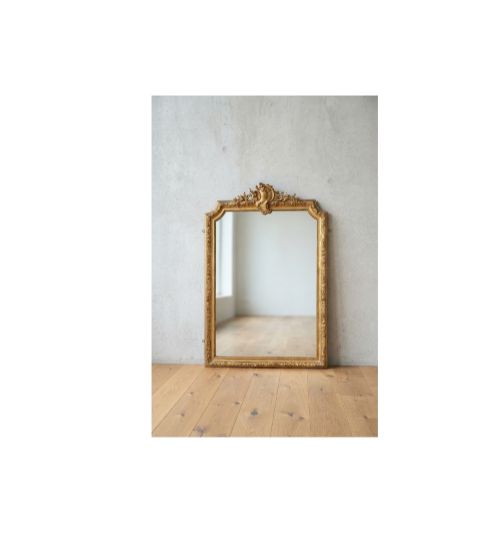
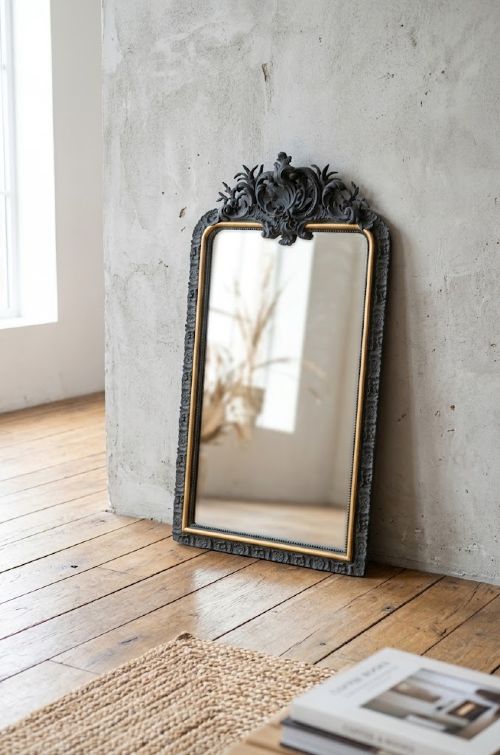
French pier mirrors from the nineteenth century often feature softer painted finishes, giltwood rococo scrolls, and subtle crestings associated with Louis Philippe or Louis XIV revivals. English alternatives frequently rely on denser mahogany or walnut structures with architectural rope carvings or Gothic pointed arches.
Examining the backboards and joinery methods further clarifies the origin workshop. English pieces commonly utilise native timbers like oak or pine for secondary framing elements.
What does original foxed glass mean?
Foxed glass refers to the atmospheric dark spots and mottled patches that form naturally across the reflective surface as the backing ages. It indicates that the mirror retains its original vintage plate rather than a modern replacement.
While some buyers prefer completely clear reflections, original foxing imparts historic character and softness. It proves the mirror has witnessed generations of interior use.