





Taisho Period Pottery
Taisho period pottery brings together vibrant glazes, distinct sculptural figures and traditional Satsuma styles from early twentieth-century Japan.
Taisho Period Pottery
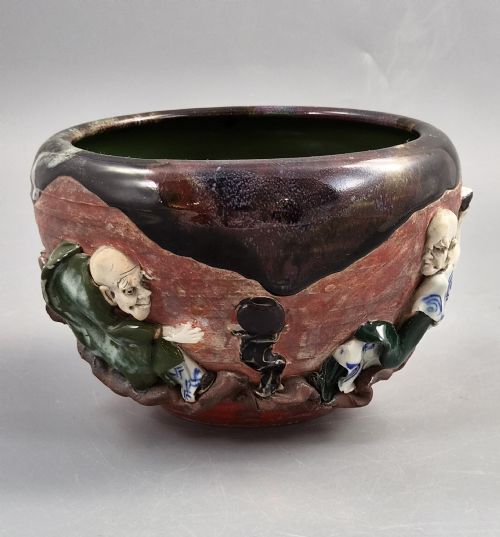
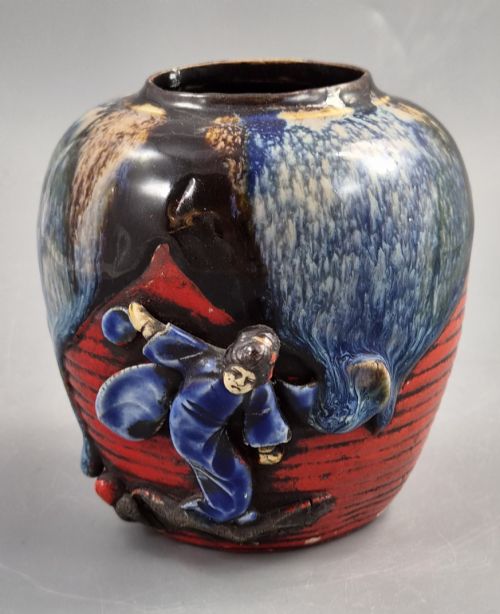
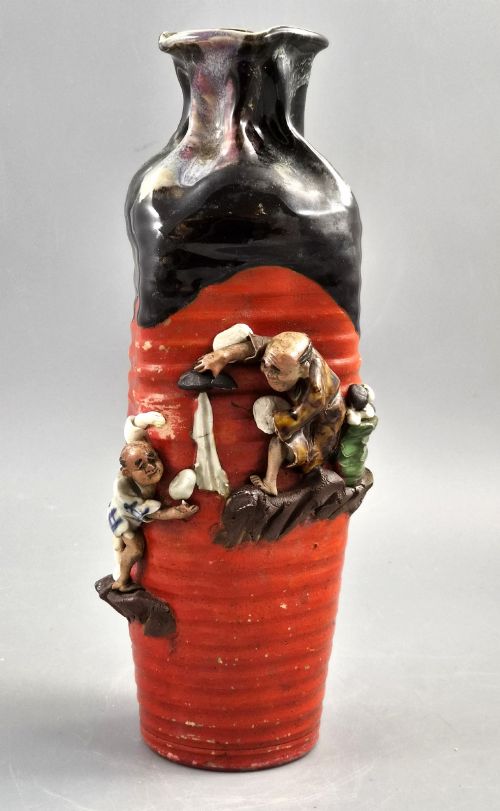
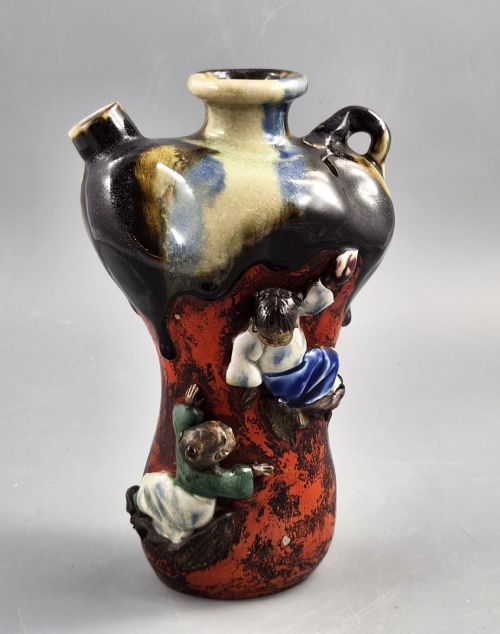
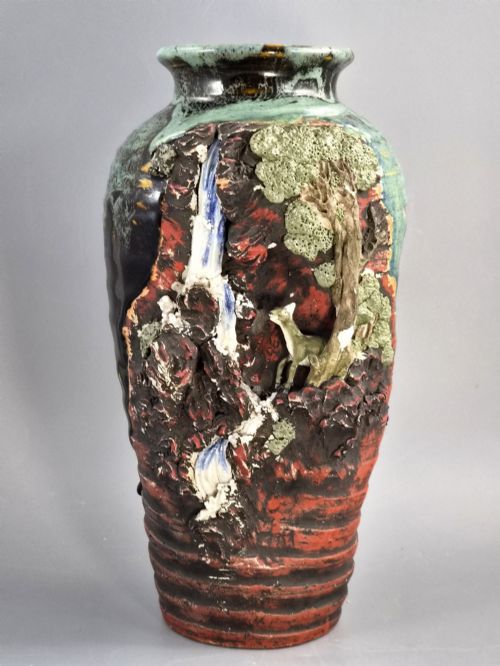
When you search for taisho period pottery, you encounter a distinct cross-section of Japanese ceramic art spanning the early decades of the twentieth century, often overlapping with the Meiji and Showa eras. The selections on this page lean heavily toward Sumida Gawa wares featuring applied figures, alongside Satsuma vases, Kutani figurines and Tokoname red clay creations.
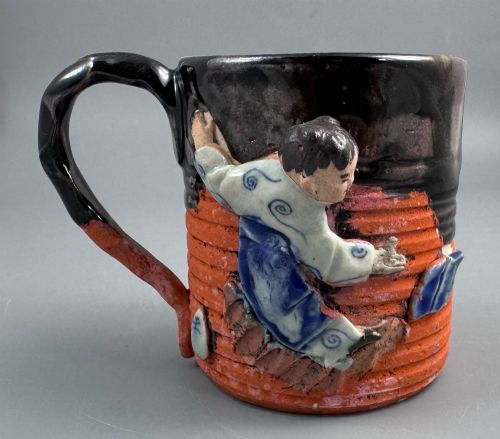
These pieces encompass various domestic and decorative forms including tall vases, pitchers, decorative bowls, tea sets, cups and saucers, mugs, and suiban brush washers. Many items bridge the nineteenth and twentieth centuries, showing traditional hand-modelled elements combined with evolving glazing techniques.
Materials and production methods
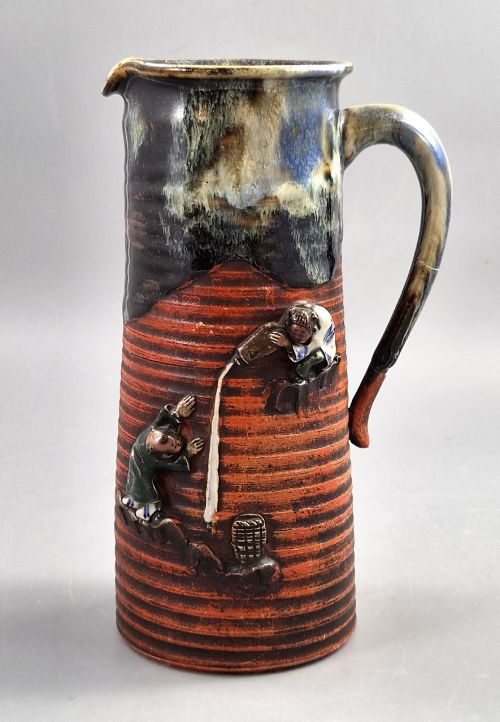
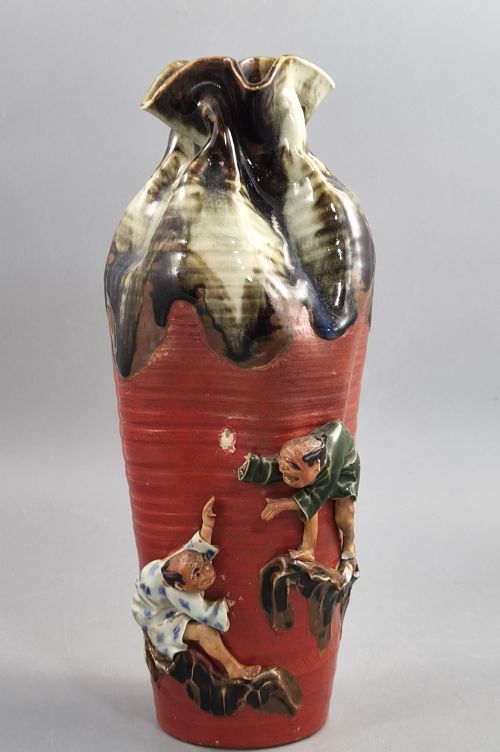
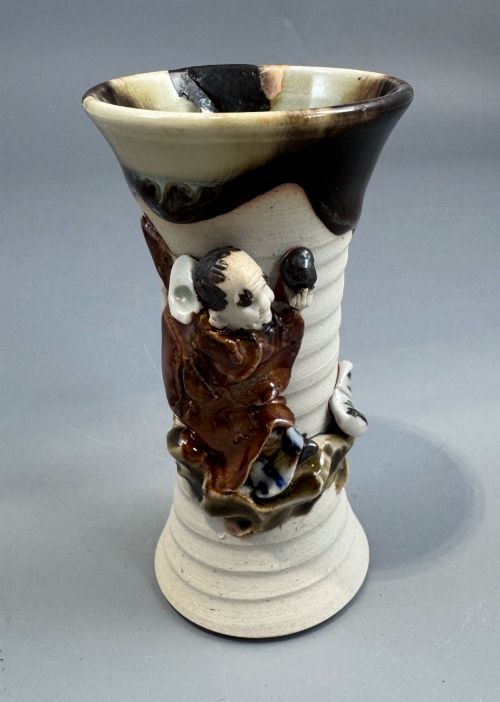
Makers utilised stoneware, earthenware, terracotta, and porcelain as the foundational bodies for these items, often applying heavy glazes such as blue flambe or standard ceramic coatings. Surface decoration frequently involved relief work, where figures like sages, rakan, and karako were hand-modelled and applied directly to the body before firing.
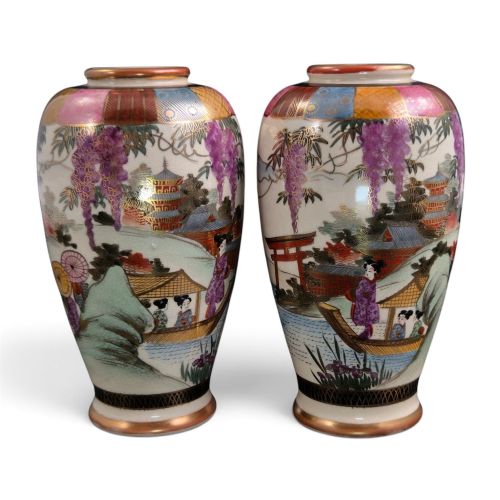
Detailing often incorporated enamel paints and gold leaf highlights, particularly visible on Satsuma and Kutani wares. Workshops employed specialised throwing and moulding techniques to achieve pinched sack rims, hexagonal structures, and sculptural landscape elements.
Several vessels feature tiny ceramic figures caught mid-climb, scaling the rims as though attempting an escape from the glaze.
Distinctions in quality and execution
The standard of a piece rests heavily on the crispness of the modelled figures and the control of the glaze, especially on complex items like Sumida Gawa and flambe surfaces. Clear signatures from recognised makers elevate a work above unsigned or generic workshop output.
Gilding and enamel preservation also dictate the standing of Satsuma and Kutani items, where precise brushwork and intact gold leaf demonstrate superior craftsmanship from studios like those of Inoue Ryosai or Makuzu Kozan II.
Inoue Ryosai·Ishiguro Koko·Makuzu Kozan II·Taniguchi
The Taisho Period Pottery Glossary
- Sumida Gawa
- A style of Japanese pottery originating from the banks of the Sumida River in Tokyo. It is characterised by heavily textured, dripped glazes and distinct applied figures in high relief.
- Satsuma
- A type of earthenware from Japan featuring a ivory-coloured, crackled glaze. Pieces are typically decorated with detailed enamel patterns and gold leaf.
- Kutani
- Japanese porcelain and ceramic ware known for vibrant overglaze enamel colours and intricate detail work. Moriage techniques are frequently applied to build up raised designs.
- Tokoname
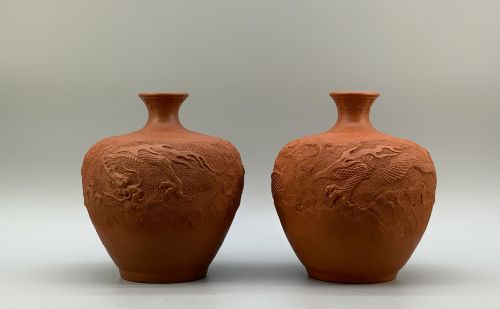
- A historic centre of Japanese ceramics known for unglazed or natural ash-glazed red clay wares. Items often depict creatures like dragons and phoenixes.
- Suiban
- A shallow decorative basin or tray used for holding water and arranging stones or plants. They serve as traditional brush washers in scholarly settings.
- Rakan
- A representation of an enlightened follower of Buddha, commonly depicted in applied ceramic relief work. These figures appear frequently on Sumida Gawa vessels.
Taisho Period Pottery: Frequently Asked Questions
What is taisho period pottery?
Taisho period pottery encompasses ceramic works produced in Japan during the Taisho reign alongside adjacent Meiji and Showa crossover years. The category includes distinct regional styles from Sumida Gawa, Satsuma, and Kutani.
These objects range from functional tea sets and pitchers to highly sculptural vases and decorative bowls covered in glazes and applied figures.
How do I identify Sumida Gawa ware?
Sumida Gawa pieces are recognised by their characteristic dripped flambe glazes and rough, pebbled surfaces. They often feature three-dimensional human figures climbing along the rim or sides.
Many examples carry signatures from makers such as Inoue Ryosai or Koko, marking them out from unsigned workshop productions.
Where were Satsuma vases made?
Satsuma wares originated in Satsuma Province on Kyushu Island, though production later spread to major urban centres like Kyoto. They are defined by a pale, finely crackled earthenware body.
Artisans decorated these surfaces using intricate enamel paints and rich gold leaf to depict landscapes, wisteria, and figures.
How do I display these ceramics?
These ceramic pieces function well as focal points on sideboards, mantels, or within open shelving units where their textures and glazes catch the light. Tall vases and sculptural jars require stable placement away from high-traffic edges.
Smaller items like cups, saucers, and brush washers suit glass-fronted cabinets or dedicated display tables where the fine details of applied figures can be examined closely.