
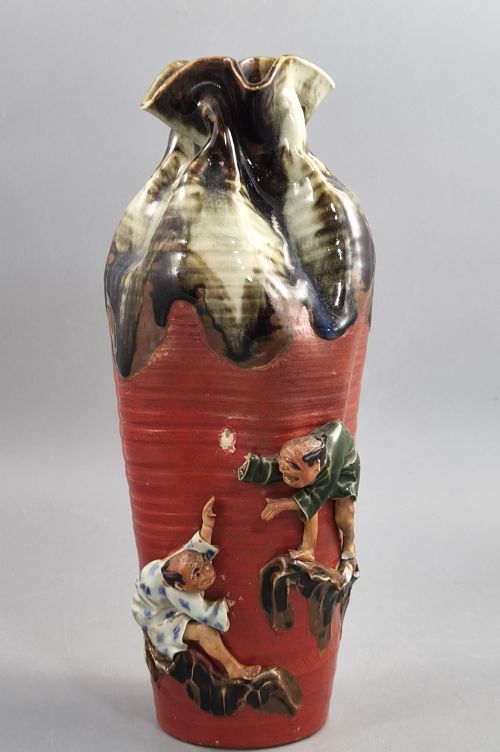
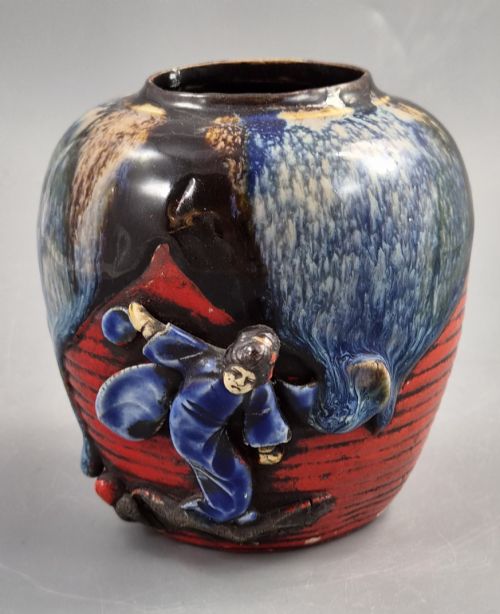
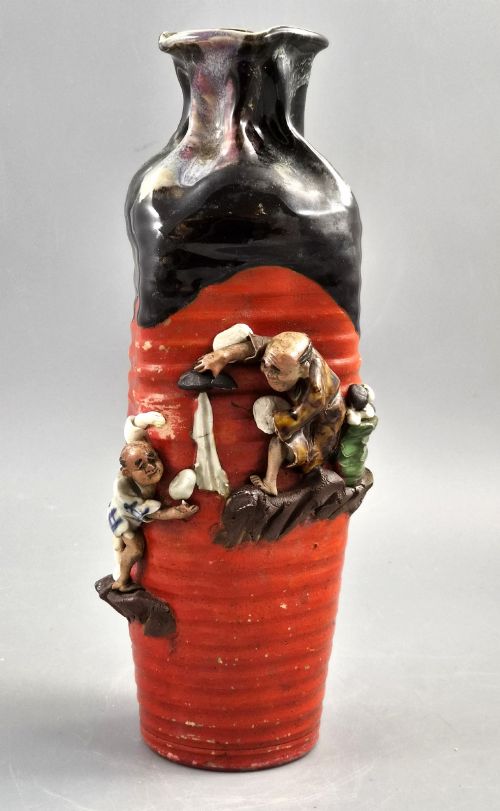
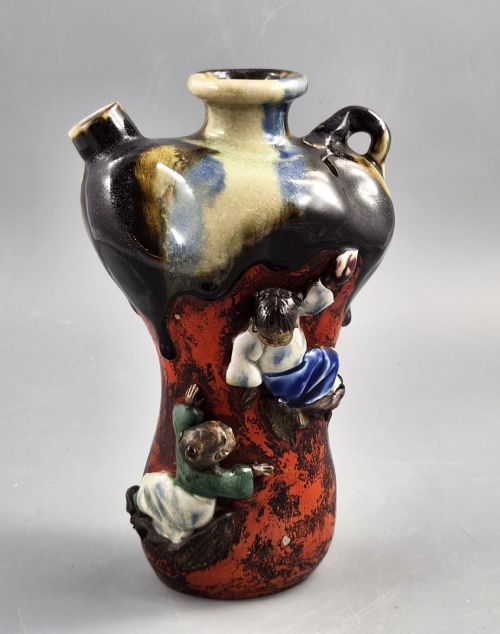


Taisho Period Ceramic Vase
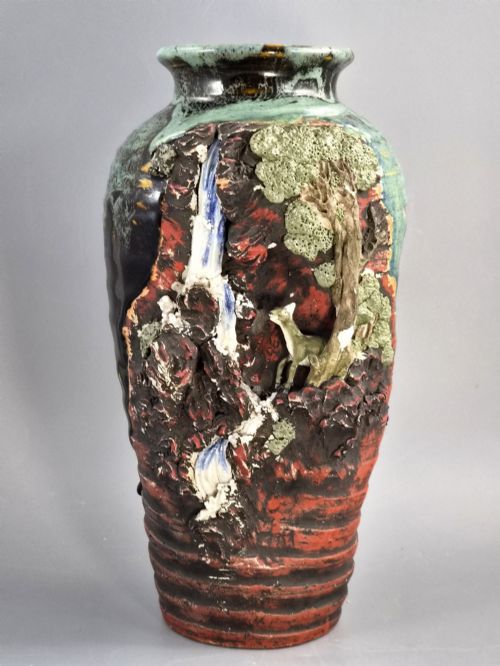
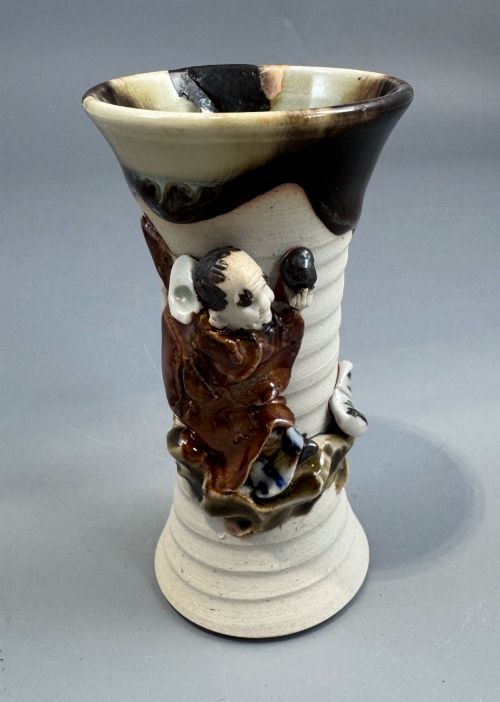
A taisho period ceramic vase brings expressive glazes and sculptural figures into a room.
Taisho Period Ceramic Vase
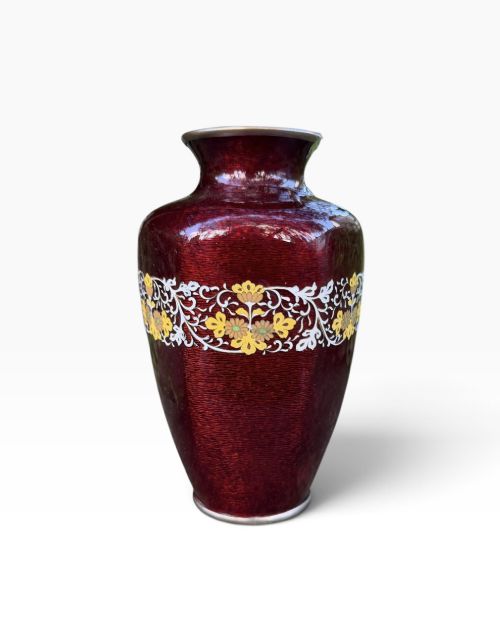
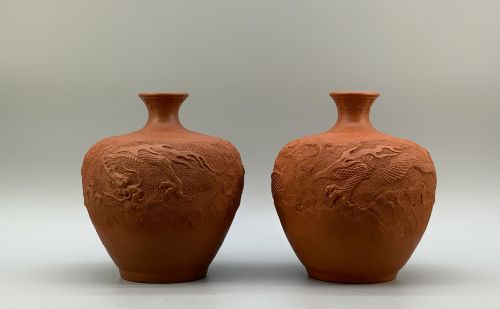
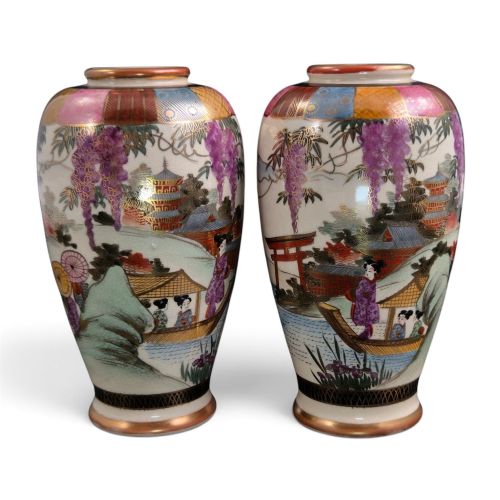
A taisho period ceramic vase gathers the expressive pottery traditions of early twentieth-century Japan. Buyers searching this phrase most frequently encounter sculptural Sumida Gawa vessels alongside refined Satsuma, Kutani and Imari wares.
The selections on this page span baluster shapes, jars and pitchers featuring applied figures, landscapes and rich glazes. Pieces from this transitional era bridge nineteenth-century decorative detail with bolder, tactile modern forms.
How they were made
Potters utilised earthenware, stoneware and porcelain bodies, shaping them into fluted, pinched or baluster silhouettes. Artisans applied coloured glazes, gold leaf and thick enamel pigments directly to the clay.
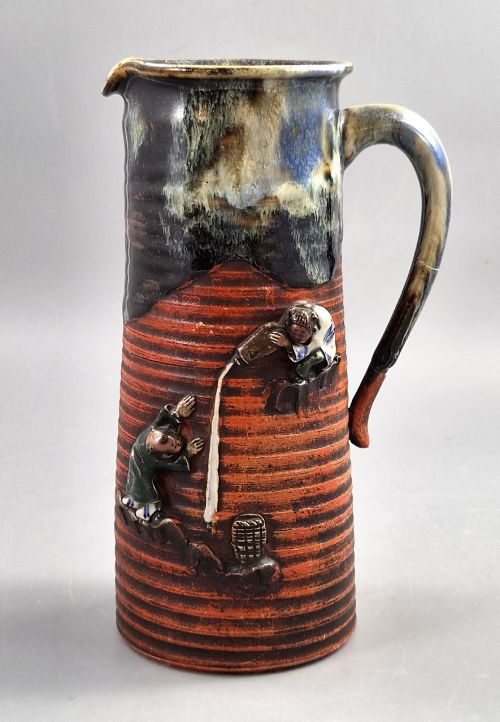
Many distinctive vessels feature applied sculptural figures, modeled separately and attached before firing. Flambé glazes and dripping colour effects require precise kiln temperatures to achieve their characteristic mottled surfaces.
Stray thumbprints pressed into the wet clay a century ago remain permanently baked into several Sumida Gawa vases.
What varies in quality
Quality rests upon the confidence of the modeling and the depth of the glaze work. Stronger examples display crisp detail in applied figures and deliberate control over runny flambé finishes.
The finesse of hand-painted enamel and gilding separates standard production items from masterworks. Balance in proportion and tactile weight indicate the care taken in the workshop.
Inoue Ryosai·Makuzu Kozan II·Tagawa
The Taisho Period Ceramic Vase Glossary
- Sumida Gawa
- A distinctive type of Japanese pottery featuring heavy dripping glazes and applied sculptural figures. These pieces were largely produced in the Tokyo area around the turn of the twentieth century.
- Satsuma
- A style of Japanese earthenware characterised by a ivory crackle-glaze and intricate enamel painting often enriched with gold. Workshops in Kyoto produced many of the finest examples.
- Flambé glaze
- A streaked or mottled ceramic finish resulting from metallic oxides reacting in the kiln. Potters utilised this technique to create unpredictable, painterly colour transitions.
- Imari
- A traditional style of Japanese porcelain featuring cobalt blue and iron red decoration against a white ground. Artisans frequently added gilt highlights to enhance the rich colour palette.
Taisho Period Ceramic Vase: Frequently Asked Questions
How do I date a Taisho ceramic?
Examine the stylistic transition between late nineteenth-century decorative density and early twentieth-century sculptural experimentation. Potters working during this era often combined traditional motifs with bolder, tactile glaze effects.
Maker signatures and registration marks help narrow the timeline, though many studio pieces rely on stylistic context and material composition to establish their period.
Where were Sumida Gawa vases made?
These distinctive vessels originated in workshops near the Sumida River in Tokyo. Artisans developed a specific style focused on heavy, dripping glazes and applied clay figures.
The aesthetic gained international popularity through export markets while retaining distinctly Japanese narrative scenes, such as sages, immortals and local legends.
How do I display a sculptural vase?
Place a tactile, heavily textured vessel where natural light highlights the raised clay figures and glaze variations. Neutral backgrounds allow complex pieces with deep colours to stand out.
Keep surrounding objects minimal to let the dynamic silhouette and rich surface details of the pottery remain the focal point of the space.
What is Satsuma ware?
Satsuma ware is a recognizable category of Japanese pottery defined by a pale, crackled earthenware body. Artisans covered these surfaces with detailed enamel paintings depicting figures, flowers and landscapes.
Gilding was frequently layered over the designs to catch the light, creating a rich texture that distinguishes these pieces from standard porcelain.