


Sumida Gawa Pottery Vase
A sumida gawa pottery vase brings tactile Japanese ceramic artistry to a room through distinctive modelled figures and rich flambé glazes.
Sumida Gawa Pottery Vase
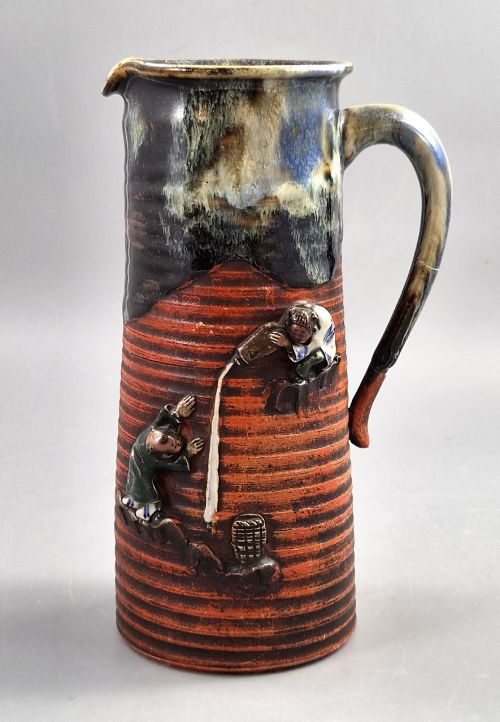
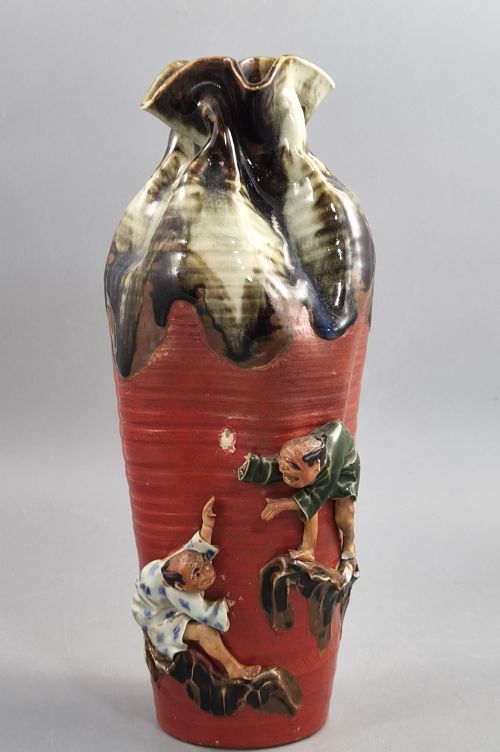
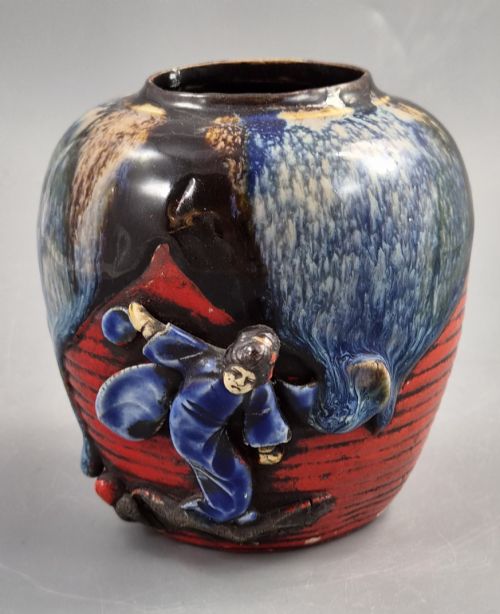
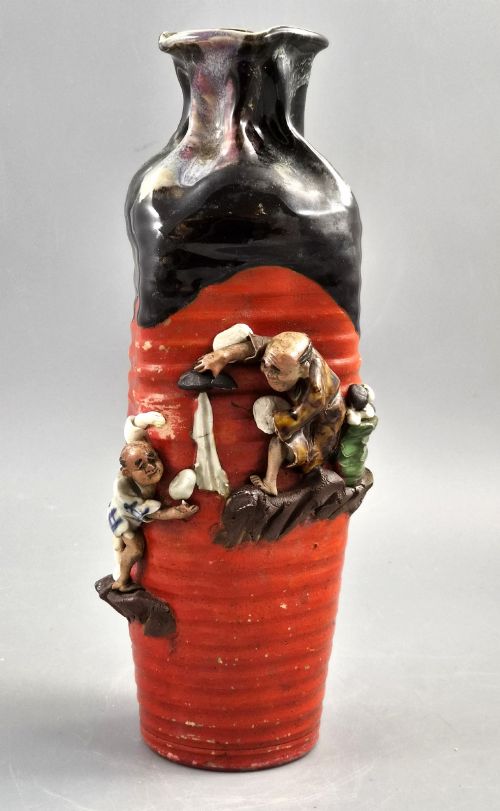
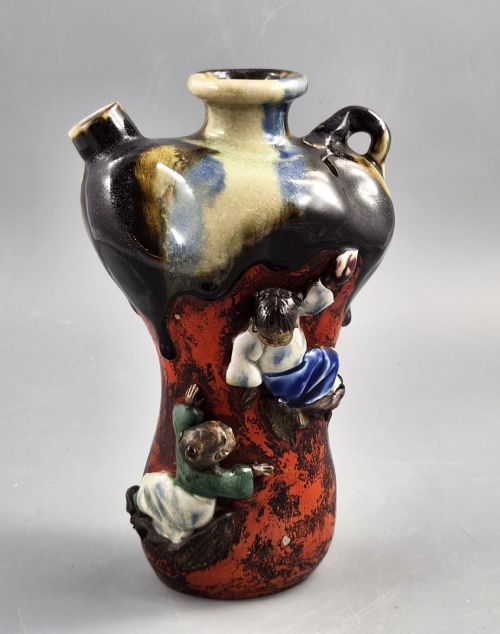
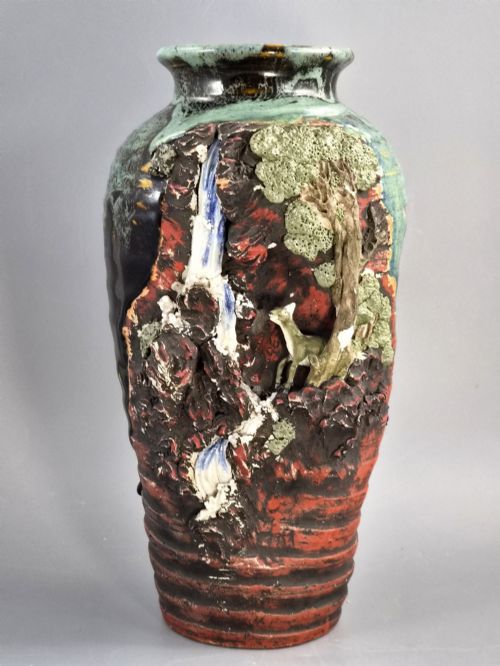
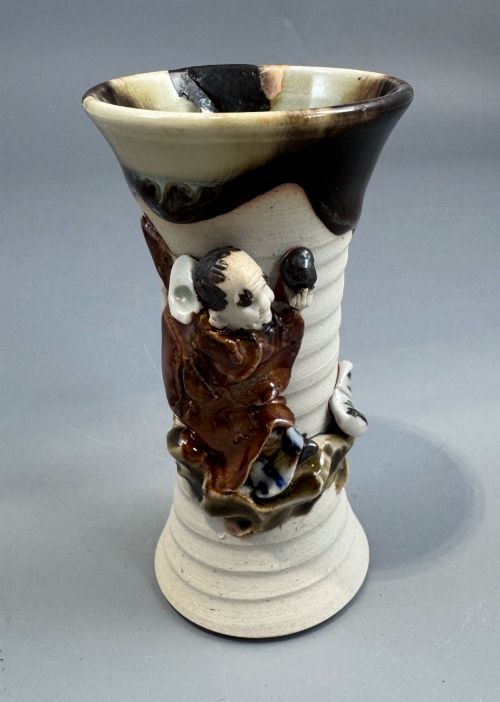
A sumida gawa pottery vase stands as a striking example of Japanese ceramic artistry originating from the Meiji and Taishō periods. When you search for this phrase, you look at vessels defined by heavy glazes and relief-modelled figures climbing or resting upon the body.
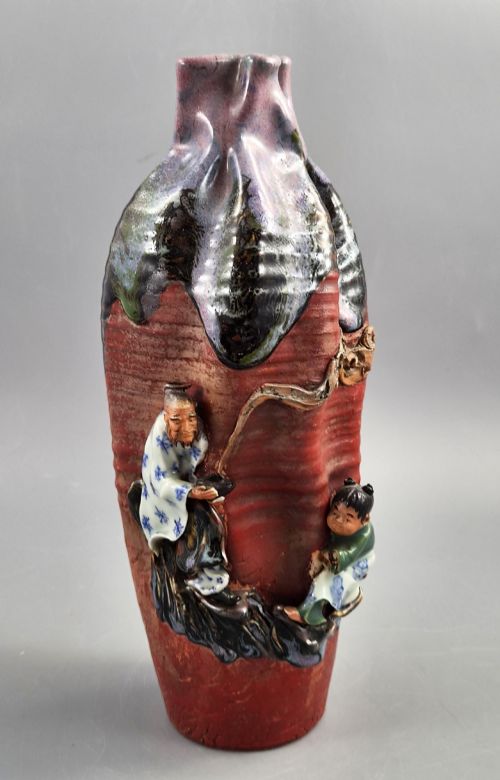
The versions most likely to meet you on this page include baluster shapes, tall jars, and pitchers featuring sages, children, or animals applied in high relief. These works bridge traditional pottery and sculptural art, often carrying signatures from notable workshops.
Originating around the turn of the twentieth century, these pieces capture a distinct aesthetic of the Meiji and Taishō eras. They combine utilitarian forms with narrative scenes rendered in clay and vibrant colour.
What varies in quality
The depth and execution of the modelled figures dictate the visual impact of the piece, separating standard examples from finer works. Master modellers rendered facial expressions and drapery with notable precision.
Glaze control and pooling heavily influence the success of the vessel, with complex flambé surfaces offering greater visual depth. Signed pieces by recognised makers demonstrate a higher level of individual artistry.
Artisans populated these vessels with tiny ceramic figures that appear to scramble endlessly up the sides of the pot.
Inoue Ryosai·Ban-ni·Hiroshi
The Sumida Gawa Pottery Vase Glossary
- Flambé glaze
- A streaked or mottled glaze produced by high-temperature firing and variable oxygen levels. This technique creates dramatic transitions between colours like oxblood and blue.
- Meiji period
- The era in Japanese history spanning from eighteen sixty-eight to nineteen twelve, characterised by rapid modernization and distinct artistic output. Many sumida gawa pieces date from the later decades of this period.
- Taishō period
- The historical era following the Meiji reign, lasting from nineteen twelve to nineteen twenty-six. Ceramics from this time often continue earlier sculptural traditions while incorporating new stylistic nuances.
- Rakan
- A term for an enlightened follower of Buddha, frequently depicted in traditional Japanese art. These figures appear in high relief on several ceramic vases.
- Karako
- A representation of a Chinese child at play, a common motif in East Asian art. They are often modelled climbing across the exterior of these vessels.
Sumida Gawa Pottery Vase: Frequently Asked Questions
What is a sumida gawa pottery vase?
A sumida gawa pottery vase is a Japanese ceramic vessel featuring heavy, dripping flambé glazes and applied relief figures. These pieces originated during the late Meiji and Taishō periods.
They are celebrated for their sculptural qualities, often depicting sages, children, or animals climbing across the exterior surface of the jar or pitcher.
How do I identify a Meiji period piece?
Meiji period ceramics are identified through stylistic markers, historical glaze types, and traditional motifs associated with late nineteenth and early twentieth-century Japanese craftsmanship. Signatures or impressed marks can also point toward this era.
Physical characteristics such as earthenware or stoneware bodies combined with heavy flambé glazes provide further context for dating.
Where were these vases made?
These pieces were produced in Japan, specifically associated with workshops working near the Sumida River in Tokyo during the Meiji and Taishō eras. Potters there developed the distinct style of applied sculptural figures.
The regional focus gave the ware its characteristic appearance, blending traditional pottery forms with narrative relief work.
How should I display a sculptural vase?
Displaying a sculptural vase requires a spot where adequate lighting can highlight the textured relief figures and complex glaze variations. Placing the vessel on a stable surface away from heavy foot traffic protects the applied clay elements.
Allowing sufficient space around the piece ensures that the narrative scenes and drip glazes remain fully visible from multiple angles.