


Tabriz Floral Area Rug
A tabriz floral area rug brings centuries of Persian weaving tradition into a room through intricate botanical motifs and durable construction.
Tabriz Floral Area Rug
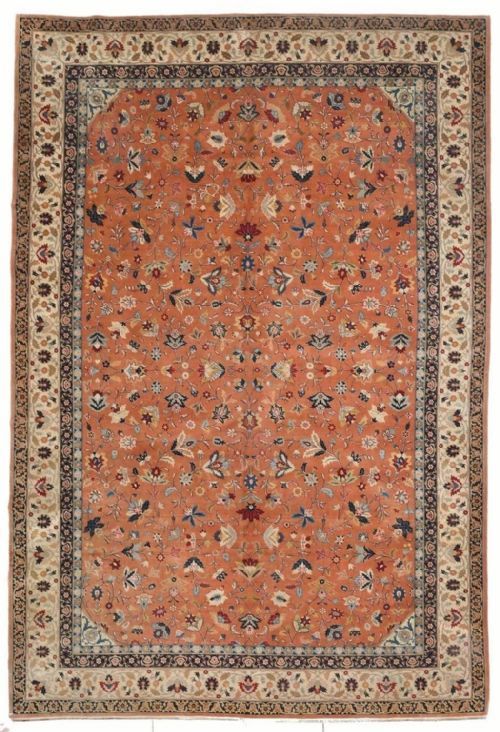
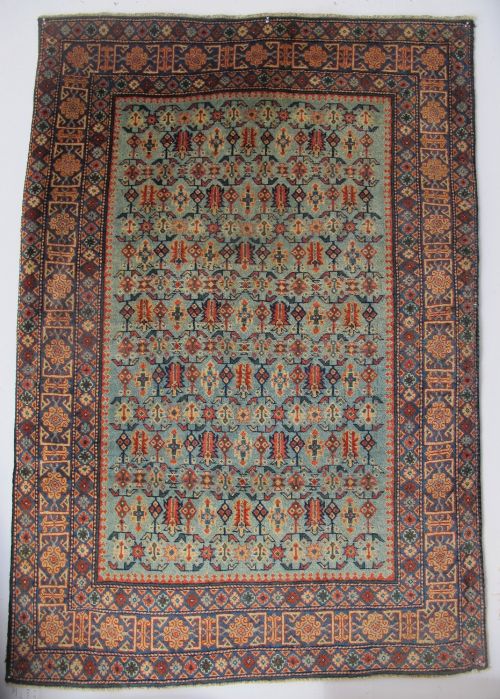
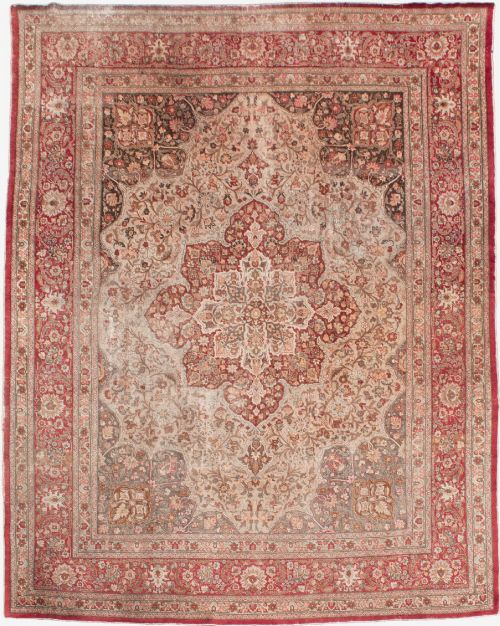
A tabriz floral area rug is a woven textile originating from North-West Persia, produced in various dimensions from small scatter formats up to large room-size and country house carpets. These pieces showcase traditional Persian, Safavid, Qajar, and village designs that focus heavily on floral motifs and classic medallions.
The versions most commonly met on this page date from the late nineteenth century and the early decades of the twentieth century, alongside select pieces from the eighteenth century. Buyers find everything from compact area rugs to substantial carpets designed for expansive interiors.
How they were made
These woven floor coverings are constructed using wool for the pile and cotton for the foundational warp and weft threads. This combination provides both the soft underfoot texture necessary for a usable rug and the structural stability required for large room-size carpets.
Weavers employ traditional Persian knotting techniques to build up dense, durable surfaces that hold complex botanical and medallion patterns with remarkable clarity. The structural materials remain consistent across different periods, relying on natural fibres to ensure longevity.
Listings span multiple decades from the eighteenth century through the 1930s, using wool and cotton materials exclusively.
What varies in quality
The standard of an individual piece rests upon the fineness of the knotting and the precision of the botanical drawing. Finer execution allows complex floral medallions and overall patterns to maintain sharp detail across the field.
Another differentiator is the origin within the broader tradition, whether woven in a city workshop or produced as a village rug. Specific attributed workshop pieces and softer pastel colour palettes also distinguish exceptional examples from standard production.
Benlian·Haji Jalili
The Tabriz Floral Area Rug Glossary
- Tabriz
- A major weaving centre in North-West Persia known for producing sophisticated carpets with detailed floral designs and classical medallion layouts.
- Medallion
- A central ornamental motif set in the middle of the rug field, often surrounded by elaborate floral and scrolling vine details.
- Warp
- The vertical threads stretched tightly on the loom that form the skeleton of the rug and end in visible fringes.
- Weft
- The horizontal threads passed across the warp strands after each row of knots to bind the structure firmly together.
- Pile
- The dense surface of cut wool yarn standing upright from the foundation, which displays the colour and pattern of the piece.
Tabriz Floral Area Rug: Frequently Asked Questions
How do I care for a wool rug?
Regular gentle vacuuming without a beater bar keeps dust from settling into the wool pile.
Professional cleaning is recommended periodically to maintain the integrity of the cotton foundation and wool fibres.
Where were these rugs made?
These pieces originate from Tabriz and surrounding villages in North-West Persia.
Production spans city workshops and regional centres known for distinct floral and medallion traditions.
What sizes are available?
Inventory ranges from smaller area rugs suitable for compact spaces to room-size carpets.
Large country house formats also appear for expansive living areas and reception rooms.
How do I identify the period?
Dating relies on stylistic shifts, structural evidence, and historical attributes recorded in each piece.
Nineteenth and early twentieth-century examples exhibit specific weaving characteristics and traditional layouts.