
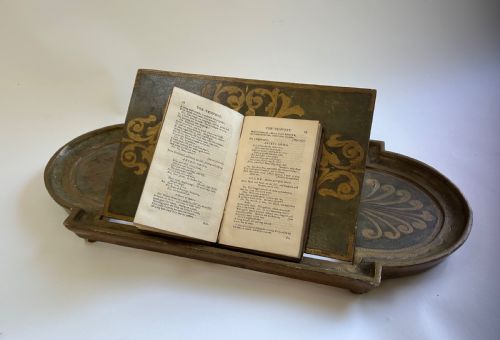


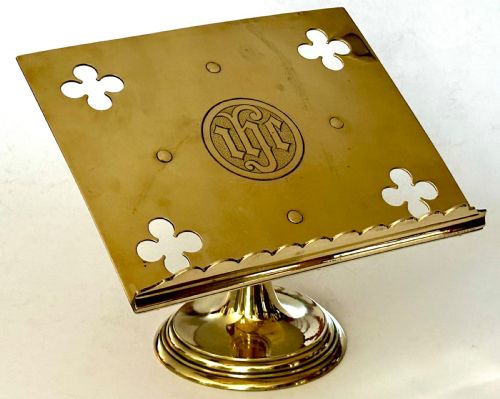


Tabletop Reading Stand
These tabletop reading stand pieces offer sturdy architectural support for books and folios while sitting neatly on any desk or surface.
Tabletop Reading Stand
A tabletop reading stand brings books to a comfortable angle for reading or display without taking up floor space. These items serve as functional book rests, easels, and desk accessories for studies and libraries.
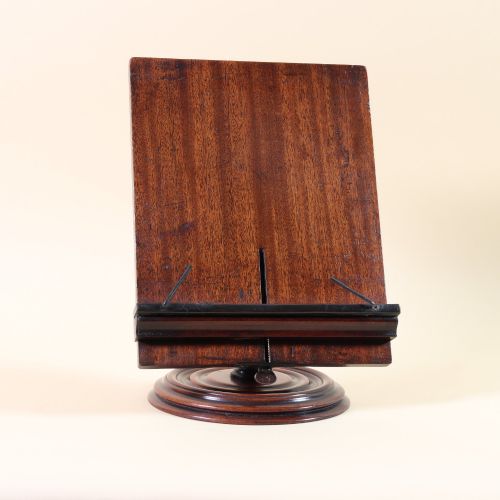
Most examples found here date from the nineteenth century into the early twentieth century. Common forms include folding mahogany bookstands, cast iron church rests, and brass lecterns designed for everyday utility.
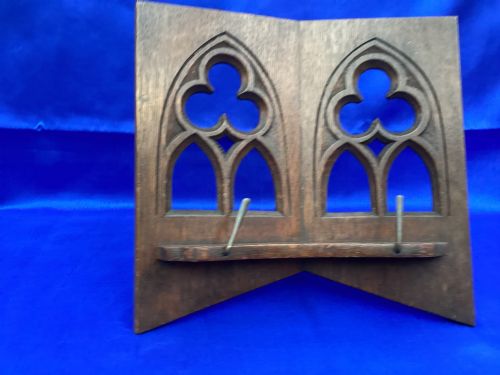
Makers utilised various regional styles ranging from Gothic Revival architectural frameworks to Florentine carving and clean Edwardian lines. Oak, mahogany, and brass predominate as the primary materials across these functional desk items.
How they were made
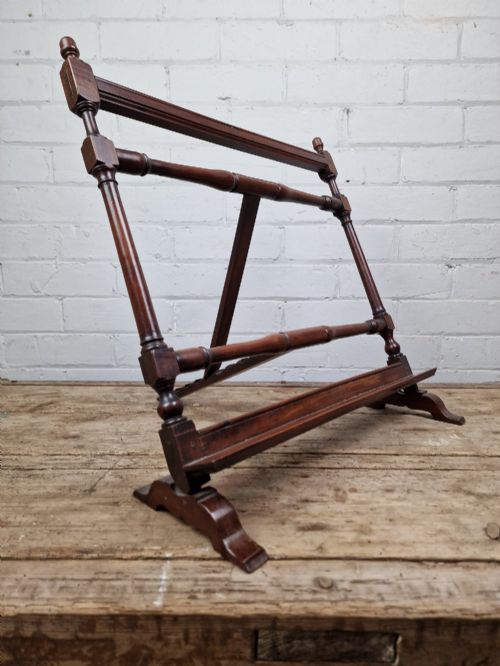
Cabinetmakers constructed wooden stands primarily using mahogany and oak, often incorporating folding mechanisms and adjustable ledges. Campaign pieces utilised robust joints and portable designs intended for travel and field use.
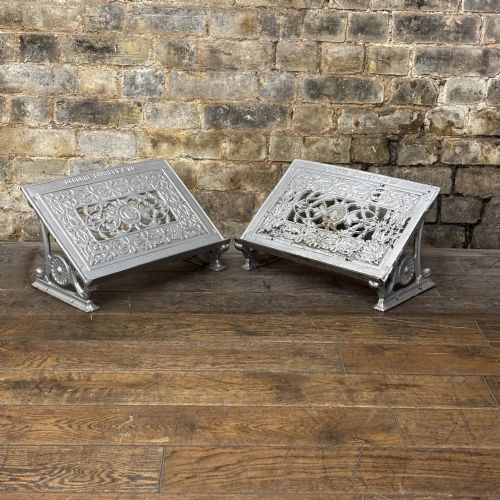
Metal items relied on heavy cast iron and polished brass, creating rigid structures for church and library use. Decorative examples added surface detail through gesso, giltwood, and transfer-printed whitewood finishes like Mauchline Ware.
Materials represented across the current selection include solid brass, mahogany, oak, cast iron, giltwood, and painted wood.
What varies in quality
The sophistication of the mechanical adjustment mechanisms dictates much of the functional merit in a stand. Finer pieces feature smooth folding actions and secure ratchets that hold heavy volumes without slipping.
Material selection and decorative execution separate standard items from exceptional ones. Solid mahogany and oak constructions display careful timber selection, whilst brass and cast iron versions depend on the crispness of their casting and finish.
Osborne Garrett Co
The Tabletop Reading Stand Glossary
- Lectern
- A slanted reading desk designed to support a book at a height and angle for standing or seated reading. These frequently appear in brass or heavy timber formats.
- Campaign
- Portable furniture designed for easy folding and transport during the nineteenth century. These items feature robust construction to withstand travel.
- Mauchline Ware
- Nineteenth-century Scottish wooden souvenirs decorated with photographic transfers and tartan patterns. Items in this finish include small reading stands and book troughs.
- Gesso
- A plaster-based mixture applied to wood surfaces to provide a smooth base for painting or gilding. This technique appears on decorative Florentine pieces.
Tabletop Reading Stand: Frequently Asked Questions
What is a tabletop reading stand used for?
These stands hold books, folios, or music scores at a comfortable viewing angle on top of a desk or table.
They free up workspace and reduce neck strain during extended periods of reading or reference work.
How do I date an antique reading stand?
Dating relies on identifying the timber species, construction joints, and stylistic markers such as Gothic Revival or Art Deco influences.
Nineteenth-century pieces often feature solid mahogany or oak with hand-cut joinery, whilst later Edwardian examples show different manufacturing methods.
Are these stands suitable for heavy books?
Many nineteenth-century wooden and cast iron stands were built specifically to support large heavy volumes like bibles and reference folios.
Sturdier designs utilise solid oak or heavy brass frames with fixed ledges to bear substantial weight safely.
How do I maintain wood and brass stands?
Wooden surfaces benefit from occasional light waxing to keep the timber nourished and prevent drying.
Brass and metal components require gentle dusting and minimal polishing to preserve their historic patina without removing surface character.