

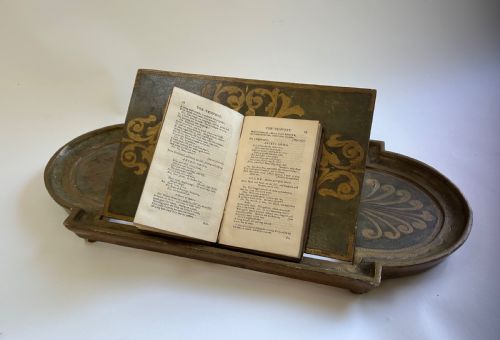


Wooden Book Lectern
A wooden book lectern supports texts at a comfortable angle for reading, bringing solid craftsmanship and historic character to a desk, study or chapel.
Wooden Book Lectern
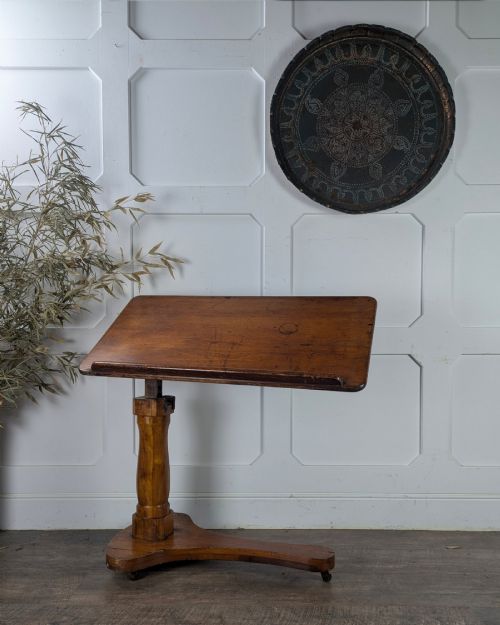
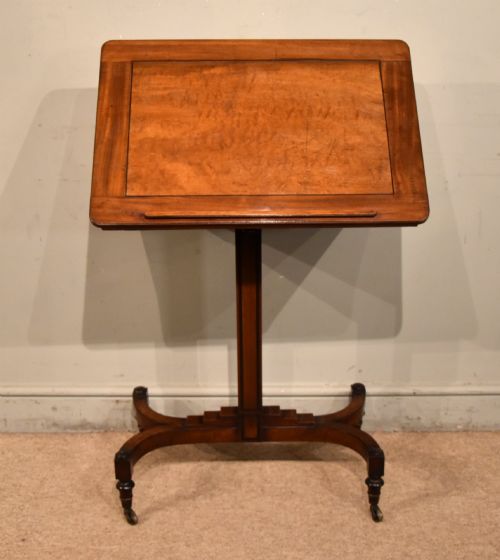
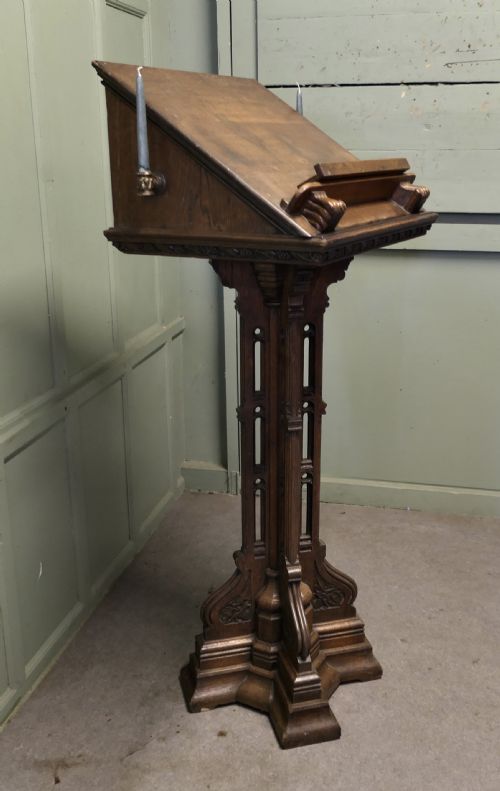
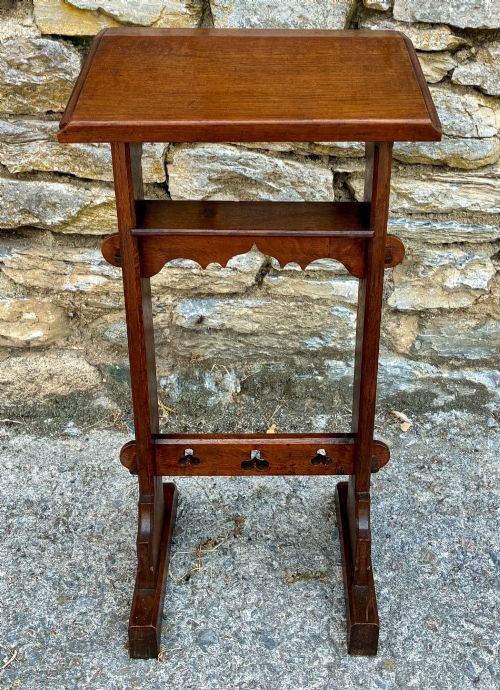
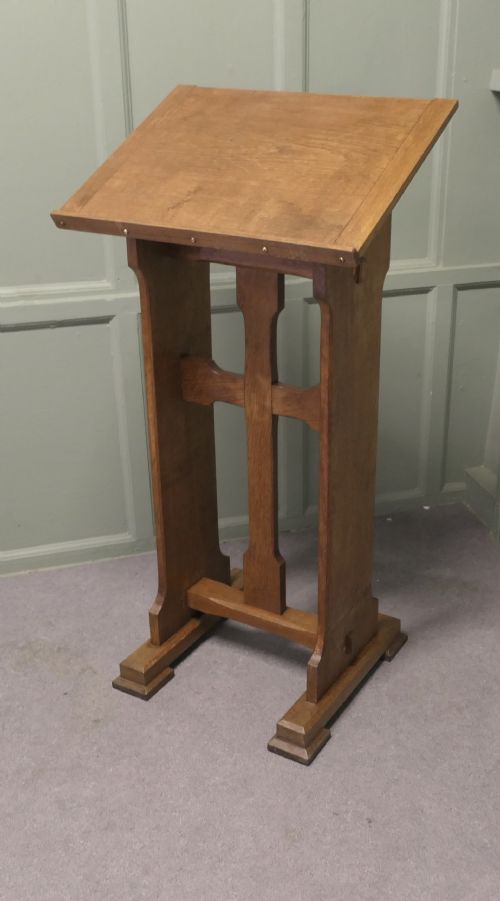
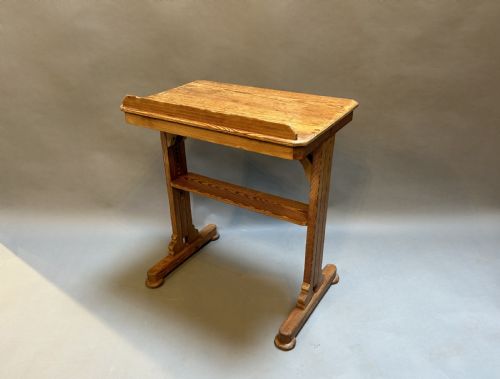
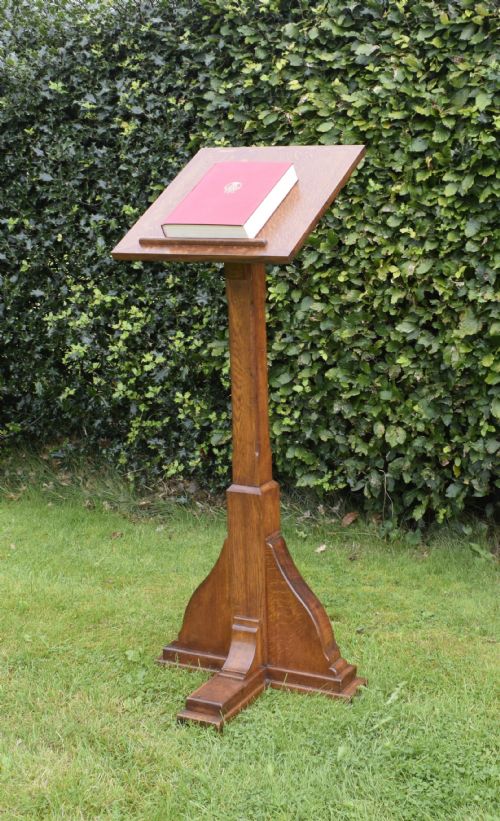
A wooden book lectern encompasses adjustable reading tables, music stands, desk-top book rests, and church pulpits designed to hold volumes securely. The selection here leans heavily toward 19th-century and Edwardian pieces, ranging from simple pine reading stands to elaborate carved oak church furniture and mahogany reading tables.
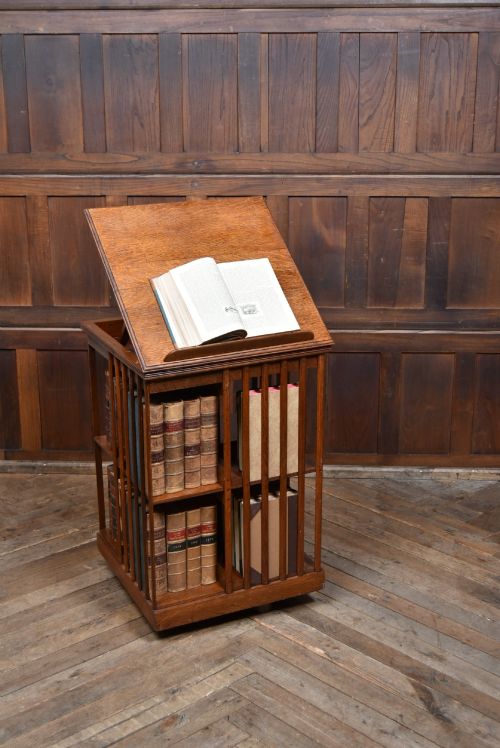
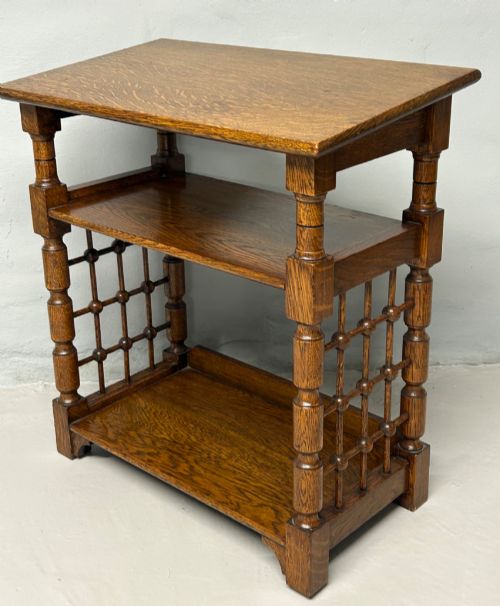
Buyers encounter variations tailored for specific settings, including revolving bookcases, folding oriental book pedestals, and restaurant reception greeter stations. Oak and mahogany dominate the forms, frequently paired with brass or iron adjustment mechanisms to alter the height and slant of the reading surface.
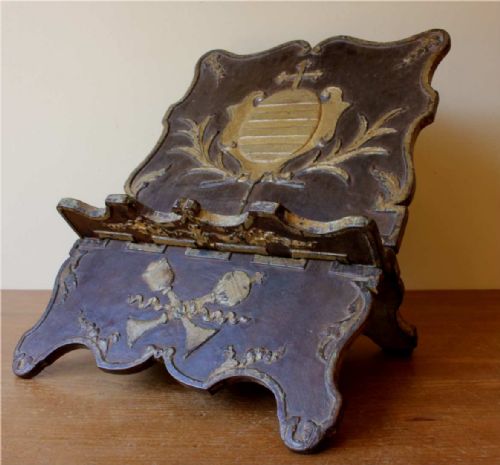
Religious examples appear alongside domestic library furniture, such as French missal stands and carved eagle lecterns with outstretched wings. Smaller desk-top book rests offer a portable alternative to heavy floor-standing podiums, while adjustable reading tables combine a book support with a stable column or tripod base.
How they were made
Cabinetmakers constructed these pieces primarily from dense hardwoods like mahogany, walnut, and golden oak, alongside utility timbers such as pine. Joinery relied on traditional methods including mortise and tenon frames, dovetailed book ledges, and turned pedestals supported by tripod bases.
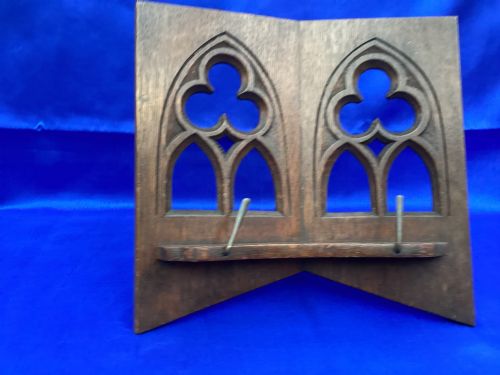
Metal components in brass and cast iron were integrated into the design to allow mechanical adjustment for height and angle. Carved details, such as the feathered wings of wooden eagles or Gothic Revival tracery, were worked directly into the solid timber by hand.
Surface finishes varied from polished mahogany and ebonised treatments to simpler wax finishes on oak and pine. Specialised decorative techniques occasionally appear, including mother-of-pearl inlay and Mauchline Ware transfer decoration on whitewood.
The listings show a strong presence of oak and mahogany, spanning Victorian Gothic Revival forms to Edwardian Arts and Crafts designs.
What varies in quality
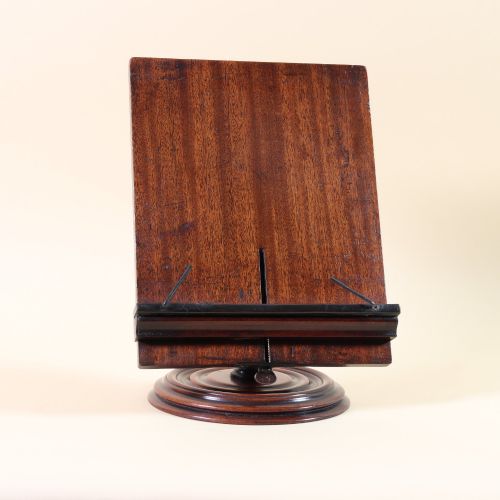
The sophistication of the mechanical adjustment mechanism often dictates the tier of a reading stand. Simple fixed ledges sit at the functional end, while fully articulating brass ratchets, screws, and pivoting brackets represent finer workshop output.
The selection of timber and depth of carving distinguish standard production from exceptional work. Solid figured mahogany and deeply sculpted oak eagle lecterns demonstrate superior material choice and sculptural skill compared to plain pine or surface-carved softwood alternatives.
Originality of components, from the base up to the reading desk and its retaining brackets, preserves the integrity of the piece. Integrated secondary functions, such as revolving tiers or complex folding mechanisms, reflect higher ambition in the original design.
The Wooden Book Lectern Glossary
- Lectern
- A stand with a slanted top used to hold a book or speech at the correct height for a standing reader. These often feature an integrated lip to stop heavy volumes from sliding off.
- Missal stand
- A small, frequently folding stand designed specifically to hold liturgical service books on an altar. They often fold flat for storage when not in use.
- Mauchline Ware
- Souvenir items made from decorated wood, typically featuring photographic transfers or tartan patterns on whitewood. These pieces capture Victorian leisure and travel habits.
- Gonçalo Alves
- A dense exotic hardwood with distinctive contrasting grain patterns, sometimes utilised for high-end Victorian furniture and stands. It provides a striking visual texture compared to standard native timbers.
- Ebonised
- Wood treated with a dark finish to imitate expensive ebony. This technique was popular in the late 19th and early 20th centuries for formal or decorative stands.
Wooden Book Lectern: Frequently Asked Questions
What is the difference between a lectern and a book stand?
A lectern typically stands at floor height or sits on a desk as a larger sloping pulpit for reading addresses or heavy texts. Book stands often encompass smaller desk-top rests, revolving bookcases, or folding pedestals.
Floor-standing lecterns often incorporate heavy tripod bases or pillar supports designed for stationary use in churches or halls. Smaller book stands prioritize portability and adjustable viewing angles for domestic studies.
How do I adjust the reading angle?
Most antique reading stands utilise a hinged book rest paired with a notched wooden support bar or a brass ratchet mechanism underneath the platform. Lifting the desk allows the support arm to drop into a different slot.
Some 19th-century designs use screw-thread columns or cast iron joints that lock the reading surface into position. Care should be taken with old metal or wooden ratchets to ensure they align properly before bearing weight.
Were all eagle lecterns made for churches?
While the majority of carved wooden eagle lecterns served ecclesiastical functions in chapels and cathedrals, secular variations also exist. Large carved birds with outstretched wings were sometimes commissioned for grand domestic libraries.
The presence of religious bookrests or missal ledges usually confirms an ecclesiastical origin, whereas simpler pivoting book platforms point towards study or library use.
Can these hold heavy modern books?
Solid oak, mahogany, and walnut lecterns possess the structural strength to support large, heavy volumes such as art folios or dictionaries. The stability depends heavily on the footprint of the base, with tripod and heavy pedestal designs offering the best balance.
Lighter pine or folding stands are better suited to standard books or magazines rather than massive reference tomes. The retaining lip at the base of the lectern must be deep enough to catch thicker bindings securely.