


Tabletop Drawers Walnut
Tabletop drawers walnut bring useful compact storage and tilting mirrors to a surface, offering period craftsmanship on a smaller scale.
Tabletop Drawers Walnut
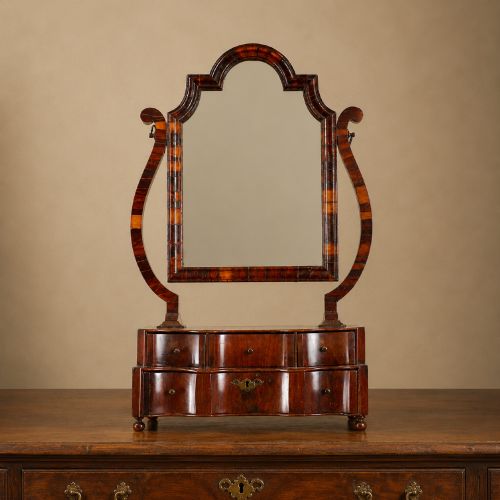
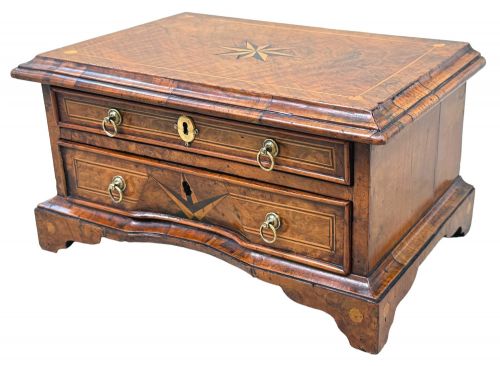
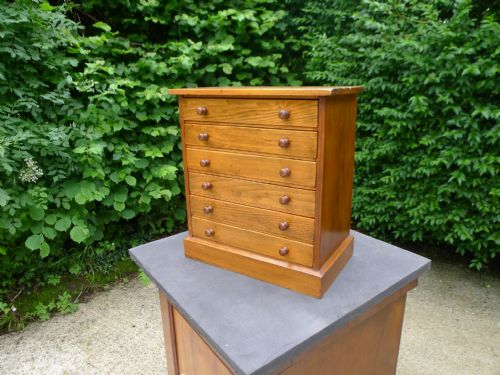
Tabletop drawers walnut encompass miniature chests, collectors cabinets, and dressing table mirrors built from the seventeenth century onwards. These small-scale pieces provide functional storage through fitted drawers or desk interiors while sitting comfortably on top of larger furniture.
The versions most commonly met on this page belong to the Georgian and Victorian periods, alongside eighteenth-century toilet mirrors. They take forms such as box mirrors, bureau fitments, and small apothecary or jewellery cabinets.
How they were made
Cabinetmakers constructed these pieces primarily using solid walnut and burr walnut veneers over secondary woods, applying fruitwood inlays or marquetry for decorative contrast. Brass handles, escutcheons, and hinges provide functional hardware, while mirror glass is integrated into swinging frames.
Joinery techniques involve precision drawer construction and fine framing to support mirror plates and miniature compartment interiors. Surfaces often display figured grain patterns, Dutch marquetry, or inlaid banding.
Some miniature chests come complete with tiny secret compartments designed to hide small fortunes.
What varies in quality
Quality rests in the choice of timber figure, such as richly patterned burr walnut or figured veneers, paired with subtle marquetry and stringing. The crispness of drawer dovetailing and the retention of original brass hardware elevate certain examples.
Proportion and the integrity of the original mirror glass or fitted interior compartments also define the upper tier of these pieces. Lesser examples show simpler secondary woods and replaced or mismatched fittings.
The Tabletop Drawers Walnut Glossary
- Burr walnut
- A prized timber veneer showing swirling, knotty grain patterns harvested from tree growths. It provides high decorative value on miniature chests and cabinet facades.
- Toilet mirror
- A small adjustable looking glass mounted on a box base containing one or more small drawers. These pieces sat upon dressing tables in the eighteenth and nineteenth centuries.
- Marquetry
- Inlaid patterns formed from different coloured woods fitted into a veneer background. Dutch examples frequently display floral or bird motifs across mirror frames.
- Bureau fitment
- A miniature writing interior featuring small pigeonholes and tiny drawers enclosed by a sloping lid. It turns a standard tabletop cabinet into a compact desk.
- Apprentice piece
- A small-scale item demonstrated to a guild by a craftsman seeking master status. They often take the form of miniature chests of drawers.
Tabletop Drawers Walnut: Frequently Asked Questions
What is the difference between a toilet mirror and a dressing mirror?
Toilet mirrors specifically incorporate a small box base fitted with drawers beneath the swinging glass. Dressing mirrors often share similar periods and forms but may focus primarily on the mirror frame itself.
Both types served the same domestic purpose of grooming on top of a chest or table during the Georgian and Victorian eras.
How do I identify a miniature chest of drawers from a full-sized one?
Miniature chests are scaled down significantly, often measuring only twenty to thirty centimetres in height. They duplicate every feature of standard furniture, including working drawers and bracket feet.
Cabinetmakers built them either as masterworks, salesman samples, or specialised storage for small valuables.
What periods do these walnut tabletop pieces come from?
The pieces span from the seventeenth century through the Georgian and Victorian eras up to the early twentieth century. Queen Anne and George II styles appear frequently among the earlier items.
Later examples from the nineteenth century often incorporate Dutch marquetry or campaign-style brass handles.
How were collectors cabinets used historically?
Collectors cabinets provided secure, compartmentalised storage for specimens such as coins, shells, minerals, or small antiques. The multiple small drawers kept delicate items organised and protected.
They were designed to sit on desks or tables for easy study by collectors.
Are the mirrors on these pieces original?
Mirror glass on eighteenth and nineteenth-century pieces is frequently replaced due to silvering degradation over time. Some pieces retain antique mirror glass showing light foxing and distortion.
Examining the rebate and backing boards helps determine whether the glass matches the age of the walnut frame.