
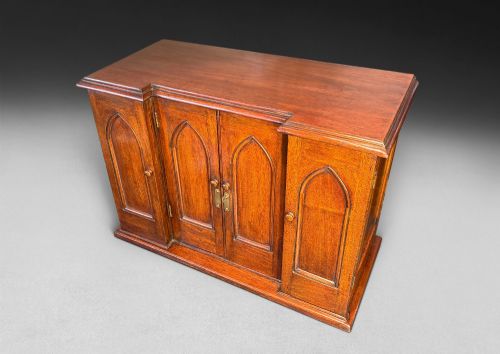
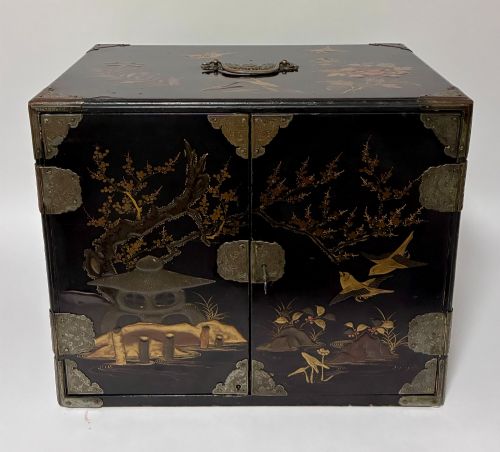
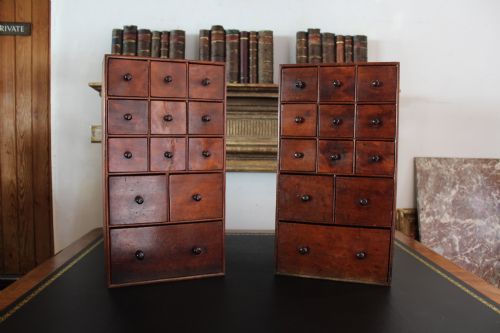
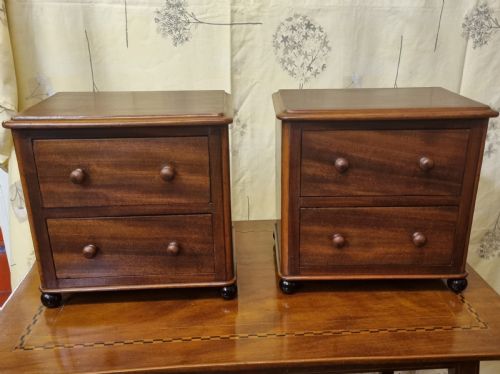
Tabletop Collectors Chest
These tabletop collectors chests are compact cabinets designed to hold small treasures, and you want one to bring both orderly storage and historic character to a room.
Tabletop Collectors Chest
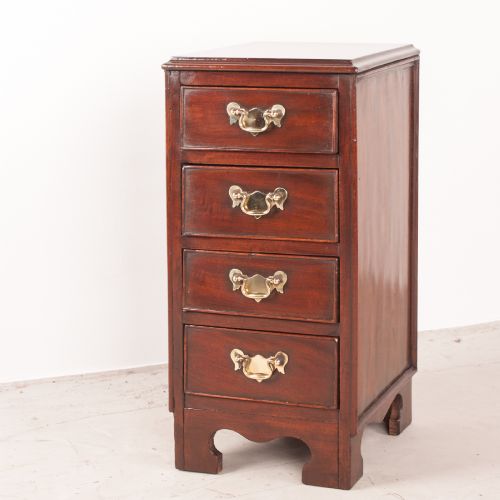
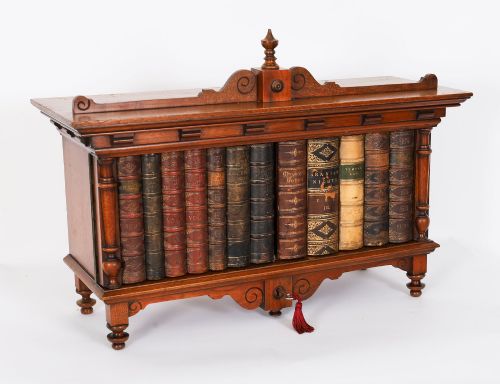
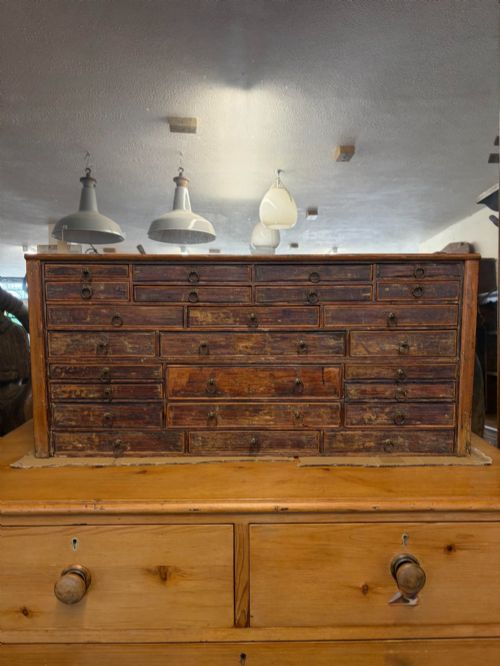
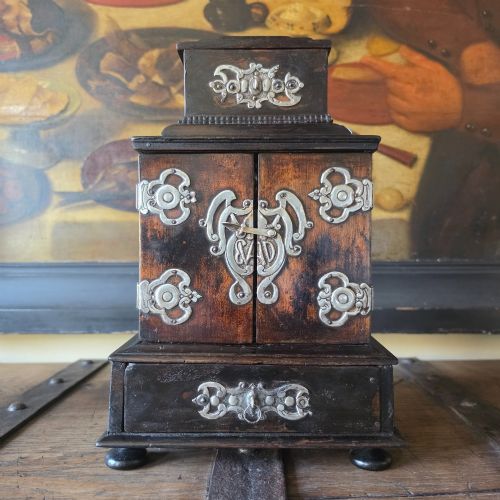
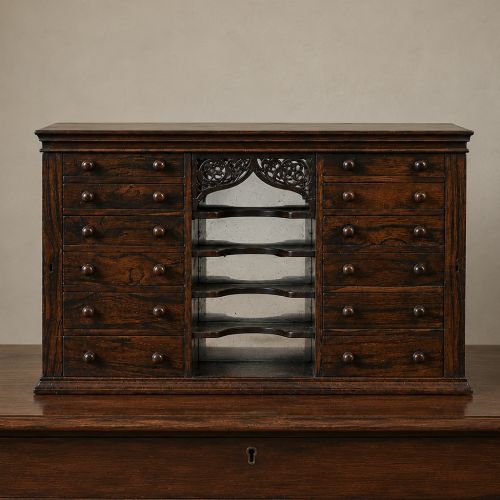
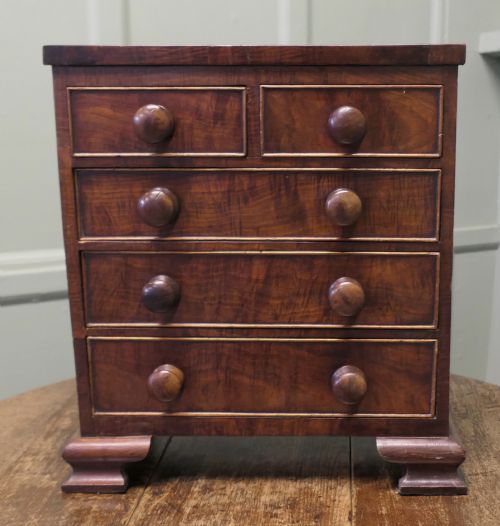
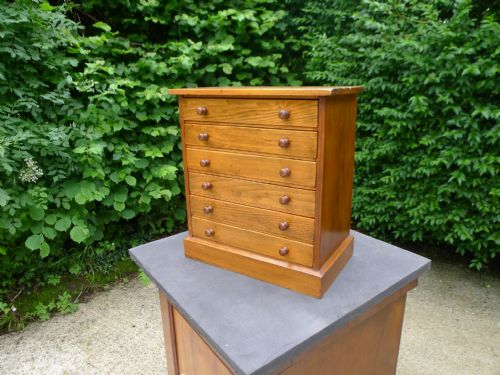
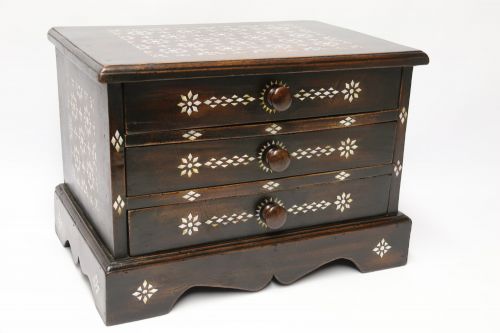
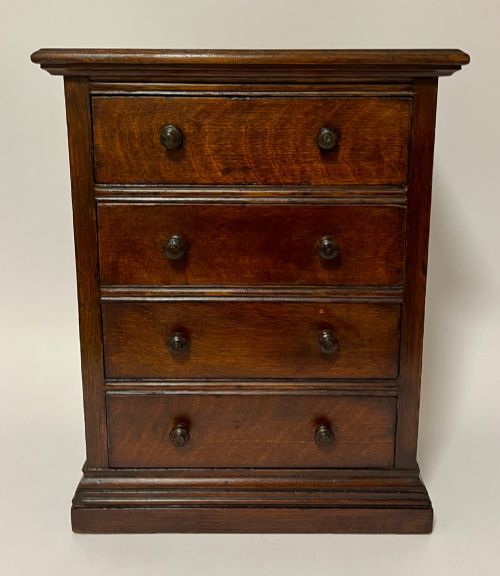
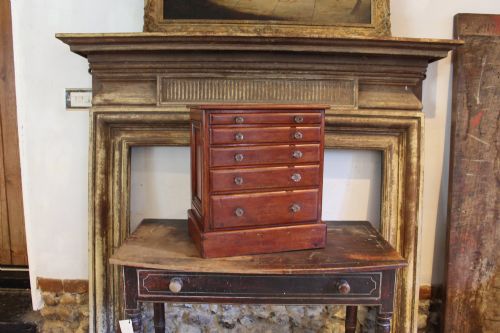
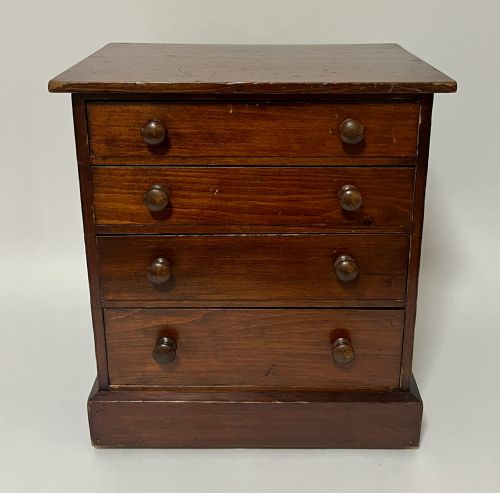
A tabletop collectors chest is a miniature piece of case furniture designed to sit upon a desk, table, or sideboard. These small-scale chests house specialised collections, ranging from natural history specimens and watch parts to jewellery and apothecary items.
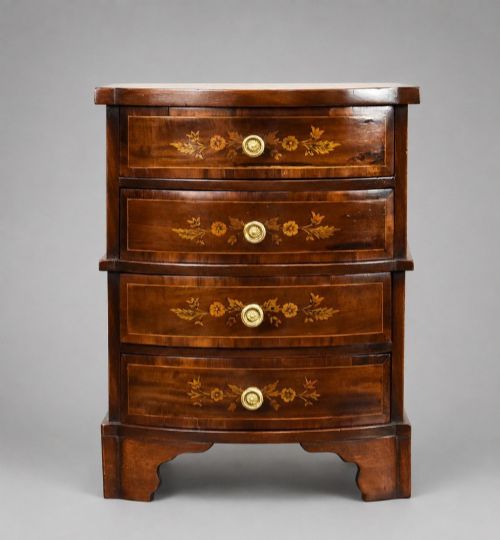
The versions most commonly met on this page span the Georgian, Victorian, and Edwardian eras. They take the form of miniature chests of drawers, specimen cabinets, and spice drawers.
Makers constructed these pieces in wood using domestic and exotic timbers. Many replicate the architectural proportions and stylistic details of full-sized furniture scaled down for tabletop use.
How they were made
Makers utilised solid hardwoods such as mahogany, oak, walnut, and rosewood, alongside softer timbers like pine and fruitwood. Carcases often employed traditional dovetail joinery for the drawer construction to ensure stability over centuries of opening and closing.
Surface finishes include French polish, wax, and occasionally black lacquer or marquetry inlay. Brass handles, escutcheons, and bone details provide functional contrast and period accuracy to the timber carcases.
The furniture styles represented span Georgian, Regency, Victorian, Edwardian, and Flemish Baroque periods, alongside Japanese lacquerwork from the Meiji era.
What varies in quality
Quality rests in the precision of the miniature scale and the integrity of the internal drawer construction. Finer examples display meticulous dovetails, neatly fitted dividers, and well-chosen timber veneers that match across the drawer fronts.
The degree of interior specialisation also separates standard pieces from superior examples. Cabinets fitted for specific objects, such as microscope slides, coins, or watch parts, demonstrate higher levels of original craftsmanship.
Luxmore's of Ilfracombe·Manoah Rhodes & Sons Ltd
The Tabletop Collectors Chest Glossary
- Apprentice piece
- A small item of furniture made by a trainee craftsman to demonstrate mastery of skills. These pieces often mimic full-scale furniture forms.
- Specimen cabinet
- A small chest with numerous shallow drawers designed for holding natural history samples. Collectors used them for shells, butterflies, and geological samples.
- Wellington chest
- A tall, narrow chest of drawers secured by a hinged locking stile on one side. This locking mechanism bars access to all drawers simultaneously.
- Kodansu
- A small Japanese tabletop cabinet featuring multiple drawers and compartments. They frequently display lacquer work and decorative metal mounts.
- Escutcheon
- A flat plate surrounding a keyhole that protects the surrounding wood from wear. They are commonly cast from brass on these pieces.
Tabletop Collectors Chest: Frequently Asked Questions
What did people store inside a tabletop collectors chest?
Owners kept specialised items requiring careful organisation and protection from dust or light. Common contents included coins, watchmaker components, microscope slides, and natural history specimens.
These small drawers kept delicate items separated and secure. Many interiors retain original velvet linings or divided trays built for specific hobbies.
Are these chests the same as apprentice pieces?
Some miniature chests served as apprentice pieces created to test a woodworker's skill. Others were manufactured specifically as commercial tabletop storage for collectors.
Distinguishing between the two depends on the scale, complexity of construction, and presence of internal fittings tailored for specific objects rather than general practice.
How do I date a nineteenth-century tabletop chest?
Dating relies on timber selection, secondary woods used inside the drawers, and the style of the brass hardware. Georgian pieces often feature oak linings, while Victorian examples frequently employ mahogany or pine.
Construction methods like machine-cut dovetails versus hand-cut joints help narrow down the period of manufacture alongside any surviving locks and keys.
Where should I place a tabletop chest at home?
These compact cabinets sit comfortably on sturdy sideboards, desks, or chests of drawers. Their modest footprint allows them to occupy spaces where full-sized furniture will not fit.
Keep them away from direct sunlight and heat sources to protect timber veneers, polish, and internal linings from drying out.