
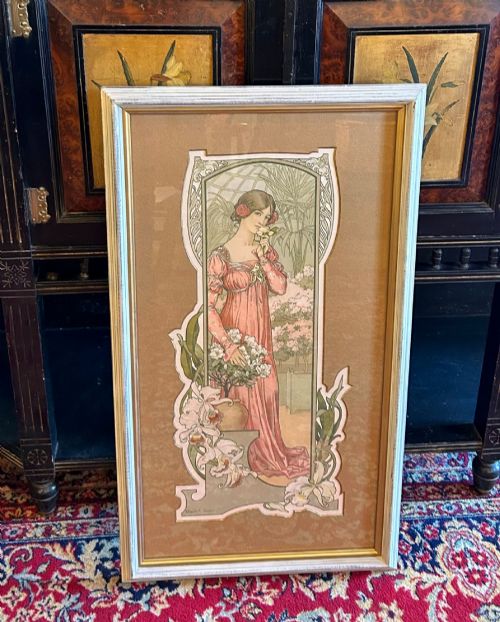
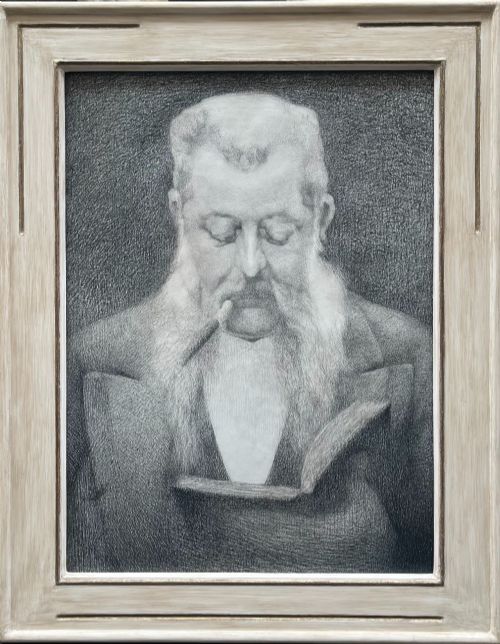
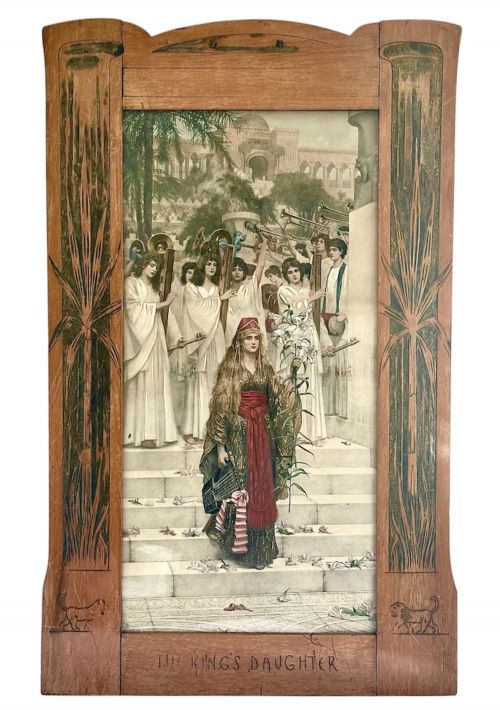
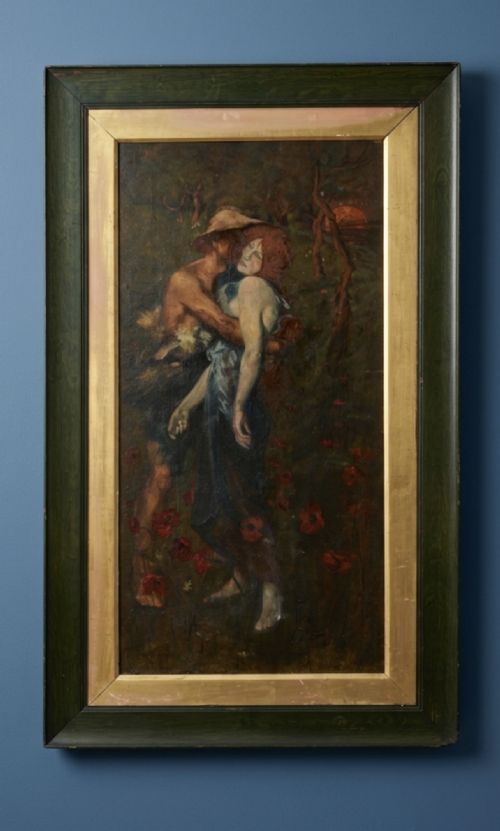


Symbolist Artwork Framed
Symbolist artwork framed brings visionary myth and allegorical mystery directly to your wall, combining moody narrative with period mouldings.
Symbolist Artwork Framed
Symbolist artwork framed captures the imaginative, dreamlike narratives of the nineteenth and early twentieth centuries. These pieces translate literary themes, classical legends, and spiritual allegories into visual form, often drawing heavily on Art Nouveau aesthetics. When you examine symbolist artwork framed on this page, you encounter works spanning the Victorian era through to the nineteen thirties.
Materials and construction
Makers utilised traditional supports such as canvas, paper, and wood panels for the primary imagery. Painters applied rich oil colours, watercolours with gouache, or ink and graphite to construct these moody compositions. Printmakers employed lithography and photogravure techniques to reproduce evocative subjects for broader appreciation.
Framing forms an integral part of these pieces, incorporating woods like oak alongside decorative applications of gold leaf. Glass protects the works on paper, while heavy timber moulding frames the oil paintings and larger prints. These protective housings reflect the stylistic preferences of the Victorian, Edwardian, and later periods.
Listings span from the Victorian era through the nineteen thirties, encompassing mediums from oil on canvas to delicate pen and ink drawings.
Judging quality in framed symbolist works
Distinctions in quality often rest upon the directness of the hand versus mechanical reproduction. Original oil paintings and unique watercolours exhibit nuanced brushwork and depth that mass-produced prints cannot replicate. However, skilled period lithographs and photogravures still command attention through careful tonal graduation and sharp line definition.
The integrity of the accompanying frame significantly influences the overall character of the piece. Surviving original frames with matching gold leaf or period oak mouldings enhance the historical context. Pieces where the frame complements the psychological weight of the artwork demonstrate superior curatorial cohesion.
Elisabeth Sonrel·Herbert Gustave Schmaltz·Antoine Calbet·Edgard Maxence·Arthur Hacker·Montagu Barstow·Eduard Veith
The Symbolist Artwork Framed Glossary
- Symbolism
- A late nineteenth-century movement that rejected realism in favour of spiritual, mythological, and psychological themes. Artists used symbolic imagery and dreamlike compositions to express hidden truths.
- Lithograph
- A print made from a planographic process on stone or metal plates. This technique allows for subtle tonal variations and faithful reproduction of detailed drawings.
- Photogravure
- An intaglio printing process that produces photographic images with continuous tones. It translates fine art photography and delicate works on paper into rich, velvety prints.
- Gouache
- An opaque water-based medium often combined with watercolour. It provides solid fields of matte colour that lend weight and opacity to painted details.
- Photogravure
- An intaglio printmaking technique utilising photographic plates to capture fine tonal gradations. It creates deep, atmospheric reproductions suitable for moody allegorical subjects.
Symbolist Artwork Framed: Frequently Asked Questions
What defines symbolist art?
Symbolist art focuses on internal visions, mythology, and psychological depth rather than literal representation. Artists use metaphor and allegory to evoke mood and secret meanings.
This aesthetic flourished across Europe from the late nineteenth century into the early twentieth century. It bridges Victorian academic painting and modern abstraction.
Are these pieces original?
The selection includes a mix of original hand-painted works and period-produced prints. Each listing specifies whether the item is an oil painting, watercolour, lithograph, or photogravure.
All pieces date from historical periods ranging from the Victorian era to the nineteen thirties. The framing is chosen to match the era of the artwork.
How do I care for framed works on paper?
Keep framed paper works away from direct sunlight to prevent fading of watercolours, inks, and lithographic pigments. Maintain stable room temperatures to avoid humidity damage behind the glass.
Dust wooden frames gently with a dry cloth. Avoid using liquid cleaners on antique gold leaf or aged timber mouldings.
How do I identify a period frame?
Period frames exhibit construction methods, wood types, and gilding styles specific to their decade. Victorian and Arts and Crafts examples often feature solid oak or hand-finished gold leaf.
Examining the reverse reveals historical fixings, old paper tapes, and timber shrinkage consistent with age. These details confirm whether the frame belongs to the era of the artwork.