






Swivelling Vanity Glass
A swivelling vanity glass offers adjustable reflection on a dressing table, bringing period character and practical daily use to a bedroom.
Swivelling Vanity Glass
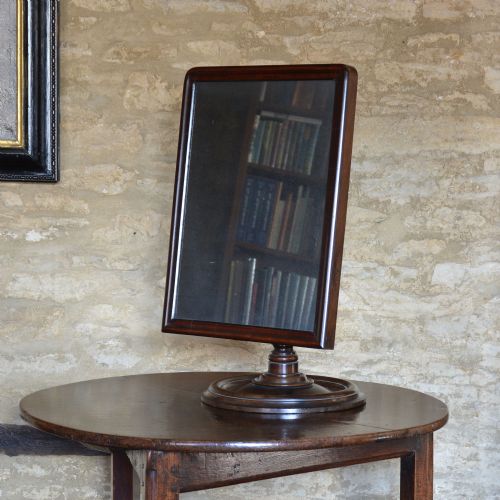
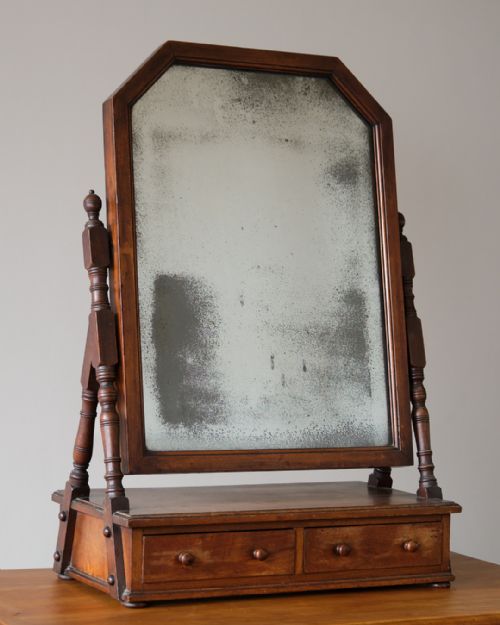
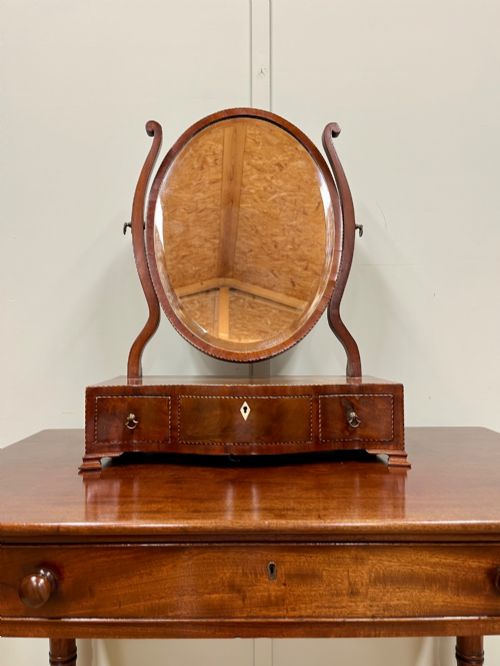
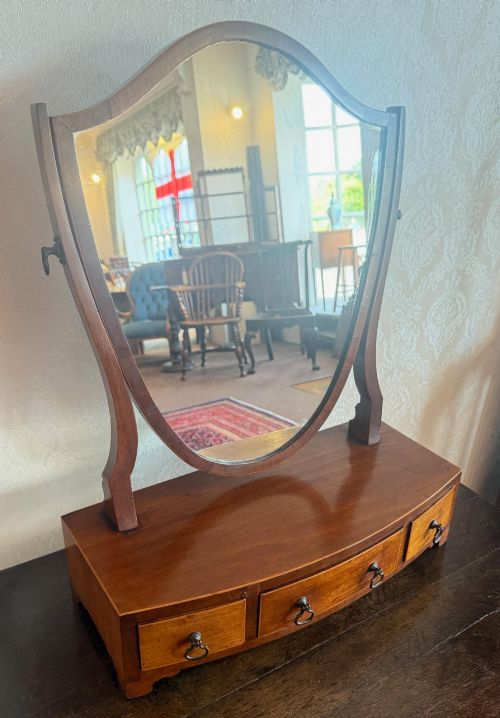
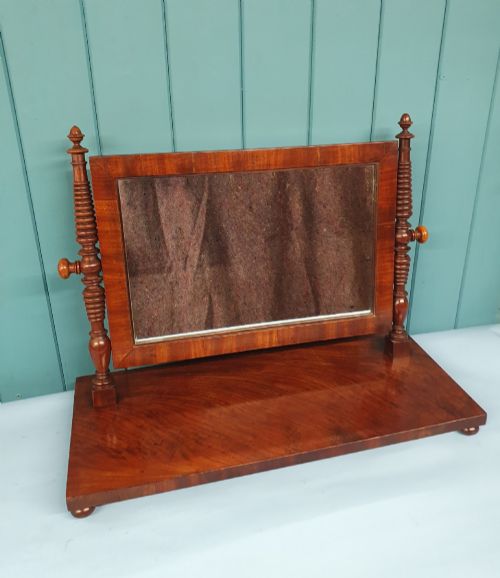
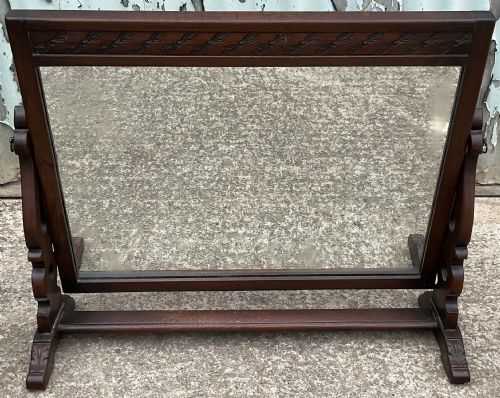
A swivelling vanity glass encompasses dressing table mirrors, toilet mirrors, and swing mirrors designed to pivot on upright frames. When searching for a swivelling vanity glass, buyers most frequently encounter mahogany examples spanning the Georgian, Regency, and Victorian periods.
These pieces range from compact table mirrors intended for chests of drawers to larger cheval mirrors standing on the floor. The wooden frames often incorporate small drawers in the base plinth for storing trinkets.
Origins stretch from English workshops to continental makers in Sweden, Russia, and Vienna, utilising timbers such as oak, birch, and walnut alongside mahogany.
Materials and construction
Cabinetmakers constructed the frames using solid and veneered hardwoods like mahogany, walnut, and oak, frequently embellished with boxwood or ebony inlay and parcel-gilt details.
The pivoting mechanism relies on brass screw pins or side arms fitted into upright supports, allowing the glass plate to tilt smoothly to the desired angle.
Original mirror plates are mounted within moulded wooden frames, sometimes backed with old pine panels secured by traditional fixings.
Swivelling Vanity Glass Retail Price Guide 2026
Typical asking prices for swivelling vanity glass among the pieces listed under this phrase on Sellingantiques today, from the lower quarter to the upper quarter. They describe what is for sale here now, not the wider market.
Current listings feature dressing mirrors spanning the seventeenth century, Georgian era, Regency period, Victorian epoch, and early twentieth century.
Distinctions in craftsmanship
Quality reveals itself in the selection of timber figures, such as dense flame mahogany or finely figured walnut veneers, and the crispness of edge mouldings and bracket feet.
The structural integration of the drawer bases, dovetail joinery, and the weight of the supporting uprights separate standard utility pieces from high-workshop production.
Heal And Sons·Thomas Rubergall·Gillows
The Swivelling Vanity Glass Glossary
- Toilet mirror
- A small mirror designed to sit on a dressing table or chest, popular from the seventeenth century onwards.
- Cheval mirror
- A full-length swing mirror supported on four legs with vertical pillars, allowing the user to view their entire outfit.
- Swing mirror
- A glass plate hung within a moveable frame that tilts back and forth on horizontal pivots.
- Parcel-gilt
- Partially gilded with gold leaf, often highlighting carved wooden details on eighteenth-century frames.
- Boxwood
- A dense, pale wood frequently used for contrasting stringing and geometric inlay work on dark mahogany surfaces.
Swivelling Vanity Glass: Frequently Asked Questions
How do I use a swivelling vanity glass?
Place the mirror on a stable chest of drawers or dressing table at a comfortable height for grooming and personal reflection.
Adjust the angle of the glass plate using the side pivots to direct the light and your line of sight as needed.
Are these mirrors attached to the table?
Most pieces listed are independent table mirrors that stand freely on their own shaped base plinth or feet.
Larger cheval versions stand directly on the floor, while a few full-length formats are self-contained movable items.
How do I date a dressing mirror?
Examine the timber species, foot style, and secondary woods like pine or oak used in the drawer linings to determine the period.
Georgian examples often feature bracket feet and fine mahogany, whereas Victorian pieces tend to be heavier with bolder mouldings.
What is the difference between a toilet mirror and a dressing mirror?
Historically, a toilet mirror specifically referred to a smaller table-top glass used during morning toilette rituals.
Dressing mirror is a broader term that encompasses both smaller table-top designs and larger floor-standing cheval mirrors.