



Swiveling Full Length Mirror
A swiveling full length mirror brings both practical dressing utility and considerable architectural presence to a room through its pivoting frame.
Swiveling Full Length Mirror
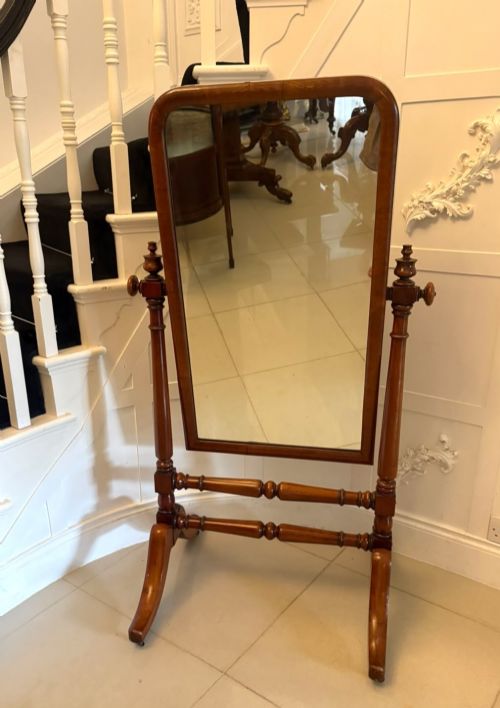
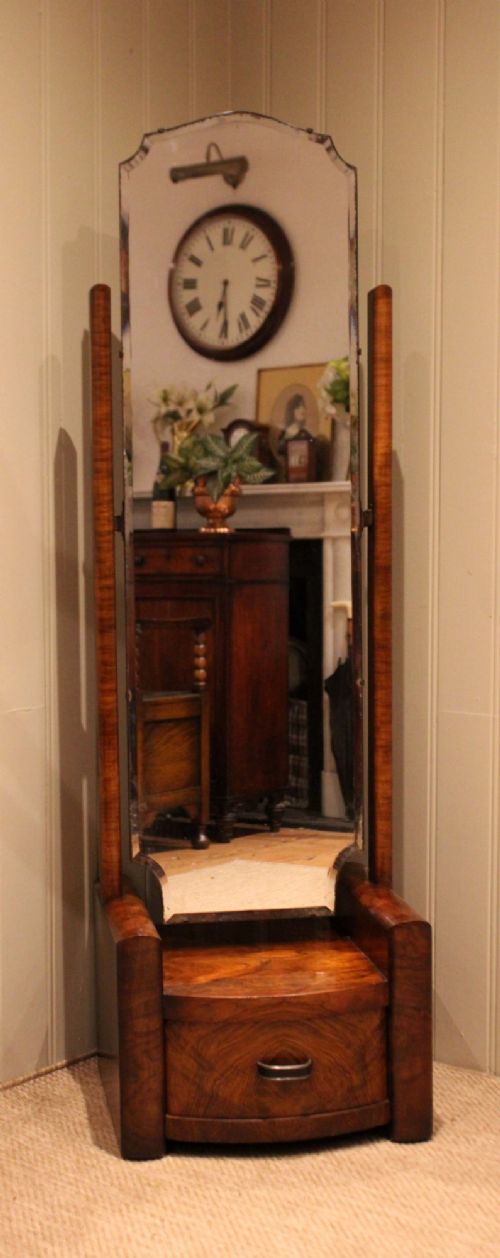
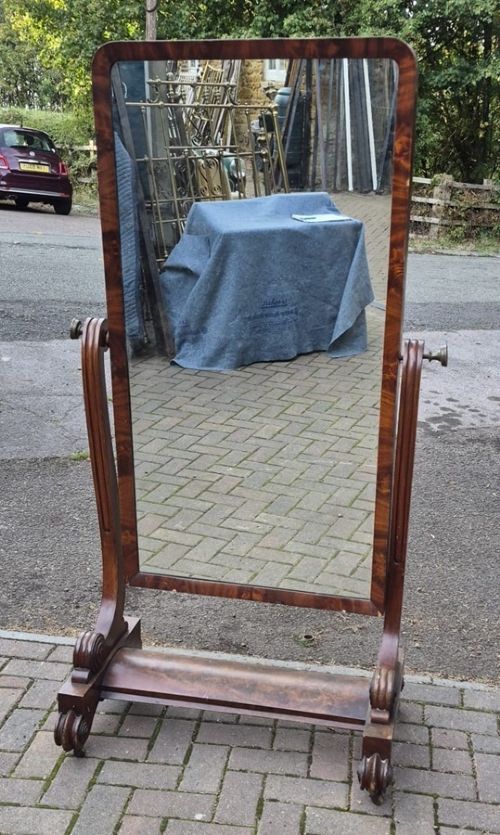
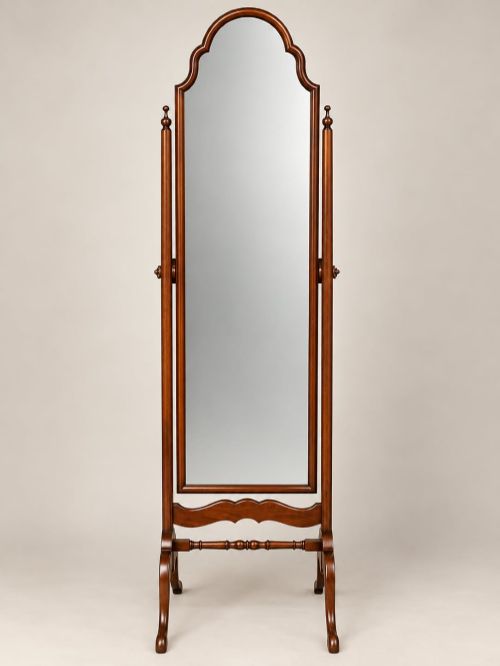
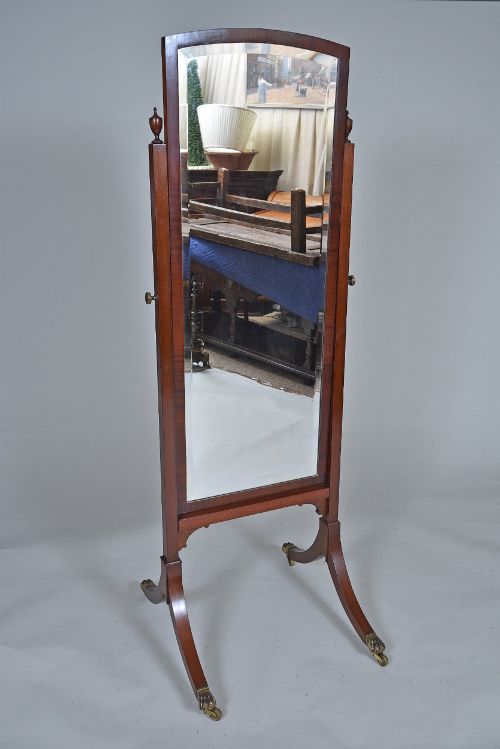
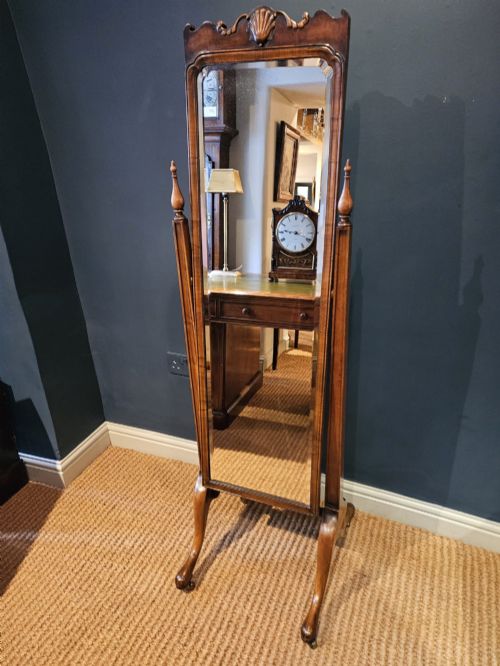
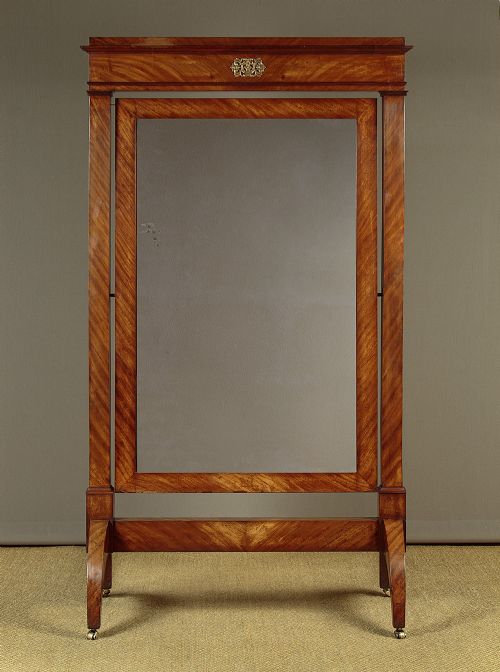
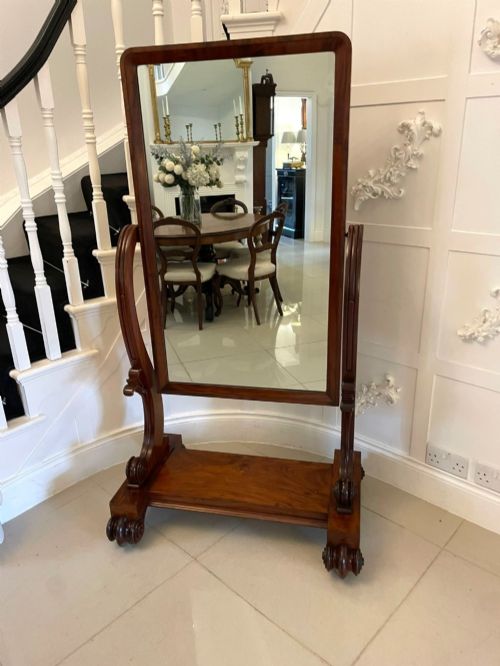
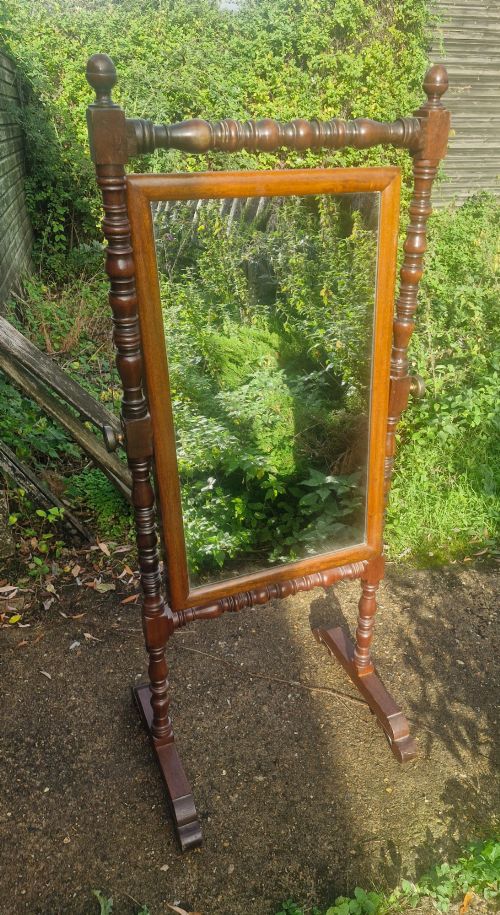
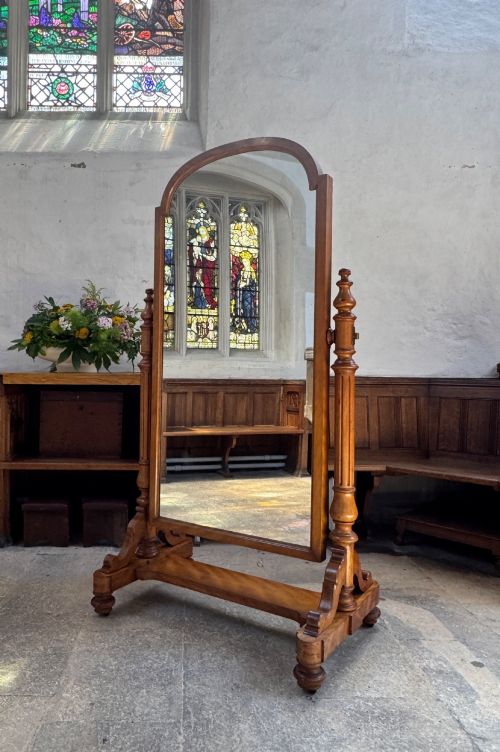
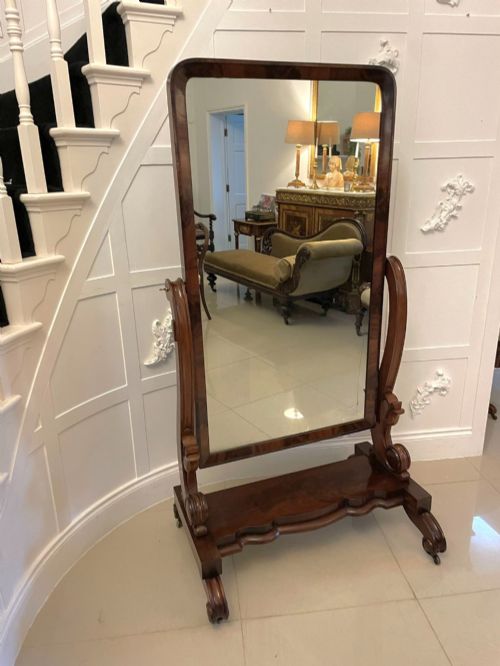
When searching for a swiveling full length mirror, you encounter tall, freestanding dressing glasses designed to pivot within a supportive frame. The most common examples on this page are substantial mahogany cheval mirrors originating from the Victorian and Edwardian periods.
These pieces generally stand on four legs, frequently fitted with castors to allow easy positioning in a bedroom or dressing room. Alongside standard Victorian and Edwardian iterations, the selection spans earlier Regency and Georgian designs as well as later 20th-century walnut and satinwood variations.
Materials and construction
Cabinetmakers relied heavily on solid and veneered timbers, predominantly mahogany, walnut, and satin birch, framed around heavy glass mirror plates. Brass hardware appears frequently, providing structural pivots, candle holders, and protective sabots on leg terminals.
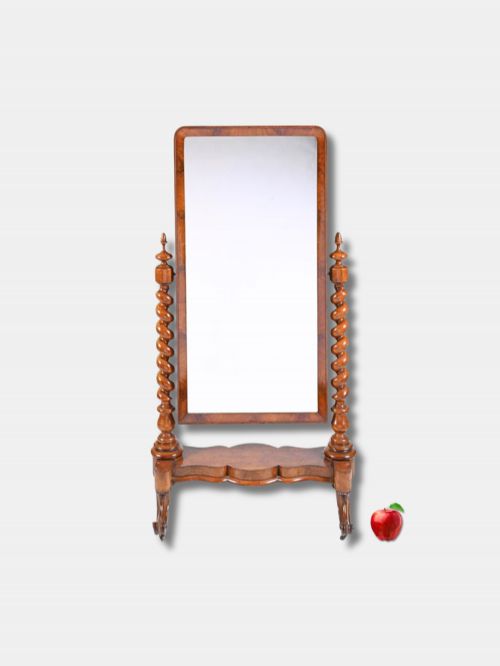
Joinery methods range from simple turned supports to elaborate carved details, barley twist uprights, and delicate marquetry inlay. Frames tilt on central pivot pins secured by brass thumbscrews or side arms, allowing the user to adjust the angle of the glass.
Swiveling Full Length Mirror Retail Price Guide 2026
Typical asking prices for swiveling full length mirror among the pieces listed under this phrase on Sellingantiques today, from the lower quarter to the upper quarter. They describe what is for sale here now, not the wider market.
Several mirrors feature two-sided rotating frames or swing-out candle sconces for illuminating your evening cravat.
Markers of distinction
Superior quality rests in the choice of timber figure, such as burr walnut or densely grained mahogany, paired with crisp hand-carving and substantial brass mounts. Finer examples display balanced proportions and robust undercarriages that prevent the tall frame from rocking during adjustment.
Secondary touches, including articulated brass candle holders, original castors, and finely inlaid satinwood marquetry, elevate a piece above standard utility items. The clarity of the mirror plate and the weight of the supporting stand determine the overall substance of the object.
The Swiveling Full Length Mirror Glossary
- Cheval mirror
- A freestanding full-length dressing mirror that hangs on vertical pivots within a frame. The word derives from the French term for horse, reflecting the four-legged support structure.
- Sabot
- A protective or decorative metal shoe fitted to the foot of a piece of furniture. In these mirrors, they are commonly cast from brass and paired with moving castors.
- Barley twist
- A spiral turning resembling a twisted rope, used to shape vertical wooden uprights and supports. This decorative woodworking technique appears frequently on Victorian frames.
- Marquetry
- The art of applying pieces of veneer to a structure to form decorative patterns and pictures. Craftsmen utilise contrasting woods like satinwood and mahogany to create geometric or floral motifs.
- Articulated
- Jointed or hinged to allow movement. In these mirrors, candle sconces or arms often feature this mechanism to swing outward.
Swiveling Full Length Mirror: Frequently Asked Questions
How do I secure the mirror at the right angle?
Most frames utilise brass pivot screws or threaded thumbscrews set into the side uprights. Tightening these mechanisms clamps the hanging pivots to hold the glass firmly in place.
If the mirror slips, check whether the washers or tension screws inside the pivot joint require adjustment or replacement to restore proper friction.
Where is the best place to position a cheval mirror?
These tall mirrors require adequate floor space to allow the frame to tilt forward and backward without striking nearby walls or furniture. Placing them perpendicular to a window captures and reflects natural light effectively.
Ensure the floor surface is relatively level so the castors do not cause the heavy wooden frame to lean unevenly.
How do I distinguish a Victorian mirror from an Edwardian one?
Victorian pieces often feature deep, dark mahogany timbers, heavy proportions, and occasionally elaborate details like barley twist columns or carved scrolling. They prioritise dense, substantial construction.
Edwardian examples tend to introduce lighter woods, such as satin birch or inlaid satinwood, alongside cleaner lines and more restrained decorative marquetry.
Did these mirrors originally include candle holders?
Certain larger dressing mirrors feature brass arms mounted to the frame specifically designed to hold candles. These provided illumination for early morning or evening dressing before electric lighting was common.
While many survive with their original articulated candle holders intact, others lost them over time through routine use or remodeling.