
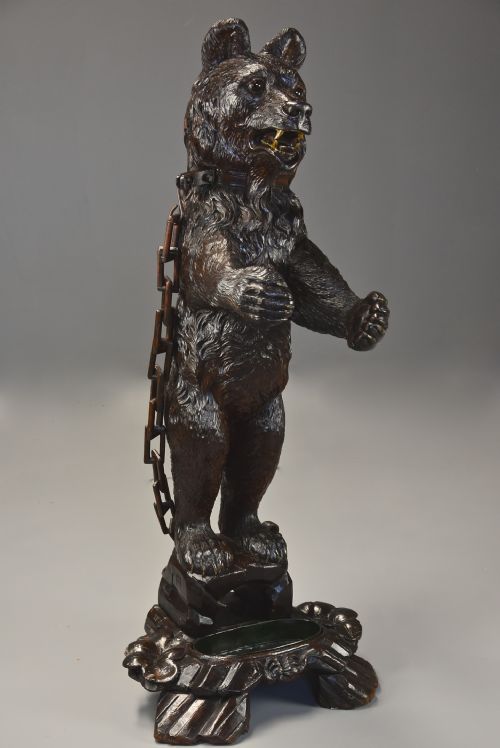


Swiss Wood Sculptures
Swiss wood sculptures bring the dense forests and mountain wildlife of the Alps directly into domestic interiors through intricate carving.
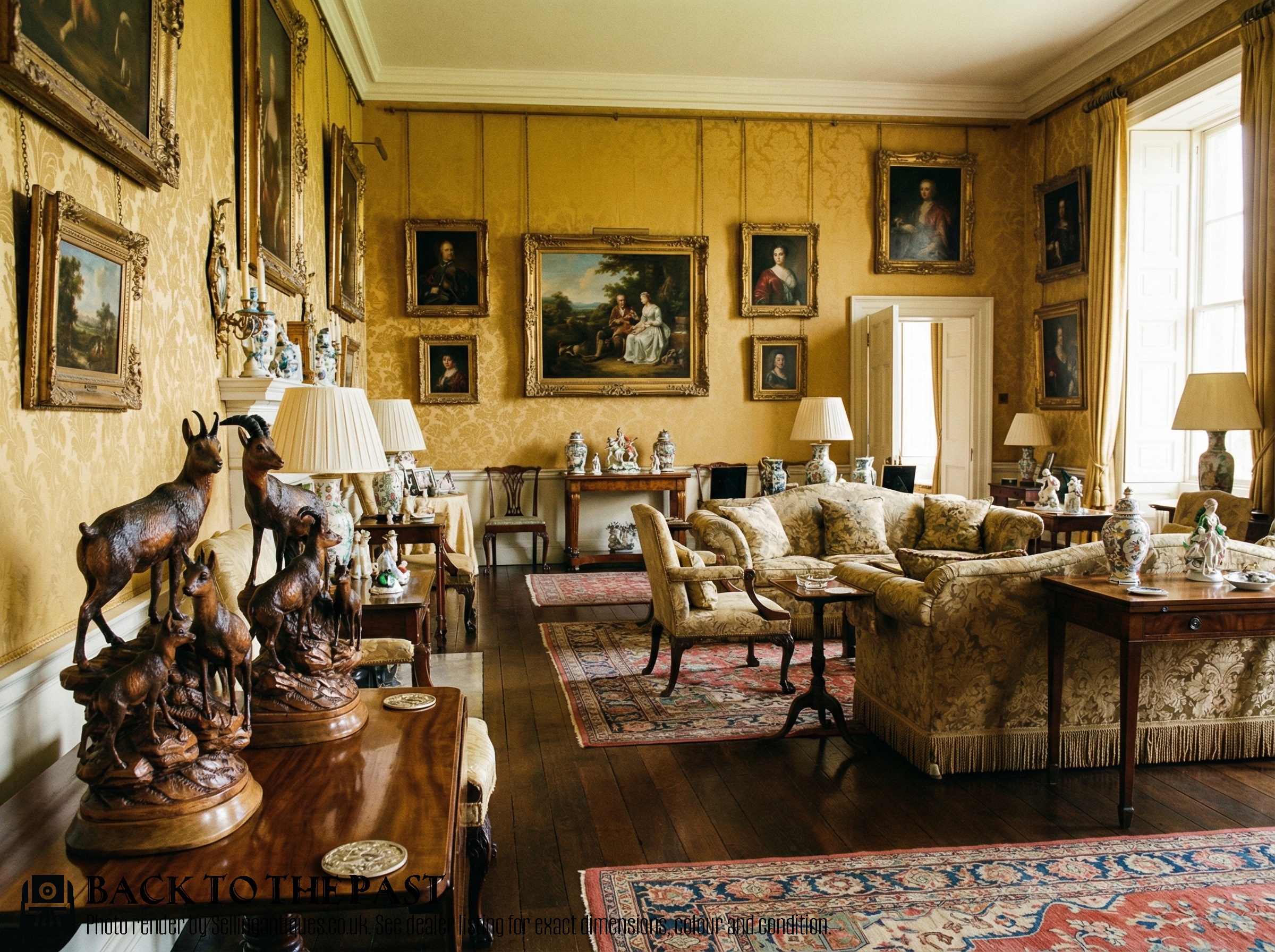
Swiss Wood Sculptures
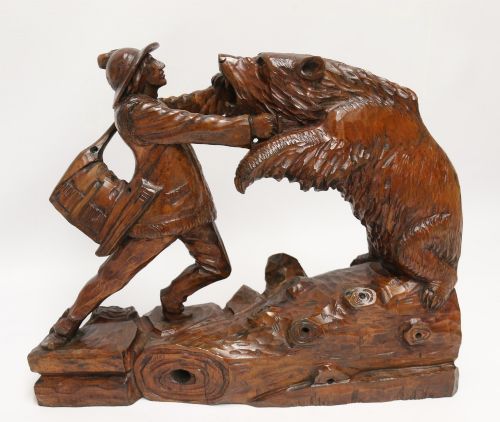
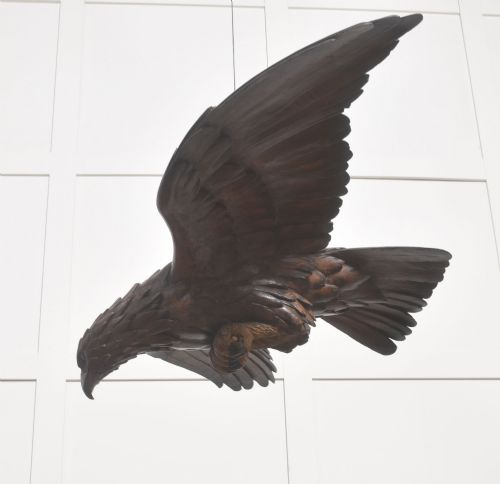
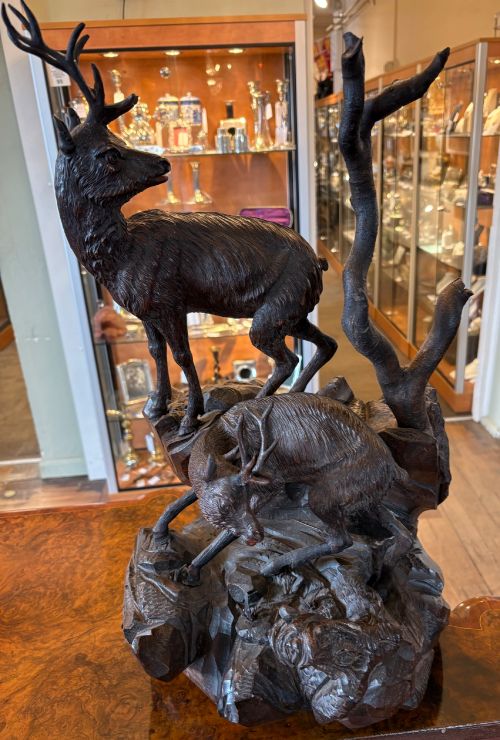
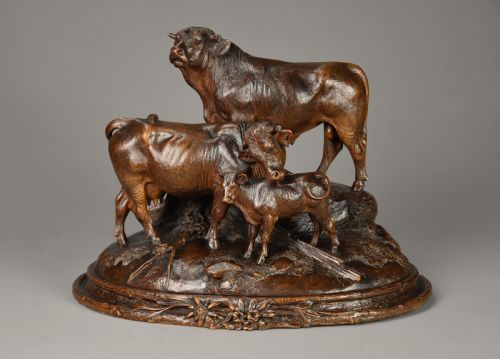
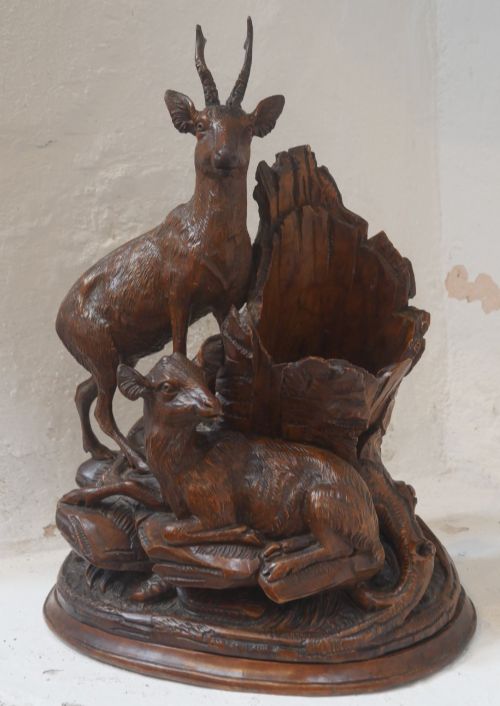
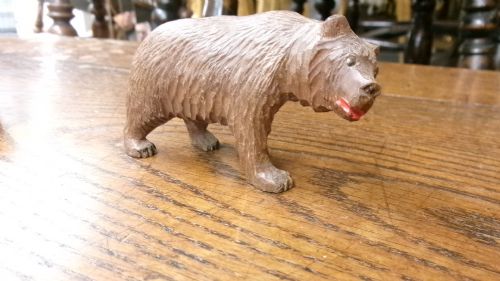
Swiss wood sculptures encompass carved figures, animals, and functional objects associated with Alpine folk art and the Black Forest style. Buyers exploring swiss wood sculptures frequently encounter depictions of bears, deer, cattle, eagles, and human figures engaged in rural pursuits.
The objects range from small desk items such as inkstands and bookends to large hall stands and figure groups. Pieces typically date from the nineteenth century into the early decades of the twentieth century, reflecting Victorian and Edwardian domestic tastes.
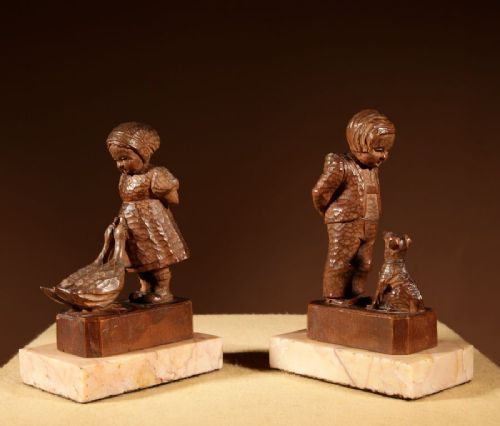
Common forms include freestanding animal studies, pairs of figures, hunting trophies, and items integrated into furniture like umbrella stands. These works capture regional narratives, historical figures like William Tell, and observations of native fauna.
Materials and carving techniques
Carvers predominantly utilised linden wood, limewood, walnut, and oak, selecting fine-grained timbers that allowed for deep undercut details and realistic fur textures. Linden wood offered a soft yet stable medium for intricate chisel work, while walnut provided darker tones and greater rigidity for larger figures.
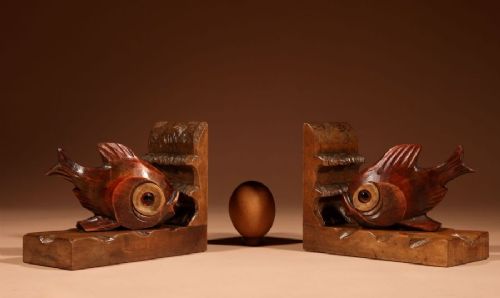
A pair of carved goldfish bookends brings an unexpected aquatic note to a genre otherwise dominated by bears and mountain goats.
Distinctions in craftsmanship
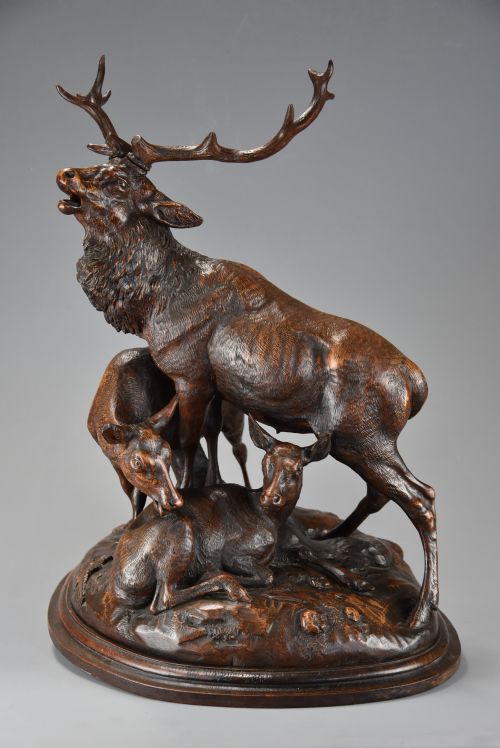
Quality rests upon the naturalism of the carving, the depth of the undercut, and the precision given to anatomical details like muscle structure and fur texture. Superior examples demonstrate careful observation of the subject, clean finishing without tool marks, and balanced proportions across complex figure groups.
The treatment of subsidiary elements, such as naturalistic tree trunk bases or foliage, separates standard workshop production from exhibition pieces. Signed or stamped items by known workshops reflect higher standards of design and execution.
J HUGGLER
The Swiss Wood Sculptures Glossary
- Black Forest style
- A designation for nineteenth-century carved wooden furniture and decorative objects originating in central Europe, particularly associated with animal figures. The aesthetic emphasises realistic depictions of wildlife and rustic scenes.
- Linden wood
- A pale, close-grained timber frequently utilised by carvers for its smooth texture and ease of handling. It permits sharp detail without excessive splitting.
- Folk art
- Artistic production stemming from a cultural tradition rather than academic training. These pieces reflect regional decorative practices and rural life.
- Hall stand
- A large piece of furniture designed for entranceways, often incorporating carved bears, hooks, and umbrella receptacles. They served both utilitarian and decorative functions in Victorian homes.
Swiss Wood Sculptures: Frequently Asked Questions
What animals appear in these carvings?
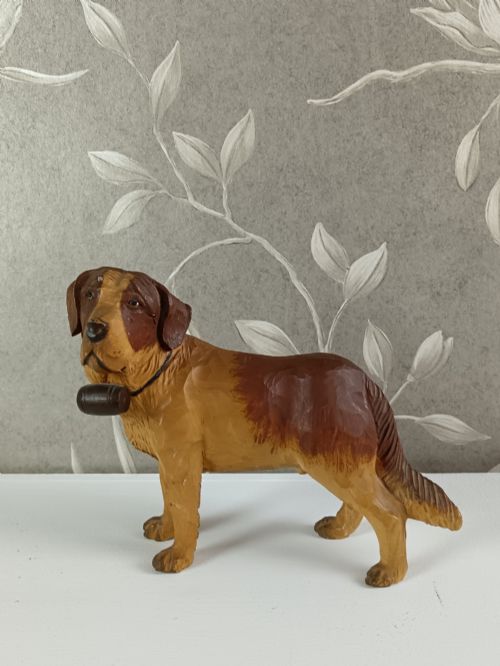
Bears, deer, eagles, hawks, chamois, ibex, cattle, and dogs dominate the subject matter of these sculptures. Carvers observed native mountain fauna closely to portray natural postures.
Animals often appear singly or in family groups, sometimes interacting with rustic elements like tree stumps, foliage, or corn.
How were these wooden items used?
Many objects combined decoration with practical utility in domestic settings. Examples include inkstands, bookends, humidors, hall stands, and stick holders.
Larger sculptures and figure groups functioned purely as decorative ornaments for mantelpieces, sideboards, and drawing rooms.
How do I date a carving?
Dating relies on stylistic clues, timber choice, and the presence of maker stamps or exhibition marks. Most listed examples originate from the nineteenth century and the early twentieth century.
Victorian and Edwardian domestic interiors drove the production of these pieces, aligning with periods of revival in folk art and rustic decoration.
Are human figures common?
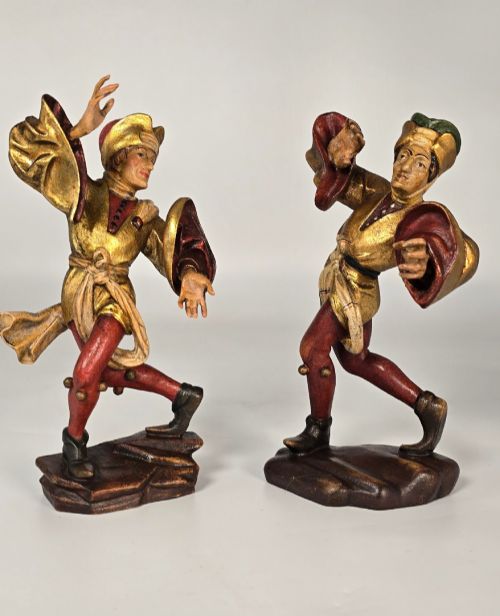
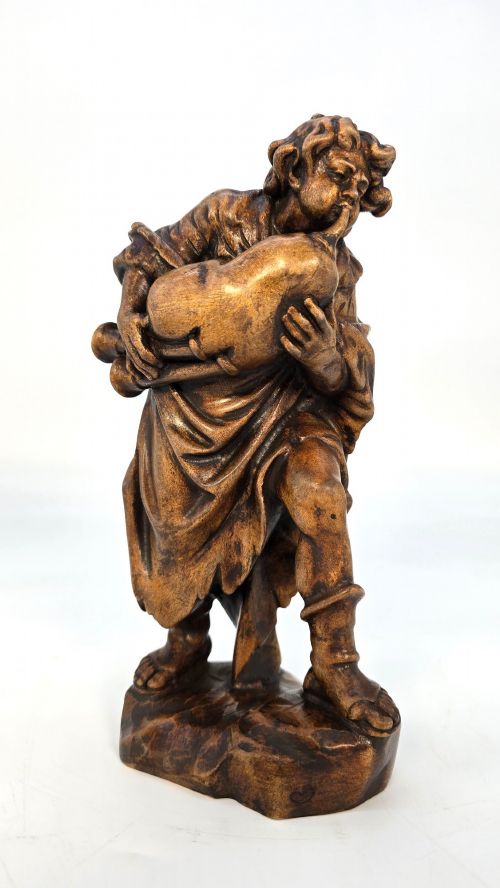
Human figures represent peasants, hunters, medieval characters, and historical figures like William Tell. Sculptors carved them in regional dress, often playing instruments or dancing.
These figures share the same detailed timber execution and folk art aesthetic as the animal studies.