

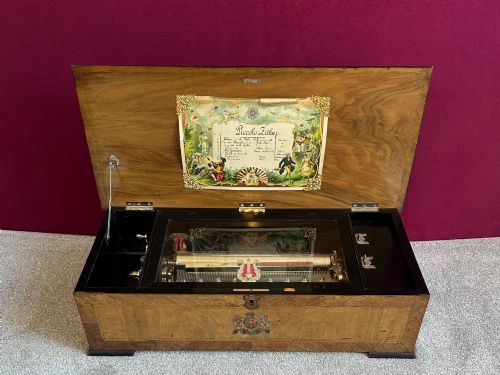






Swiss Musical Box
A swiss musical box brings mechanical melody into a room through pinned cylinders and steel teeth.
Swiss Musical Box
When you search for a swiss musical box, you find mechanical instruments housed in wooden cases that play predetermined tunes using a rotating pinned cylinder. The pieces listed here span the nineteenth century and into the twentieth, with Victorian examples appearing most frequently.
Most entries are straightforward rectangular music boxes, though the form extends to items fitted with bells, drums, and in some instances, marquetry inlaid chairs or decorative fruit bowls. These objects combine cabinetry with precision mechanics, originating largely from Swiss workshops during the Victorian era and the Belle Epoque.
How they were made
Maker workshops built the casework from rosewood, walnut, ebonised wood, and boxwood, frequently adding marquetry inlay to the surfaces. Glass panels often protect the internal movement, allowing visibility of the brass cylinders and steel combs.
The sound mechanism relies on a steel comb with tuned teeth plucked by pins projecting from a revolving brass cylinder. More complex examples incorporate additional elements such as miniature drums, bells in view, and multiple air settings.
Swiss Musical Box Retail Price Guide 2026
Typical asking prices for swiss musical box among the pieces listed under this phrase on Sellingantiques today, from the lower quarter to the upper quarter. They describe what is for sale here now, not the wider market.
Materials recorded across the inventory include brass, steel, glass, boxwood, gonçalo alves, and sterling silver alongside traditional ebonised wood.
What varies in quality
Quality rests upon the musical capacity of the movement and the complexity of the arrangement, measured by the number of airs a cylinder can play. Instruments featuring auxiliary percussion like bells or drums sit higher in the scale of ambition than single-comb models.
Cabinetry execution dictates the exterior standard, where dense hardwoods, intricate marquetry inlay, and refined silver or enamel work distinguish superior examples from plain utility boxes.
Langdorff & Fils·Nicole Freres·B A Bremond·LeCoultre
The Swiss Musical Box Glossary
- Cylinder
- The rotating brass barrel set with pins that pluck the steel comb to produce the tune. It forms the core memory of the instrument.
- Air
- A single tune or melody played by the musical movement. Boxes are often described by how many airs they hold.
- Comb
- The tuned steel plate with individual teeth that vibrate when struck by the cylinder pins. Each tooth corresponds to a specific note.
- Marquetry
- The art of applying pieces of veneer to a structure to form decorative patterns. It frequently decorates the walnut and rosewood cases.
- Bells in view
- Visible small bells mounted within the movement that strike alongside the comb during playback. They add a visual element to the auditory performance.
Swiss Musical Box: Frequently Asked Questions
How do I operate a cylinder music box?
Wind the spring mechanism using the attached crank or key, then release the stop lever to engage the cylinder.
Ensure the mechanism runs through its complete tune cycle without forcing any levers or attempting to interrupt the governor.
What is an air on a music box?
An air represents an individual tune or musical piece pinned onto the rotating brass cylinder.
Boxes typically cycle through a set sequence of multiple airs before repeating the programme.
How are different periods identified?
Dating relies on cabinet style, material choices, and mechanical signatures such as serial numbers or maker signatures on the comb.
Victorian pieces often feature rosewood or walnut cases with elaborate marquetry, while later twentieth-century items show simpler Edwardian or folk art influences.
Where should I place a music box at home?
Position the box on a stable, level surface away from direct sunlight, radiators, and damp environments to protect the wood and internal steel work.
Hardwood furniture provides a solid base that can help project the acoustic resonance of the movement.