



Swinging Floor Mirror
A swinging floor mirror is the ultimate full-length dressing glass, offering an adjustable pivot for the entire figure.
Swinging Floor Mirror
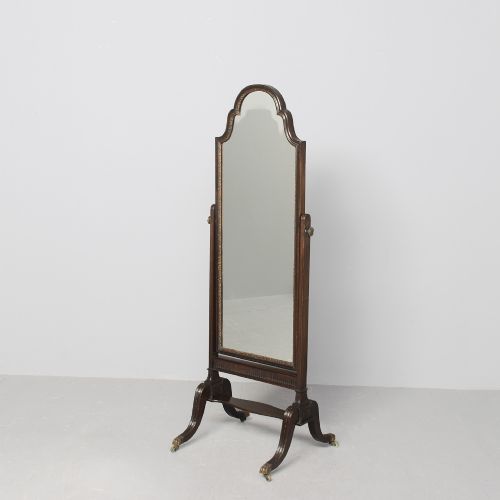
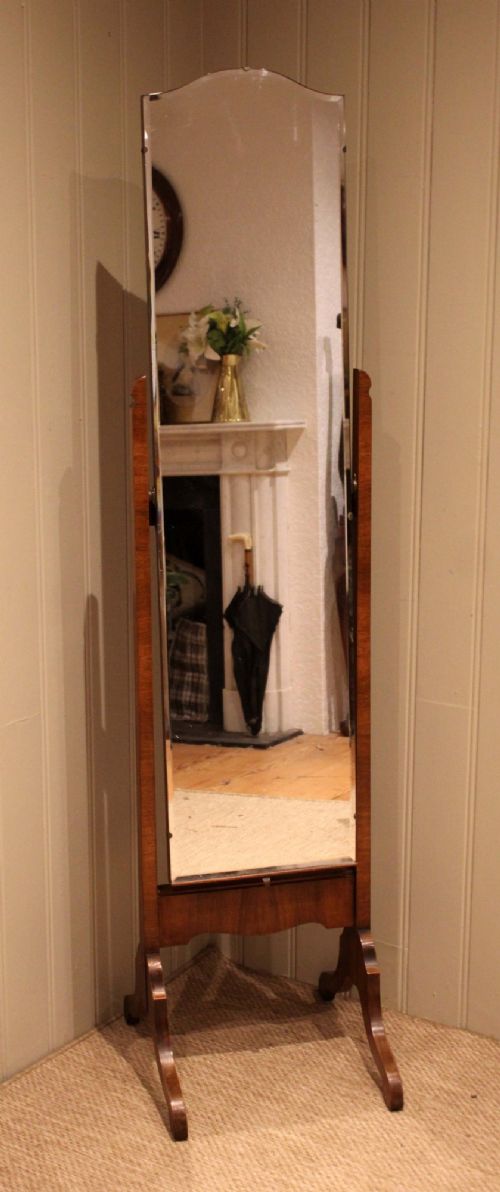
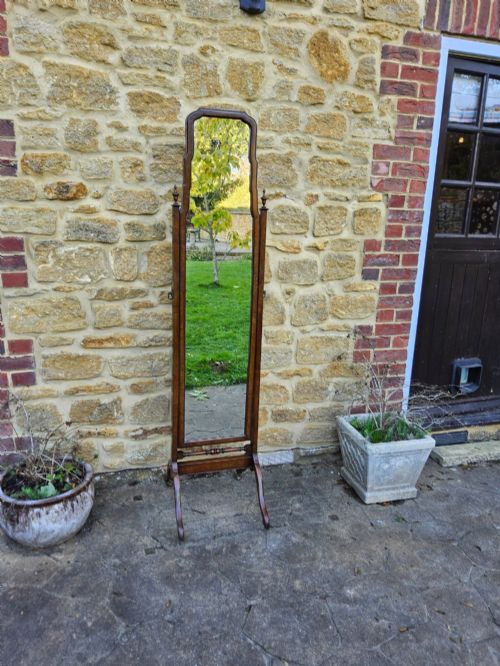
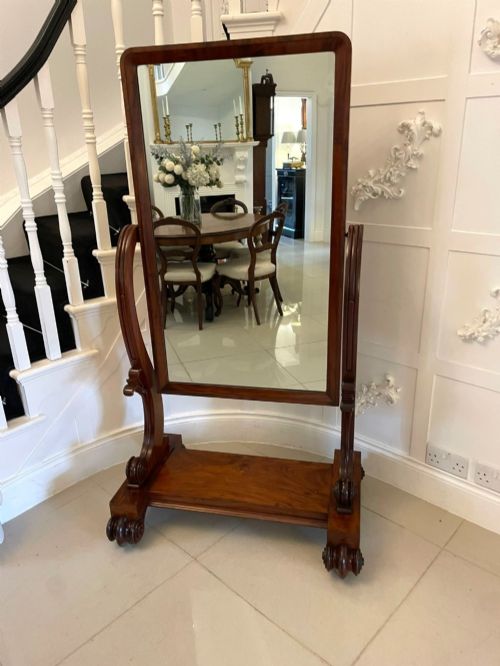
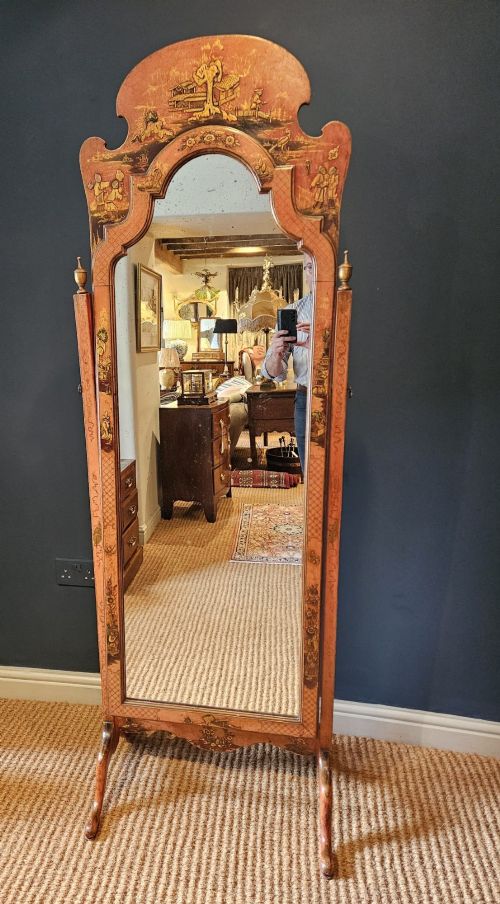
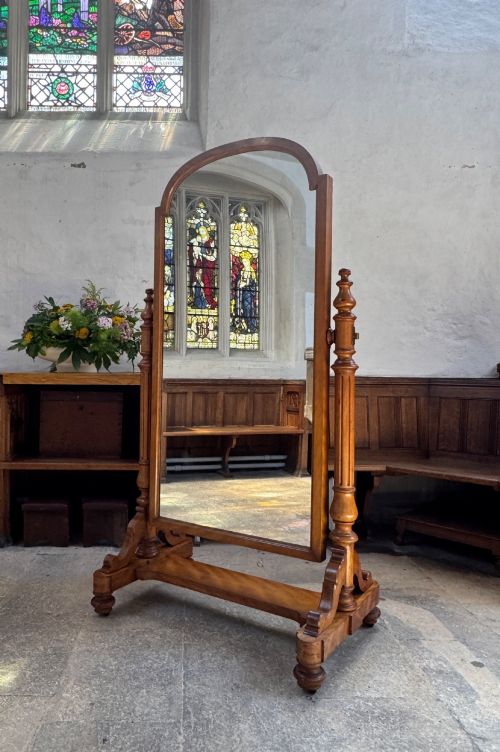
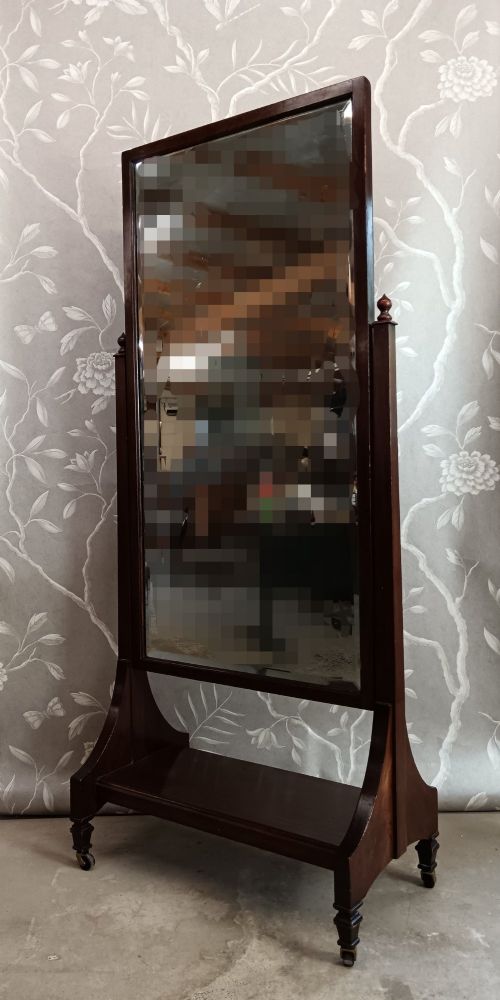
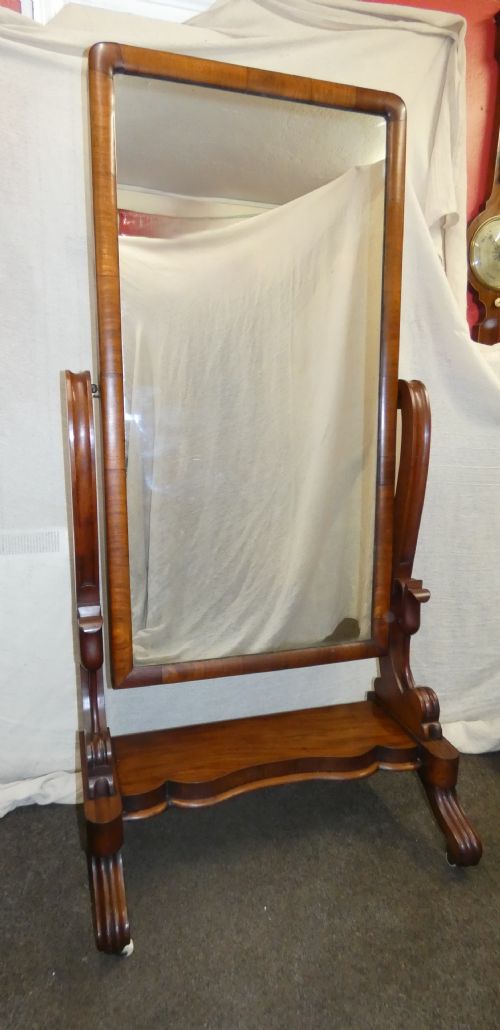
A swinging floor mirror, often called a cheval mirror, is a freestanding full-length glass mounted on a pivoting frame between upright pillars. When you search for a swinging floor mirror, you are looking at substantial pieces designed to stand independently in a bedroom or dressing room rather than hang upon a wall.
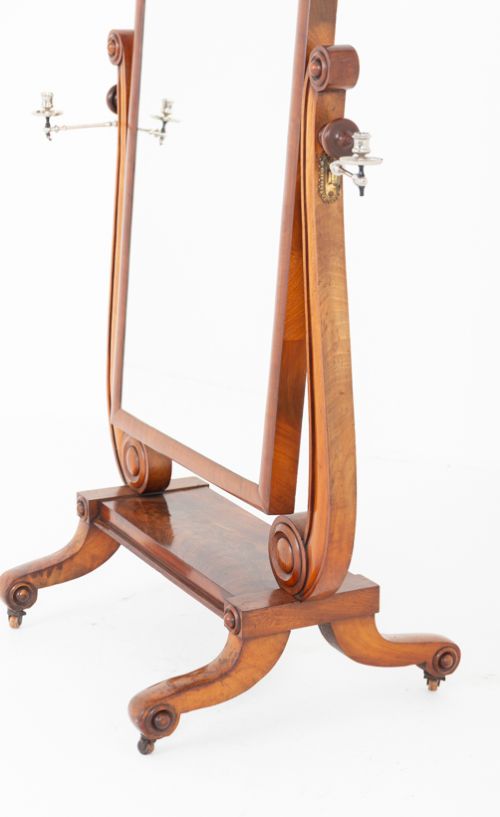
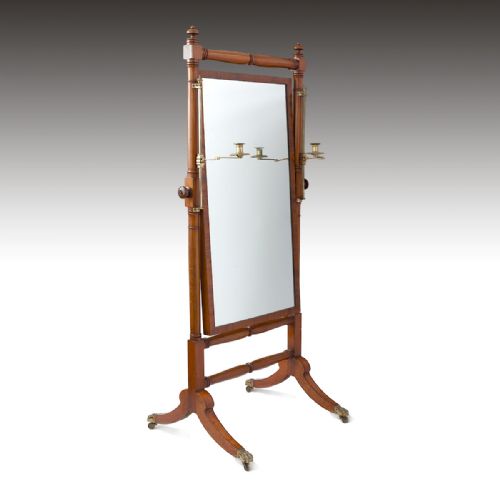
Makers historically configured these items with stable, splayed legs or heavy platform bases to support the weight of the heavy glass and frame. Many examples feature brass pivots and candle holders that allow the glass to tilt smoothly to any desired angle.
How they were made
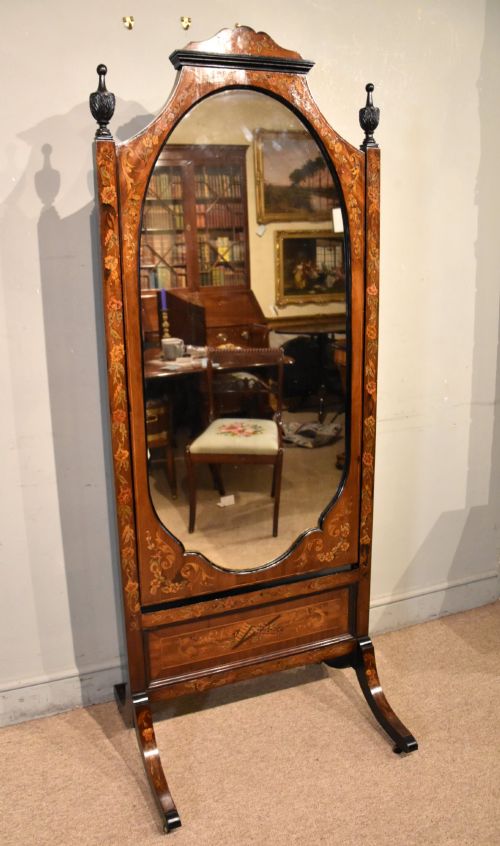
Cabinet makers constructed the main uprights and frames using solid timbers such as mahogany, walnut, and satin birch, frequently employing marquetry inlay or flame veneers for visual depth. The glass itself rests securely within a movable frame suspended on brass pivot pins.
Metal fittings played a crucial role in construction, with cast brass brackets, screw caps, and articulated candle holders attached to the side pillars. These metallic elements provided both the mechanical pivot action and decorative contrast to the dark wood.
Swinging Floor Mirror Retail Price Guide 2026
Typical asking prices for swinging floor mirror among the pieces listed under this phrase on Sellingantiques today, from the lower quarter to the upper quarter. They describe what is for sale here now, not the wider market.
One historical example includes dedicated brass candle holders so you could check your evening attire long before the advent of electric light.
What varies in quality
The distinction between standard examples and the finest pieces lies in the selection of timber and the sophistication of the joinery. Superior items utilise highly figured flame mahogany or delicate marquetry inlay on stable, heavy frames that prevent any wobble during pivoting.
Hardware quality also dictates the tier of the piece, with heavy, well-cast brass pivots and articulated candle arms marking out workshop production of high distinction. The integration of the frame and the proportion of the upright pillars determine the overall visual balance.
The Swinging Floor Mirror Glossary
- Cheval mirror
- A freestanding full-length dressing glass mounted on a pivoting frame. The name derives from the French word for horse, referencing the four-legged supporting frame.
- Pivot
- The metal pin or screw mechanism set into the upright pillars that allows the mirror frame to swing back and forth. It bears the weight of the glass during adjustment.
- Flame mahogany
- A distinct timber grain pattern resembling flickering flames, achieved by cutting across the branch junction of the tree. Cabinet makers prized this for principal display surfaces.
- Marquetry inlay
- Decorative patterns formed by fitting contrasting pieces of wood veneer into a primary surface. This technique adds intricate ornamentation to the frame borders.
Swinging Floor Mirror: Frequently Asked Questions
How do I adjust a swinging floor mirror?
Most swinging floor mirrors rely on brass pivot screws set into the side uprights. Tightening or loosening these thumb screws allows you to control the resistance and fix the glass at your preferred angle.
Ensure you support the weight of the frame with one hand while adjusting the pivots to prevent sudden tilting or strain on the wooden mounts.
Where should I place a cheval mirror?
These freestanding mirrors require adequate floor space and a stable surface to stand safely. Placing them near a natural light source helps maximise their function as a full-length dressing glass.
Keep them clear of heavy foot traffic areas to protect the projecting legs and any attached brass candle arms from accidental knocks.
How can I tell the period of the wood?
Examining the timber species and construction methods helps identify the era of manufacture. Georgian and Regency pieces often use dense solid mahogany with fine brass mounts, while Victorian examples introduce satin birch and pitch pine.
Secondary woods used at the back and interior frame structures also offer clues regarding the workshop origin and date.
What maintenance do these mirrors need?
Routine care involves dusting the timber frame with a dry cloth and cleaning the glass with a suitable solution. Avoid harsh chemical polishes that might damage antique veneer finishes.
Periodically check the brass pivot screws to ensure they remain secure within the wooden pillars without stripping the surrounding grain.