
Swing Table Mirror
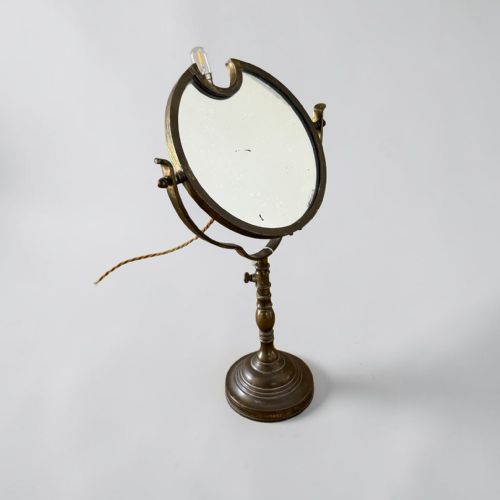
When you search for a swing table mirror, you are looking at an adjustable glass plate mounted on pivots between upright arms for personal grooming.
Swing Table Mirror
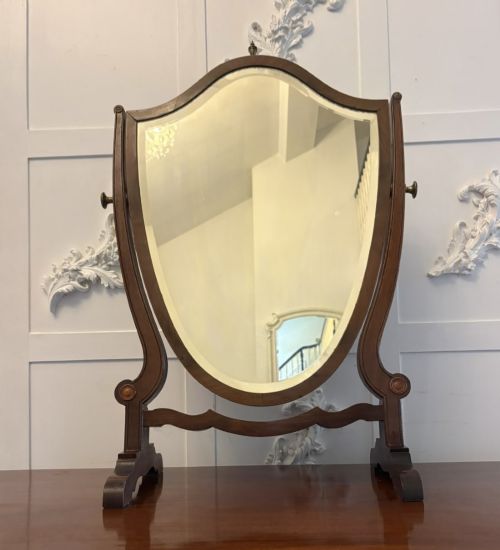
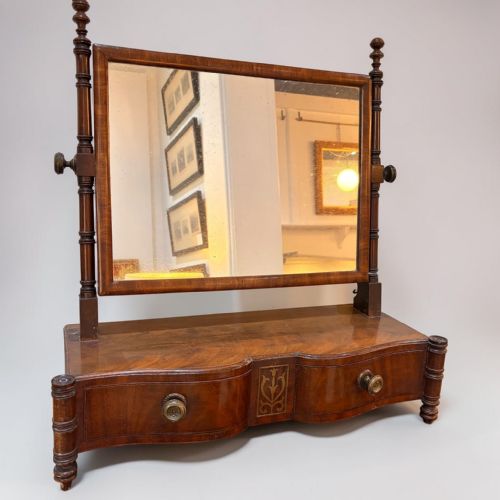
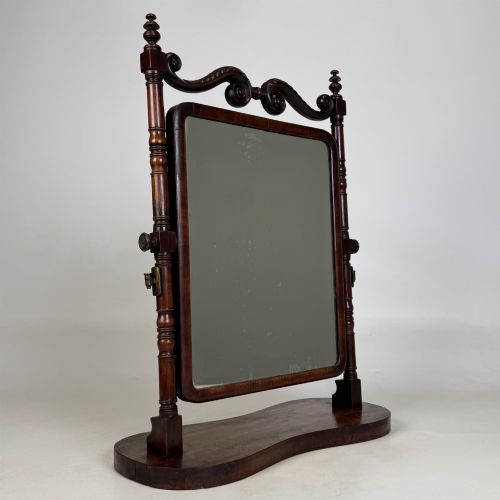
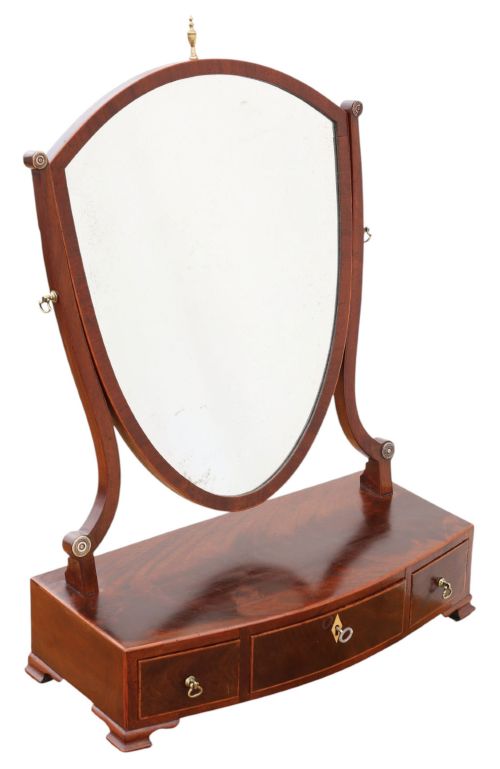
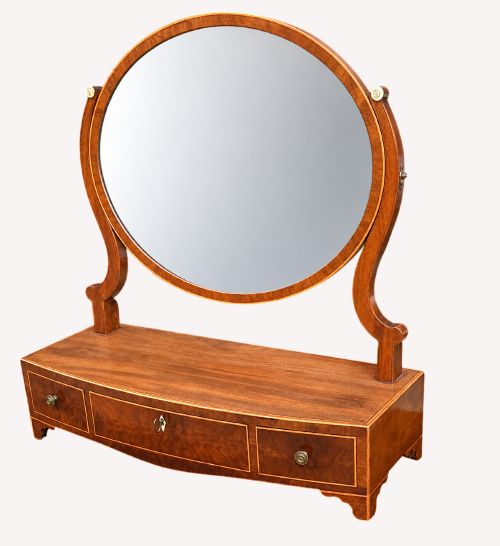
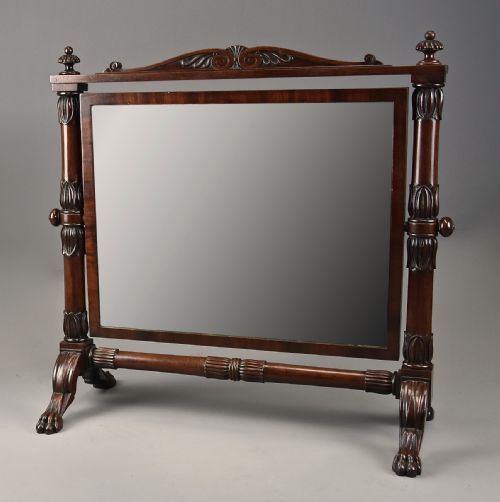
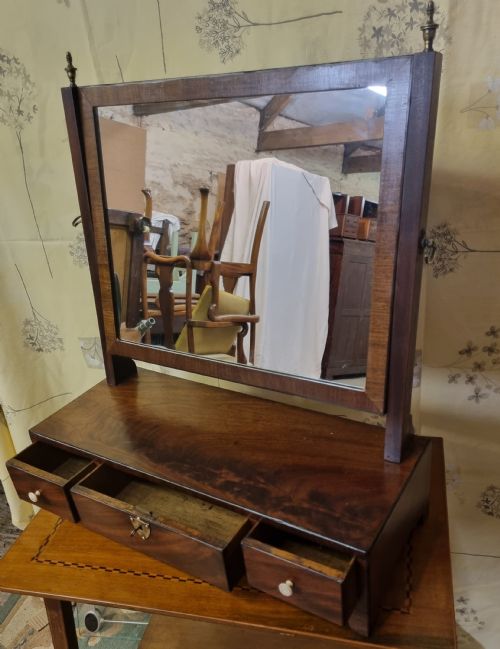
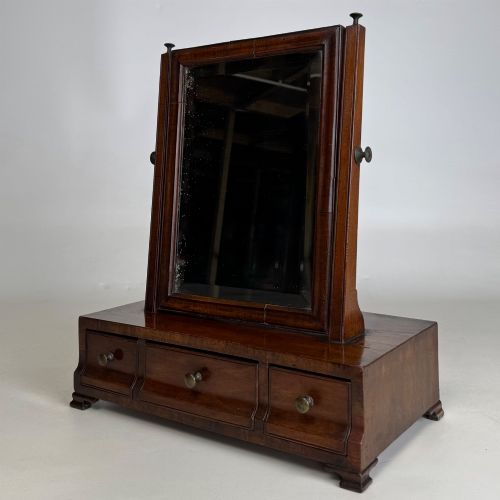
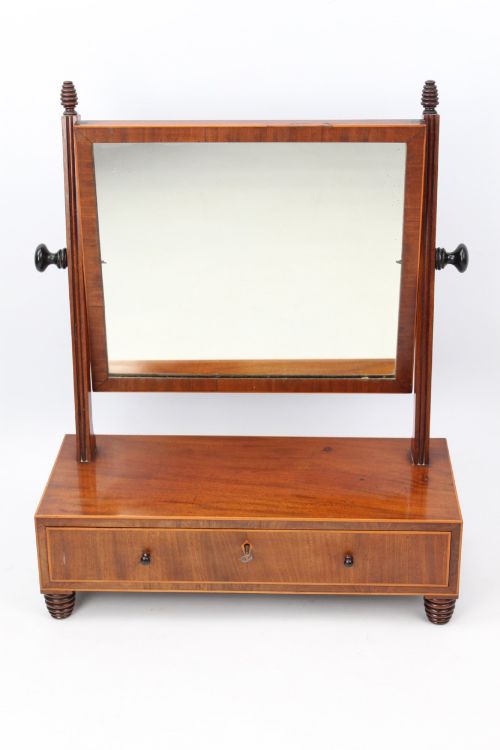
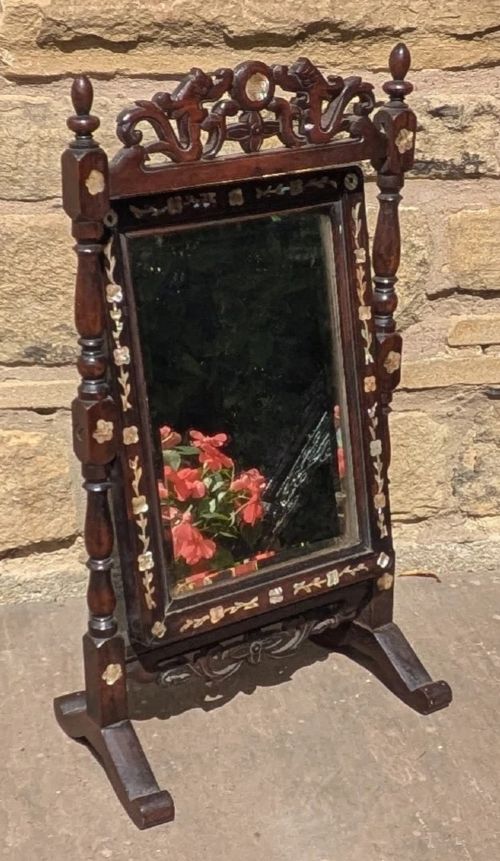
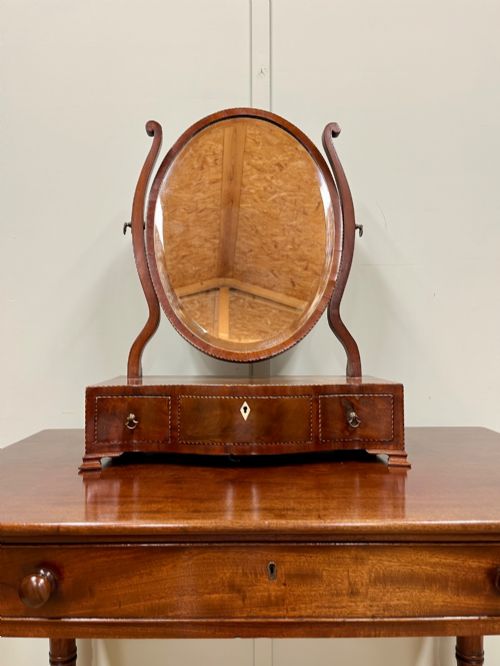
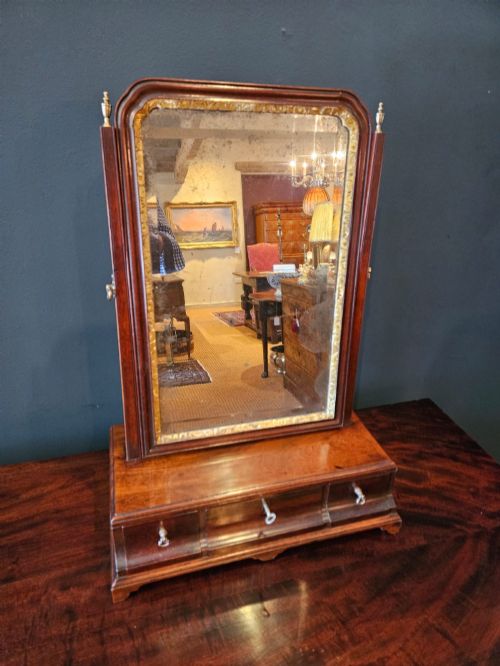
A swing table mirror, frequently termed a toilet mirror or dressing glass, sits upon chests or tables to provide a tilting reflection for the user. The form appears predominantly in mahogany, walnut, and pine across the Georgian, Regency, and Victorian eras, often incorporating small drawer bases.
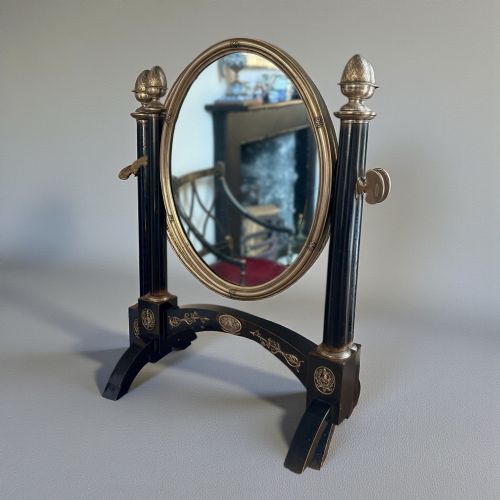
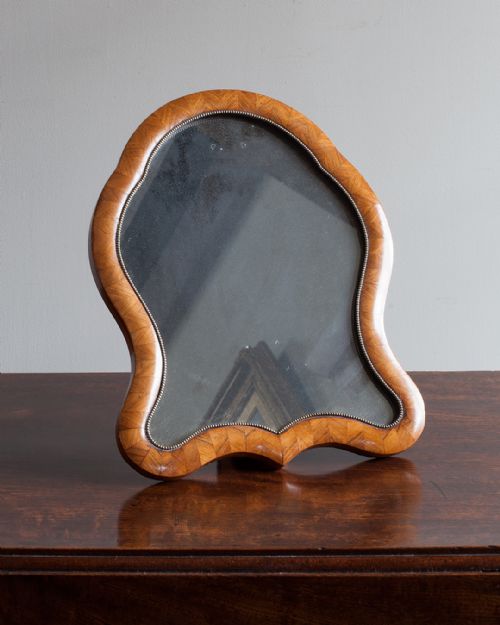
Georgian and Regency examples frequently feature rectangular or shield-shaped glasses suspended between swept uprights, whilst Victorian versions scale larger with deep plinths and flame-grain veneers. Edwardian pieces introduce inlaid boxwood details, brass triptych folding frames, and occasionally small jewellery cabinet integrations.
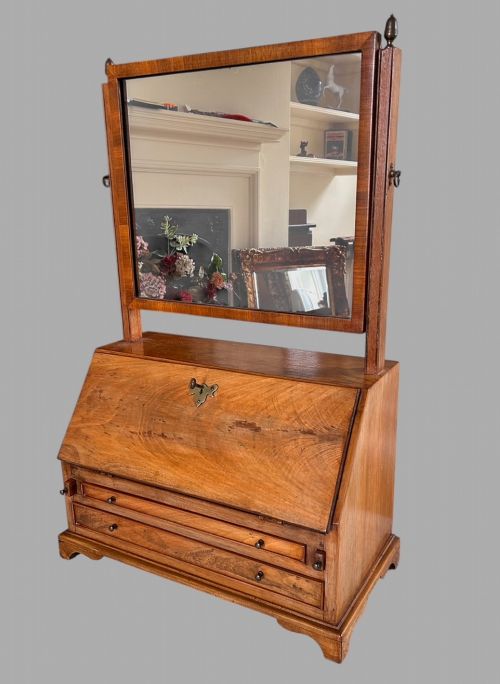
Table-top bureau variants combine the pivoting glass with a fitted writing compartment, merging functional storage with the primary mirror plate. These objects reflect domestic dressing habits from the eighteenth century through to the early twentieth century, spanning numerous regional cabinet-making traditions.
Materials and cabinet construction
The glass plate itself rests within an adjustable frame held by brass or wooden side screws, allowing the user to alter the angle of reflection. Structural integrity relies on traditional dovetail joints used within the base drawers and secure tenon connections joining the upright arms to the plinth.
Listings feature mahogany, walnut, and oak frames spanning the Georgian, Victorian, and Edwardian periods.
Judging execution and proportion
Quality rests upon the selection of timber figures, such as symmetrical flame mahogany or burr walnut veneers, matched with crisp boxwood inlay and well-proportioned upright supports. Lesser pieces rely on plain secondary timbers and thick, heavy frames that lack the refined balance of earlier cabinet work.
The integration of the drawer base dictates the overall utility and sophistication of the piece, with finer examples demonstrating precise dovetailing and harmonious scale between the mirror plate and the plinth below.
Heal & Sons·P & MA Nicholson
The Swing Table Mirror Glossary
- Toilet mirror
- A smaller table-top dressing glass designed to sit upon a chest of drawers or commode during the eighteenth and nineteenth centuries.
- Shield mirror
- A glass plate shaped like a heraldic shield, popular on dressing mirrors during the Georgian period.
- Cheval mirror
- A large standing floor glass, though the term occasionally describes substantial table-top variants equipped with extended framing.
- Crossbanding
- A decorative border technique where thin strips of veneer are laid across the grain of the primary wood panel.
- Ormolu
- Gilt-bronze decorative mounts applied to furniture frames, frequently seen on Regency and continental pieces.
Swing Table Mirror: Frequently Asked Questions
What is a swing table mirror?
A swing table mirror is a small, pivoting glass plate mounted within a wooden frame and supported by upright arms attached to a base. They were designed to rest on dressing tables or chests.
These pieces allowed users to adjust the angle of the reflection for personal grooming and dressing. Many incorporate small drawers in the base for holding trinkets.
How do I date a swing mirror?
Dating relies on examining the timber species, veneer patterns, edge profiles, and construction methods like dovetailing. Georgian pieces often display slender proportions and mahogany or walnut.
Victorian and Edwardian versions tend to feature heavier plinths, distinct brass finials, and occasional inlaid boxwood details. The form of the mirror plate, whether rectangular, oval, or shield-shaped, also offers clues to the period.
Were these mirrors part of larger furniture?
Many dressing glasses were produced as independent items to sit atop existing chests of drawers, whilst others formed matching components of larger dressing tables. Over time, mirrors and tables frequently became separated.
Independent table mirrors often feature finished backboards and small drawer units. This independence allowed them to be moved easily around domestic bedchambers.
How do I care for an antique mirror?
Antique glass and wood require gentle maintenance away from direct sunlight and damp environments to protect the polished surfaces and silvering. Avoid harsh chemical cleaners on both the wood and the mirror plate.
Checking the brass pivot screws periodically ensures the frame remains secure without straining the wooden uprights. Natural beeswax helps maintain the lustre of mahogany and walnut frames.