



Swing Mirror Floor Standing
Swing mirror floor standing pieces are substantial dressing glasses mounted on pivots, offering a full-length reflection that anchors a bedroom.
Swing Mirror Floor Standing
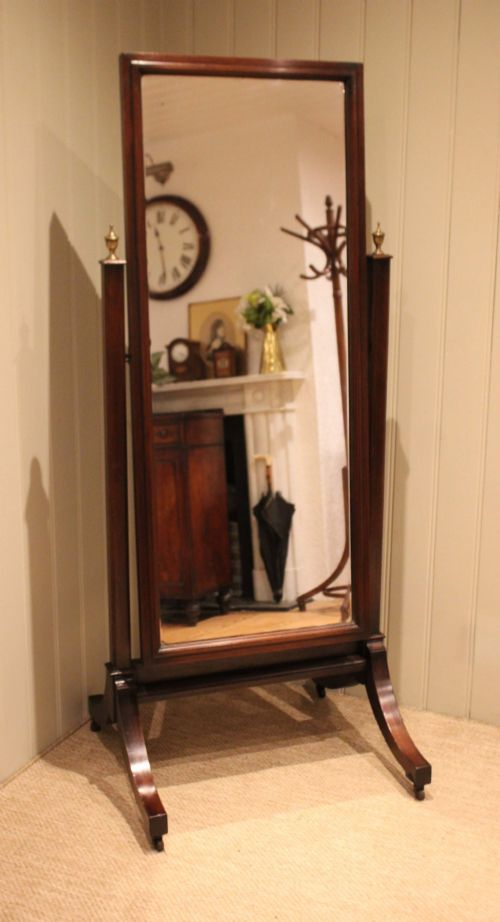
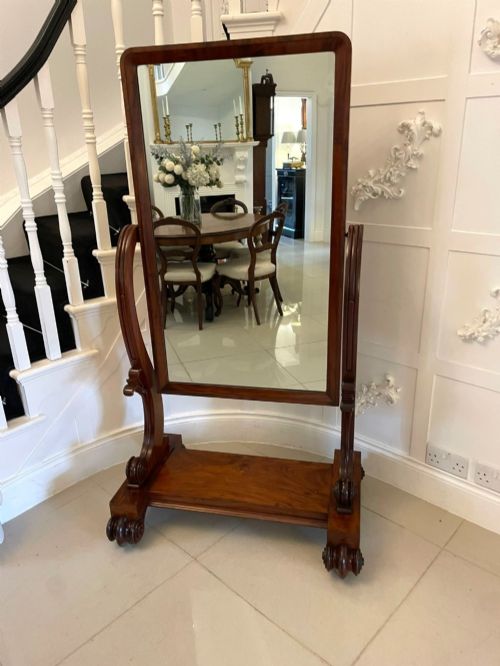
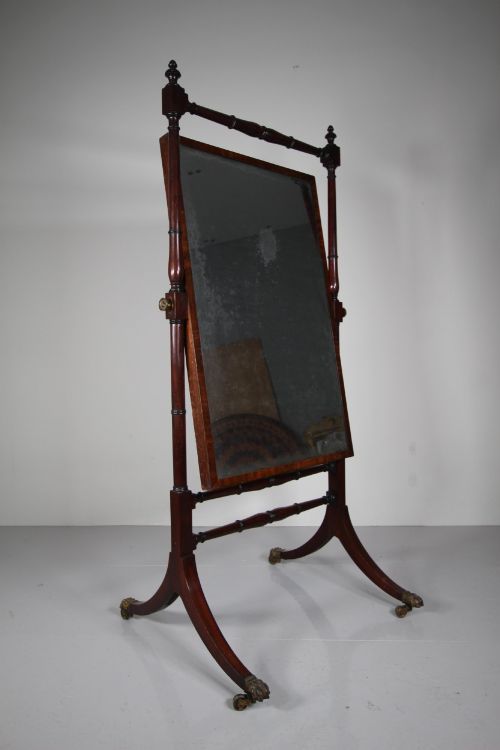
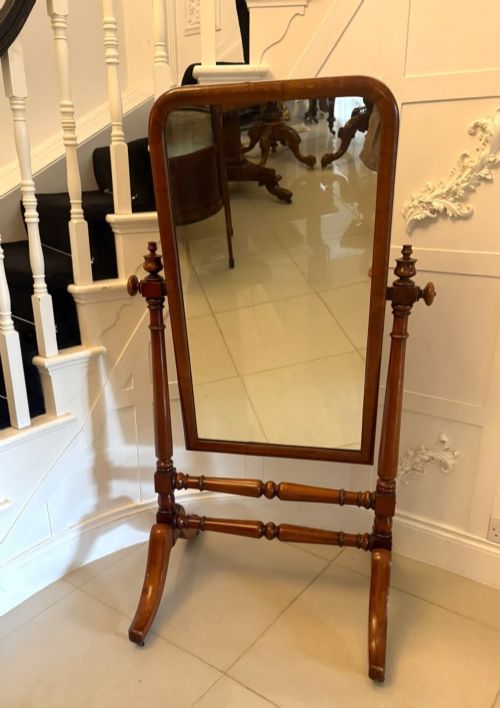
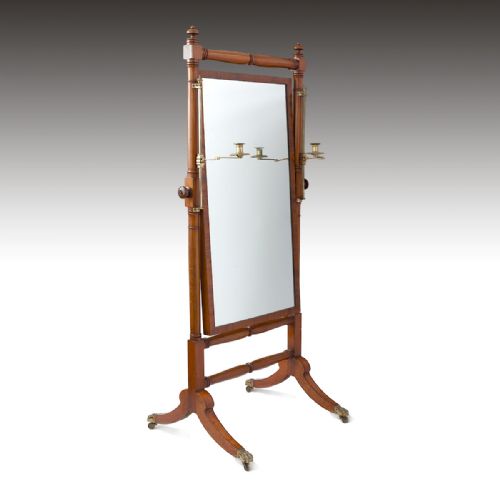
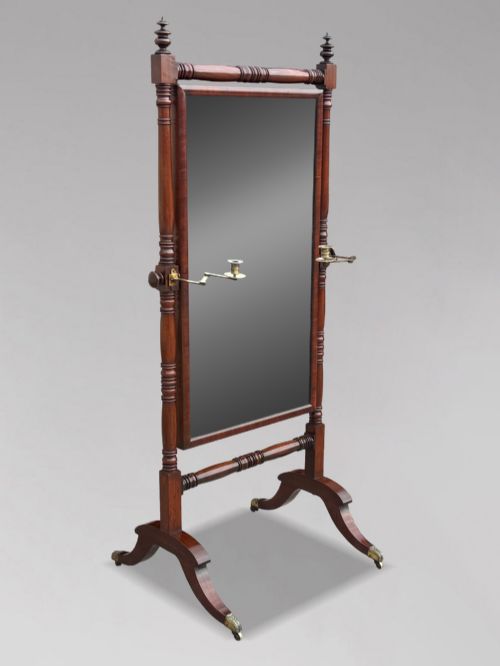
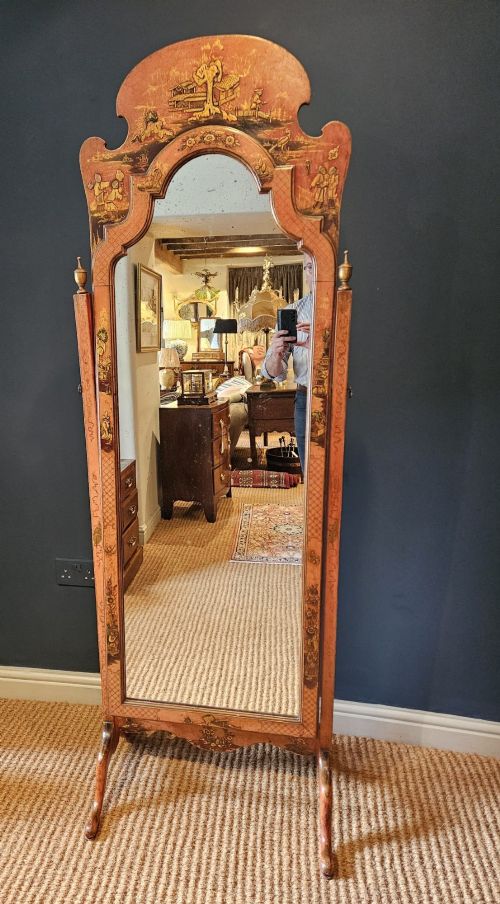
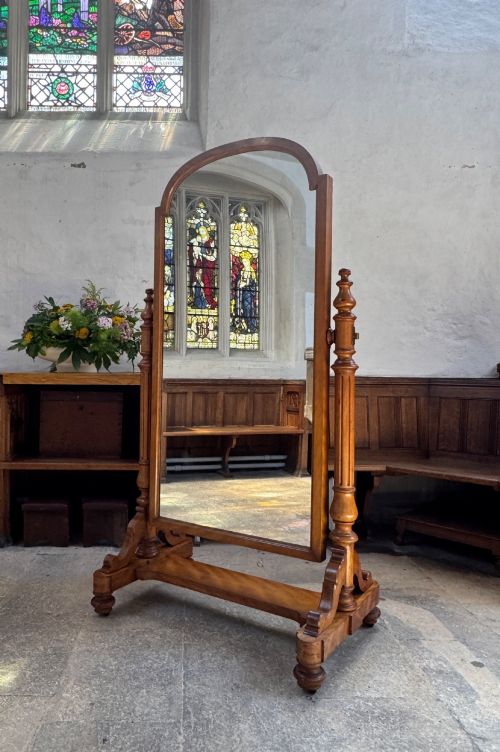
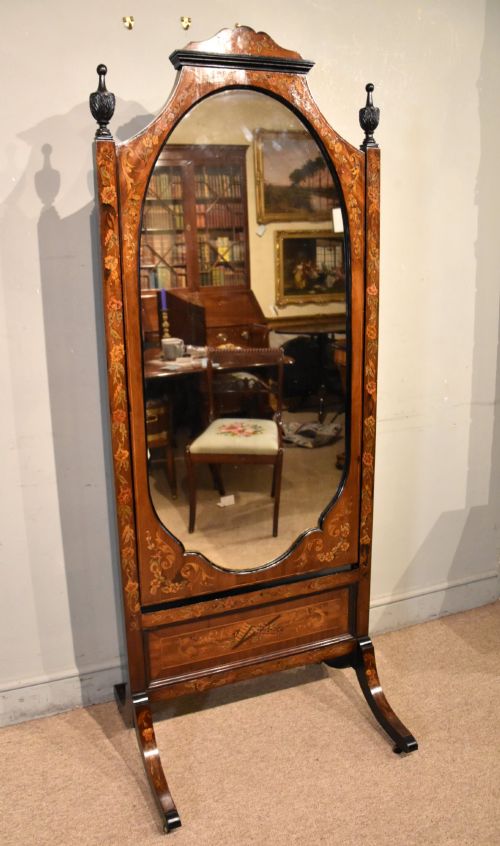
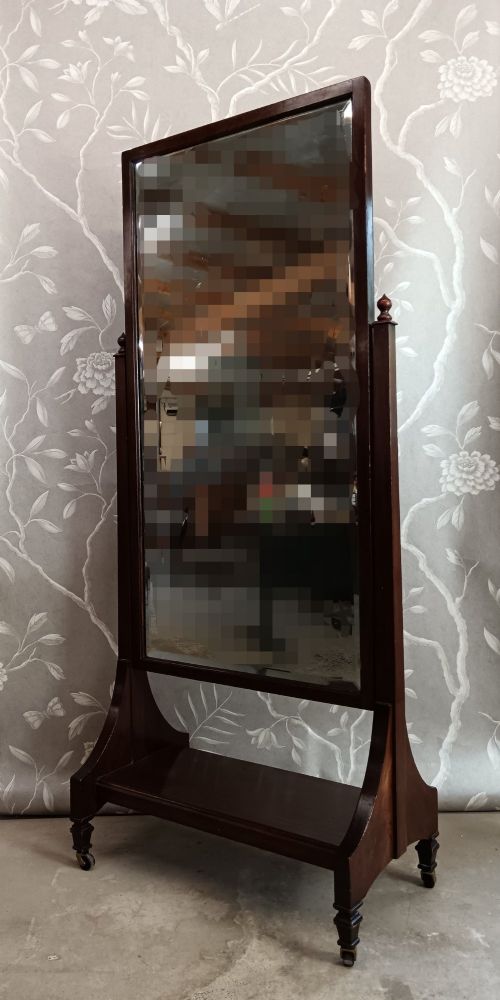
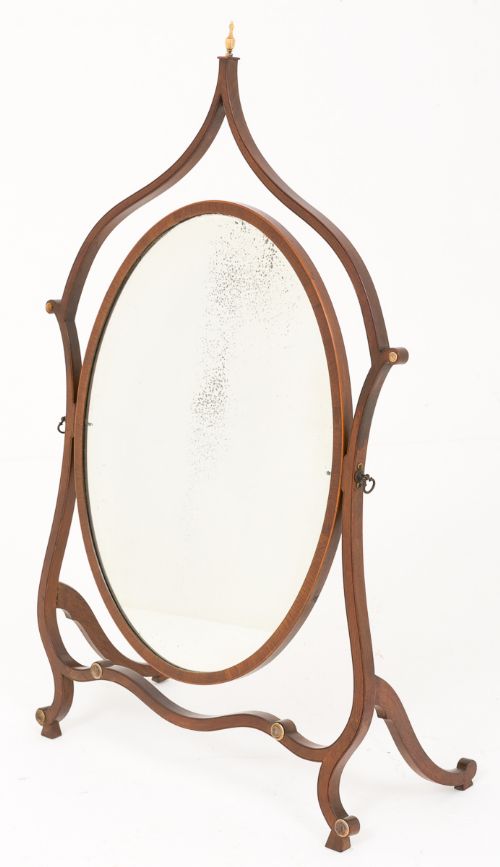
These floor standing swing mirror pieces, predominantly known as cheval mirrors, provide a full-length reflection supported by a freestanding frame. The selections span from the George III and Regency periods through to the Victorian era and the nineteen-twenties.
Mahogany forms the primary timber across the inventory, accompanied by satin birch, pitch pine, walnut, and lacquered wood. Examples range from simple traditional dressing glasses to elaborate Chinoiserie interpretations and large country house models.
How they were made
The heavy glass plates hang on adjustable swing pivots supported by upright standards and substantial feet, which frequently include turned columns or trestle bases.
Swing Mirror Floor Standing Retail Price Guide 2026
Typical asking prices for swing mirror floor standing among the pieces listed under this phrase on Sellingantiques today, from the lower quarter to the upper quarter. They describe what is for sale here now, not the wider market.
Listings span from the 18th century through the Victorian era, showcasing mahogany, satin birch, and pitch pine.
What varies in quality
Quality rests upon the selection of timber, such as well-figured flame mahogany or satin birch, alongside the crispness of carved details and inlay work. Substantial scale and balanced proportions distinguish finer examples from standard workshop production.
The integration of original brass hardware, articulated candle arms, and robust pivot mechanisms indicates higher craftsmanship during construction.
Gillow
The Swing Mirror Floor Standing Glossary
- Cheval mirror
- A large freestanding dressing mirror suspended on a frame with pivot pins allowing the glass to swing. This design originated in France and became popular in English bedrooms during the Georgian period.
- Flame mahogany
- A decorative wood veneer showing a distinct flame-like figure obtained from the branch cuts of the tree. Cabinet makers utilised this timber for prominent surfaces on high-status furniture.
- Satin birch
- A pale, lustrous hardwood sourced from birch trees, used in furniture production during the nineteenth century. Its fine grain provided a bright contrast to darker timbers.
- Marquetry inlay
- Decorative patterns formed by fitting contrasting pieces of veneer into a prepared wooden ground. This technique decorated the frames of sophisticated dressing mirrors.
Swing Mirror Floor Standing: Frequently Asked Questions
What is a cheval mirror?
A cheval mirror is a tall floor standing dressing glass that hangs on a central pivot, allowing the user to tilt the plate to various angles.
These pieces appeared in bedrooms and dressing rooms to provide a full-length view of attire.
How do I date a swing mirror?
Dating relies upon the timber species, the style of the frame supports, and the construction methods used on the base.
Georgian and Regency examples show lighter frames and slender turned columns, whereas Victorian pieces often present heavier proportions and darker woods.
Where should I place a floor mirror?
These mirrors require a stable floor space away from heavy traffic areas to support their considerable height and weight safely.
Placing them near a window maximises the reflection of natural light into the room.
What wood types are common?
Mahogany is the dominant timber across these pieces, appearing in solid form and as flame veneers.
Alternative materials include satin birch, pitch pine, and walnut, frequently accented with brass mountings.