





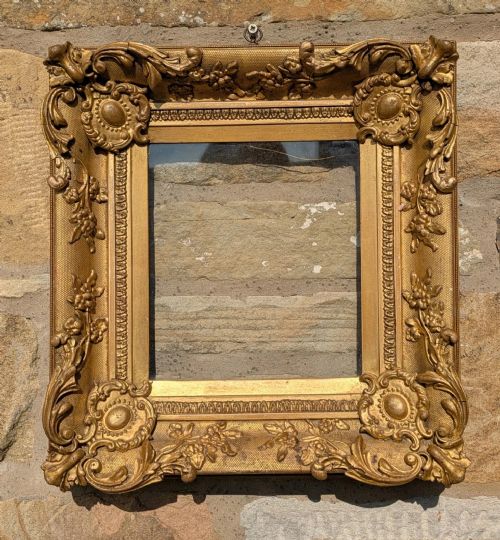


Swept Gilt Picture Frame
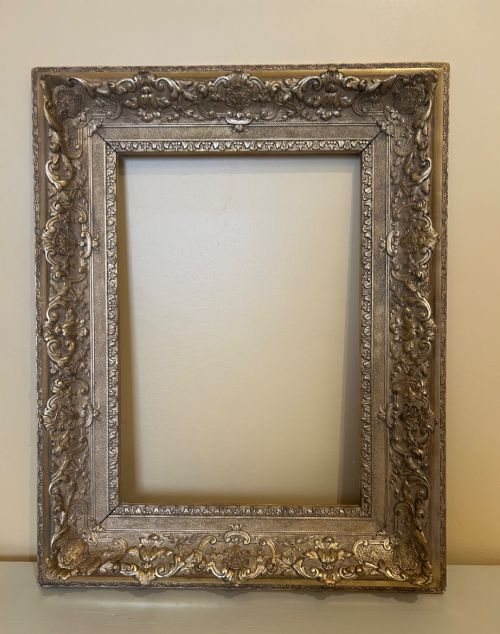
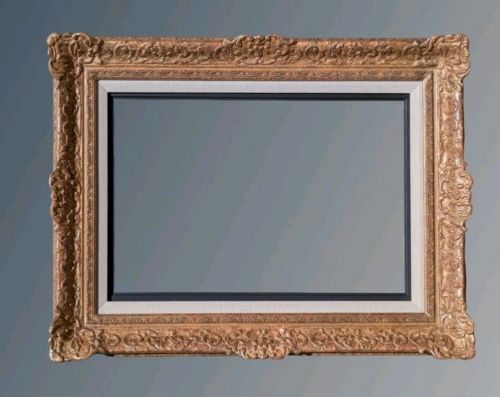
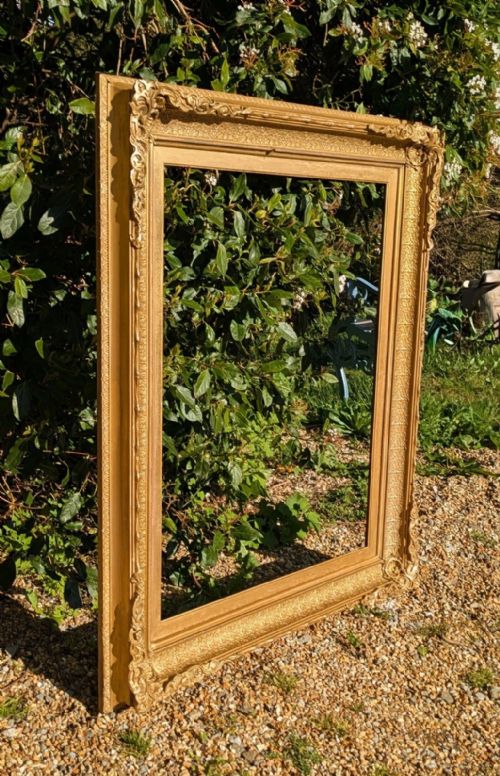
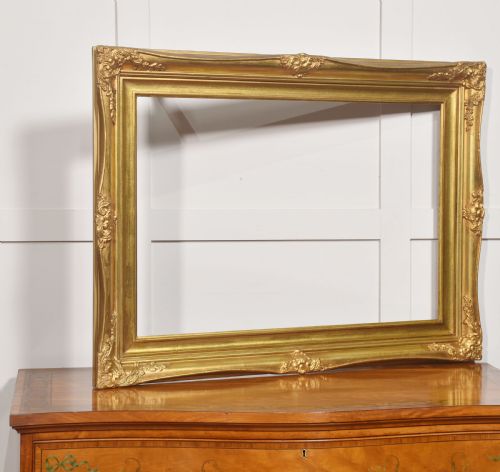
A swept gilt picture frame carries curving moulded ornamentation that gives depth and movement to the wall.
Swept Gilt Picture Frame
A swept gilt picture frame combines undulating moulded wooden profiles with a metallic leaf finish, framing oil paintings and watercolours. These pieces emerge predominantly from Victorian and early twentieth-century workshops, drawing on earlier decorative movements.
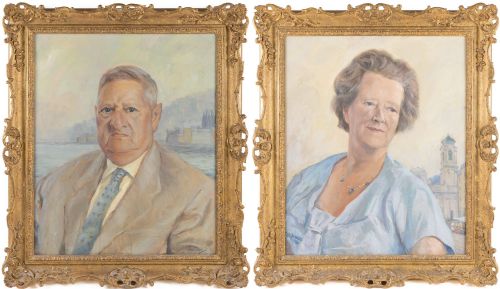
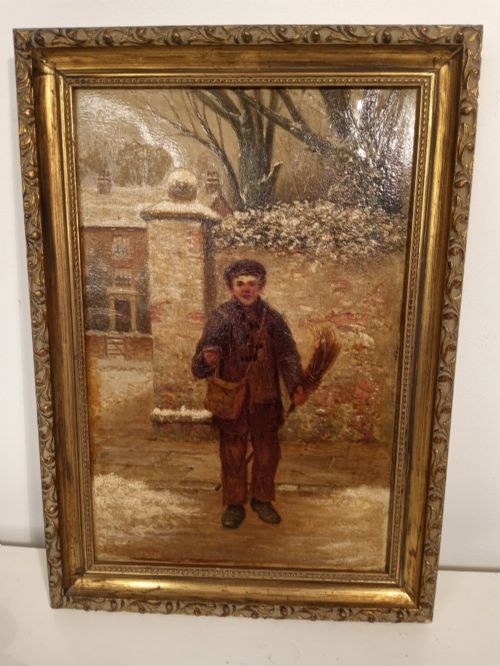
The most common examples on this page are Victorian and later nineteenth-century frames, frequently housing landscapes or portraits. Their characteristic flowing scrolls and deep profiles direct the eye inward toward the artwork.
Materials and Construction
Frames are constructed from a wooden base carcass overlaid with gesso, a plaster-like mixture built up to receive detailed ornamentation. Artisans then apply gold leaf or gilt finishes over the moulded gesso contours.
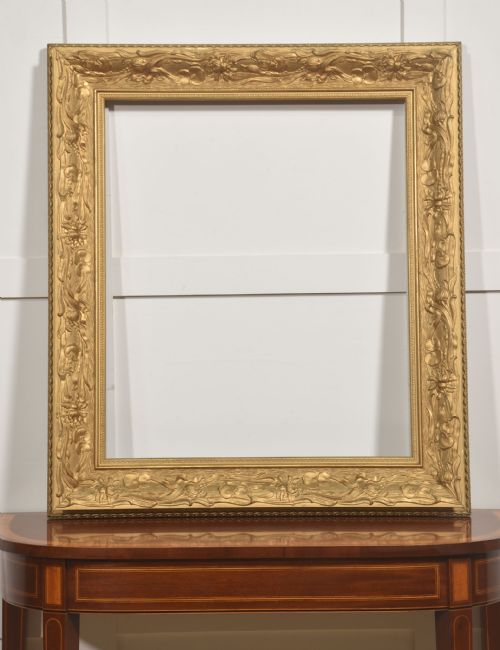
The sweeping curves and high relief elements rely on skilled carving and moulding techniques passed down through workshops. This combination of wood, gesso and gold leaf creates the characteristic reflective sheen.
Listings feature oil paintings, watercolours and pastels alongside standalone frames dating from the seventeenth to the twentieth century.
Assessing Quality
Quality rests in the crispness of the moulded ornament and the depth of the wooden profile. Superior examples retain sharp leaf-work and deep relief without softened edges from repeated casting or wear.
The application of the gold leaf and the integrity of the underlying gesso layer dictate the visual richness of the surface. Frames with well-preserved gilding display a warm, consistent light reflection across their curves.
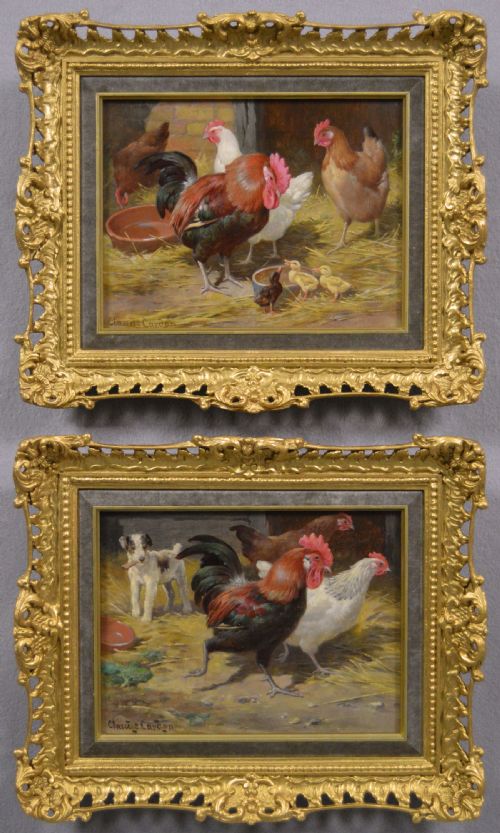
Claude Cardon·Arthur Herbert Rigg·Sir Herbert Hughes-Stanton·William Miller Frazer·Emily Selinger·George Parson-Norman·John Holland Snr·George Stubbs
The Swept Gilt Picture Frame Glossary
- Gesso
- A plaster preparation applied to a wooden base to form a smooth or moulded surface for gilding. It allows artisans to shape intricate relief ornamentation.
- Giltwood
- Timber that has been coated with gold leaf or a gold-coloured finish. This material provides the bright metallic appearance characteristic of these frames.
- Rococo Revival
- A nineteenth-century style drawing on eighteenth-century motifs of asymmetrical scrolls, shells and organic curves. It strongly influences the ornate shaping of these frames.
- Montparnasse
- A simplified, planar frame style associated with early twentieth-century French artistic circles. It offers a contrasting aesthetic to heavily decorated Victorian moulding.
Swept Gilt Picture Frame: Frequently Asked Questions
What periods do these frames come from?
The pieces span the seventeenth, nineteenth and twentieth centuries, with a strong representation of Victorian and Edwardian examples. Styles range from Rococo Revival and Neoclassical to mid-century Italian design.
Craftsmanship evolved across these periods, shifting from heavily carved or moulded gesso work to simpler twentieth-century profiles like the French Montparnasse.
How do I choose the right size?
Consider both the rebate size which holds the canvas and the overall exterior dimensions of the moulding. Deep profiles project further from the wall and require adequate surrounding space.
Matching the visual weight of the frame to the artwork ensures neither element overpowers the other when hung.
Can these frames hold mirrors?
Many frames of this construction serve equally well for mirrors as for oil paintings and watercolours. The deep rebate and sturdy wooden carcass support reflective glass just as they hold canvas.
Checking the internal dimensions determines whether a mirror plate fits the existing rebate securely.
How do I clean a gilt surface?
Dust the ornate mouldings gently with a soft dry brush to remove particles without disturbing the surface. Avoid liquid cleaners or chemical agents that can damage the delicate leaf layer.
Maintaining a stable indoor environment protects the underlying gesso and wood from moisture damage.