



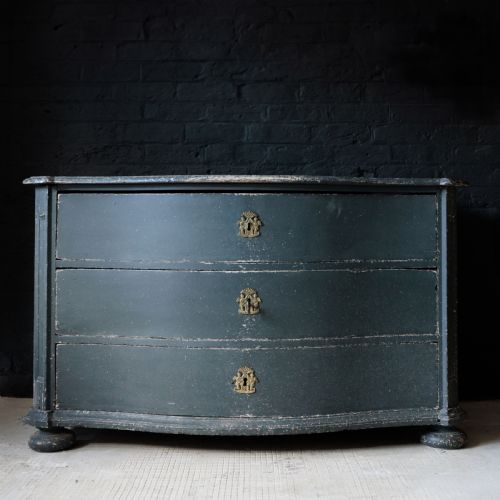
Swedish Storage Chest
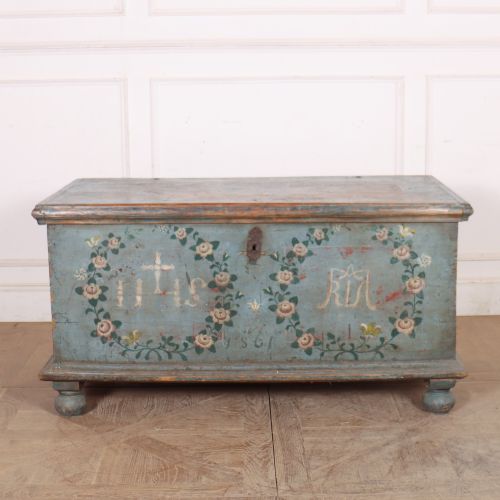
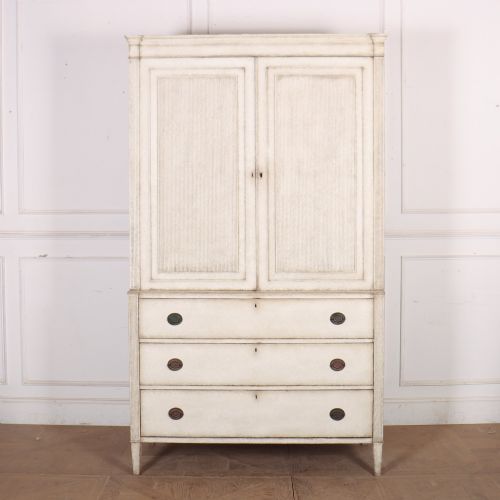
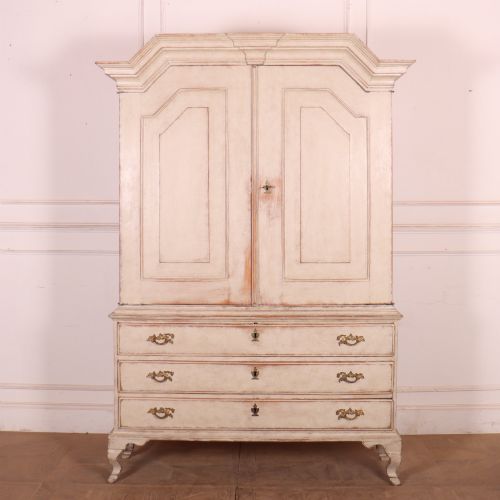
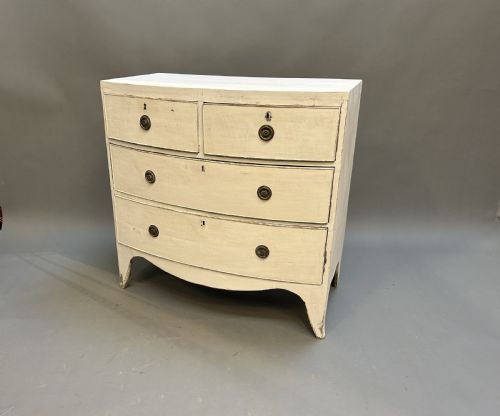
These heavy timbers and painted finishes form a swedish storage chest, built for holding household linens and valuables through long northern winters.
Swedish Storage Chest
A swedish storage chest brings practical domestic containment from the eighteenth and nineteenth centuries into modern rooms, spanning simple pine boxes to grand walnut commodes. Buyers searching for a swedish storage chest will encounter sturdy coffers, marriage chests, and drawer units that reflect Scandinavian rural and neoclassical traditions.
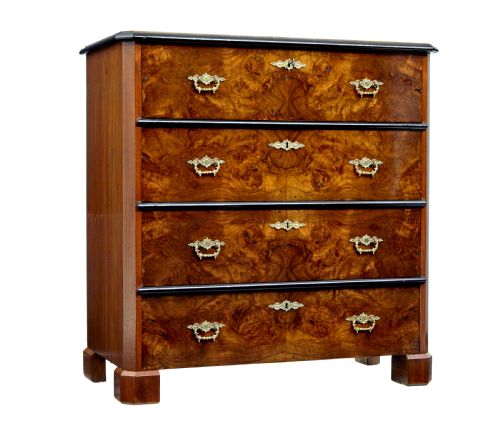
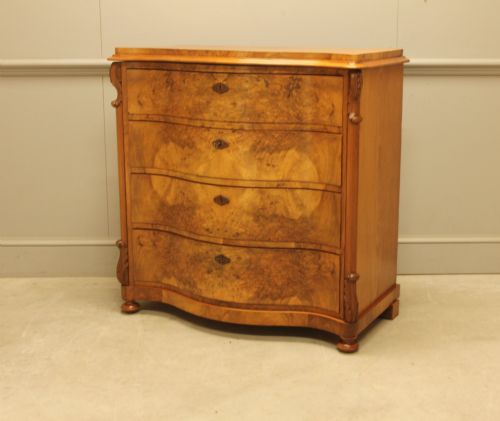
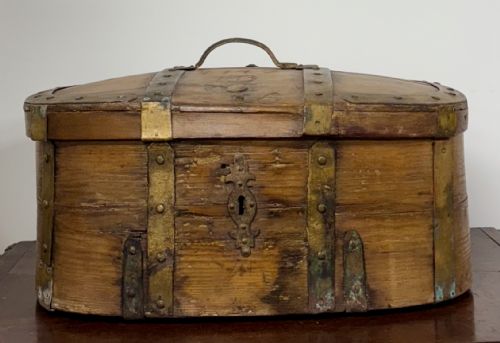
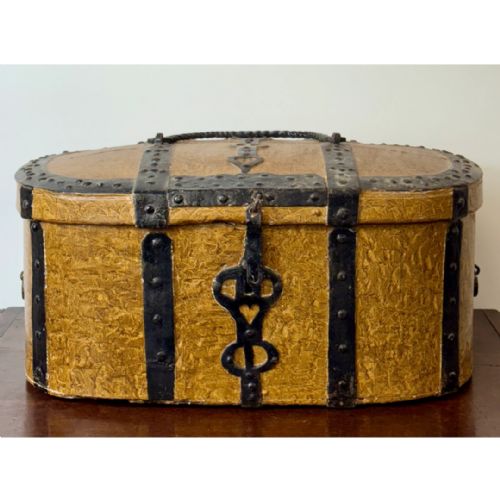
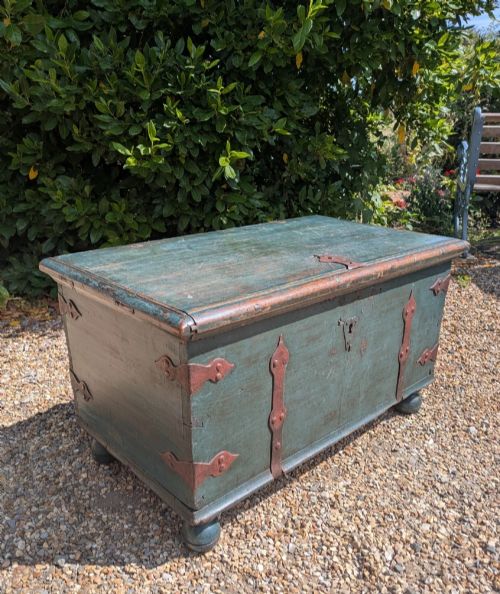
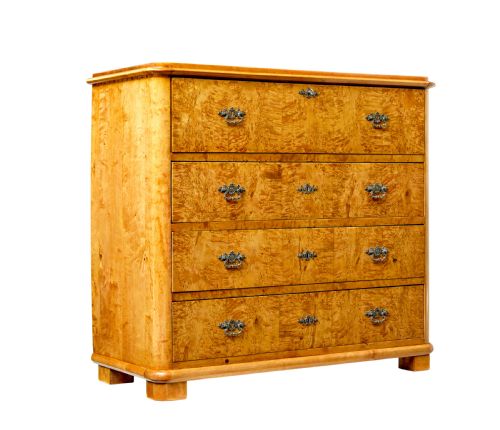
The selection here encompasses eighteenth-century folk art trunks alongside nineteenth-century pieces bearing the hallmarks of Gustavian and Empire revival design. Common formats include dome-top coffers, blanket boxes with hand-forged iron strapwork, and tall chests of drawers finished in paint or polished burl veneers.
Materials and Construction
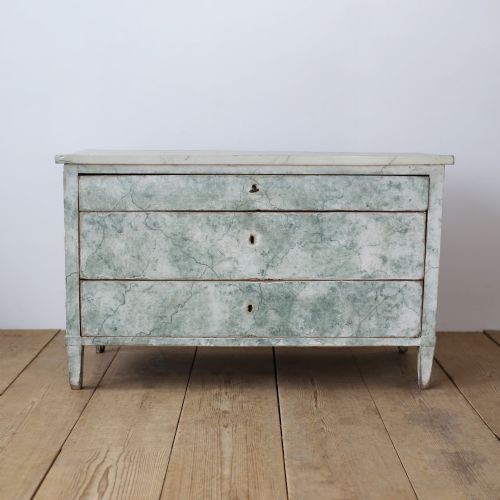
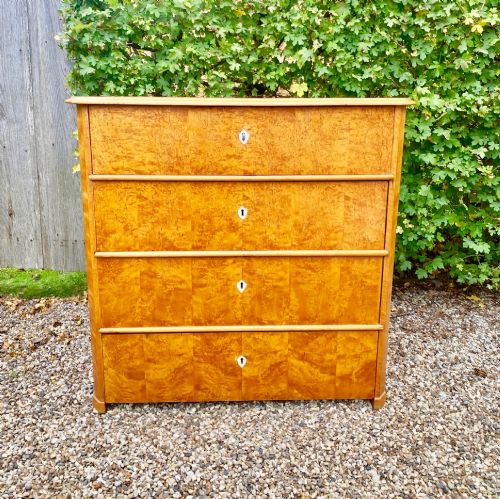
Makers relied primarily on native pine, birch, and burr walnut, fashioning carcases with pegged joints and solid boards designed to withstand seasonal climate shifts. Surfaces received either thick coats of decorative paint, sometimes mimicking faux marble, or meticulous polishing to highlight flame birch and walnut veneers.
Hardware played a structural as well as decorative role, utilising hand-forged iron strapwork and brass mounts to secure lids and drawers. Strong boxes and coffers often incorporated heavy interior locking mechanisms operated by substantial iron keys.
Swedish Storage Chest Retail Price Guide 2026
Typical asking prices for swedish storage chest among the pieces listed under this phrase on Sellingantiques today, from the lower quarter to the upper quarter. They describe what is for sale here now, not the wider market.
Listings span the eighteenth century to the late nineteenth century, incorporating pine, oak, walnut, and birch timbers alongside painted and wrought iron finishes.
Judging Quality
Distinctions in quality rest on the integrity of the original surfaces and the precision of the cabinetwork rather than simple age alone. Pieces retaining their early hand-painted decoration or untouched patinated wood hold greater integrity than those stripped or heavily restored in later centuries.
Construction details distinguish provincial work from urban atelier output, seen in the smoothness of drawer dovetailing and the restraint of applied neoclassical carvings. Fine proportions and balanced hardware placement separate standard utility containers from exceptional vernacular examples.
The Swedish Storage Chest Glossary
- Commode
- A low chest of drawers or cabinet on legs, often featuring serpentine fronts and fine wood veneers typical of eighteenth and nineteenth-century design.
- Coffer
- A large heavy box used for storage, usually fitted with a hinged lid and reinforced with iron braces or strapwork.
- Marriage chest
- A specialised painted box commissioned to celebrate a wedding, frequently inscribed with initials or dates and decorative folk motifs.
- Serpentine
- A furniture front characterised by a wavy outline with a convex centre flanked by concave sides.
- Gustavian
- The Swedish neoclassical style developed during the reign of Gustav III, known for restrained classical proportions, pale painted finishes, and understated carving.
Swedish Storage Chest: Frequently Asked Questions
How were these chests used originally?
Households utilised these lidded boxes and drawer units to store heavy woollen blankets, family linens, and valuable silver documents.
Many served as marriage chests commissioned for domestic establishment, holding the bride's dowry textiles securely through the winter months.
What woods appear most often?
Makers constructed the vast majority of provincial pieces using local Scandinavian pine, which took paint finishes readily.
Finer urban examples showcase decorative hardwoods including birch, burr walnut, and flame veneer arranged in symmetrical patterns.
How do I spot original paint?
Original painted surfaces display natural craquelure, subtle fading, and wear patterns accumulated over generations of domestic use.
Modern repaint layers typically lack the integrated surface depth and tonal variation found beneath genuine eighteenth and nineteenth-century finishes.
Where should I place a chest at home?
These versatile pieces function effectively as living room coffee tables, bedroom blanket boxes, or hallway storage units for shoes and accessories.
Keeping them away from direct heat sources prevents the native pine and birch timbers from drying and cracking.