


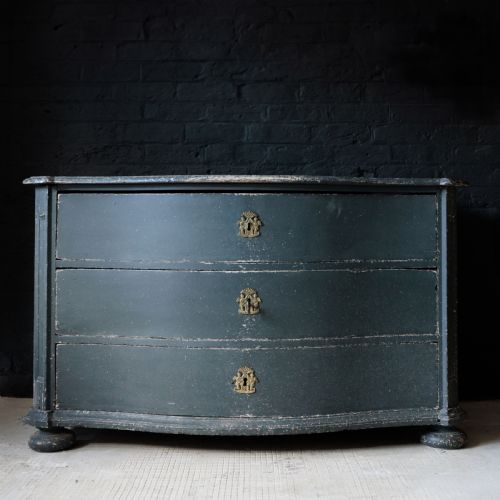


Swedish Painted Storage Cabinet
A swedish painted storage cabinet brings practical domestic storage and pale, decorative charm to a room.
Swedish Painted Storage Cabinet
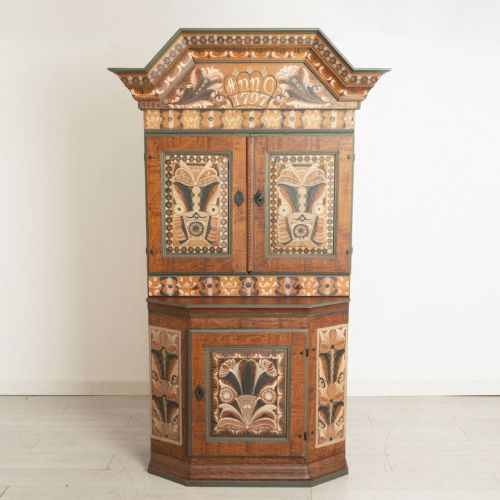
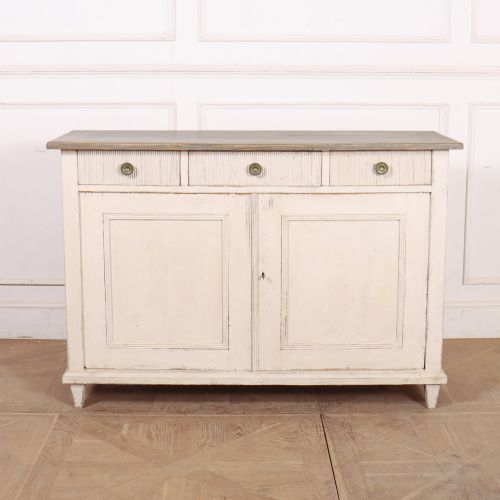
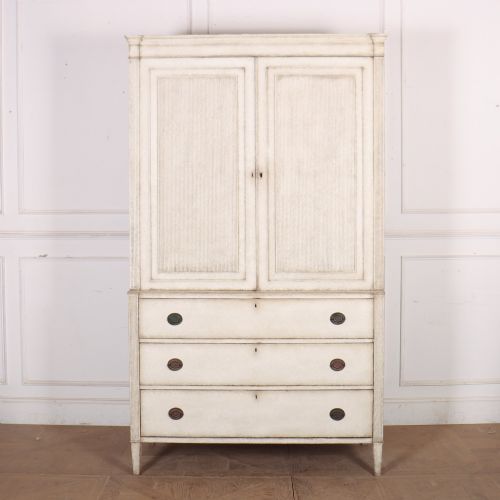
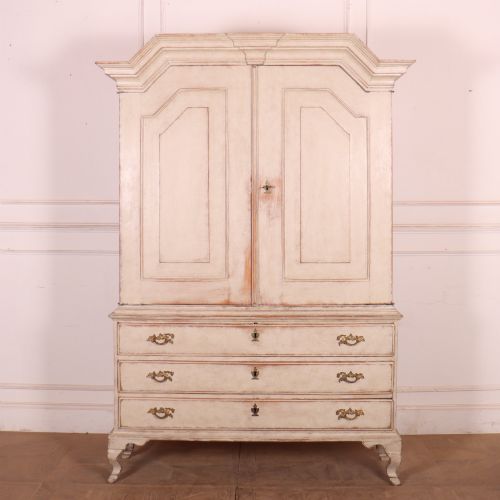
A swedish painted storage cabinet combines functional timber storage with traditional painted finishes originating from northern Europe. Buyers exploring this category encounter tall linen cupboards, double-door wardrobes, and compact wall cupboards designed for domestic interiors.
Most examples date from the nineteenth century, though eighteenth-century pieces appear alongside later interpretations. Forms range from rustic country cupboards and folk art pieces to refined Gustavian designs.
Pine and softwood form the primary structural timbers, shaped into useful proportions for holding linen, kitchenware, or garments. These pieces often feature panelled doors and standing bases, providing substantial capacity while maintaining a light visual presence in a room.
Materials and construction
Makers constructed these cabinets using locally available pine and softwood, joined with traditional carpentry methods suited to regional workshops. Iron and brass hardware, including hinges and locking escutcheons, secure the doors and drawers.
Surfaces received protective coats of paint, frequently utilising mineral or oil-based pigments in pale greys, whites, and muted greens. Some finishes involve ragwork techniques or scraped original paint layers that reveal the history of decoration beneath.
Swedish Painted Storage Cabinet Retail Price Guide 2026
Typical asking prices for swedish painted storage cabinet among the pieces listed under this phrase on Sellingantiques today, from the lower quarter to the upper quarter. They describe what is for sale here now, not the wider market.
Ragwork paint finishes allowed rural cabinetmakers to imitate expensive hardwoods using humble pine boards and a bundle of rags.
Assessing quality and character
Quality rests in the survival of original painted surfaces and the integrity of the pine construction. Pieces retaining untouched layered paintwork or traditional ragwork decoration command greater attention than later redecorated items.
Proportion and architectural detail distinguish finer examples from plain utility furniture. Well-executed cornices, balanced panel proportions, and crisp mouldings elevate pieces rooted in the Gustavian tradition above simpler rustic work.
The Swedish Painted Storage Cabinet Glossary
- Gustavian
- A Swedish neoclassical style spanning the late eighteenth and early nineteenth centuries. It brings restrained symmetry, fluted pilasters, and pale monochrome paint to furniture design.
- Ragwork
- A decorative painting technique where fabric or rags are used to manipulate wet paint on a surface. This creates mottled, textured patterns resembling marbling or subtle graining.
- Linen cupboard
- A tall cabinet traditionally utilised for storing household textiles, bedsheets, and table linens. These pieces typically feature multiple internal shelves enclosed by one or two doors.
- Softwood
- Timber derived from coniferous trees, such as pine and fir, which was readily available across Scandinavia. It served as the primary material for painted regional cabinetry due to its workability.
Swedish Painted Storage Cabinet: Frequently Asked Questions
How do I clean a painted cabinet?
Dust surfaces gently with a dry, soft cloth to prevent accumulation. Avoid harsh chemical cleaners that might soften or strip historic paint layers.
Keep pieces away from direct sunlight and excessive humidity to protect the timber and delicate pigment finishes.
Are these cabinets used for wardrobes?
Many deeper cupboards and hall wardrobes provide adequate internal depth for hanging garments on rails. Some historic interiors instead utilised shelves for folded textiles.
Buyers should verify internal measurements to ensure compatibility with modern hangers and clothing storage needs.
How do I identify original paint?
Original painted surfaces show natural wear, micro-craquelure, and integration with the underlying pine timber over generations. Multiple underlying layers often emerge through areas of historical friction.
Modern redecoration typically lacks this accumulated depth and the specific patina associated with nineteenth-century folk pieces.