



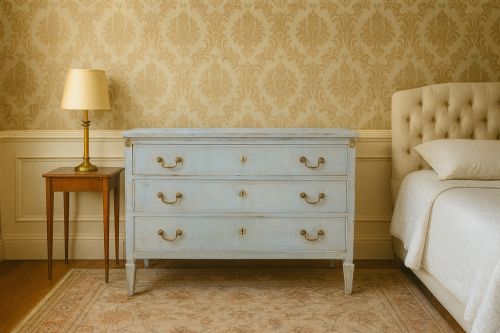


Swedish Painted Pine Chest
A swedish painted pine chest brings rural Scandinavian colour and honest domestic storage into a room.
Swedish Painted Pine Chest
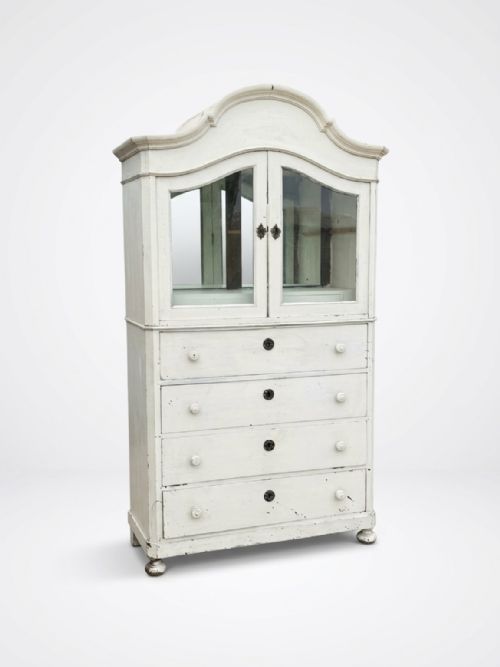
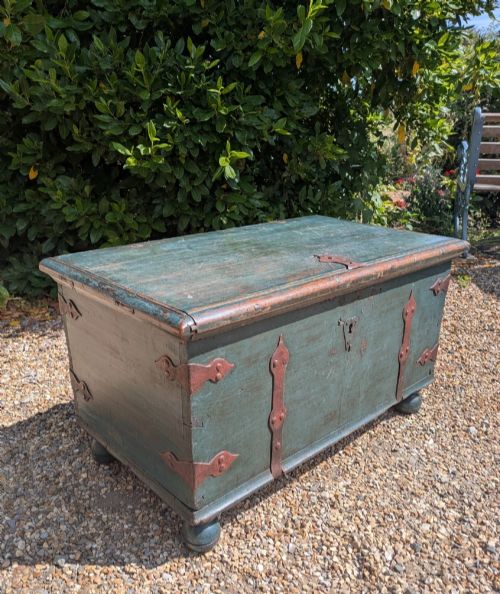
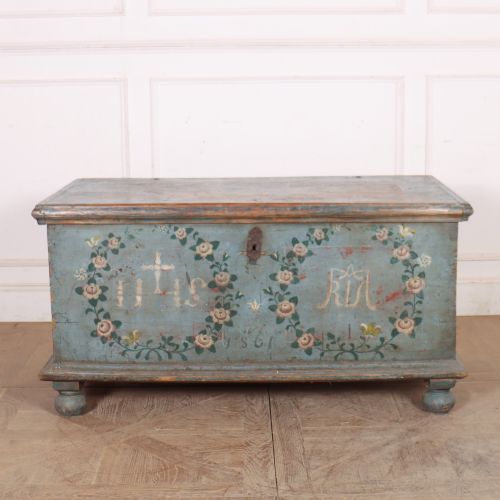
A swedish painted pine chest encompasses functional storage forms ranging from simple lift-lid blanket boxes and dome-top coffers to sophisticated drawer-front commodes and marriage chests. Most examples encountered here belong to the nineteenth century, bearing the practical hallmarks of Scandinavian country life.
Makers and rural joiners produced these items using native softwood timber to supply farmsteads and village homes with durable receptacles for linen, clothes and personal possessions. Alongside standard rectangular boxes, the inventory holds shaped strong boxes, wall cupboards and tall commodes.
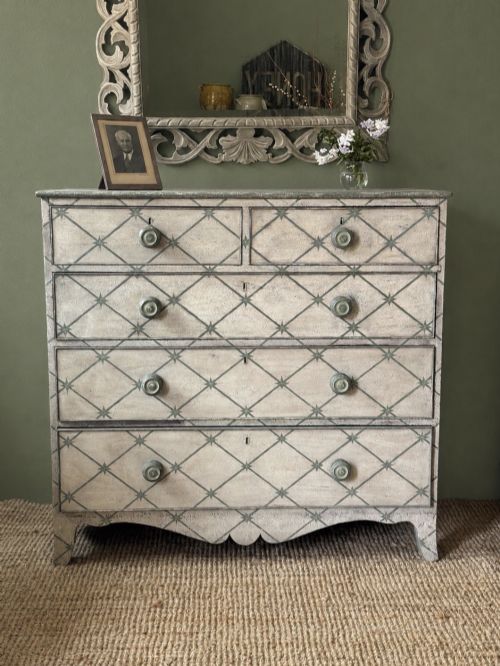
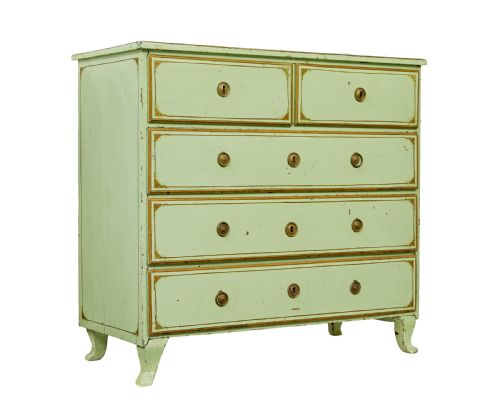
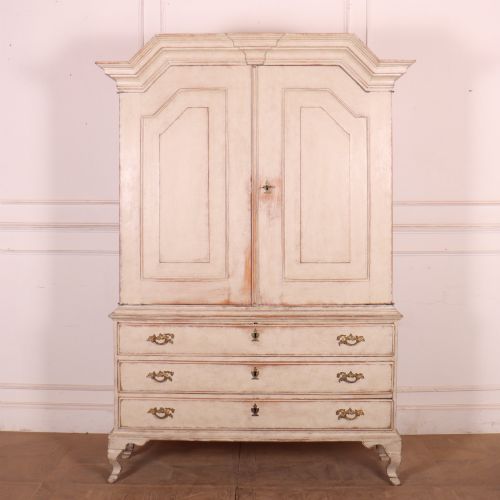
Surviving pieces display varied regional aesthetics, moving between rustic folk art finishes and the neoclassical restraint of Gustavian design. Buyers select them for their combination of generous proportions and decorative painted surfaces.
What varies in quality
Quality rests upon the integrity of the original construction and the preservation of early painted surfaces. Pieces retaining their initial pigment without excessive overpainting offer a more authentic connection to their period of origin.
The refinement of the joinery distinguishes standard utility boxes from high-status commodes, visible in the hand-cut dovetails, shaped drawer fronts and delicate mouldings. Retaining original forged iron strapwork and operational locks elevates the standing of an individual chest.
Some nineteenth-century strong boxes feature complex internal compartments designed to safeguard family documents and small valuables from curious farmhands.
Gemla Fabrikers
The Swedish Painted Pine Chest Glossary
- Marriage chest
- A celebratory storage box commissioned for a wedding, frequently inscribed with initials and dates. These pieces often display the finest decorative painting in a regional workshop.
- Commodes
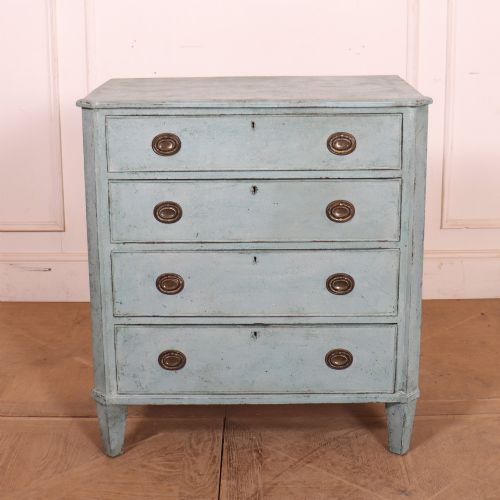
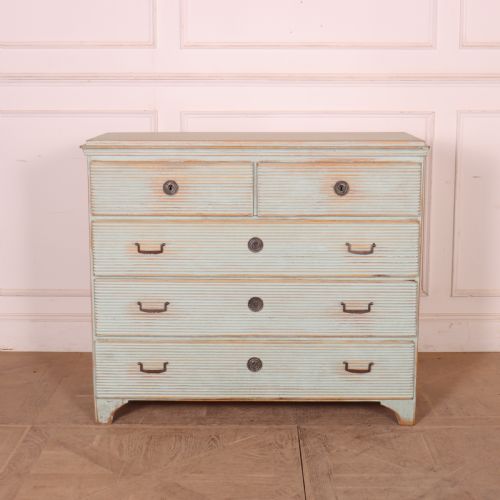
- A low chest of drawers or cabinet designed for domestic chambers. Swedish examples often feature serpentine fronts or fluted drawer details derived from neoclassical taste.
- Coffer
- A heavy wooden box with a lid, used historically for transporting or storing valuables. Dome-top variants allowed rainwater to run off during transit.
- Strapwork
- Ornamental metal bands fixed across the exterior of a chest for reinforcement and visual effect. Hand-forged iron examples provide secure bracing for heavy travel trunks.
- Gustavian
- The Swedish interpretation of French neoclassical style, named after King Gustav III. It is characterised by lighter proportions, restrained carving and pale painted finishes.
Swedish Painted Pine Chest: Frequently Asked Questions
What is a swedish painted pine chest used for?
These chests served primarily for storing household textiles, blankets, and personal garments in domestic interiors. Today, they function effectively as coffee tables, end-of-bed storage, or statement focal points in hallways and living spaces.
Their robust timber construction allows them to support everyday objects while keeping contents dust-free and neatly concealed.
How do I identify a gustavian piece?
Gustavian pieces display neoclassical influences with restrained symmetry, fluted details, and lighter proportions than heavier rustic furniture. They typically feature pale or muted painted surfaces rather than dark, unpainted woods.
Looking for shaped drawer fronts, subtle carved motifs, and formal architectural lines will help distinguish this refined urban style from folk art.
Are the painted finishes original?
Many items retain their early or original paint layers, though centuries of domestic use often involved touch-ups or complete re-decoration. Inspecting the surface under natural light reveals wear patterns and layering that indicate the age of the pigment.
Original paint frequently exhibits a chalky or soft patina developed through decades of cleaning and handling.
How should I care for antique pine?
Keep wooden chests away from direct heat sources and strong sunlight to prevent the pine timber from splitting and the paint from fading. Dust them regularly with a dry, soft cloth and avoid chemical polishes that can damage historic finishes.
Maintaining a stable indoor humidity level preserves both the structural integrity of the softwood and the stability of the painted surface.