
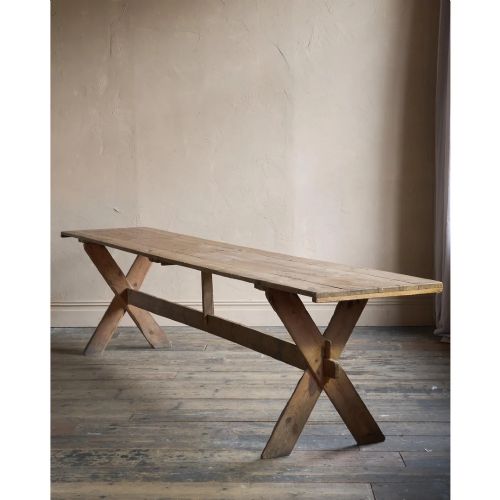
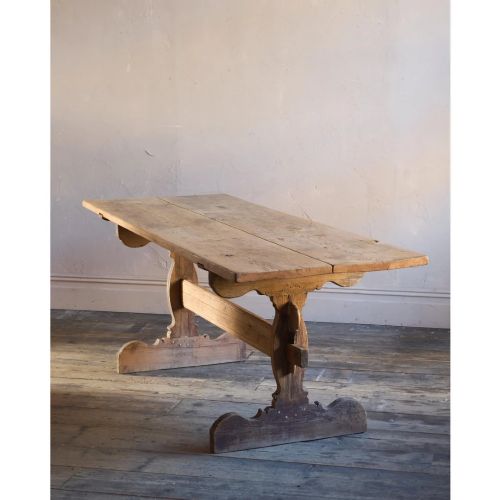


Swedish Country Kitchen Table
A swedish country kitchen table brings practical Scandinavian utility and honest pine construction straight into a modern interior.
Swedish Country Kitchen Table
A swedish country kitchen table encompasses robust utilitarian furniture originating from Scandinavian farmhouses and domestic interiors. The selections here span the eighteenth century, the nineteenth century, and nineteen-forty, reflecting enduring rural traditions.
Most examples found on this page take the form of painted pine kitchen tables, bakers tables, and preparation tables. Dining tables and drop leaf formats also appear, constructed primarily from softwood and timber.
The aesthetic is rooted in Scandinavian country and Gustavian design movements. These forms served demanding daily work before transitioning into domestic living spaces.
How they were made
Makers utilised native pine and softwood timber to build these hard-working surfaces. Oak and brass occasionally appear as supporting materials or structural elements.
Surfaces were frequently finished with paint, notably traditional Falu paint, which protected the timber and provided a distinct matte colour. Trestle construction and drop leaf mechanisms offered stability and flexibility for domestic labour.
Traces of historic flour and dough still hide in the deep grain of the bakers tables.
What varies in quality
Quality rests in the survival of original painted surfaces and the integrity of the timber framing. Tables retaining authentic layers of historic paint hold greater visual depth than later repainted examples.
Proportion and scale distinguish standard utility boards from larger architectural dining pieces. The balance between the trestle base and the main top dictates the overall visual harmony.
The Swedish Country Kitchen Table Glossary
- Pine
- A soft coniferous timber commonly utilised throughout Scandinavian furniture for its accessibility and workability. It forms the primary structural material for the majority of these tables.
- Falu Paint
- A traditional red or dark earth paint derived from copper mine waste in Sweden. It provides a durable matte finish on exterior and interior woodwork.
- Trestle
- A structural support consisting of a horizontal beam fixed to two splayed legs. This method allows maximum legroom beneath large dining and preparation boards.
- Drop Leaf
- A hinged table leaf that can be folded down to save space or raised to extend the surface. This mechanism adds practical versatility to smaller domestic interiors.
- Gustavian
- The Swedish neoclassical style spanning the late eighteenth and early nineteenth centuries. It combines French influence with restrained Scandinavian simplicity.
Swedish Country Kitchen Table: Frequently Asked Questions
Are these tables suitable for daily dining use?
These pieces were built for demanding kitchen and preparation work, making them remarkably robust for modern family meals. Their sturdy pine construction handles everyday gatherings with ease.
Living with an antique surface involves embracing the marks of past labour. A simple wipe with a damp cloth maintains the historic timber and paint.
How do I identify a true nineteenth century piece?
Examination of the timber joints, tool marks, and fastener types reveals the age of construction. Nineteenth century examples display hand-cut joinery consistent with rural workshop practices.
Surface patination develops over generations of use and cleaning. Original paint layers show a distinct chalky texture that modern reproductions cannot replicate.
What is the difference between a bakers table and a dining table?
Bakers tables and preparation tables were designed for specific culinary tasks, often featuring scrubbed pine tops intended for rolling dough. They reflect the functional needs of historic Scandinavian kitchens.
Standard dining tables focus more on seating capacity and leg clearance. Both types share the same robust softwood construction aesthetic.
How should I care for historic painted pine?
Painted surfaces require gentle cleaning with mild soap and water to preserve the original finish. Avoid harsh chemical solvents that can strip historic pigment.
Maintaining moderate room humidity prevents the pine timber from splitting. Wax or oil is rarely needed on painted sections but can nourish exposed wooden tops.