







Swedish Carved Chest
These nineteenth-century swedish carved chest designs bring robust storage and striking wood grain into a room.
Swedish Carved Chest
A swedish carved chest typically takes the form of a nineteenth-century chest of drawers, built to offer substantial storage with distinct regional flair. These pieces often feature serpentine fronts or clean architectural lines that reflect domestic Scandinavian craftsmanship.
The versions most commonly met on this page span the nineteenth century, including painted commodes and heavily figured wood finishes. They range from rustic country examples to revival styles like Neo-Rococo and Swedish Baroque Revival.
Makers utilised local timbers to construct these chests, resulting in functional furniture that doubles as a focal point. Buyers select them for their generous proportions and characteristic Nordic aesthetic.
How they were made
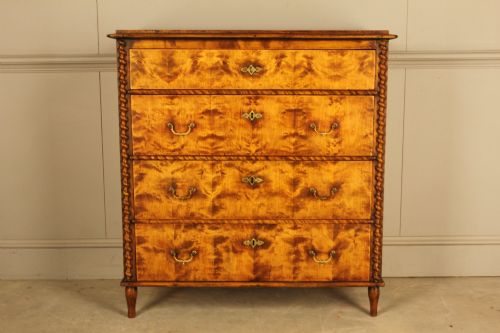
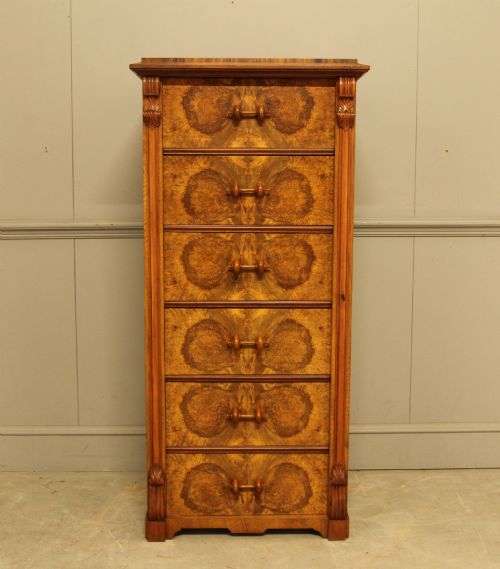
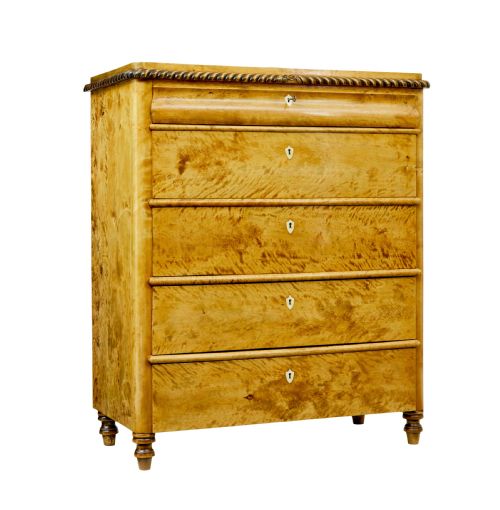
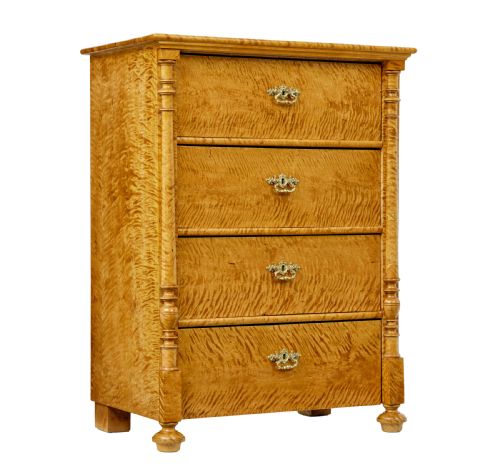
These chests rely on solid native timbers such as birch, pine, elm, and oak, frequently enhanced by figured veneers like tiger birch, satin birch, and burr walnut. Artisans shaped these woods into serpentine or straight-fronted carcases, often incorporating intricate inlay work.
Surface treatments play a vital role in their construction, utilising traditional paint finishes alongside exposed wood polished to highlight the grain. Details in brass and bone occasionally appear as key escutcheons or drawer pulls, adding tactile contrast.
Swedish Carved Chest Retail Price Guide 2026
Typical asking prices for swedish carved chest among the pieces listed under this phrase on Sellingantiques today, from the lower quarter to the upper quarter. They describe what is for sale here now, not the wider market.
Some nineteenth-century drawers hide secret compartments behind carved mouldings, built to guard family papers and small treasures.
What varies in quality
Carving depth and the crispness of applied detail distinguish simpler provincial work from more ambitious revival pieces. Construction integrity, such as smooth drawer action and well-fitted joints, dictates the lasting utility of each chest.
The Swedish Carved Chest Glossary
- Serpentine
- A curved shape featuring a convex centre flanked by concave sides. This undulating profile appears frequently on nineteenth-century drawer fronts.
- Tiger birch
- A figured timber variety showing distinct alternating dark and light chatoyant bands resembling tiger stripes. It was prized by Scandinavian cabinetmakers for decorative drawer fronts.
- Gustavian
- A Swedish neoclassical design style characterised by restrained ornamentation and lighter colour palettes. It emerged in the late eighteenth century and influenced subsequent nineteenth-century furniture.
- Commode
- A low chest of drawers, often with a decorative top surface. The term frequently describes painted or veneered pieces of continental origin.
Swedish Carved Chest: Frequently Asked Questions
What periods do these chests come from?
The available examples date from the nineteenth century, capturing various historical revivals and regional interpretations.
Craftsmen during this era drew on earlier Baroque and Rococo motifs while maintaining distinct Scandinavian proportions.
How do I care for a painted finish?
Painted surfaces require gentle dusting with a dry, soft cloth and protection from direct sunlight and extreme humidity.
Avoid chemical cleaning agents that might lift or soften historic paint layers over time.
Where were these chests used in the home?
These chests served primarily as principal storage furniture in bedrooms and parlours for linens and garments.
Their decorative fronts also allowed them to function as display surfaces in formal reception rooms.
What woods were used in construction?
Cabinetmakers utilised a mix of native softwoods and hardwoods, including pine, birch, elm, oak, and satin birch.
Finer decorative surfaces often employed exotic or highly figured veneers laid over a stable secondary timber.