
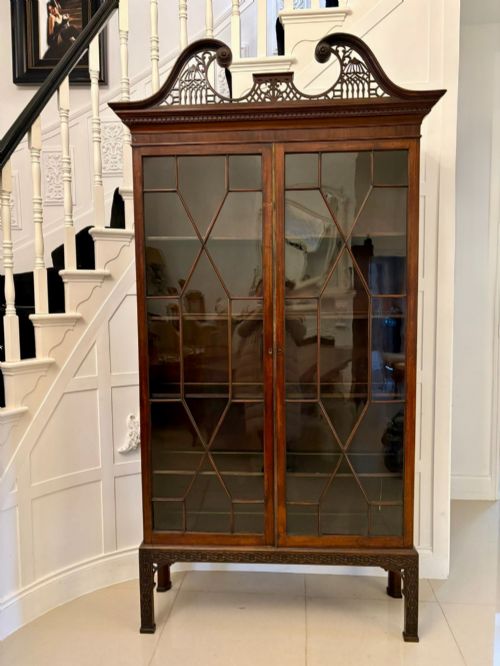
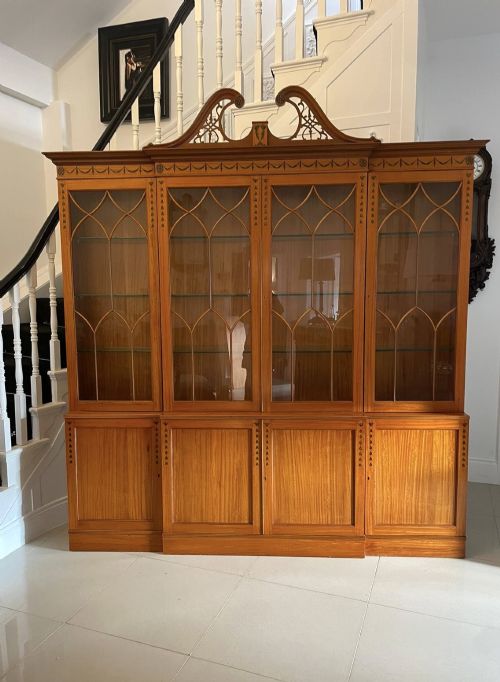
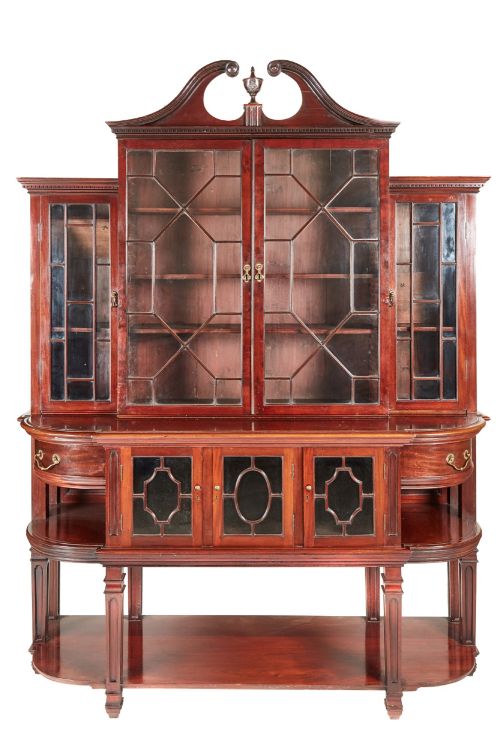
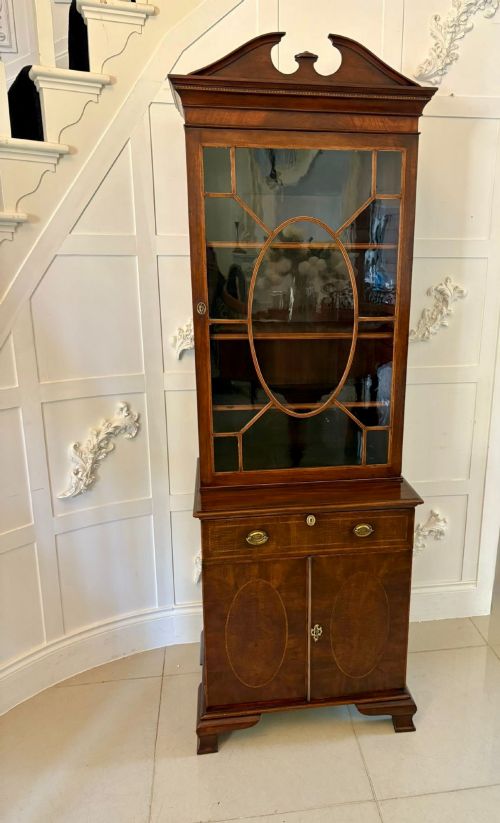
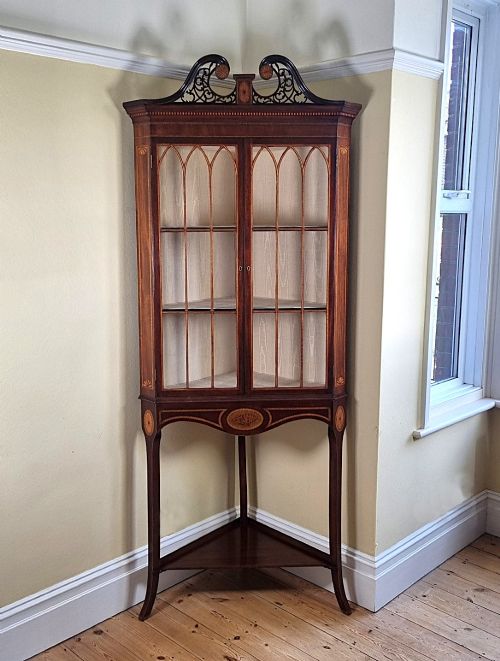
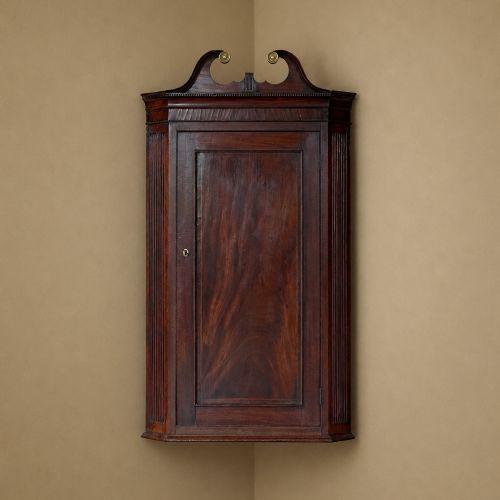
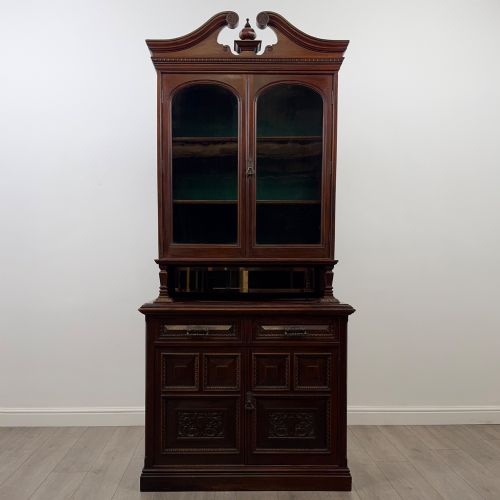
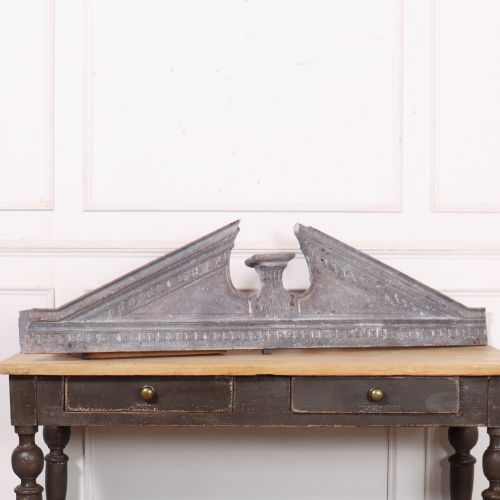
Swan Neck Pediment
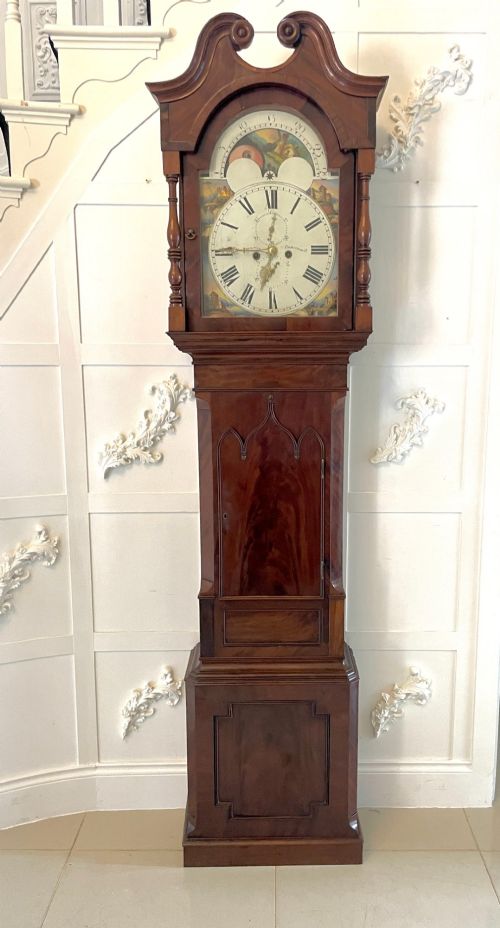
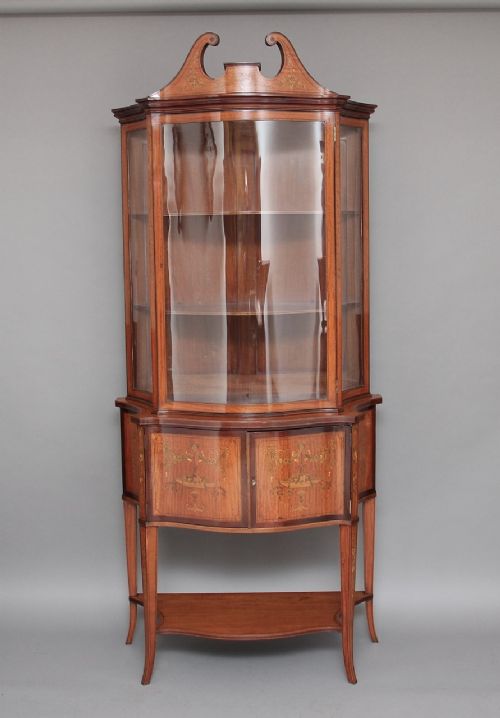
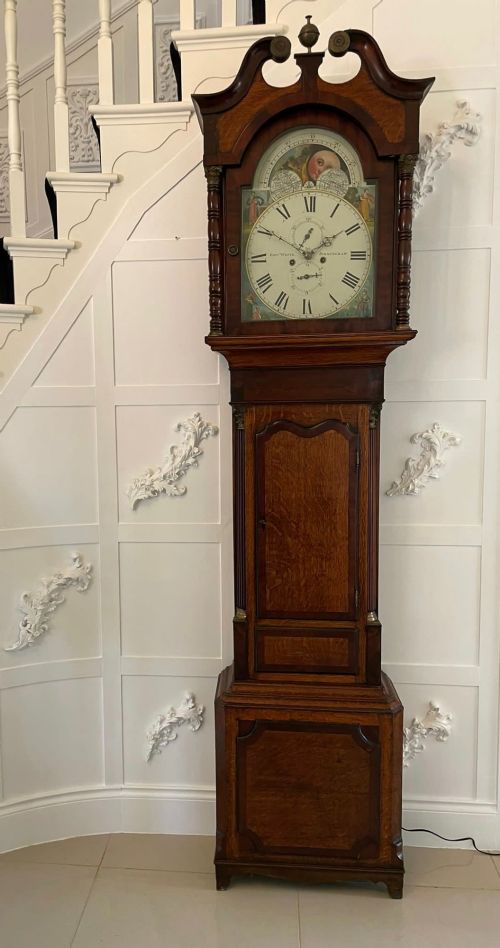
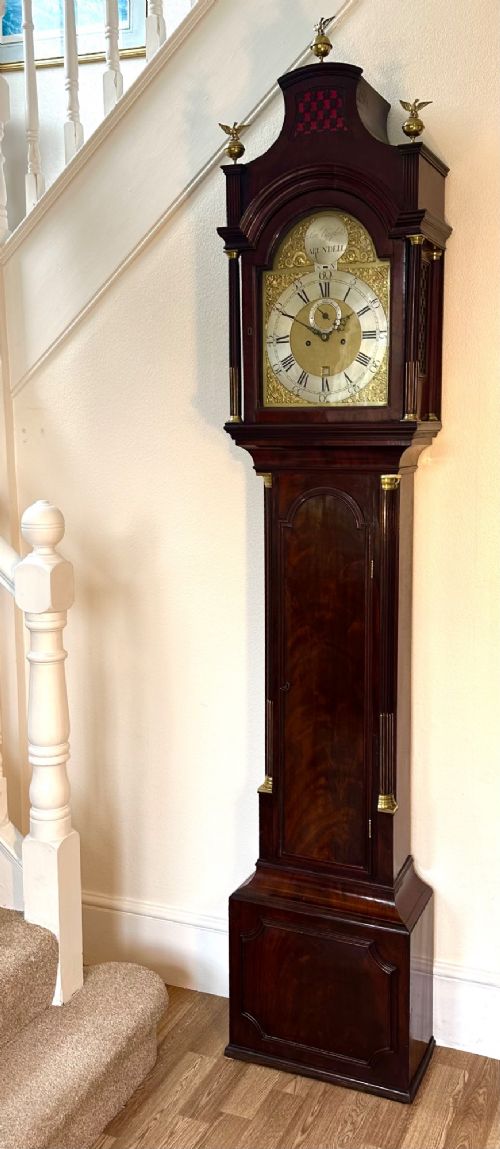
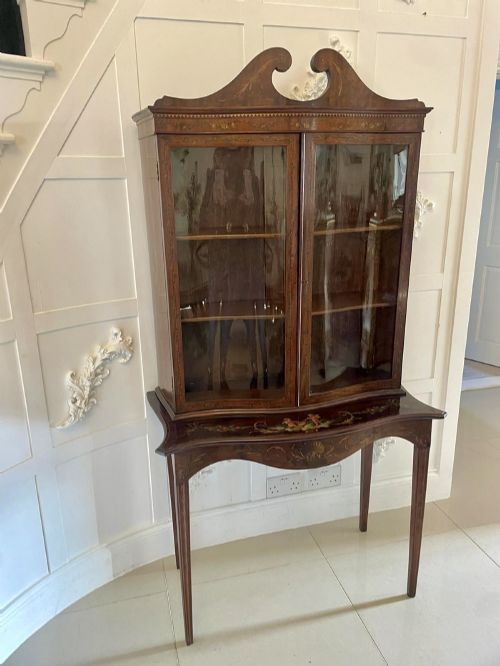
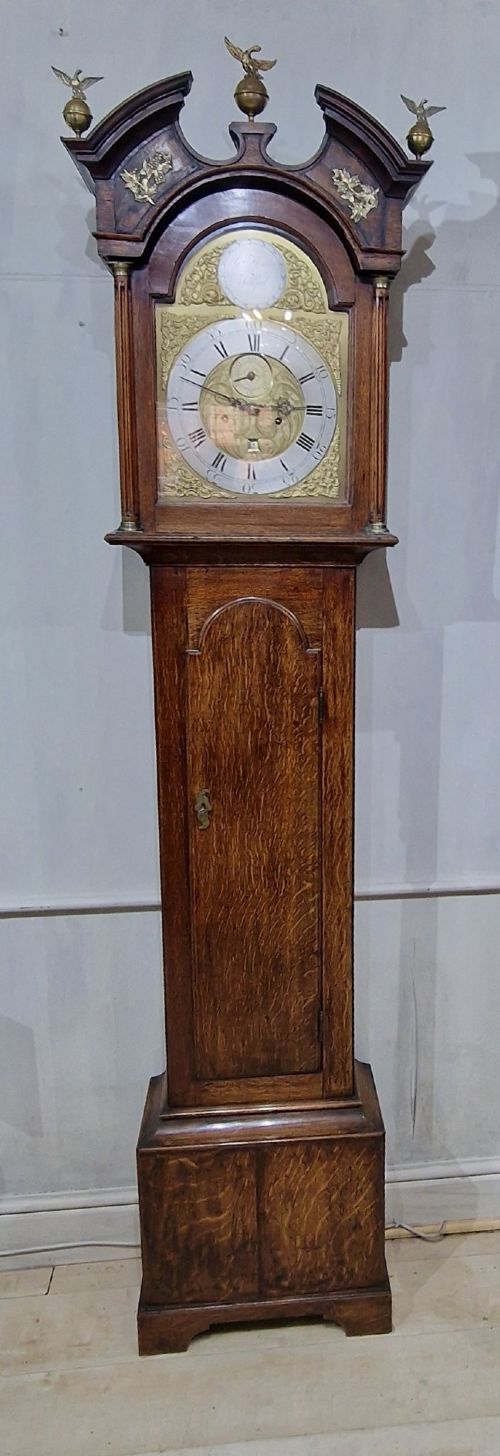
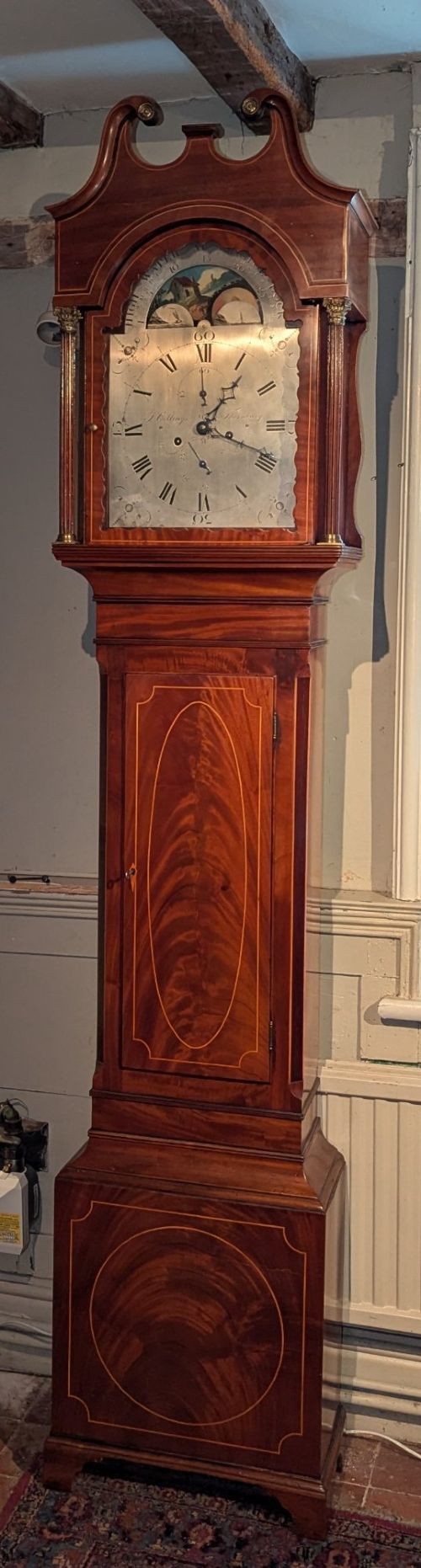
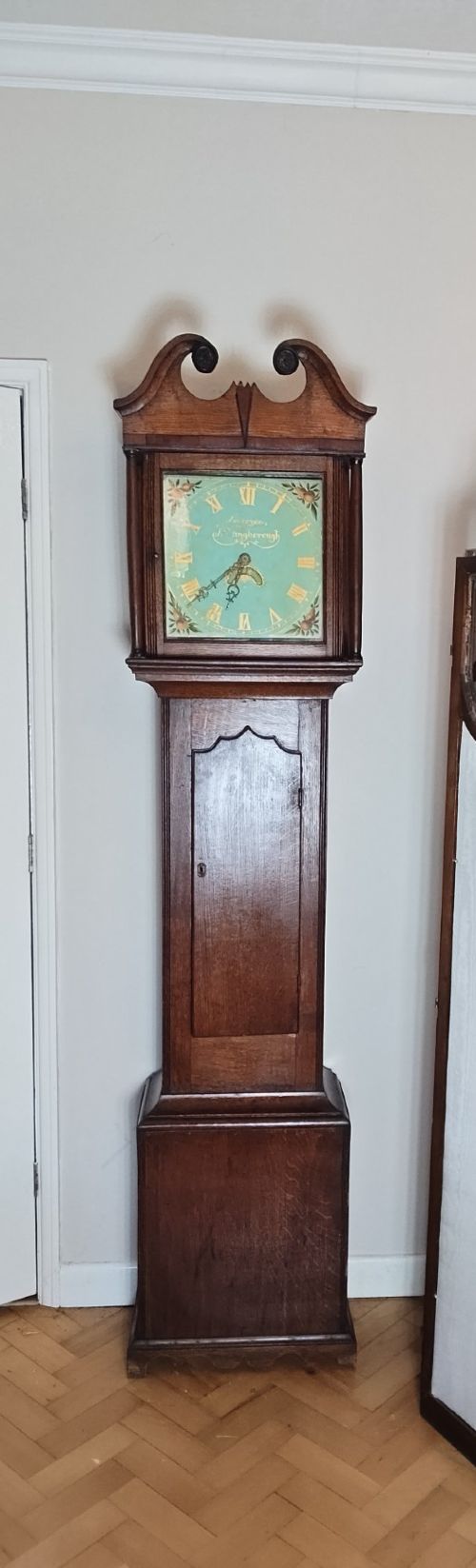
A swan neck pediment crowns fine tall case clocks, bookcases, and cabinets with a graceful broken arch.
Swan Neck Pediment
A swan neck pediment forms the shaped architectural top of tall case clocks, bookcases, linen presses, and corner cabinets. When you search for swan neck pediment, you encounter the broken arch profile that curls outwards at either side like a bird's neck, frequently terminating in a carved wooden patera or scroll.
The pieces carrying this cornice emerge predominantly from the eighteenth and nineteenth centuries, spanning Georgian, Victorian, and Edwardian eras. Longcase clocks and breakfront display cabinets provide the most common sightings of this decorative apex on the market.
Makers integrated this architectural flourish to add height and classical proportion to case furniture. Oak, mahogany, and satinwood form the primary bodies carrying these arched tops, often paired with glazed doors or marquetry inlay.
How They Were Made
Cabinet makers constructed these pediments by joining curved sections of solid mahogany, oak, or walnut to form the distinctive double-scroll profile. Timber grain direction required careful planning to maintain structural strength along the delicate outward curves of the arch.
Joiners frequently employed brass finials or carved wooden roundels at the centre terminals of the scrollwork. Carved fretwork panels and painted decoration often filled the central space between the upward sloping scrolls.
Some tall clocks hide moon dials behind their arched hoods, tracking lunar cycles alongside the hours.
What Varies in Quality
Quality rests in the fluidity of the scroll carving and the proportion of the arch to the case below. Superior examples display crisp joinery at the mitres and well-proportioned terminals that match the scale of the furniture.
The selection of timber significantly influences the distinction between pieces, with finely figured mahogany and rich satinwood representing higher workshops. Original brass hardware and untouched painted decoration also elevate the standing of the woodwork.
Edwards & Roberts·James Hendrie·William McEwan·Edward Shepley·Thomas Webbe
The Swan Neck Pediment Glossary
- Swan neck pediment
- A decorative architectural cornice formed by two curving mouldings that rise to break the horizontal line at the top of a piece of furniture. It originates from classical architecture and gained widespread use in eighteenth-century cabinetry.
- Breakfront
- A cabinet or bookcase whose central section projects forward from the flanking wings. This configuration creates visual depth beneath the architectural pediment.
- Astragal glazed
- A glass door divided into smaller panes by narrow wooden strips known as glazing bars. These frames permit clear display of the interior shelving.
- Patera
- A circular decorative carving resembling a classical dish or medallion, frequently placed at the centre or terminals of a scroll pediment. It acts as a focal point for the joinery.
- Linen press
- A tall storage piece comprising upper sliding shelves for textiles above a chest of drawers. These imposing cupboards often carry broken arch cornices.
Swan Neck Pediment: Frequently Asked Questions
What pieces feature swan neck pediments?
Longcase clocks, breakfront bookcases, and tall display cabinets most frequently carry this architectural top. Linen presses and corner cupboards also utilise the broken arch design to finish their upper sections.
These pieces span the Georgian, Victorian, and Edwardian periods, constructed primarily in mahogany and oak.
How do I date a swan neck pediment?
Dating relies on the secondary woods, construction methods, and overall style of the case furniture beneath the pediment. Earlier eighteenth-century examples display different timber preparation and carving depth compared to later nineteenth-century revivals.
Examining the backboards and drawer linings provides reliable indicators of the period of manufacture.
Are the brass finials original?
Many tall case clocks and cabinets feature central brass finials mounted between the scrolls of the pediment. Determining originality involves checking the fitting holes and brass patination against the surrounding wood.
Replacements occur frequently because these projecting elements suffered damage during household moves.
How should I care for mahogany with this pediment?
Maintenance requires stable indoor humidity away from direct sunlight to prevent timber shrinkage and veneer lifting. Regular dusting with a dry, soft cloth preserves the polished surface without building up wax residues.
Harsh chemical cleaners must be avoided to protect the historic finish of the timber.