
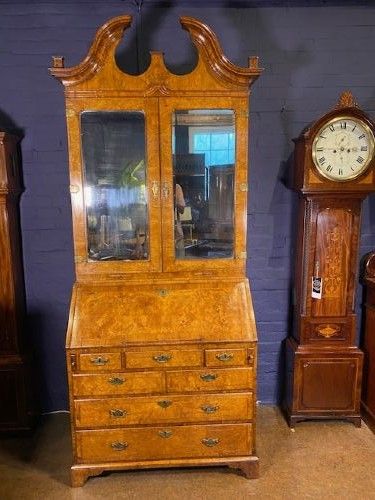
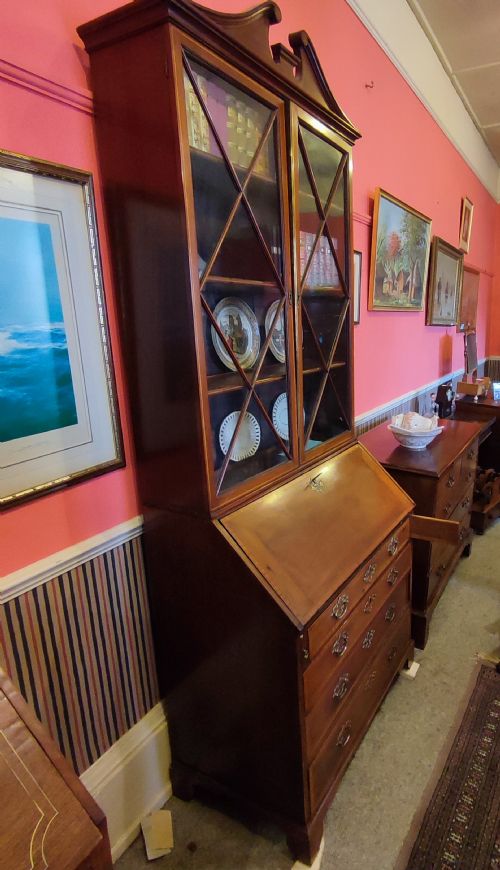


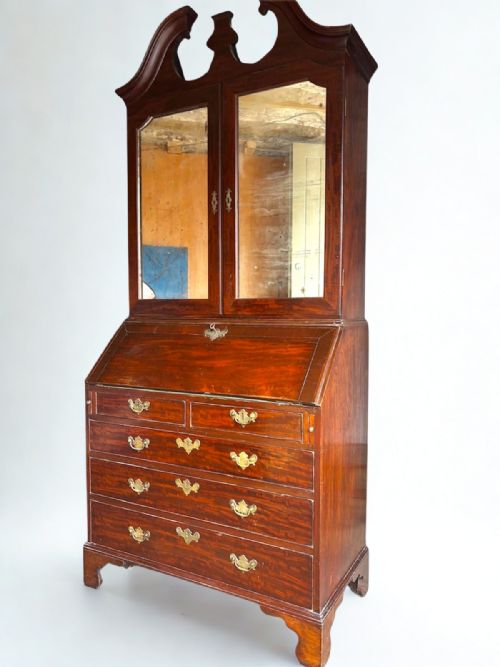


Swan Neck Bureau Bookcase
These swan neck bureau bookcase examples combine a fitted writing desk with enclosed shelving behind glazed or panelled upper doors, topped by characteristic scrolled pediments.
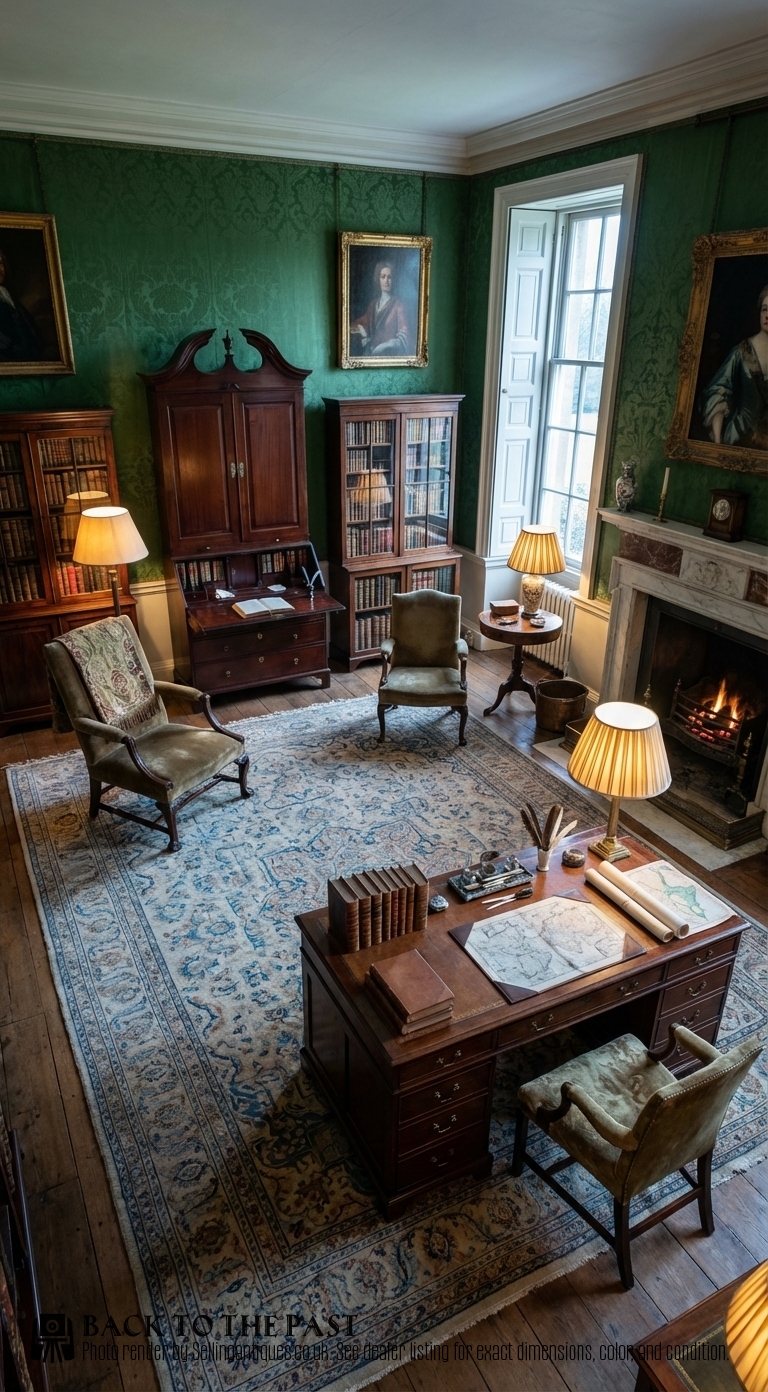
Swan Neck Bureau Bookcase
The defining architectural detail is the swan neck pediment surmounting the upper cornice, formed by two opposing curved scrolls that rise to a central terminal or finial. These pieces emerge in walnut and mahogany during the seventeenth and eighteenth centuries, continuing through Georgian, Regency, and Victorian periods into revival styles of the early twentieth century.
The versions most commonly met on this page span the Georgian era, particularly the reign of George III, alongside later revival interpretations. Mahogany remains the predominant timber encountered, though earlier examples utilise walnut or incorporate rosewood and satinwood details.
How They Were Made
Cabinetmakers constructed these large carcasses from dense timbers such as mahogany and walnut, frequently applying veneers over sturdy oak or pine secondary woods. The swan neck pediments required skilled joinery to shape the curved mouldings and secure them cleanly to the upper cornice.
Glazing bars in the upper doors divide the glass into geometric panes, while brass hardware including escutcheons, drop handles, and hinges secures the drawers and fall-fronts. Interior drawers and compartments demand precise miniature dovetail construction and careful fitting to operate smoothly within the writing desk.
Surface finishing involved hand-rubbed polishing that brought out the natural grain and depth of the wood, sometimes complemented by satinwood stringing, marquetry inlay, or mirror panels set into the upper doors.
What Varies in Quality
The grade of timber selected for the primary visible surfaces dictates much of the visual distinction, from plain figured grain to richly figured flame mahogany or highly prized burr walnut. Finer workshop production shows in the crispness of carved mouldings around the swan neck pediment and the precision of fine crossbanding and stringing.
Internal architecture marks the difference between standard cabinet work and exceptional craftsmanship, visible in the complexity of the fitted pigeonholes, secret compartments, and small drawers within the bureau section. The integrity of the original glass panes, brass hardware, and structural joinery throughout the tall carcass also separates standard pieces from those of premier standing.
Edwards and Roberts
The Swan Neck Bureau Bookcase Glossary
- Swan neck pediment
- A decorative architectural top consisting of two curved mouldings resembling a swan's neck that rise from the cornice towards a centre point. This pediment often frames a central carved finial or urn.
- Bureau bookcase
- A combination furniture form uniting a sloping writing desk with a shelved upper cabinet enclosed by doors. The lower desk portion opens to reveal drawers and pigeonholes.
- Secretaire bookcase
- A variant where the writing surface is a pull-out drawer dropping forward on hinges rather than a slanted fall-front. This maintains the clean exterior appearance of a chest of drawers on the lower level.
- Fall-front
- A sloping or vertical wooden panel hinged at the bottom that drops down to form a writing surface. It conceals the interior stationery compartments when closed.
- Glazing bars
- The wooden strips that hold individual panes of glass within a cabinet door, often arranged in gothic arch, astragal, or geometric patterns. They provide structural support for the upper bookcase doors.
Swan Neck Bureau Bookcase: Frequently Asked Questions
What is a swan neck bureau bookcase?
A swan neck bureau bookcase is a tall piece of antique furniture combining a lower writing desk with an upper shelving cabinet. It is distinguished by the curved scrollwork of its swan neck pediment at the very top.
These pieces were built to serve as both a private writing space and a secure library for books and papers in domestic interiors.
How were bureau bookcases used historically?
The lower section provided a fold-down or pull-out writing surface equipped with small drawers and pigeonholes for handling correspondence and keeping records. The upper glass-fronted cabinet displayed prized book collections and valuables protected from dust.
Together they functioned as the administrative and intellectual centre of a gentleman's study or drawing room.
How do I date an antique bureau bookcase?
Dating relies on examining the timber species, secondary woods, construction methods, and stylistic details. Walnut and feather-banding point towards the earlier periods, while rich figured mahogany and specific pediment shapes align with Georgian or revival eras.
Hardware fixings, dovetail construction, and drawer linings also offer reliable physical evidence for the period of manufacture.
Where should I place a bureau bookcase?
Because of their considerable height and substantial footprint, these pieces require a stable wall with adequate vertical clearance. They suit studies, libraries, and principal living rooms where their architectural presence can be appreciated.
Keeping them away from direct sunlight and dramatic temperature shifts protects the polished timber and delicate veneers.