




Bureau Cabinet with Pediment
A bureau cabinet with pediment is a commanding piece of architectural joinery built to organise correspondence and display volumes in style.
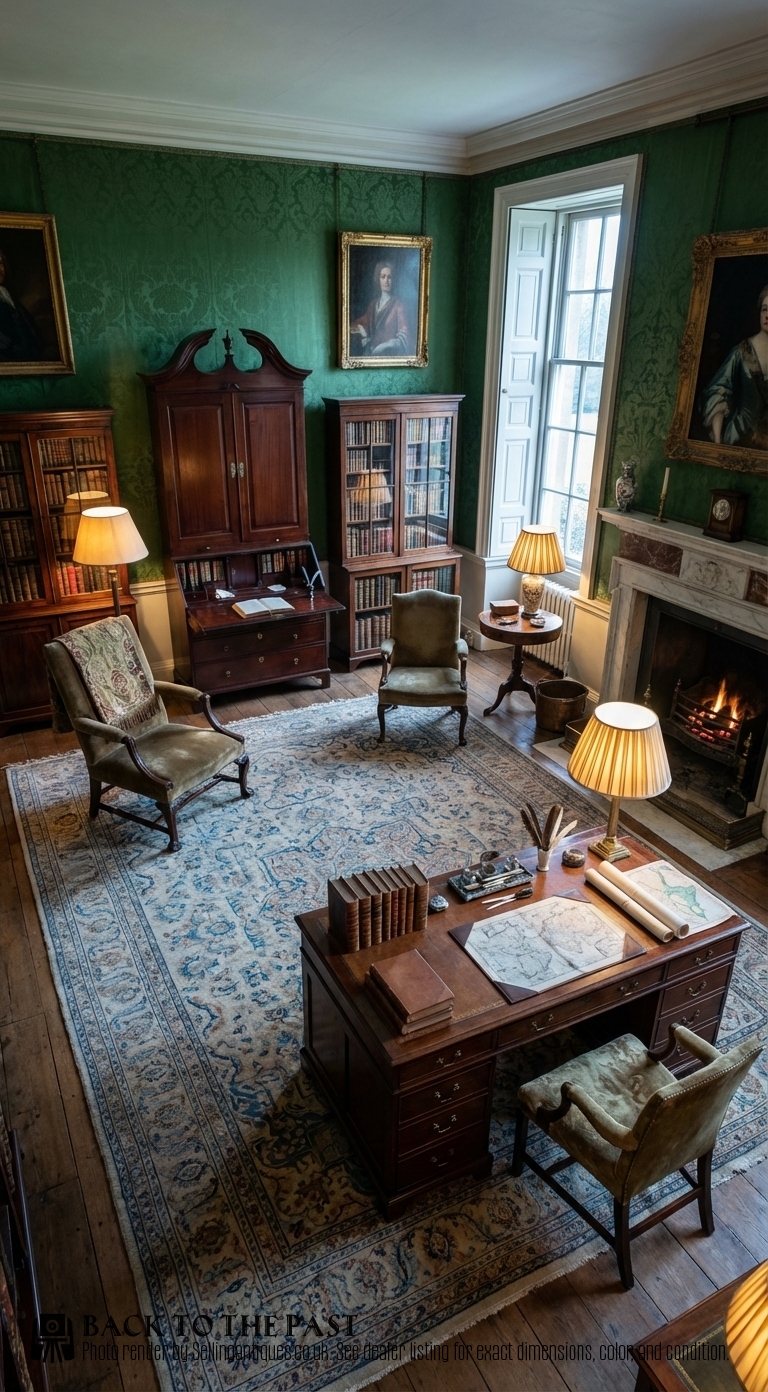
Bureau Cabinet with Pediment
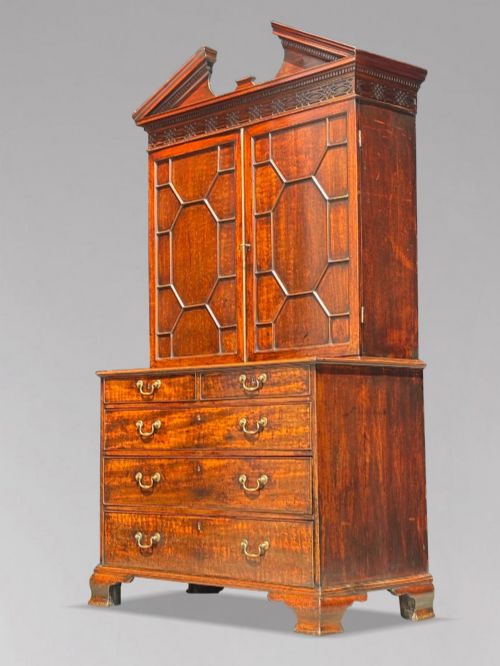
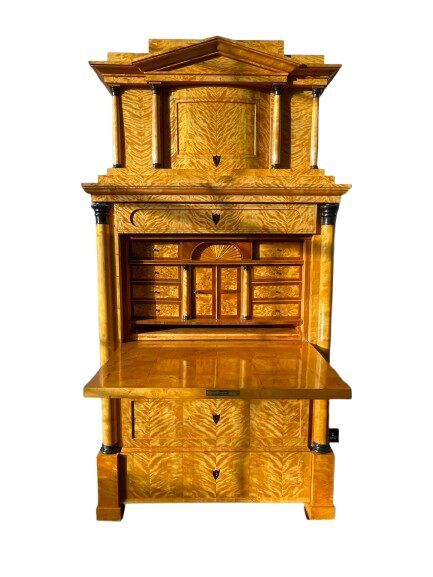
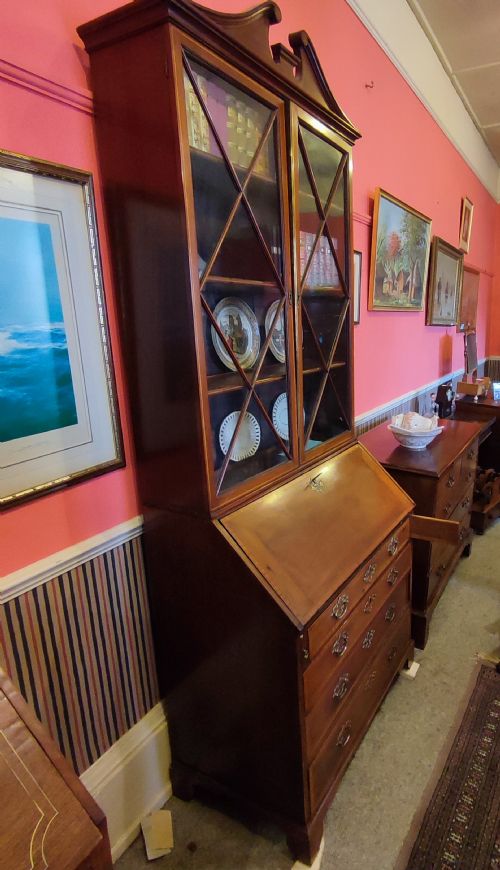
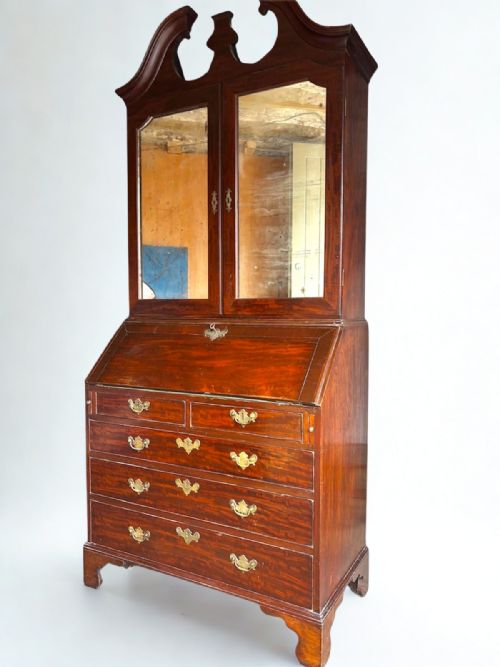
A bureau cabinet with pediment combines a fall-front writing desk below with a shelved bookcase above, crowned by a distinct architectural pediment. These grand pieces emerge across the Georgian, Regency, and Victorian eras, reflecting the domestic needs of literate households.
The pieces on this page span the eighteenth and nineteenth centuries, including George II, George III, and Regency examples alongside Victorian interpretations. Collectors meet both tall floor-standing variants and occasional designs on stands.
Mahogany predominates among the surviving stock, accompanied by walnut, rosewood, oak, and satinwood, often enhanced by marquetry inlay or mirror panels. The upper section usually encloses shelves behind glazed doors beneath the crowning pediment.
How they were made
Joiners constructed these cabinets using dense timbers such as mahogany and walnut, frequently applying rich veneers over secondary woods for stability. Cabinetmakers shaped structural carcasses to support heavy upper bookcase sections and fitted hinged fall-front desks with internal pigeonholes and small drawers.
Glazing bars divided glass panels in upper doors with precise joinery, while brass hardware secured drawers and fall-fronts. Pediments were carved or moulded from solid timber, often taking swan neck or architectural triangular forms to cap the upper bookcase.
Materials recorded across the available pieces feature brass hardware, glass panels, marquetry inlay, and satinwood alongside primary cabinet timbers.
What varies in quality
The refinement of the timber selection and the crispness of the carving dictate the standing of a piece. Finer examples display carefully chosen grain patterns on the fall-front and drawer fronts, alongside well-proportioned pediments and harmonious proportions.
Internal joinery standard sets apart superior cabinets, visible in the dovetailing of small drawers and the complexity of secret compartments within the bureau interior. Original brasses and unblemished mirror panels or clear glass further elevate the standing of a cabinet.
The Bureau Cabinet with Pediment Glossary
- Pediment
- An architectural crowning feature above the upper bookcase doors, taking forms such as a swan neck or triangle. It draws the eye upward and defines the classical proportions of the cabinet.
- Fall-front
- A hinged writing flap that pulls down to form a horizontal desk surface. It conceals an interior arrangement of pigeonholes and small drawers.
- Secretaire
- A specialised writing cabinet or drawer housing a fitted desk interior. It often operates with a pull-out drawer front rather than a hinged flap.
- Marquetry inlay
- Decorative patterns formed by fitted veneers of various coloured woods into a contrasting ground. This technique creates geometric or floral motifs on the exterior surfaces.
- Glazing bar
- A narrow wooden strip holding individual panes of glass within the upper cabinet doors. Fine bars indicate careful cabinetmaking.
Bureau Cabinet with Pediment: Frequently Asked Questions
What is a bureau cabinet with pediment?
A bureau cabinet with pediment is a tall wooden furniture form featuring a writing desk compartment below and a shelved bookcase above, finished with an architectural top.
Cabinetmakers built these pieces to serve as both a private writing desk and a formal library display unit for the home.
How do I date a bureau cabinet?
Dating relies on examining the timber species, construction methods, and stylistic details such as bracket feet, pediment shape, and handle hardware.
Georgian examples typically show solid mahogany or walnut construction with hand-cut dovetails, whereas later nineteenth-century pieces display different secondary woods and manufacturing marks.
Where were bureau cabinets placed?
These large pieces stood in studies, libraries, and formal reception rooms where owners managed correspondence and displayed leather-bound volumes.
Because of their height and visual weight, they anchored the wall of a principal room in larger houses.
How do I care for a mahogany cabinet?
Maintaining mahogany and walnut surfaces involves keeping the wood away from direct sunlight and sudden temperature shifts to prevent veneer cracking.
Applying occasional wax polish helps nourish the timber and preserves the natural lustre of the finish over decades of use.