


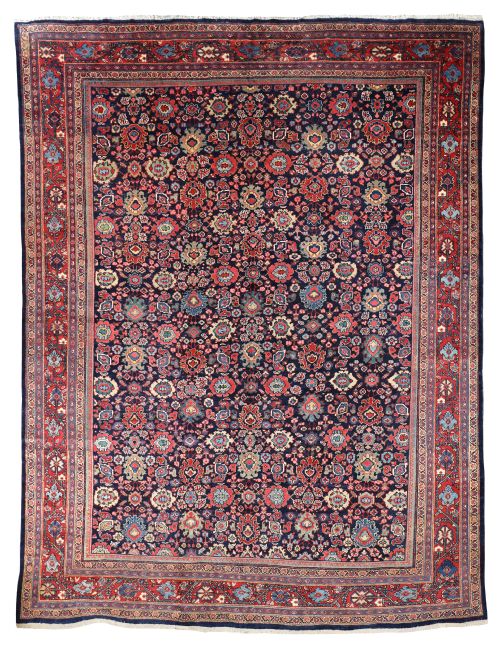


Sultanabad Woven Carpet
A sultanabad woven carpet brings enduring Persian design into a room, offering large-scale patterns and rich heritage that decorators seek for grand spaces.
Sultanabad Woven Carpet
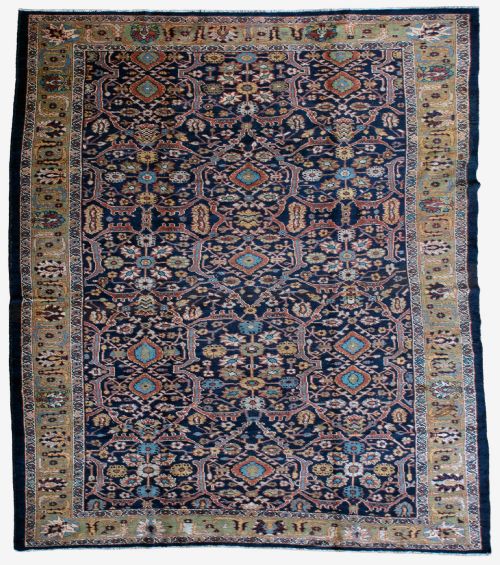
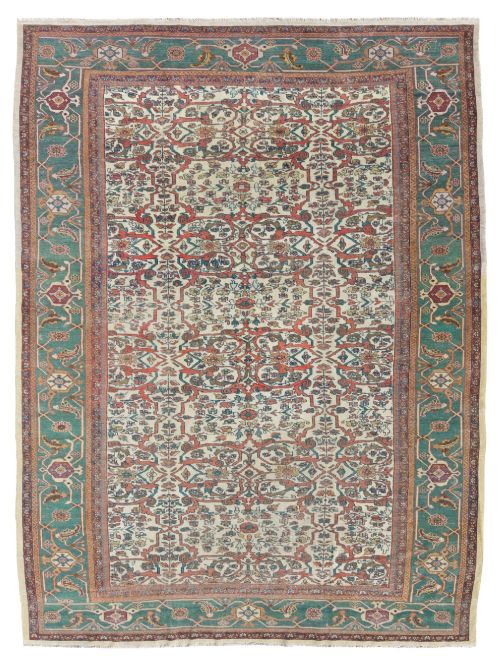
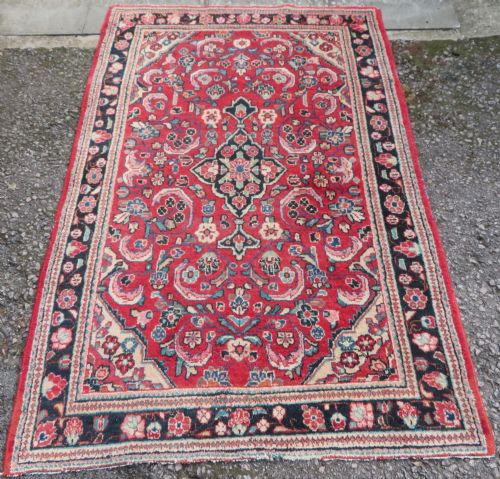
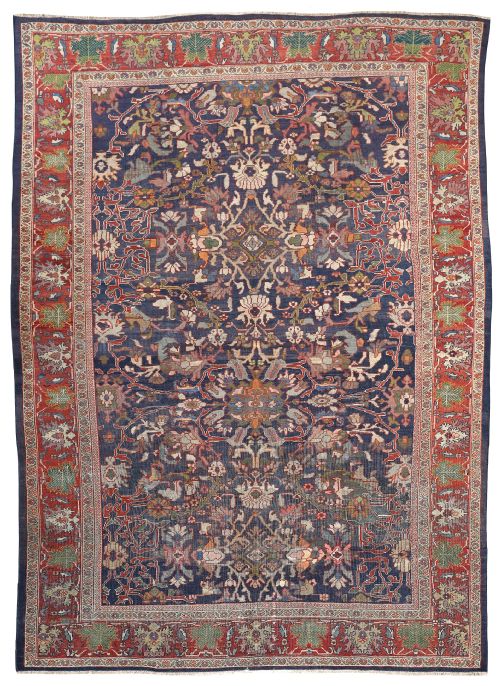
When you search for a sultanabad woven carpet, you are looking at large Persian floor coverings created during the late Victorian era through the early decades of the twentieth century. These pieces encompass related workshop styles including Mahal and Ziegler productions, originating from the Arak region of Persia.
The version you are most likely to meet on this page is an antique room-size carpet woven between 1880 and 1930. These carpets typically feature expansive floral motifs and muted palettes adapted for Western tastes of the period.
Materials and Techniques
These carpets are constructed with wool pile knotted onto sturdy cotton foundations. The quality of the wool determines the tactile depth, while the cotton warp and weft provide the structural grid necessary for large formats.
Weavers employed traditional Persian hand-knotting techniques to execute grand floral designs and characteristic Mostafi patterns. Natural dyes historically contributed to the nuanced colour depth visible across these antique room-size rugs.
These grand Persian carpets crossed continents by steamship just to be walked on by Victorian tea drinkers.
What Varies in Quality
The distinction between standard examples and the finest pieces lies in the subtlety of the colour palette and the crispness of the drawn design. Finer carpets exhibit harmonious dye saturation and balanced proportions across room-scale dimensions.
Structural integrity and pile density also separate tiers of quality, with tighter knots preserving intricate floral details through decades of footfall. The historical attribution to specific workshops like Ziegler adds another layer of distinction.
Ziegler and Co
The Sultanabad Woven Carpet Glossary
- Sultanabad
- A regional market and style designation for Persian carpets woven in and around the city of Arak, known for large-scale floral patterns. These carpets were largely produced for export to Western markets during the late nineteenth century.
- Mahal
- A category of rugs and carpets originating from the smaller villages surrounding Sultanabad. They generally feature bolder, more rustic interpretations of classical Persian designs.
- Ziegler
- A designation often applied to carpets produced or commissioned by the Manchester firm Ziegler & Co, which operated dye works and workshops in Persia. These pieces typically display softer, more subdued palettes tailored for European drawing rooms.
- Mostafi
- A classic Persian garden and floral repeating design pattern featuring stylized blossoming motifs arranged within a structured lattice framework. This design appears on select room-size carpets from the region.
- Warp
- The vertical cotton threads stretched taut on the loom that form the foundation of the carpet. The exposed fringe at either end of the rug consists of these finished warp threads.
Sultanabad Woven Carpet: Frequently Asked Questions
Where were sultanabad woven carpets made?
These carpets were woven in the Arak region of Persia, historically known as Sultanabad, alongside surrounding villages such as Mahal. Production was largely organised to supply European and American demand for grand room-size floor coverings.
Weavers utilised local wool and traditional Persian knotting techniques within these regional workshops, often incorporating designs tailored specifically for Western aesthetic preferences.
How do I date a sultanabad carpet?
Dating relies on stylistic markers, dye characteristics, and structural analysis typical of the period between 1880 and 1930. Earlier pieces often display more organic natural dyes and looser village-style weaves.
Comparing the scale of the floral motifs and the specific wool texture against documented examples from the Victorian era helps narrow the decade of production.
How should I care for an antique carpet?
Protect the wool pile by placing the carpet in a low-traffic area or using a breathable, high-quality underlay to prevent slippage and friction. Regular gentle vacuuming without a beater bar removes trapped grit.
Professional specialist cleaning is recommended every few years to maintain the wool fibres and preserve the integrity of the cotton foundation.
What is the difference between Mahal and Ziegler?
Ziegler carpets generally refer to productions associated with the Manchester firm that influenced design and colour palettes for Western homes. They often feature muted tones and refined interpretations of classic Persian motifs.
Mahal carpets typically emerge from surrounding independent villages and can exhibit slightly more rustic wool textures and bolder, varied colour combinations.