






Studded Leather Tub Armchairs
Studded leather tub armchairs combine supportive rounded backs with rich hides, offering comfort and presence for studies and libraries.
Studded Leather Tub Armchairs
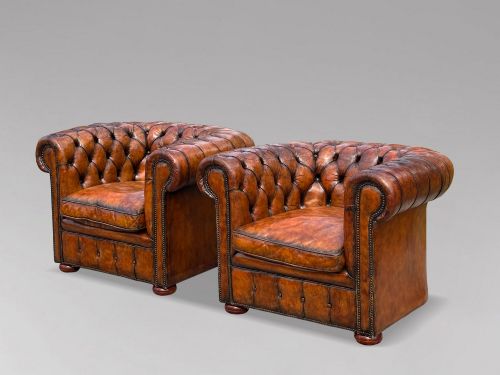
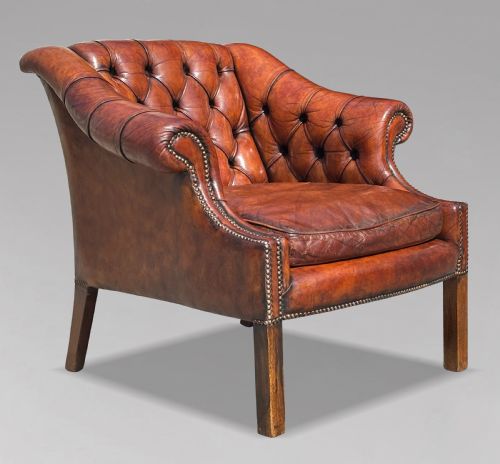
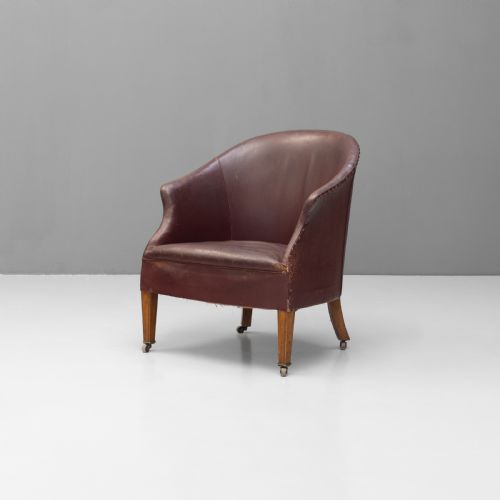
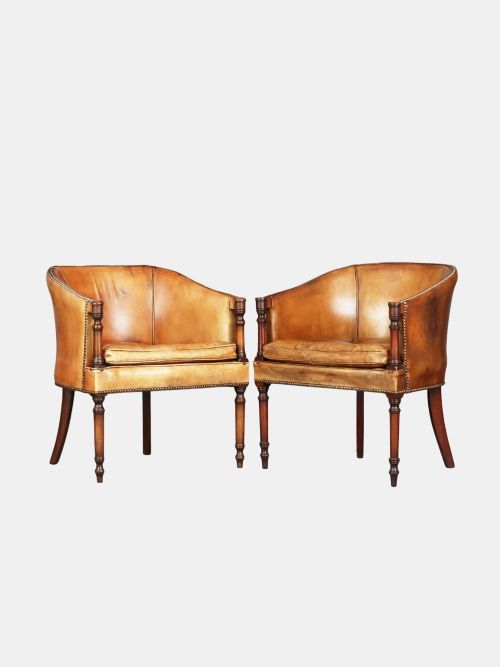
Studded leather tub armchairs encompass low-slung seating forms designed for library, desk, and club use, originating primarily across the nineteenth and early twentieth centuries. When you search for studded leather tub armchairs, you encounter diverse iterations ranging from sturdy Victorian captain's seats to Edwardian library chairs and 1930s art deco club chairs.
The dominant forms on this page include mahogany, oak, walnut, and burr elm frames fitted with leather seats and brass studding. These pieces frequently manifest as swivelling desk chairs, horseshoe designs, and low occasional tub seating meant for reading rooms and offices.
How they were made
Frames rely on solid timbers such as mahogany, oak, walnut, beech, and burr elm, shaped into curved backs and supportive armrests. Woodworkers constructed these skeletons to bear weight while maintaining the continuous enclosed sweep characteristic of tub and horseshoe seating.
Upholstery involves leather hides secured tightly to the wooden frame using brass studs or tacks driven along the seams. This method combines structural retention of the padding with a neat decorative border of metal fasteners.
Studded Leather Tub Armchairs Retail Price Guide 2026
Typical asking prices for studded leather tub armchairs among the pieces listed under this phrase on Sellingantiques today, from the lower quarter to the upper quarter. They describe what is for sale here now, not the wider market.
Listings span the nineteenth century through the 1930s, featuring Victorian, Edwardian, and Art Deco styles in oak, mahogany, walnut, and leather.
What varies in quality
Quality rests upon the selection of timber and the depth of figure in woods like mahogany, walnut, and burr elm. Subtleties in frame joinery and the harmonious integration of the curved wooden back distinguish superior cabinetwork.
The grade of leather and the execution of the brass studding define the tactile outcome. Supple hides paired with precise, even placement of metal tacks demonstrate higher craftsmanship than rigid leather and uneven fastening.
The Studded Leather Tub Armchairs Glossary
- Tub chair
- An armchair featuring a continuous curved back and arms that form a single enclosed hull. This design wraps around the sitter for increased draught exclusion and comfort.
- Captain's chair
- A sturdy wooden armchair, often featuring a low spindle or solid curved back, frequently adapted for office or desk use. Many examples incorporate swivelling mechanisms and leather upholstered seats.
- Fauteuil
- An open-armed upholstered armchair originating in France, often built with exposed wooden framing in styles such as Louis XVI. These pieces combine formal elegance with library utility.
- Club chair
- A deep, comfortable armchair upholstered in leather, designed for relaxation in studies and smoking rooms. They often display pronounced brass studding along the arm and back contours.
- Hide
- Animal skin prepared for upholstery use, valued for its durability and tactile ageing properties. In these listings, tan, brown, burgundy, and red hides predominate.
Studded Leather Tub Armchairs: Frequently Asked Questions
Where were these chairs used?
These chairs historically populated professional studies, private libraries, and executive offices alongside large wooden desks.
Their robust construction and comfortable leather upholstery suited them for daily administrative work and quiet reading.
How do I care for leather upholstery?
Leather upholstery benefits from regular dusting and occasional treatment with appropriate conditioning balms to maintain flexibility.
Keep these chairs away from direct heat sources and strong sunlight to prevent the hide from drying and cracking.
How are different periods identified?
Periods are identified by examining the timber species, framing style, and turning details characteristic of Victorian, Edwardian, or Art Deco manufacturing.
Comparing structural joinery and hardware like brass studs helps place an armchair within its nineteenth or early twentieth-century context.