

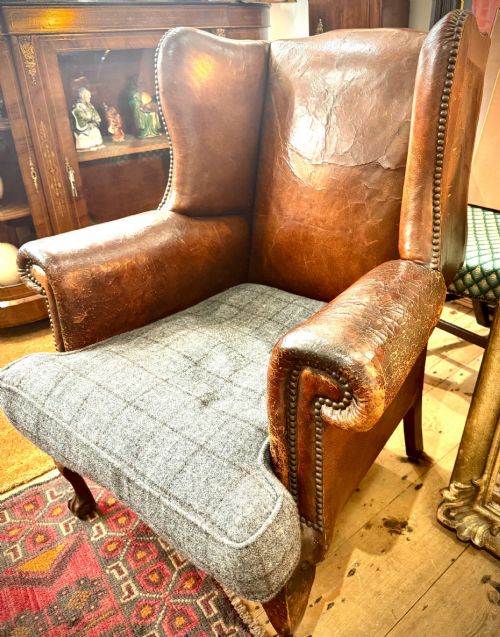
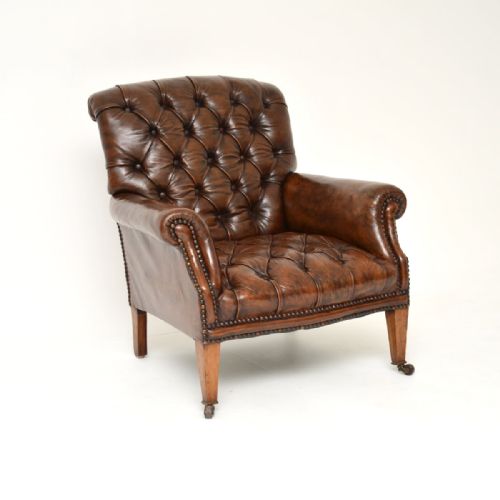

Studded Leather Fireside Chair
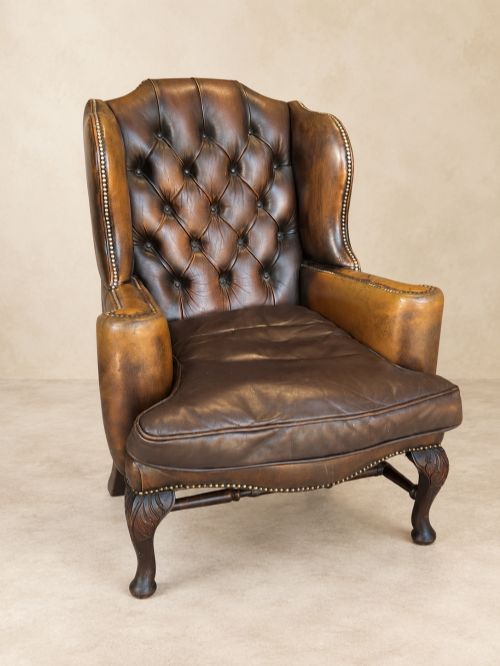
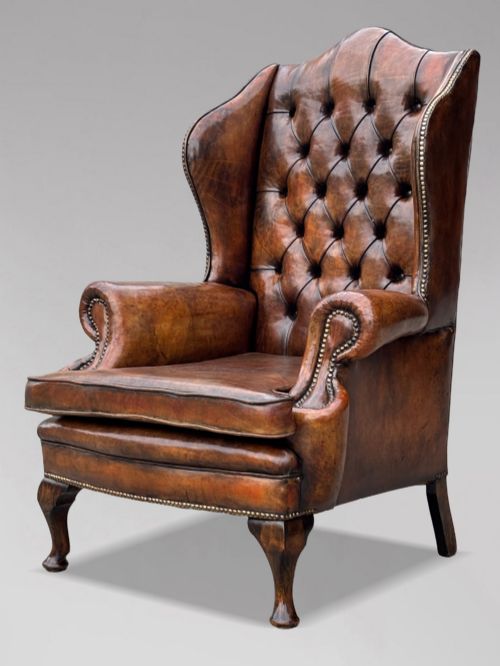
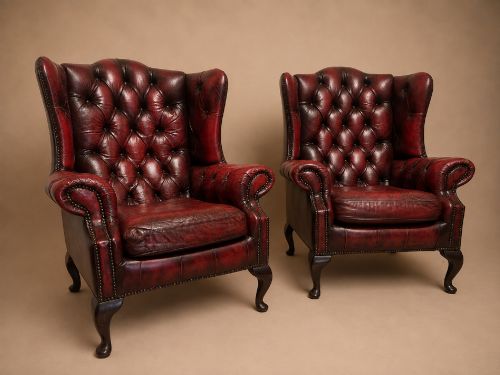
A studded leather fireside chair provides deep-seated comfort, combining rich hide with supportive wings.
Studded Leather Fireside Chair
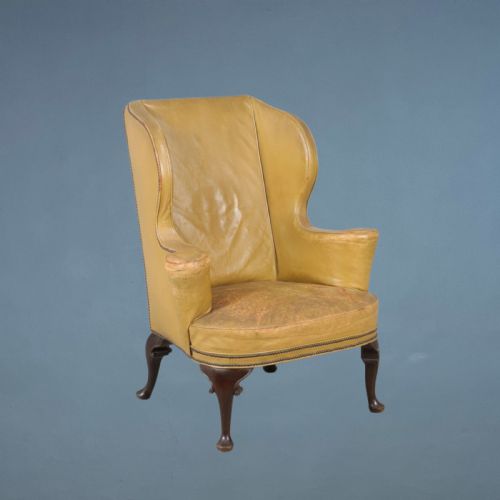
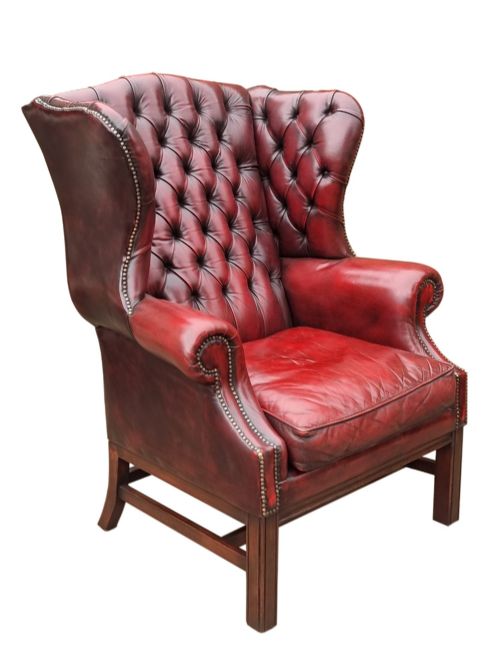
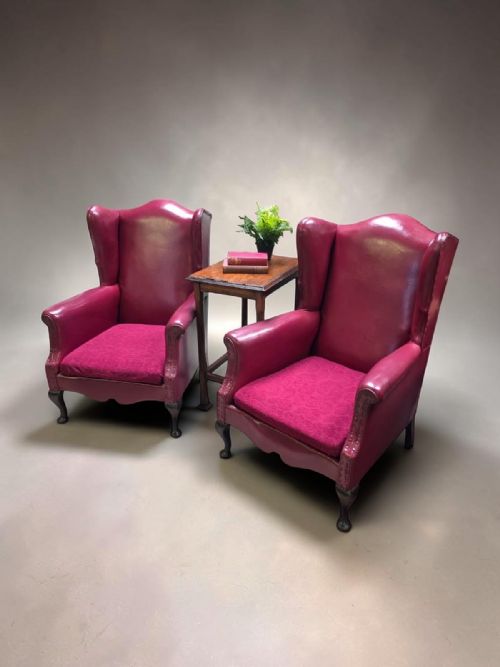
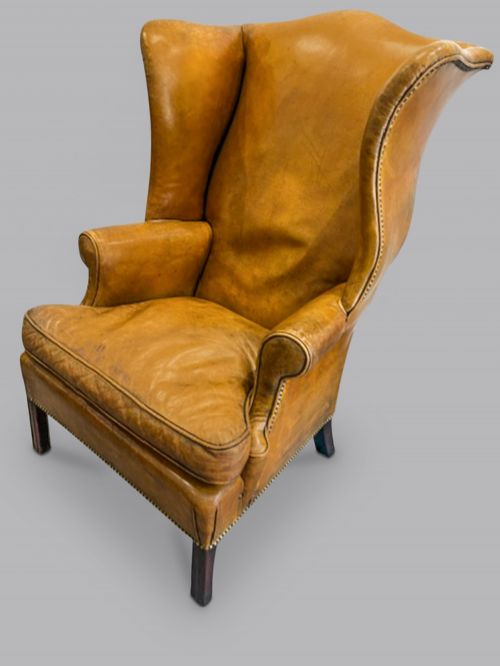
A studded leather fireside chair takes several distinct forms, most notably the high-backed wing armchair designed to keep draughts away from the sitter. These seating options emerge across the Georgian, Victorian, and Edwardian eras, spanning periods from the eighteenth century into the 1930s.
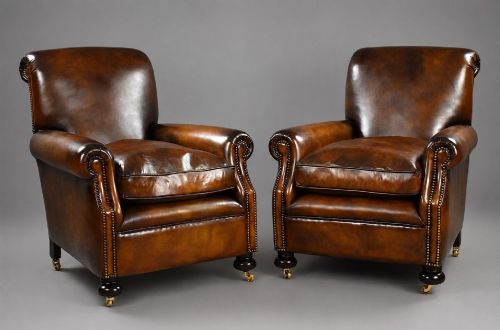
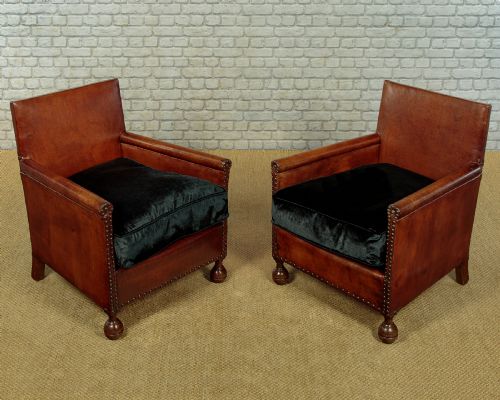
The wingback configuration dominates the selection, accompanied by club chairs and occasional library armchairs. Makers also produced variations including rocking chairs and low armchairs utilising similar materials.
Examples appear in revival styles alongside genuine period pieces, referencing George II, George III, and Queen Anne designs. Scottish School and French pieces also contribute to the range of available forms.
What varies in quality
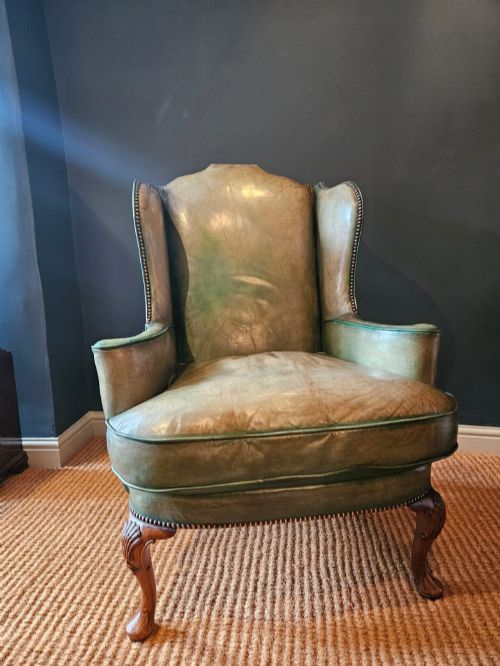
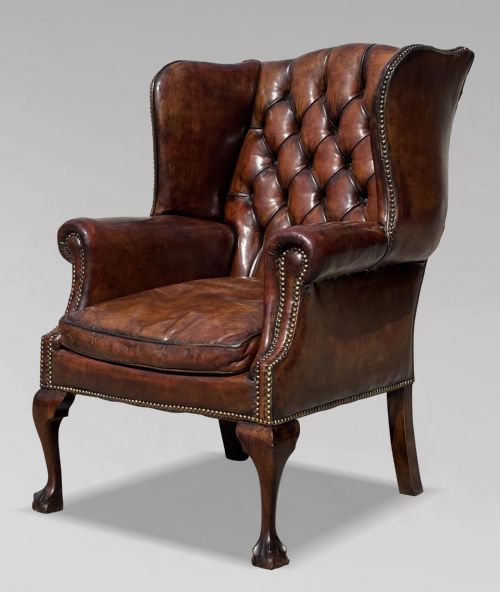
The refinement of the wooden framework dictates much of the character, particularly where cabriole legs, carved details, or claw and ball feet appear. Timbers selected for the frame range from standard commercial wood to figured walnut and rich mahogany.
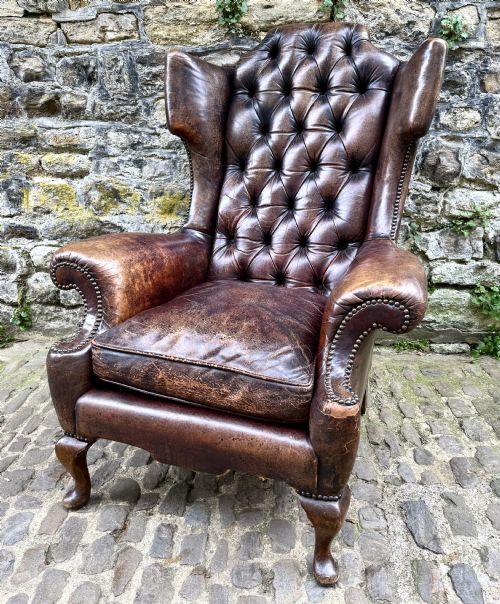
Leather quality and treatment define the surface appearance, with hand-dyed and hand-coloured hides developing distinct patinas over decades. The precision of the brass studding and the depth of the buttoning reflect the original maker's skill.
Several chairs arrive with stories written straight into the brass studs, holding down decades of fireside heat.
The Studded Leather Fireside Chair Glossary
- Wingback
- An armchair featuring protective side panels designed to shield the occupant from cold draughts. These wings project forward from the upholstered backrest.
- Cabriole leg
- A furniture leg that curves outward in a convex arc and tapers inward in a concave arc, terminating in a foot. This form appears frequently on walnut frames.
- Club chair
- A low, deep-seated armchair upholstered in leather. These pieces prioritise heavy padding and relaxed posture.
- Button-back
- An upholstery technique where indentations are formed across the backrest using buttons secured through the padding. This method pulls the leather tight and creates a patterned surface.
Studded Leather Fireside Chair: Frequently Asked Questions
How do I identify a Georgian leather chair?
Georgian pieces display specific architectural proportions and timber choices, often utilising mahogany or walnut for exposed legs. Look for period-appropriate joinery and classical design references.
Later revival pieces built in the twentieth century imitate these earlier aesthetic markers. Examining the internal construction and wear patterns helps clarify the true age.
What is a wingback armchair used for?
Wingback chairs were originally positioned near fireplaces to protect sitters from cold draughts circulating in large rooms. The characteristic side panels trapped heat around the head and upper body.
Over time, they transitioned into general library and living room seating. Their high backs continue to offer substantial head and neck support.
How do I care for antique leather?
Antique leather requires consistent maintenance to prevent the hide from drying and cracking over time. Gentle cleaning removes surface dust without stripping natural oils.
Applying suitable leather balms preserves the suppleness of nineteenth-century and older surfaces. Direct sunlight should be avoided to prevent fading.
What distinguishes Victorian styles here?
Victorian chairs often feature heavier proportions, deep buttoning, and darker wood frames. These pieces frequently incorporate brass studding along the armrests and wings.
Craftsmen of this era combined traditional comfort with ornate decorative touches. Examples range from library armchairs to low club seating.