



Studded Dome Top Chest
A studded dome top chest is a heavily reinforced travel and storage container that brings tactile historical presence and robust utility to any room.
Studded Dome Top Chest
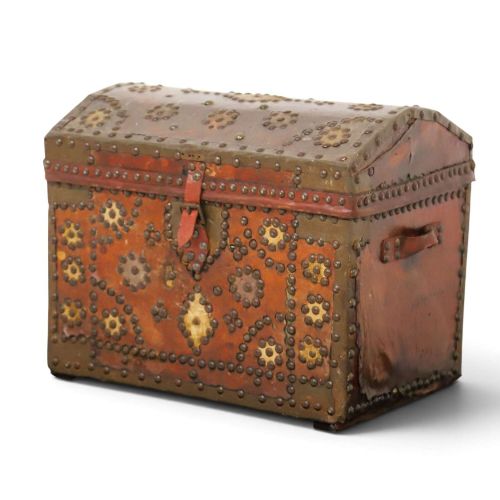
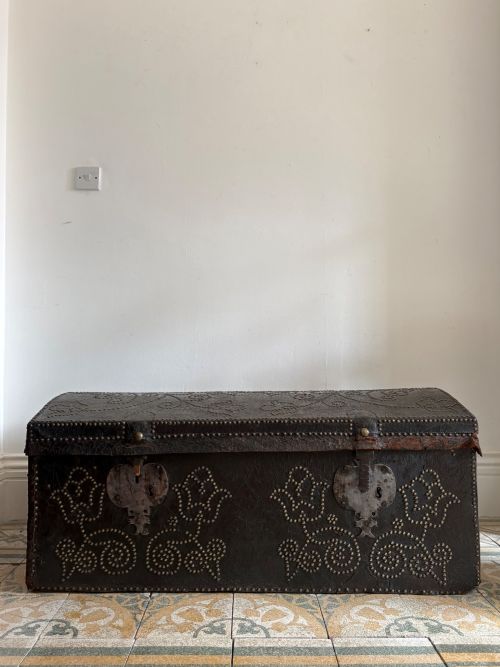
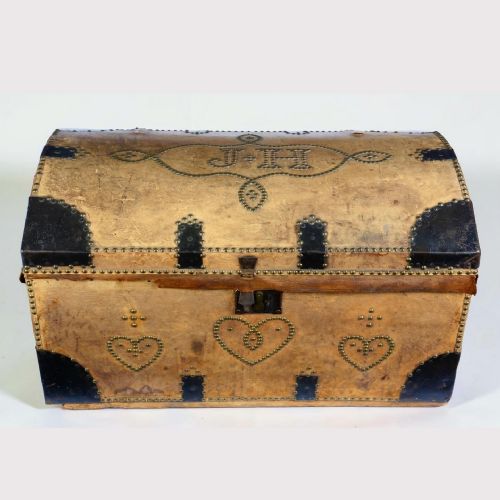
When you search for a studded dome top chest, you find heavily bound storage pieces designed to shed water and withstand hard travel. These trunks appear in forms ranging from large Dutch and Ottoman carriers to smaller tea caddies and campaign cases.
The materials span oak, pine, and hide, held together by iron and brass studwork that forms geometric patterns across the curved lids. You encounter pieces originating from English, French, Spanish, and Scandinavian workshops across the seventeenth, eighteenth, and nineteenth centuries.
Most examples rely on a wooden core wrapped in leather, goatskin, or painted finishes, anchored by metal bands and carrying handles. The curved top design serves a practical purpose, preventing moisture from pooling during transit.
How they were made
Makers constructed the primary carcase from sturdy timbers like oak or pine, then clad the exterior in animal hide, goatskin, or leather. They secured these organic coverings using rows of iron or brass studs, which doubled as structural reinforcement and decorative surface work.
Heavy metal carry handles and corner brackets were fastened to withstand the rigours of carriage and ship travel. Paint and varnish finishes were applied to specific regional pieces, such as Scandinavian folk art boxes and Baroque revival chests.
Studded Dome Top Chest Retail Price Guide 2026
Typical asking prices for studded dome top chest among the pieces listed under this phrase on Sellingantiques today, from the lower quarter to the upper quarter. They describe what is for sale here now, not the wider market.
Listings feature items built from oak, pine, burr walnut, and iron, spanning the seventeenth through to the nineteenth century.
What varies in quality
The distinction between ordinary utility boxes and finer specimens lies in the precision of the metal studwork and the integrity of the hide cladding. Denser hardwoods and intact original leather coverings command greater regard among collectors.
Provenance and maker attribution elevate certain examples, particularly those bearing the stamps of firms like Chapple and Sons or Arthur Wannop. The complexity of the decorative iron or brass patterns also signals the ambition of the original workshop.
Arthur Wannop·Chapple and Sons
The Studded Dome Top Chest Glossary
- Dome top
- A curved lid construction designed to shed water and increase internal capacity. This shape characterises travel trunks intended for heavy transit.
- Studwork
- Metal pins or nails driven into the exterior surface in decorative and structural rows. These elements secure the leather covering to the wooden carcase.
- Coffer
- A heavy wooden box used for storing valuables and documents. These pieces often feature reinforced bands of metal and secure locking mechanisms.
- Campaign case
- A portable storage trunk built for military officers on the move. Such pieces typically incorporate robust carrying handles and durable leather or wood construction.
Studded Dome Top Chest: Frequently Asked Questions
How were studded dome top chests used originally?
These chests served as durable luggage for transporting clothing and valuables across land and sea. Their curved lids prevented water accumulation during long journeys.
Inside homes, they doubled as secure storage for linens, documents, and precious items away from damp conditions.
Where should I place a dome top chest?
These pieces suit living spaces and bedrooms where they provide both surface area and internal storage. Position them at the foot of a bed or as a coffee table.
Keep them away from direct sunlight and strong heat sources to protect the historic leather and wood.
How do I tell an eighteenth century chest apart from a nineteenth century one?
Earlier pieces from the seventeenth and eighteenth centuries often display heavier iron bindings and simpler, utilitarian hide coverings. Eighteenth century Dutch and Spanish examples typically show distinct regional stud patterns.
Nineteenth century versions frequently incorporate refined brass work and stylistic revivals such as the Baroque style.
What is the difference between a coffer and a trunk?
A coffer traditionally refers to a heavy, heavily fortified box built for safekeeping valuables with thick wooden walls. A trunk is generally lighter and designed primarily for travel and clothing transport.
Both forms frequently share the characteristic studded dome top construction seen in this selection.