



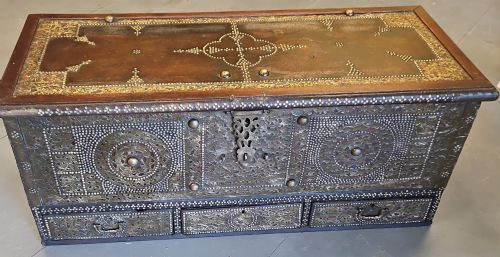
Studded Coffer Chest
A studded coffer chest brings robust utility and tactile metalwork together, offering sturdy storage wrapped in hide, leather, or hardwood.
Studded Coffer Chest
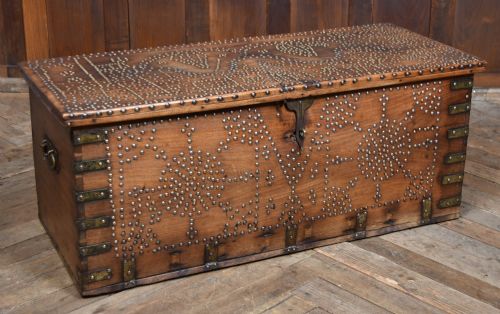
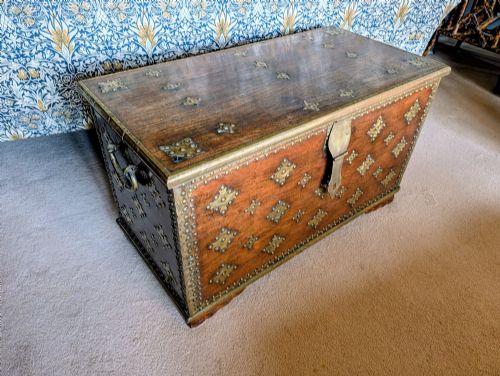
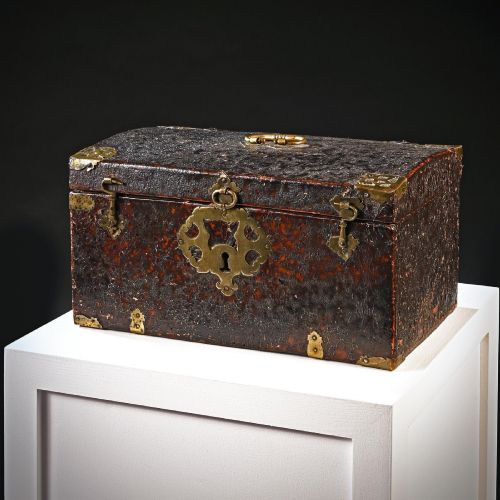
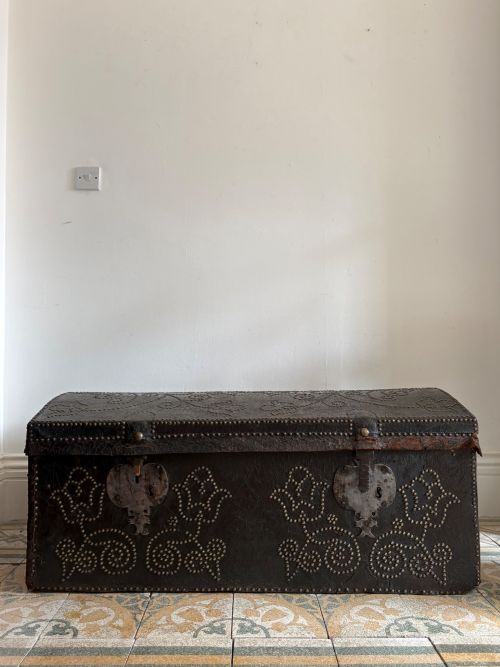
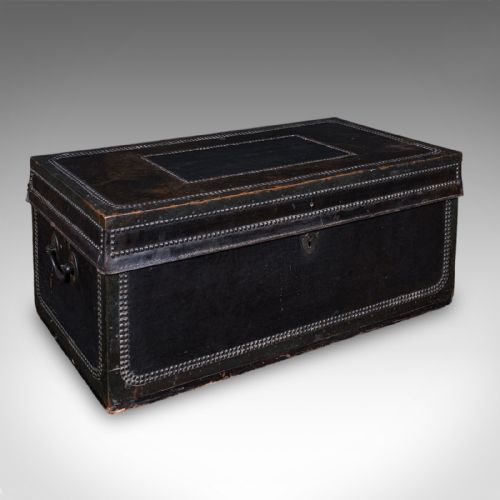
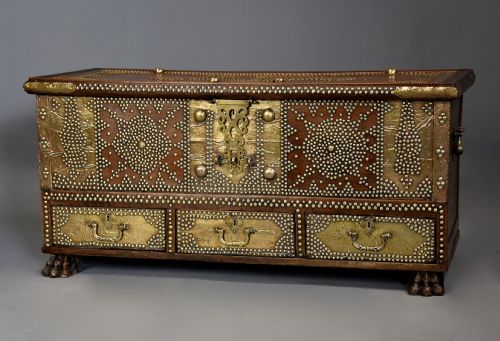
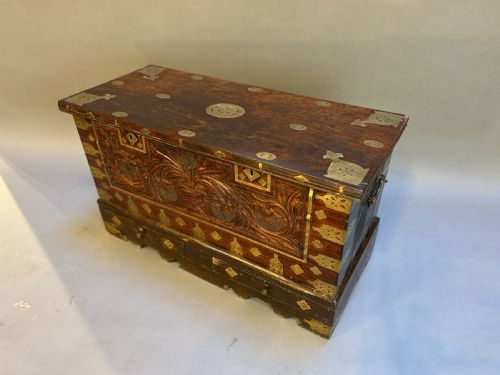
A studded coffer chest serves as a robust storage container designed for travel, household organisation, or display, spanning centuries of craftsmanship. When exploring this selection, a buyer encounters everything from seventeenth-century Spanish and Dutch leather-clad trunks to nineteenth-century Zanzibar trade chests and British campaign boxes.
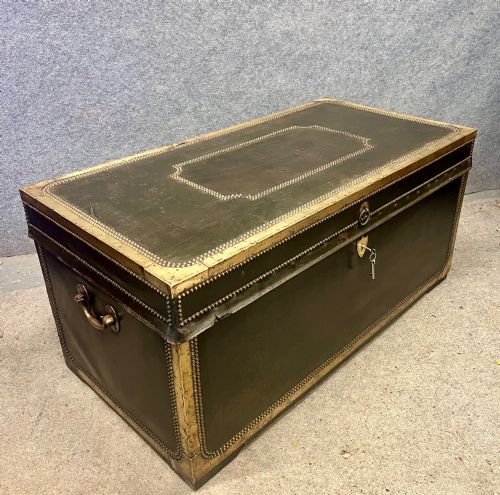
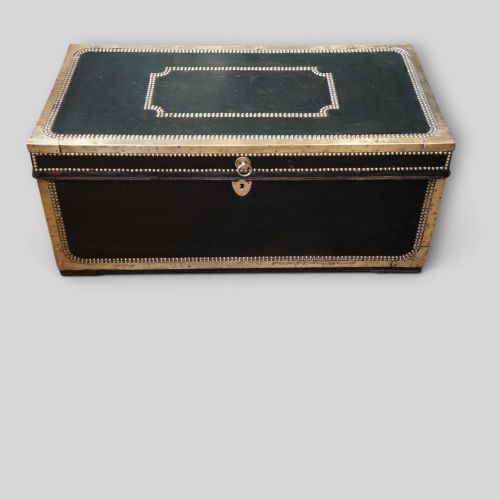
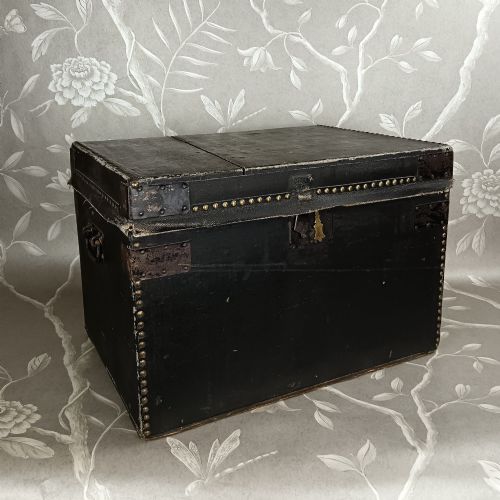
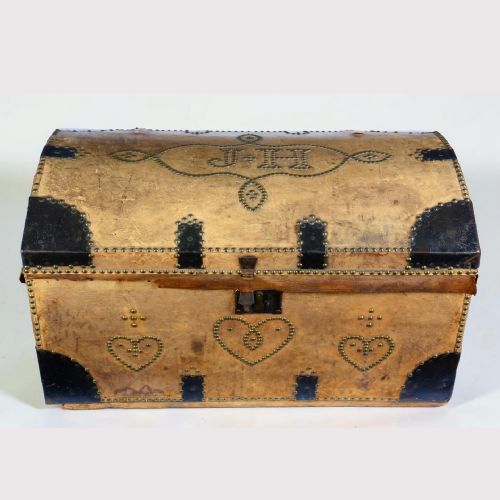
The forms vary widely, encompassing dome-top travelling trunks, flat-topped blanket boxes, ottomans, and heavy strongboxes. Materials range from native oak and mahogany to exotic padouk, camphor wood, and teak, frequently clad in hide or leather and secured with metal bindings.
Origins stretch across Europe, Britain, and trade routes reaching East Africa, China, and India. This geographic breadth ensures that each studded coffer chest reflects the specific utility and aesthetic preferences of its place and period of manufacture.
How They Were Made
Constructed primarily from sturdy timbers such as oak, teak, padouk, or camphor wood, these pieces rely on traditional joinery to withstand the rigours of travel and domestic use. Artisans then clad the wooden carcass in animal hide, leather, or iron plating, protecting the organic material beneath from dampness and rough handling.
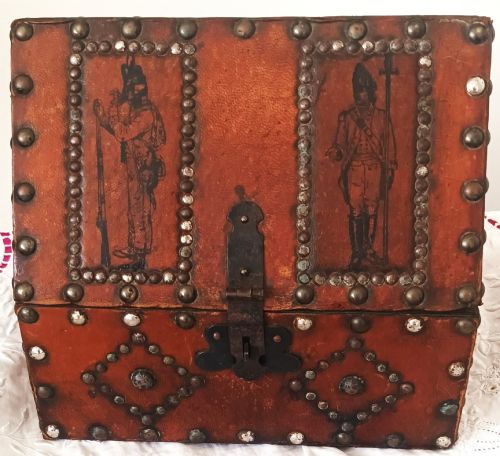
Decorative and structural reinforcement comes from intricate brass studwork, nailhead detailing, and metal binding. Individual studs are hammered by hand into geometric patterns or borders, securing the leather covering while creating the distinctive surface texture that defines the type.
Several travel trunks preserve their original owner initials punched neatly in brass studs across the hide lid.
What Varies in Quality
The standard of a studded coffer chest depends largely on the integrity of its primary timber framework and the preservation of its original leather or hide cladding. Pieces retaining their complete brass studwork and functional iron carrying handles demonstrate superior survival through centuries of use.
Sophistication of regional manufacture also distinguishes examples, as seen in the intricate brass ornamentation of Zanzibar trade chests compared to utilitarian European travel trunks. Maker attribution, through stamped locks or brass maker plates, elevates an example above anonymous domestic storage.
Samuel Pratt·Wm Insall of Bristol·Arthur Wannop·Chapple and Sons·Seabrook of St Pauls London
The Studded Coffer Chest Glossary
- Campaign trunk
- A collapsible or robustly reinforced box designed for military officers on the move during the eighteenth and nineteenth centuries. These items often include brass corners and recessed carrying handles.
- Zanzibar chest
- A heavy wooden storage box associated with East African trade routes, typically constructed from teak or padouk and decorated with elaborate brass studwork and strapwork.
- Coffer
- A large wooden chest traditionally used for holding valuables, textiles, or documents. They frequently feature heavy lids and robust iron or leather reinforcement.
- Camphor wood
- A fragrant timber utilised extensively in trade chests and trunks because its natural scent repels insects. It is durable and highly valued in tropical furniture production.
- Hide
- Untanned or heavy tanned animal skin used to cover wooden trunks for weather resistance and durability. It ages with a distinct patination over centuries.
Studded Coffer Chest: Frequently Asked Questions
What is a studded coffer chest used for?
These pieces functioned primarily as secure travelling luggage, shipboard cargo containers, or domestic storage repositories for valuable textiles and documents.
In modern interiors, they serve equally well as coffee tables, blanket boxes, or statement storage furniture at the foot of a bed.
How do I date a leather studded trunk?
Dating relies on examining the construction methods of the internal woodwork, the style of the iron or brass hardware, and the type of leather or hide used.
Earlier seventeenth-century examples display heavy iron mounts and Spanish or Dutch construction traits, whereas nineteenth-century pieces often incorporate exotic woods and stamped brass details.
Are camphor wood chests safe for clothes?
Camphor wood produces a distinct natural aroma that has historically protected stored textiles from moths and dampness.
This makes period camphor chests practical for storing woollens, linens, and winter blankets in contemporary homes.
What is the difference between a coffer and a trunk?
A coffer generally denotes a heavy, stationary storage chest intended for a fixed location within a great house or church.
A trunk implies a piece designed for travel, frequently fitted with carrying handles, leather cladding, and protective metal bindings.