

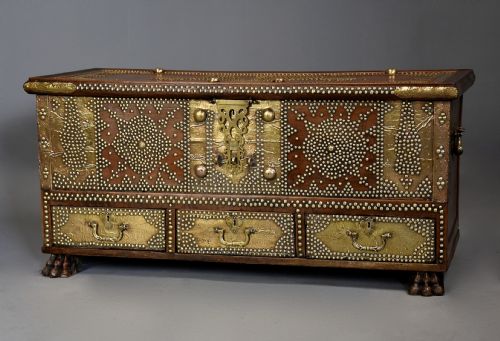
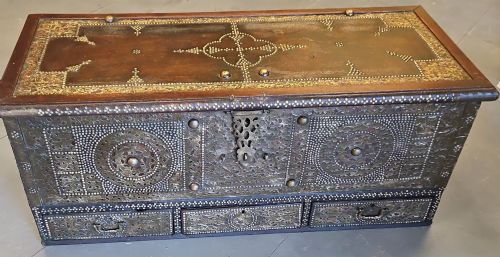


Stud Studded Wooden Chest
A stud studded wooden chest brings rugged texture and serious storage into a room, combining timber with heavy metal fastenings.

Stud Studded Wooden Chest
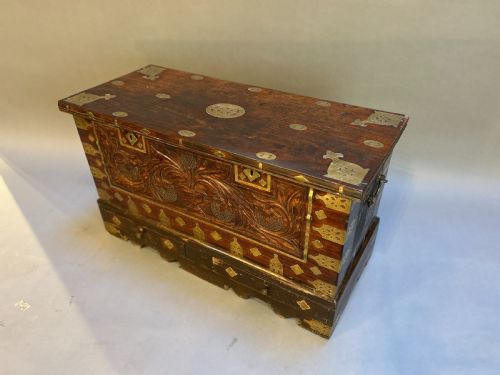
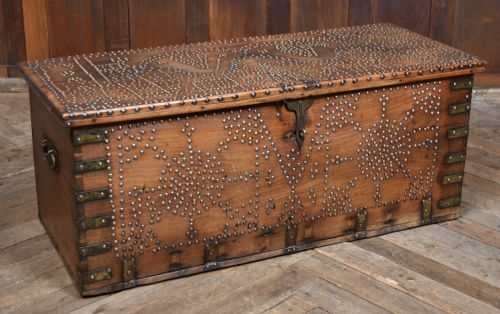
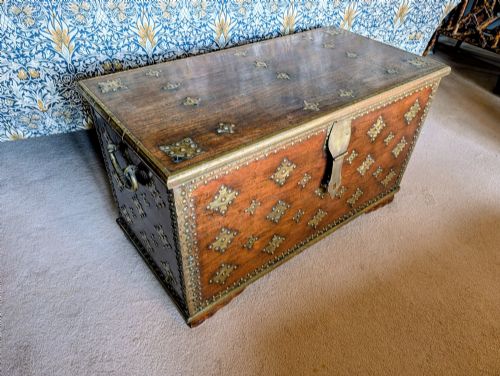
A stud studded wooden chest spans robust domestic storage boxes, travellers' trunks and traders' chests originating from diverse global traditions. These pieces appear across multiple eras, ranging from seventeenth-century leather-covered boxes to late nineteenth-century iterations.
Makers utilised durable timbers such as teak, padouk, pine, oak and camphorwood to construct these functional receptacles. Metal studs, iron bands and brass capping reinforce the wooden panels while creating decorative geometric patterns across the exterior.
Materials and construction
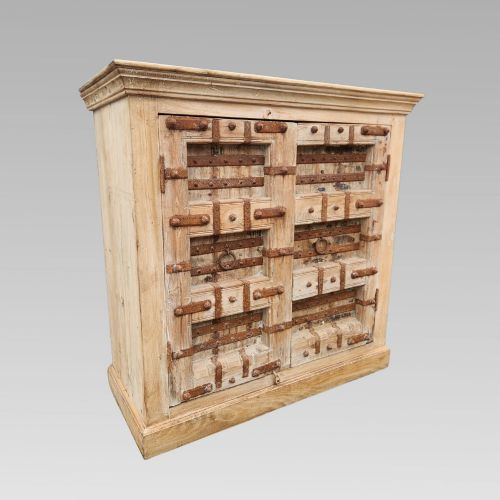
Craftsmen built the primary structures using dense hardwoods like teak and padouk, alongside domestic timbers such as pine and oak. Metal components, specifically brass studs, iron bindings and corner caps, were secured to the exterior surfaces to reinforce joints and protect against heavy transit use.
Surface treatments varied from natural polished timber and applied leather or hide to hand-painted finishes on Scandinavian and Victorian boxes. Metalwork ranges from simple iron strapping to intricate brass stud decoration arranged in traditional patterns.
Stud Studded Wooden Chest Retail Price Guide 2026
Typical asking prices for stud studded wooden chest among the pieces listed under this phrase on Sellingantiques today, from the lower quarter to the upper quarter. They describe what is for sale here now, not the wider market.
Materials span domestic pine and oak alongside exotic hardwoods including padouk, camphorwood and rosewood.
Quality and execution
The calibre of a piece rests upon the density of the primary timber, the integrity of the original metal bindings, and the precision of the studwork. Heavier tropical hardwoods and intact brass or iron hardware indicate sturdier construction.
Original surface preservation distinguishes finer examples, particularly where leather coverings, hand-painted decoration or patinated brass retain their character. Altered or replacement hardware and structural timber replacements alter the original integrity of the piece.
The Stud Studded Wooden Chest Glossary
- Zanzibar chest
- A heavy hardwood storage chest traditionally associated with East African trade routes, characteristically embellished with brass studwork and strap hinges.
- Coffer
- A large wooden chest used historically for holding valuables, distinguished by a hinged lid and robust proportions.
- Blanket box
- A domestic chest designed primarily for storing linens and blankets, usually constructed from pine, oak or tropical hardwoods.
- Camphorwood
- An aromatic timber utilised in trunk construction for its insect-repellent properties, frequently found in campaign and travel chests.
- Strong box
- A secure metal-bound or reinforced small box intended for money or documents, often featuring painted finishes or robust locking mechanisms.
Stud Studded Wooden Chest: Frequently Asked Questions
What is a Zanzibar chest?
A Zanzibar chest is a distinct form of trading vessel storage made from dense hardwoods like teak or padouk and decorated with brass studding.
These pieces were built for maritime transport and long-distance trade, featuring robust metal hinges and fastening plates.
How were studded chests used?
These chests served primarily for secure transport and domestic storage of personal valuables, textiles and trade goods during travel.
The metal studs and iron bindings protected the wooden corners and edges from heavy impacts during transit.
How do I date an antique wooden chest?
Dating relies on identifying the timber species, construction joints, lock types, and the prevailing style of metal reinforcement.
Earlier examples from the seventeenth and eighteenth centuries display different joinery methods compared to high Victorian or late nineteenth-century commercial trunks.
Where should I place a chest at home?
A studded chest functions effectively as a coffee table in a living space or as practical storage at the foot of a bed.
The durable wooden and metal surfaces withstand daily use while providing concealed space for blankets and household items.