




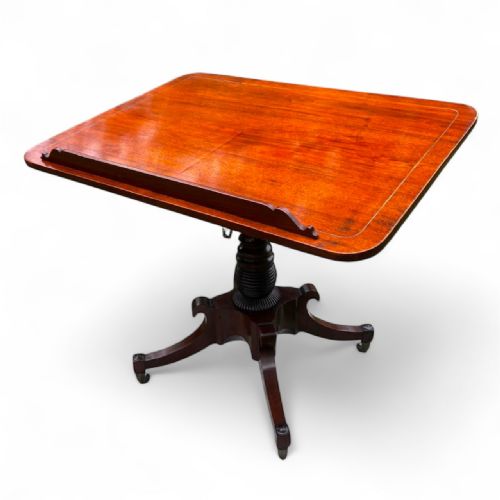


String Inlaid Table
A string inlaid table brings linear precision to a room, framing rich timbers with contrasting lines of light and dark wood or bright brass.
String Inlaid Table
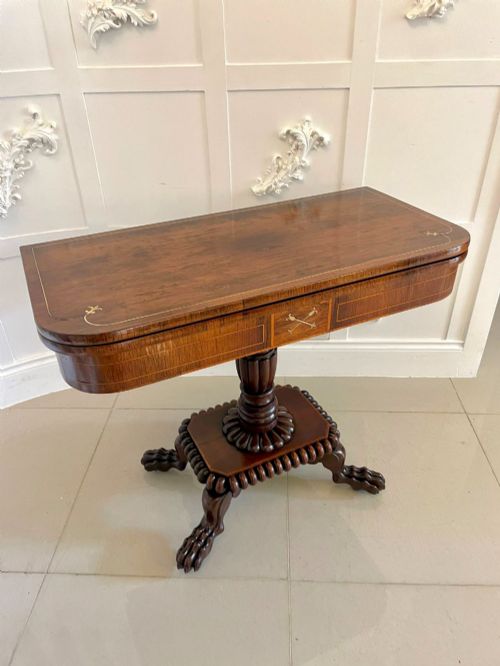
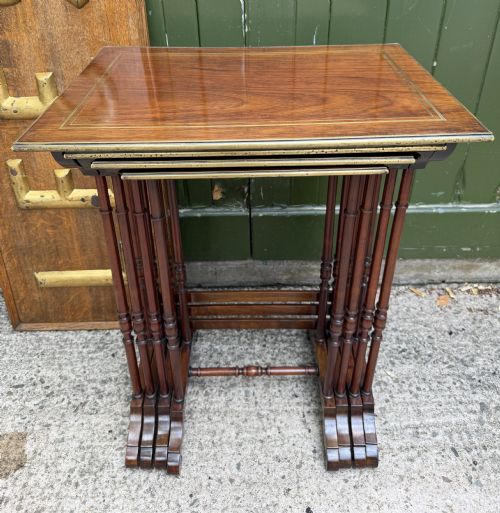
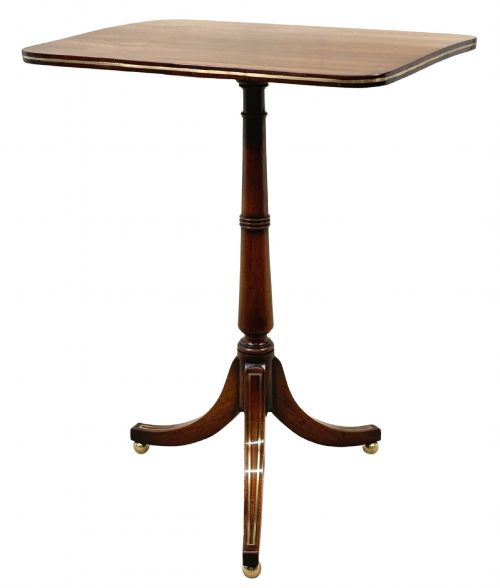
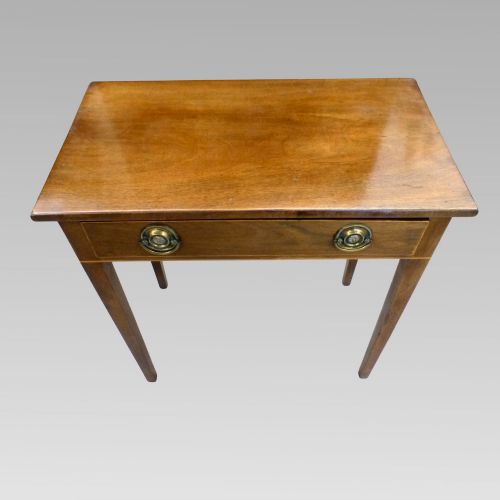
A string inlaid table for sale on this page typically spans the Georgian, Regency, and Edwardian periods, appearing in forms designed for cards, tea, and general occasional use. Card tables, Pembroke tables, and nests of tables dominate the selection, often taking the form of fold-over tops or compact occasional pieces. Mahogany and rosewood form the primary structural timbers, frequently accented with fine contrasting lines that define the edges and legs.
The Regency examples show a strong preference for brass inlay alongside dark rosewood, creating bold geometric borders and classical motifs. Edwardian interpretations lean towards mahogany paired with lighter satinwood or boxwood lines, often in smaller scale occasional or bedside tables. Georgian pieces present simpler mahogany surfaces edged with delicate stringing that highlights the proportions of the construction.
Materials and construction
Cabinet makers utilised dense primary timbers such as mahogany and rosewood to provide a stable dark ground for contrasting decorative lines. Boxwood, satinwood, and ebony supplied the pale or dark stringing, while brass strip inlay added metallic definition to Regency pieces. These contrasting materials were let into shallow channels cut into the solid timber or veneered surfaces.
The joinery relies on traditional techniques suited to folding leaves, tilt-top mechanisms, and slender pillar supports. Table tops frequently employ mahogany or rosewood veneers laid over secondary framing timbers, edged with mitred stringing to protect the margins. Turners shaped the pedestals and legs, while metal inlay required precise hand-fitting into the prepared grooves.
Table forms span card tables, Pembroke tables, occasional tables, quartetto nests, and teapoys.
Evaluating the standard
Quality rests in the crispness of the inlay work and the preservation of the original timber surfaces. Sharp, unbroken lines of boxwood, ebony, or brass that remain flush with the surrounding wood indicate careful hand execution by skilled cabinet makers. When the inlay chips or lifts unevenly, the visual rhythm of the piece is disrupted.
The choice of timber grain and the integrity of the structural joints also distinguish finer examples. Well-figured mahogany and richly grained rosewood provide a strong backdrop that enhances the linear decoration. Pieces retaining their original patination and operational stability command greater appreciation than those with replaced elements or heavy refinishing.
The String Inlaid Table Glossary
- Stringing
- A thin, narrow strip of contrasting wood or light-coloured timber inlaid into a channel on the surface of furniture. It forms delicate linear borders around table tops, drawer fronts, and leg shafts.
- Quartetto tables
- A set of four graduating nesting tables designed to slide neatly beneath one another. They appear frequently in Regency and Edwardian variations.
- Teapoy
- A small box or chest mounted on a central pillar and base, designed to hold tea canisters. Some examples incorporate internal compartments and inlaid decoration.
- Fold-over top
- A hinged table top that opens to double its surface area, commonly found on card and games tables. The mechanism often swings out to support the opened leaf.
- Ebony
- A dense, dark heartwood used to create sharp black linear contrast in stringing. It provides a stark boundary against lighter timbers like mahogany.
String Inlaid Table: Frequently Asked Questions
What is string inlay?
String inlay is a narrow border of contrasting wood or brass set flush into the surface of a piece of furniture. It creates a fine linear outline that follows the contours of the table top or legs.
Cabinet makers used this technique to define panels and highlight the structural geometry of tables during the Georgian and Regency eras.
How do I date a table?
Dating relies on combining the timber choice, the style of the legs, and the specific form of the inlay work. Regency tables often feature rosewood and brass, while Edwardian pieces frequently use mahogany with light wood stringing.
Examining the construction methods underneath and inside the drawers provides further evidence of the period of manufacture.
Were card tables used daily?
Card tables served as multi-purpose furniture in period homes, functioning as side or console tables when folded shut. In the evening, the top unfolded to accommodate card games or writing.
Their dual nature made them practical items for drawing rooms and parlours where space versatility mattered.
How do I care for rosewood?
Rosewood requires stable indoor humidity and protection from direct sunlight to prevent the timber from drying out. Regular dusting with a soft, dry cloth preserves the polished surface without building up residue.
Avoiding abrasive cleaners ensures the delicate brass or wood stringing remains secure in its channel.