
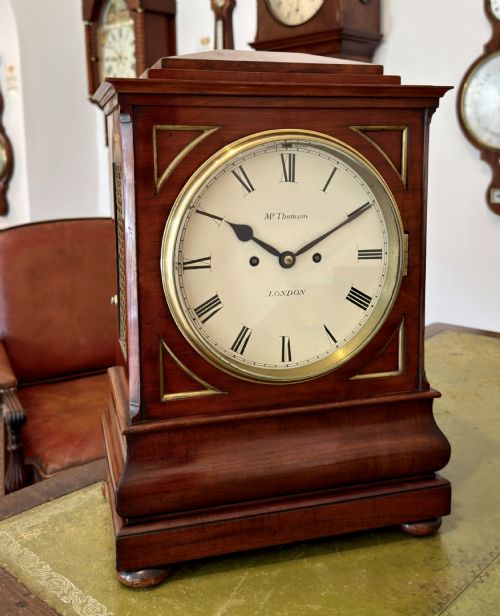
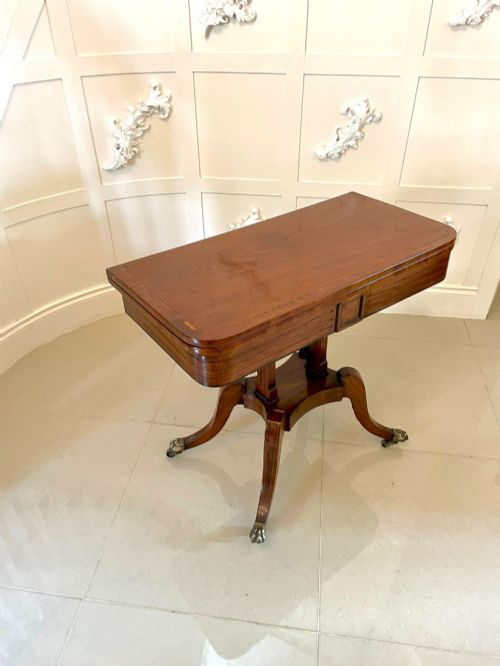

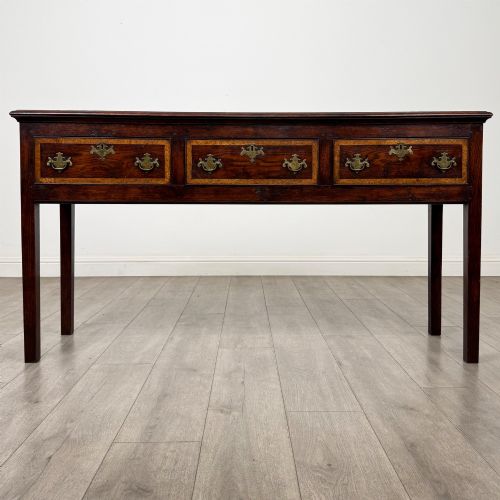
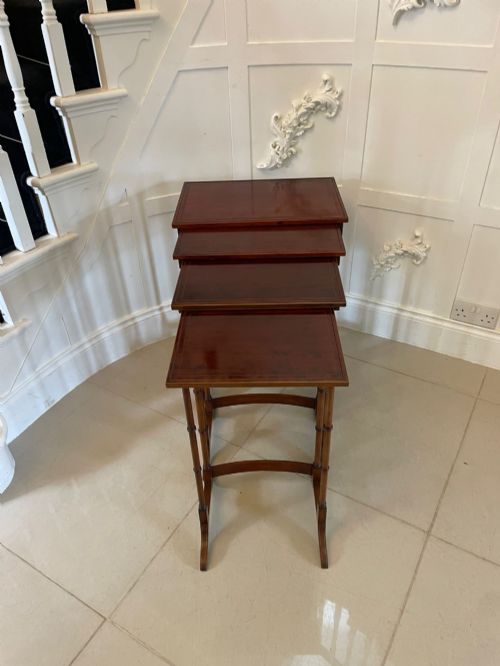
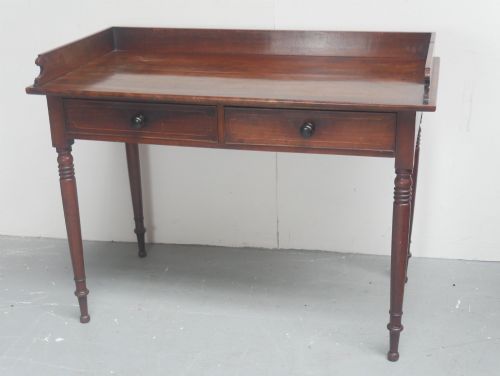
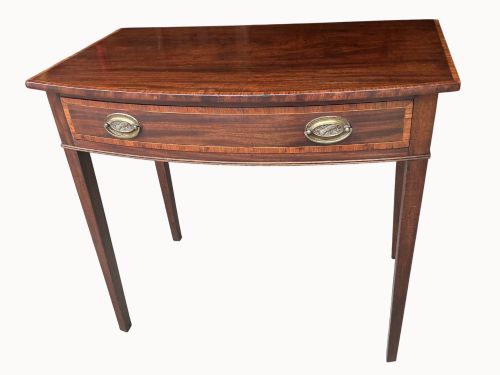
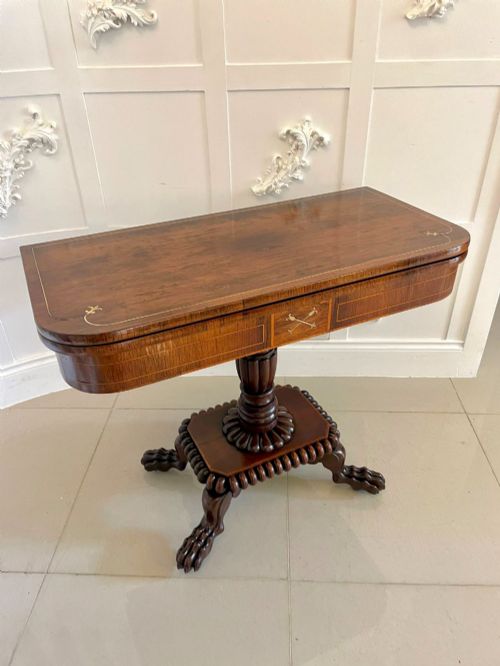
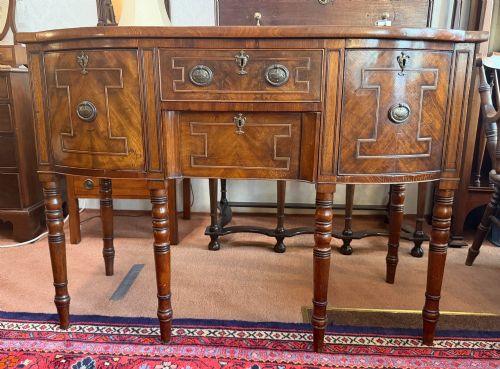
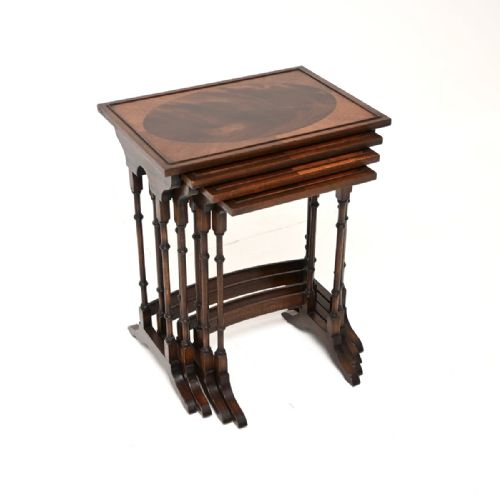
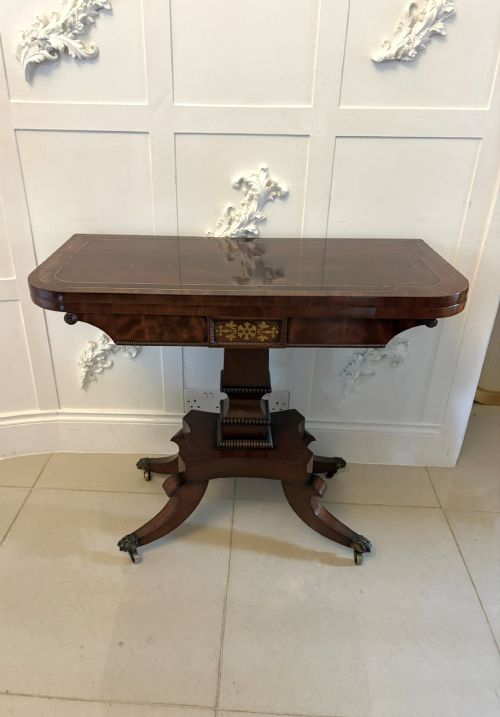
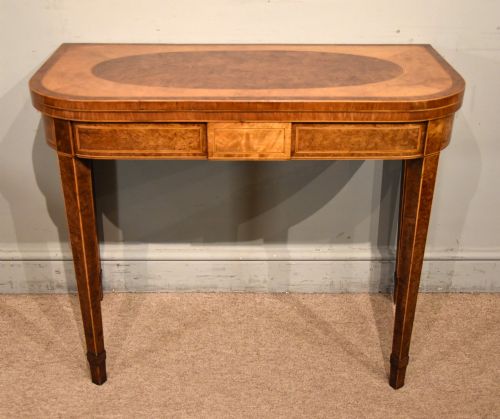
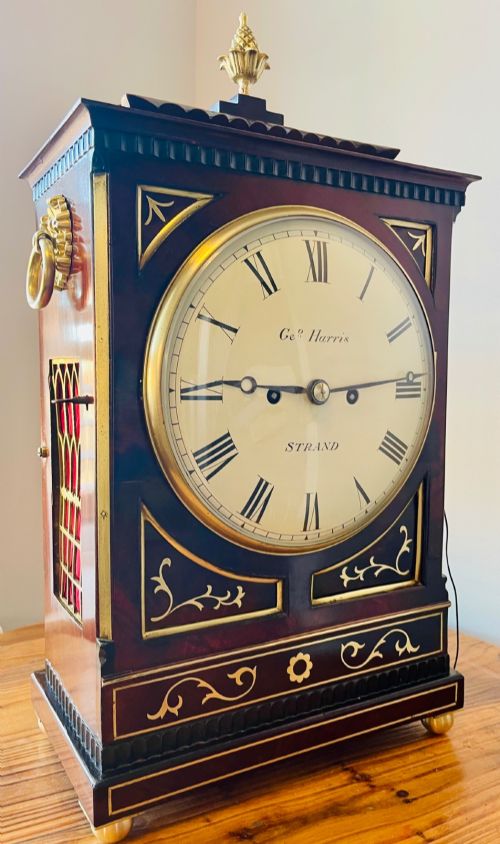
Georgian Inlaid Table
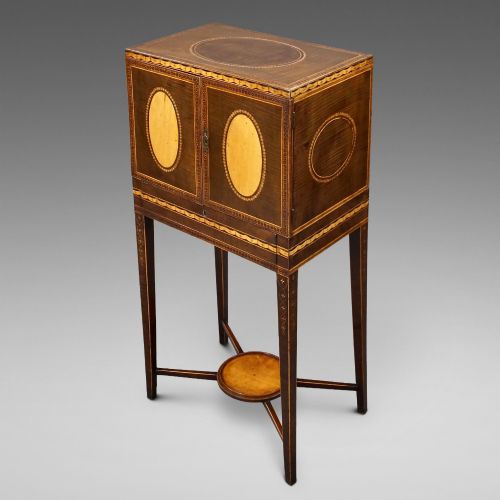
When you search for a georgian inlaid table, you are looking for versatile centuries-old furniture defined by contrasting wood details and polished timber surfaces.
Georgian Inlaid Table
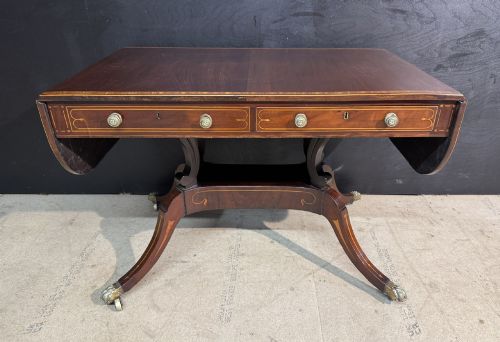
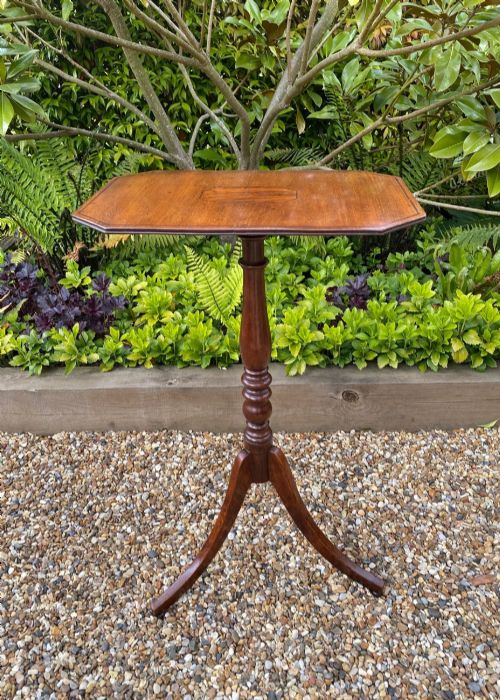
A georgian inlaid table typically takes the form of a card table, console, Pembroke, or tripod occasional piece designed for domestic utility and display. The surviving pieces heavily favour mahogany as the primary timber, often enriched with lighter wood details.
Many examples date from the eighteenth and nineteenth centuries, spanning the Georgian, Regency, and later revival periods. These items served specific functions in period drawing rooms, from holding tea services to providing a surface for evening card games.
The versions most commonly met on this page combine functional folding or drop-leaf designs with decorative bandings or stringing. They reflect the refined tastes of their original makers through balanced proportions and subtle geometric ornamentation.
How They Were Made
Cabinet makers constructed these pieces primarily using solid mahogany, satinwood, and rosewood, applying fine veneers over stable secondary woods to achieve figured surfaces. They integrated contrasting timbers like boxwood, ebony, and harewood into precise recess channels to create borders and geometric motifs.
Inlay techniques required immense precision, with artisans cutting delicate wood sections by hand and setting them flush into the primary timber ground. Turnery and joinery methods such as dovetailing secured the structural frames of drawers and drop-leaves before final polishing.
Card tables and console forms appear most frequently, spanning eighteen hundred through the early twentieth century.
What Varies in Quality
The distinction between tiers rests upon the choice of timber and the complexity of the decorative scheme. Superior items display finely figured flame mahogany or satinwood paired with meticulous, multi-toned boxwood and ebony stringing.
Execution of the joinery and the sharpness of the inlaid motifs dictate the overall standard of the piece. Master workshops achieved tight tolerances in folding mechanisms and seamless integration of contrasting woods that lesser examples lack.
The Georgian Inlaid Table Glossary
- Stringing
- A narrow strip of contrasting wood inlaid into the surface to form fine linear borders. This technique frequently outlines table edges and drawer fronts on Georgian furniture.
- Crossbanding
- A border of veneer laid around the perimeter of a table top so that the grain runs perpendicular to the central panel. It creates a framed visual effect on many card and console tables.
- Pembroke table
- A small drop-leaf table with hinged flaps on opposite sides and usually a single drawer. These versatile pieces were easily moved around eighteenth-century sitting rooms.
- Demi-lune
- A half-moon shape utilised for console and card tables designed to sit flat against a wall. They often feature fold-over tops supported by pivoting rear legs.
- Marquetry
- The art of forming decorative patterns using fitted pieces of wood veneer rather than simply cutting into a solid surface. It allows for elaborate floral or pictorial designs across tabletops.
Georgian Inlaid Table: Frequently Asked Questions
How were card tables used?
These tables stood against parlour walls until evening, when servants unfolded the top to reveal a baize-lined playing surface for whist or quadrille.
After play concluded, the top folded back down to save space in the room.
How do I spot boxwood inlay?
Boxwood provides a pale, creamy yellow contrast against dark timbers like mahogany or rosewood.
It appears in thin lines or geometric patterns that trace the perimeters of table tops and drawer edges.
Where did console tables sit?
Console tables stood directly against a wall, frequently positioned beneath a mirror in a formal hallway or drawing room.
Their half-round or rectangular shapes ensured they occupied minimal floor space while displaying decorative objects.