
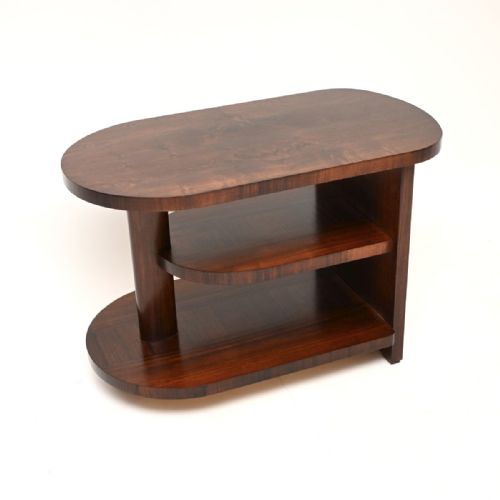
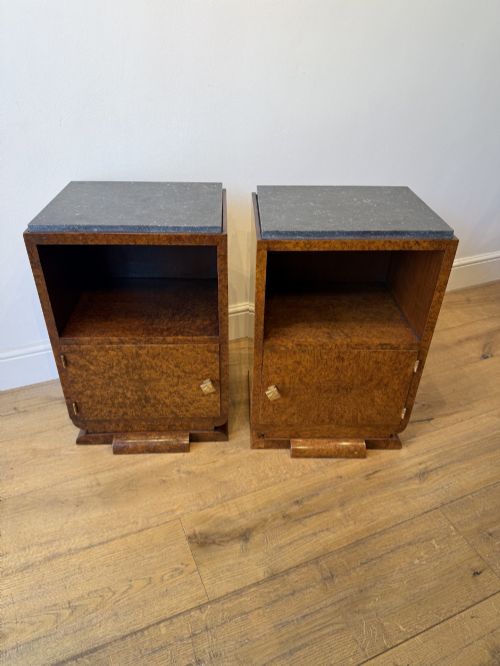
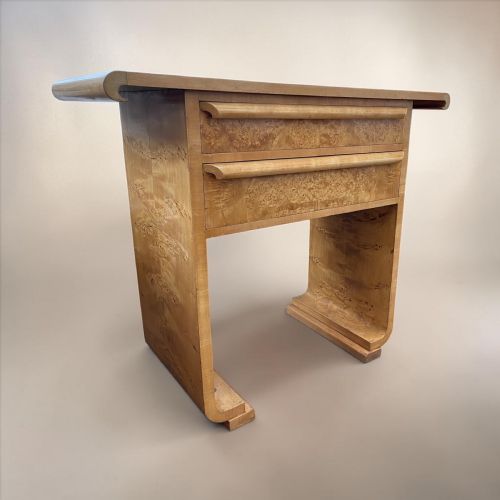
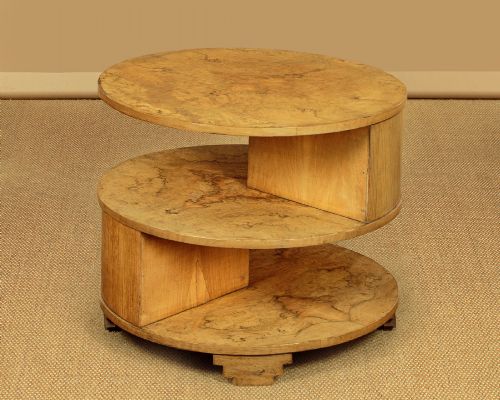


Streamline Moderne Side Table
A streamline moderne side table brings clean geometry and figured timber into a room, offering functional surface space with distinct nineteen-thirties flair.
Streamline Moderne Side Table
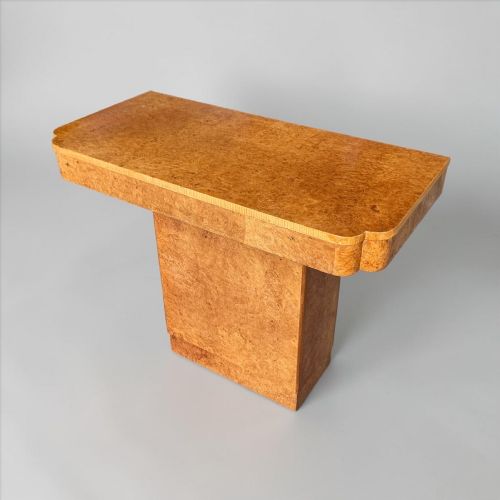
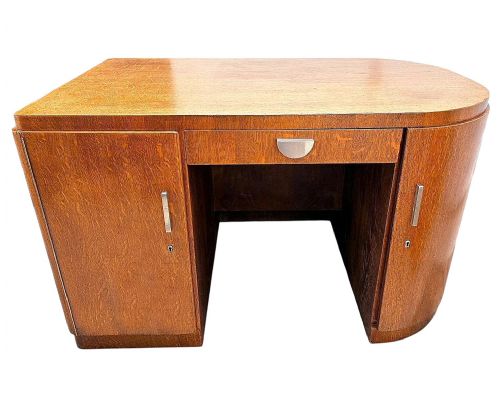
When searching for a streamline moderne side table, a buyer encounters compact occasional furniture designed during the nineteen-twenties and nineteen-thirties. These pieces frequently appear under broader headings such as Art Deco and Art Deco Modernist, sharing the era's taste for smooth surfaces and architectural silhouettes.
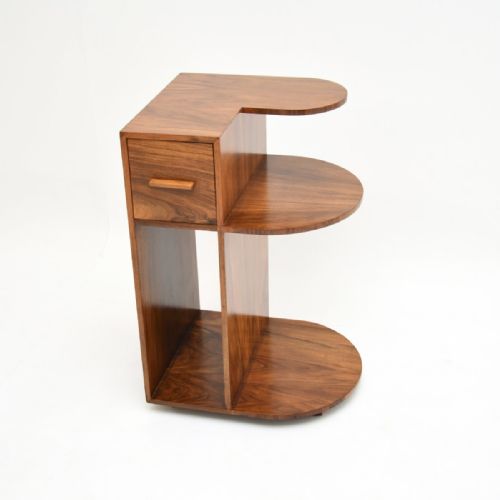
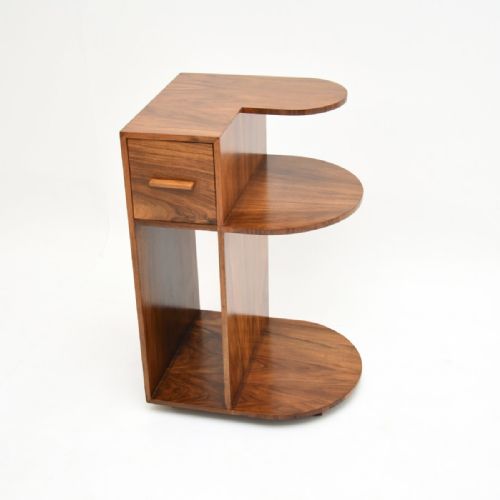
The selections on this page span several practical forms including lamp tables, coffee tables, bedside cabinets, and console tables. Walnut veneer and figured walnut dominate the selection, often accompanied by oak, burr elm, and occasional brass details.
How They Were Made
Cabinetmakers of the period relied on solid timber carcases overlaid with decorative wood veneers such as walnut, rosewood, and burr elm. This technique allowed craftsmen to display striking grain patterns across flat tops and curved fronts.
Metal elements like brass and fitted casters provided both structural support and contrasting metallic trim. Joinery remained precise and concealed, preserving the uninterrupted horizontal lines characteristic of the style.
Listings in this category span the nineteen-twenties and nineteen-thirties, utilising walnut, oak, satinwood, and brass.
What Varies in Quality
Quality in these tables rests primarily on the choice and matching of wood veneers. Examples featuring symmetrical figured walnut or burr elm display a superior visual depth compared to plain timber surfaces.
Construction details also separate standard production from finer workshop output. Robust internal framing, integrated two-tier designs, and original hardware indicate higher manufacturing standards.
Gomme·Fortnum and Mason·Gilbert Rohde·Heals of london·Hille
The Streamline Moderne Side Table Glossary
- Veneer
- A thin layer of figured wood applied over a secondary timber base. This method allowed makers to display expensive grain patterns economically.
- Art Deco
- A design style spanning the nineteen-twenties and thirties characterised by sleek lines and modern materials. It heavily influences the side tables found in this category.
- Burr Elm
- A knotty timber growth yielding intricate and swirling grain patterns. Cabinetmakers utilised this wood on cabinet fronts and tabletops for decorative impact.
- Caster
- A small wheel fitted to the legs of a table for mobility. Many nineteen-thirties designs incorporated these to allow easy movement across carpets.
Streamline Moderne Side Table: Frequently Asked Questions
What is a streamline moderne side table?
It is an occasional table produced during the nineteen-thirties, reflecting the streamlined aesthetic of the period with smooth curves and polished wood surfaces.
These tables were designed for domestic living rooms and bedrooms to hold lamps, books, or decorative objects while maintaining a compact footprint.
How do I care for a walnut side table?
Keep the wood away from direct sunlight and strong heat sources to prevent the veneer from drying out or cracking.
Dust regularly with a dry cloth and occasionally apply a suitable furniture wax to maintain the sheen of the polished surface.
Are these tables from the nineteen-thirties?
The majority of pieces date from around nineteen-thirty, originating during the height of the Art Deco and Modernist movements.
They represent a specific era of British and international cabinetmaking that prioritized functional geometry and decorative grain.
Where were these tables used originally?
Owners placed them beside sofas, beds, or chairs as convenient surfaces for lighting and everyday items.
Their versatile proportions allowed them to function as lamp tables, coffee tables, or small bedside cabinets in period homes.