



Storage Piano Stool
A storage piano stool combines a seat for the keyboard with a hidden compartment for sheet music.
Storage Piano Stool
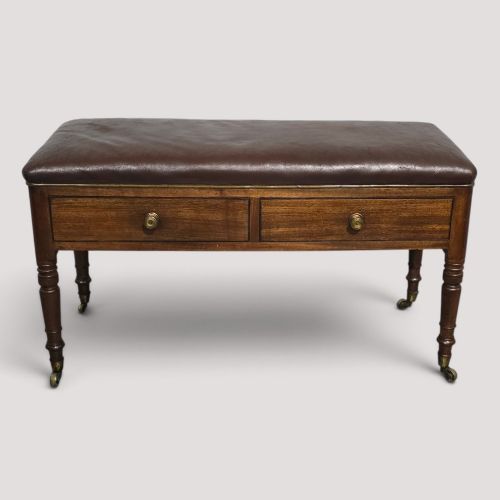
A storage piano stool is a seating piece designed to house sheet music and scores beneath a hinged or lift-up lid. The pieces on this page span the Victorian and Edwardian eras through to the Art Deco period, offering both single seats and wider duet proportions.
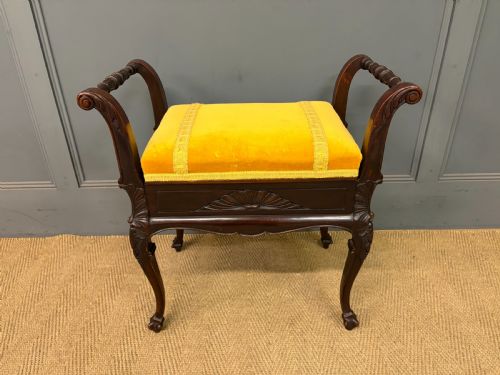
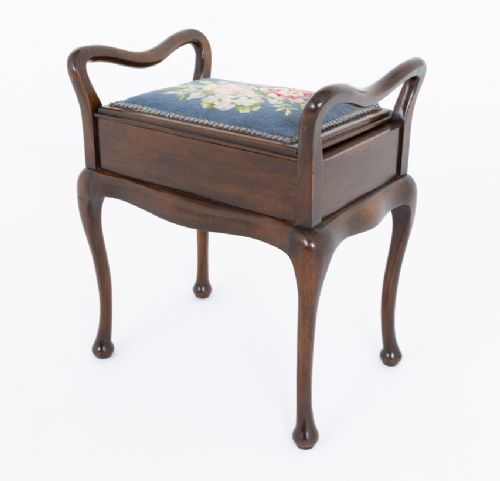
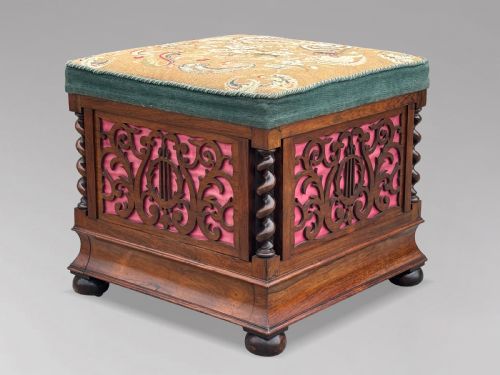
Most examples found here are constructed from mahogany, walnut, or oak, frequently carrying period details such as boxwood inlay or carved woodwork. The forms range from simple lift-up lids to fall-front compartments and upholstered music seats.
Originating predominantly from British workshops, these practical seats served domestic music rooms and parlours. Buyers selecting a storage piano stool acquire a functional item that maintains the period aesthetic of a traditional instrument setup.
Materials and Construction
Cabinetmakers built these frames primarily using solid mahogany, walnut, and oak, often applying delicate boxwood inlay to enrich Edwardian surfaces. Joinery relied on sturdy traditional framing to support the weight of players and the internal storage box.
Seats were upholstered in fabrics such as velvet, tapestry, or standard textile coverings, frequently incorporating hinged mechanisms or fall-front designs. Brass hardware, including hinges and handles, secured the opening mechanisms and added subtle metal detailing.
Storage Piano Stool Retail Price Guide 2026
Typical asking prices for storage piano stool among the pieces listed under this phrase on Sellingantiques today, from the lower quarter to the upper quarter. They describe what is for sale here now, not the wider market.
Some Victorian musicians hid their strictest piano exercises inside, hoping the heavy oak lid would lock away the scales forever.
Evaluating Quality
The standard of a storage piano stool rests on the choice of timber and the crispness of any inlaid decoration. Finely figured mahogany or walnut veneers combined with intricate boxwood work distinguish the superior workshops from simpler utility pieces.
Mechanical integrity in the hinge or fall-front mechanism determines how well the storage compartment functions over time. Original upholstery materials and well-executed frame joinery further elevate an example within the range.
The Storage Piano Stool Glossary
- Duet stool
- A wider seating form designed to accommodate two musicians side by side at the piano. These often feature extended lift-up lids to access larger sheet music collections.
- Fall-front
- A hinged front panel that drops forward to reveal internal storage compartments rather than lifting from the seat top. This mechanism allows access without disturbing objects resting on the cushion.
- Inlay
- A decorative technique where contrasting woods such as boxwood are fitted into recesses in the primary timber. Edwardian makers utilised this method extensively on mahogany surfaces.
- Tapestry
- A heavy woven textile frequently utilised for period upholstery. These patterned fabrics appear frequently on Edwardian and Victorian music seats.
Storage Piano Stool: Frequently Asked Questions
What is a storage piano stool?
A storage piano stool is a specialised seat featuring a hollow compartment beneath the top surface for holding sheet music and folios. The design allows musicians to keep their scores organised directly beneath the keyboard seating.
These pieces emerged in various woods and revival styles throughout the nineteenth and early twentieth centuries. They function equally well today as music seating or as versatile occasional furniture in living spaces.
How do I date a storage piano stool?
Dating relies on observing the primary timber, decorative motifs, and construction methods characteristic of different periods. Victorian examples often display heavier mahogany or carved oak, whereas Edwardian pieces frequently feature lighter mahogany with boxwood inlay.
Art Deco items from the later periods introduce streamlined walnut forms and distinct geometric influences. Comparing these physical traits against historical records helps narrow down the decade of manufacture.
Are these stools comfortable for daily use?
Most pieces feature padded upholstery covered in fabric, velvet, or tapestry to provide adequate support during practice sessions. Duet versions offer broader proportions for multiple players or relaxed seating.
Buyers can also utilise these seats at dressing tables or in hallways for discreet storage. The internal compartment holds small household items while keeping the room tidy.
How do lift-up and fall-front seats differ?
Lift-up seats operate via hinges on the top cushion, requiring the user to raise the entire upholstered surface to access the interior. This traditional mechanism provides straightforward access to the music box below.
Fall-front designs feature a vertical panel that tips downward, allowing access to internal shelves or compartments without lifting the seat. Both configurations served distinct preferences in Victorian and Edwardian parlours.