





Stick Stand with Mirror
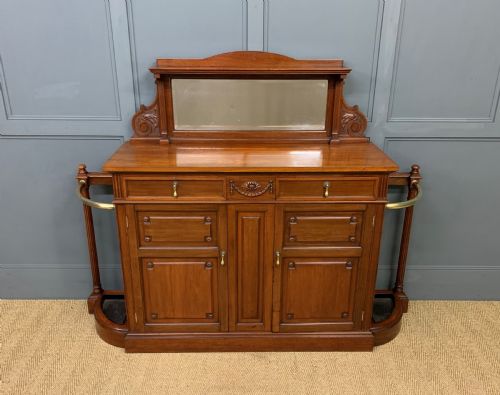
A stick stand with mirror is the quintessential entrance piece, combining a looking glass with umbrella storage to greet every visitor.
Stick Stand with Mirror
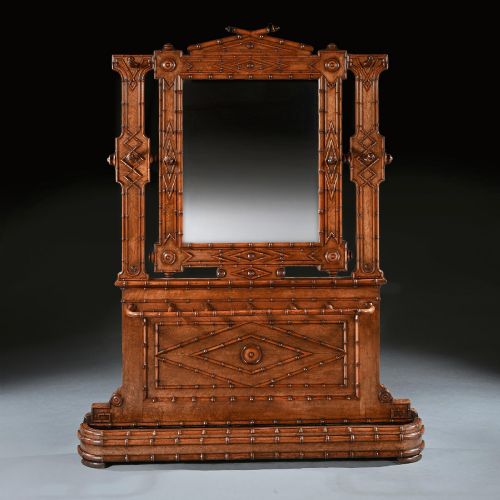
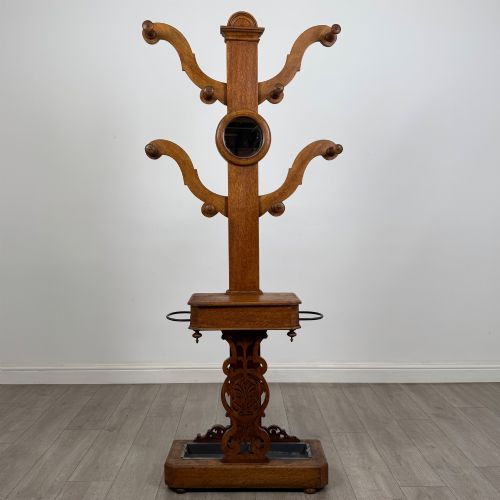
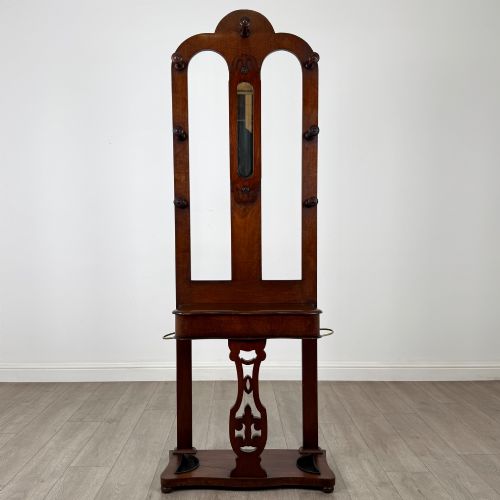
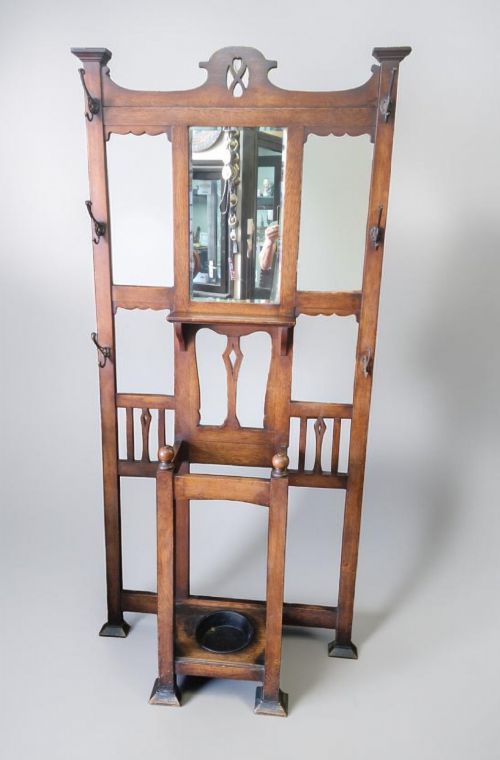
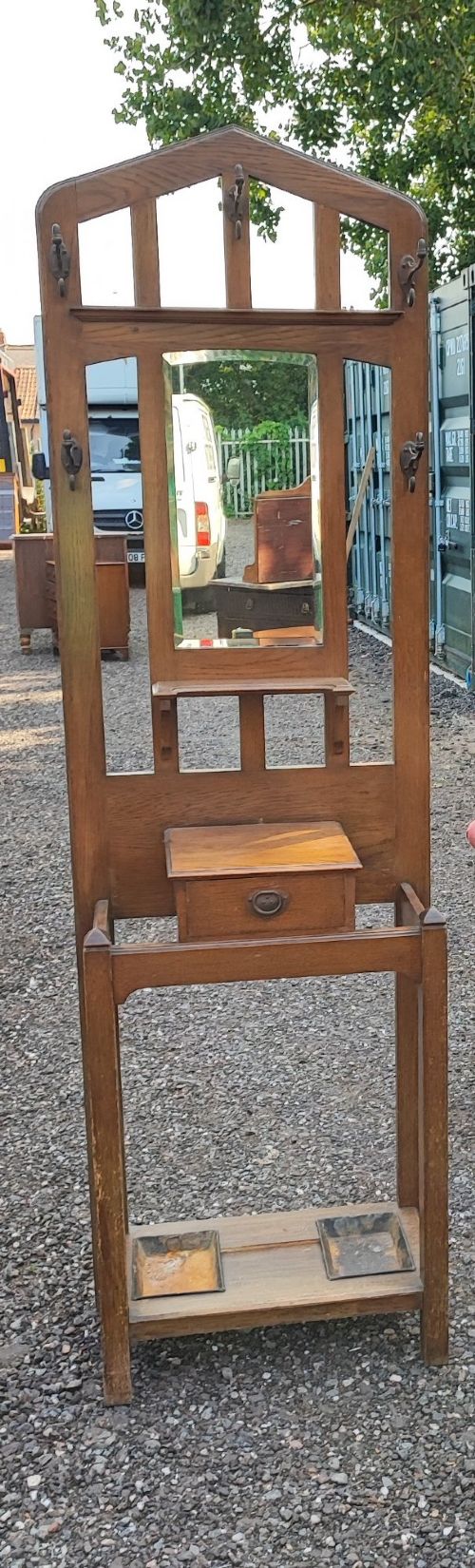
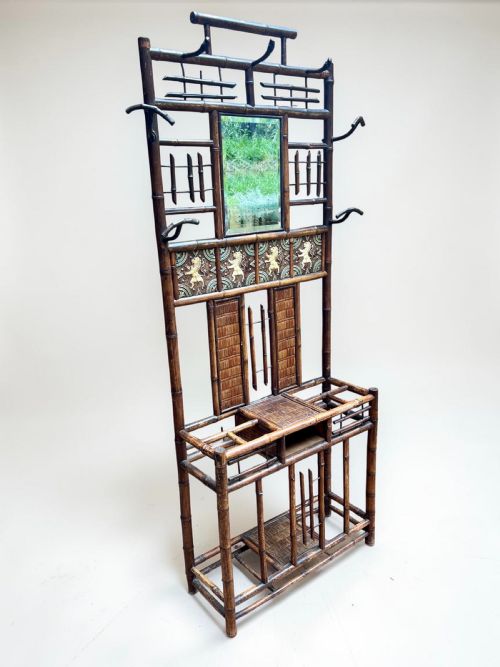
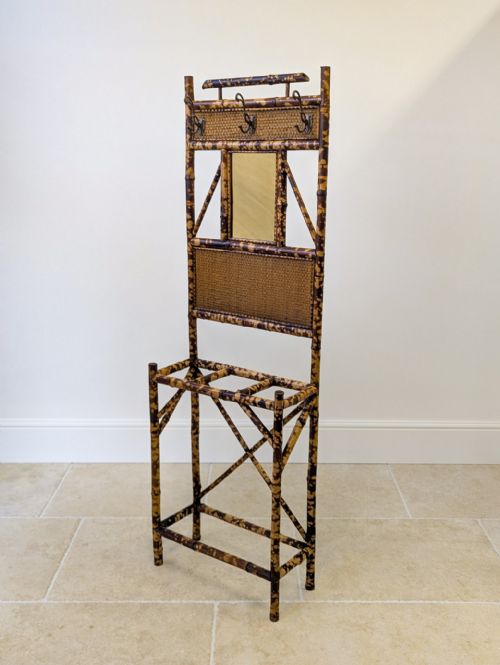
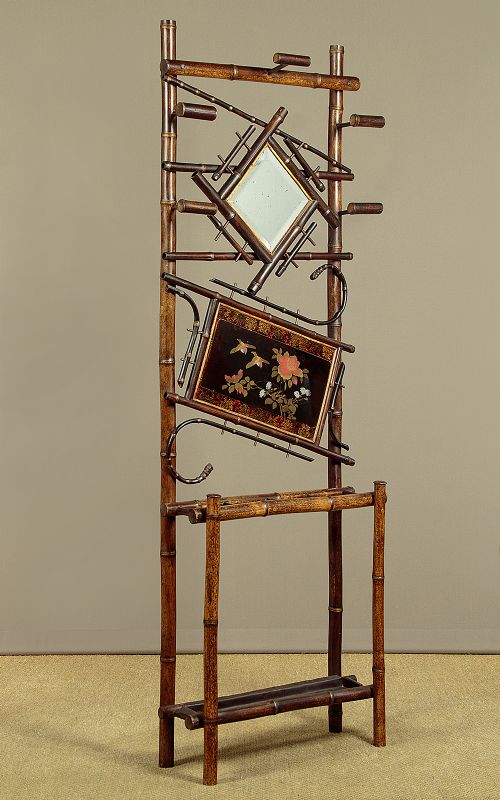
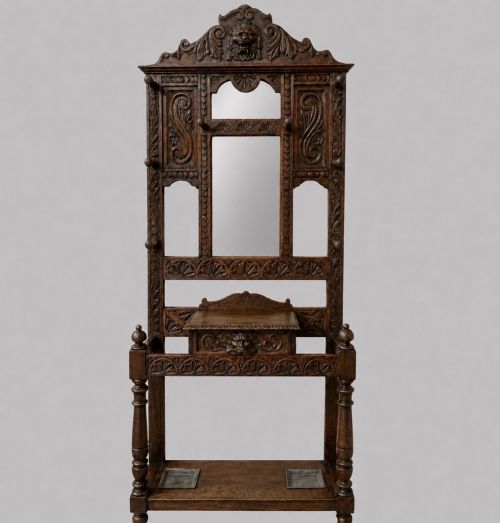
A stick stand with mirror combines a central glass plate with provisions for hats, coats, and walking umbrellas, serving as the focal point of a traditional hallway. These hall stands and hallstands appear primarily in Victorian, Edwardian, and Aesthetic Movement designs, spanning from the 1870s through to the 1920s.
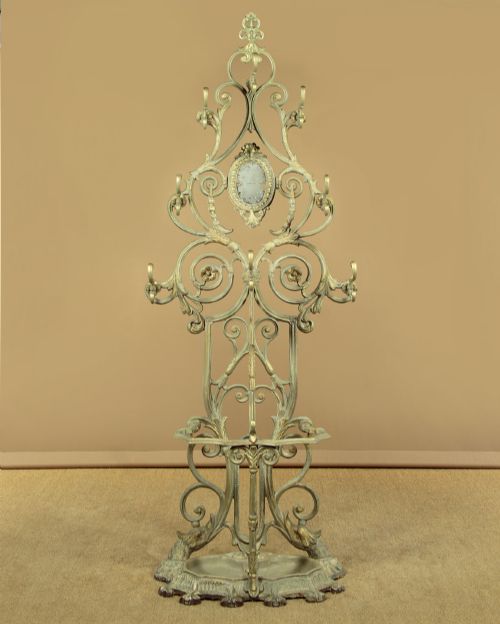
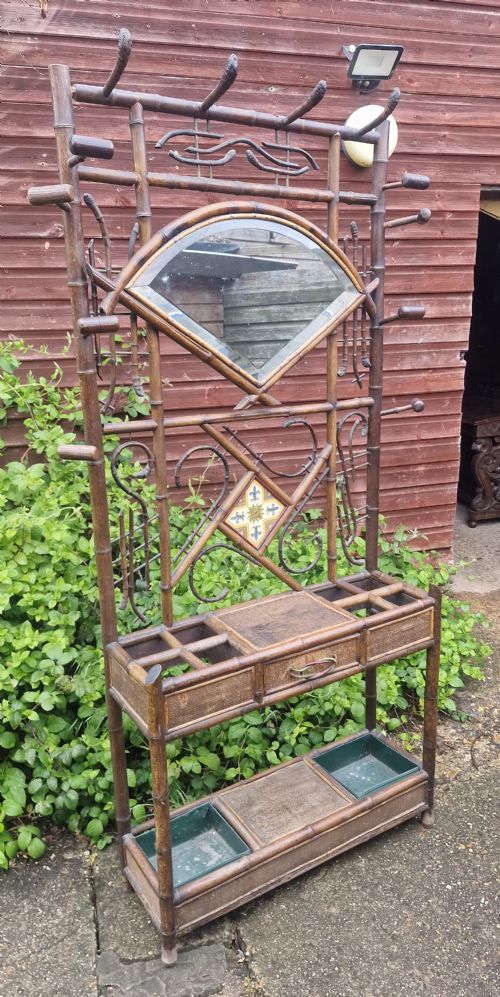
The form exists in diverse iterations, ranging from substantial carved oak and mahogany furniture to lighter bamboo and faux bamboo structures. Cast iron examples also appear frequently, often taking on intricate Victorian Gothic Revival or French forms that prioritize durability in busy entryways.
How they were made
Makers constructed these hallway items utilising sturdy timber such as oak, mahogany, and birdseye maple, frequently incorporating decorative elements like brass hooks and marble shelves. Joinery techniques varied according to the period and style, from solid carved timber framing to steam-bent bamboo and moulded cast iron.
Mirrors were integrated directly into the upper wooden or metal framework, often secured with simple backing boards, while lower sections incorporated metal drip pans to catch moisture from wet umbrellas and walking sticks.
Stick Stand with Mirror Retail Price Guide 2026
Typical asking prices for stick stand with mirror among the pieces listed under this phrase on Sellingantiques today, from the lower quarter to the upper quarter. They describe what is for sale here now, not the wider market.
Design styles represented span Victorian, Edwardian, Aesthetic Movement, Arts and Crafts, and Art Nouveau.
What varies in quality
Quality in a stick stand with mirror often rests on the ambition of the carving and the selection of materials, such as figured mahogany, golden oak, or specialised faux bamboo finishes. The integration of high-grade components like inset marble shelves and heavy cast brass hardware elevates the standing of certain pieces above standard utility furniture.
Structural integrity also dictates distinction, particularly in bamboo and cast iron iterations where complex assembly and crispness of mould work or joinery determine the refinement of the finished hall stand.
Coalbrookdale
The Stick Stand with Mirror Glossary
- Hall Stand
- A multifaceted hallway furniture piece designed to hold hats, coats, sticks, and umbrellas, typically incorporating a mirror. These items served a practical domestic purpose in the Victorian and Edwardian eras.
- Faux Bamboo
- A decorative finish where wood, metal, or other materials are carved and painted to resemble natural bamboo. This technique was popular during the Aesthetic Movement and late nineteenth century.
- Aesthetic Movement
- A late nineteenth-century design movement that emphasised art for art's sake, often drawing inspiration from Japanese art and employing materials like birdseye maple and bamboo.
- Cast Iron
- An iron-carbon alloy poured into moulds to create rigid, highly detailed structures. It was frequently utilised for robust Victorian umbrella and coat stands.
Stick Stand with Mirror: Frequently Asked Questions
How do I care for the mirror?
Clean the glass carefully with standard window spray, avoiding any moisture contact with the surrounding wood or metal frame.
Ensure that damp umbrellas placed in the stand do not splash water against the lower wooden base to prevent warping.
What periods are most common?
The majority of these entrance pieces date from the Victorian era, alongside Edwardian and Arts and Crafts examples.
Earlier pieces often feature heavy mahogany or cast iron, while later variations lean towards oak and bamboo.
Where should I place it?
Position the furniture in a hallway or entrance lobby where the mirror can reflect light and guests can utilise the hooks.
Keep the item away from direct heat sources to protect timber panels and prevent the glue behind the mirror silvering from degrading.
How do I identify materials?
Examine the framework closely to distinguish between solid oak, mahogany, cast iron, and bamboo or faux bamboo finishes.
Look for secondary elements like inset marble shelves and brass drip trays which indicate the specific construction grade.