

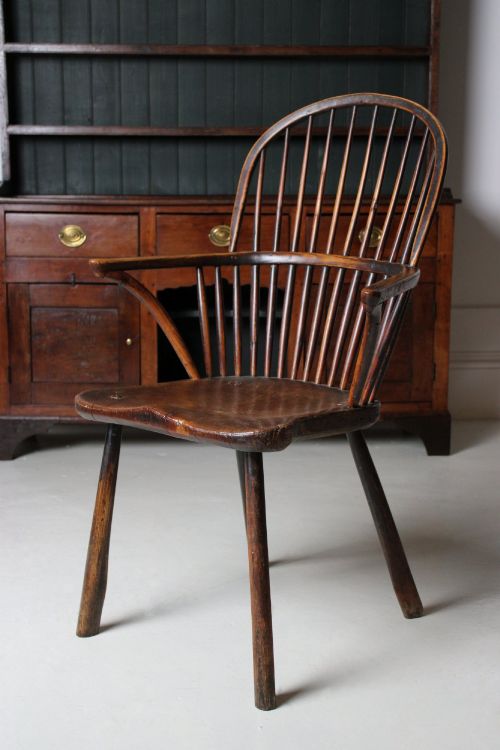
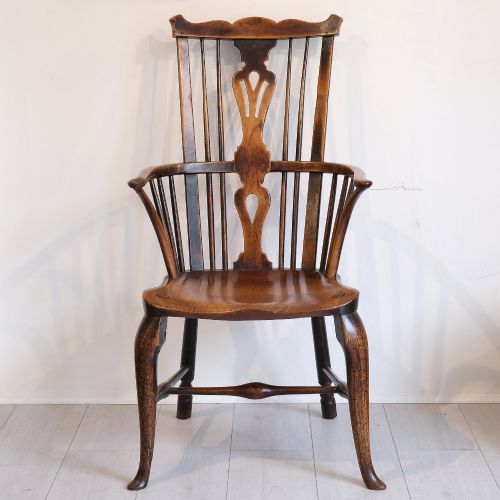


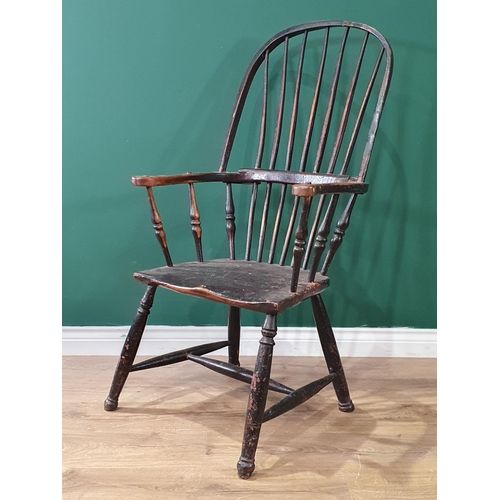


Stick Back Carver Chair
These stick back carver chair examples bring enduring vernacular craftsmanship and sturdy comfort to any interior.
Stick Back Carver Chair
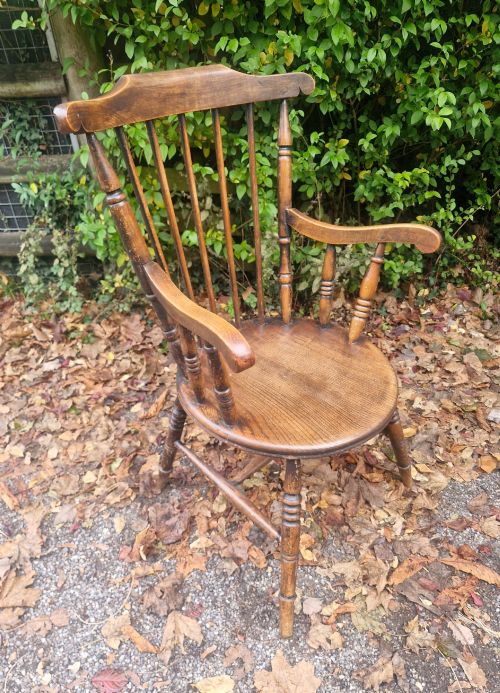
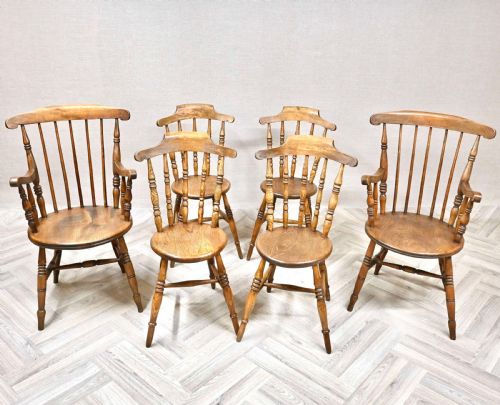
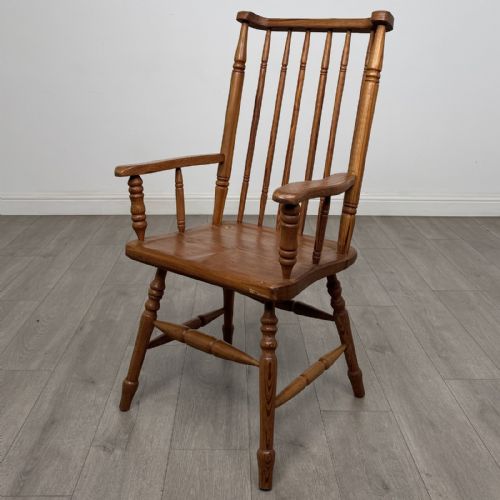
A stick back carver chair is a form of Windsor or country armchair defined by slender spindles fitted directly into a solid wooden seat, accompanied by integrated armrests. These pieces range from Georgian and Victorian vernacular seating to robust kitchen dining chairs produced across the nineteenth and twentieth centuries.
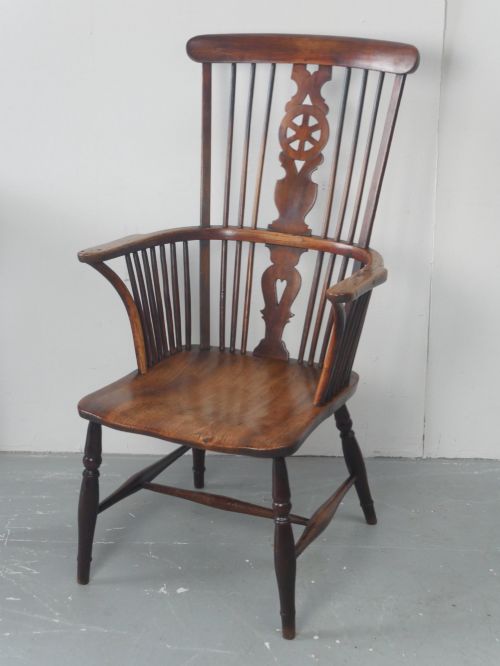
Buyers browsing this selection will most frequently encounter nineteenth century and Victorian country pieces, often constructed with turned legs and comb back or high back designs. The armchairs and dining chairs listed here reflect regional British rural traditions, utilising native timbers shaped for domestic utility.
How they were made
Maker construction relies heavily on native hardwoods such as elm for solid saddle seats, paired with ash, beech, oak, or yew for turned legs, spindles, and steam-bent bows. These materials were chosen for strength and flexibility, allowing the framework to support daily domestic use.
Joinery techniques involve driving tapered spindles into bored holes within the seat plank, alongside wedged tenons for the undercarriage legs. This method creates a rigid yet resilient structure typical of English country vernacular furniture.
Stick Back Carver Chair Retail Price Guide 2026
Typical asking prices for stick back carver chair among the pieces listed under this phrase on Sellingantiques today, from the lower quarter to the upper quarter. They describe what is for sale here now, not the wider market.
Current listings feature pieces spanning the Georgian, Victorian, and early twentieth century eras.
What varies in quality
Quality in a stick back carver chair rests upon timber selection and the harmony of proportion between the turned components and the sculpted seat. Chairs featuring deeply dished penny seats and well-figured grain exhibit superior regional craftsmanship compared to utilitarian workshop variants.
The sophistication of the arm supports and the integrity of the spindle wedging distinguish finer examples. Patina accumulated through decades of use enhances the surface character, reflecting the longevity of the original construction.
The Stick Back Carver Chair Glossary
- Carver chair
- An armchair designed for use at the head of a dining table or as a fireside seat.
- Vernacular
- Everyday utilitarian furniture made by regional craftsmen rather than urban cabinet makers.
- Comb back
- A Windsor chair style where the top of the back resembles the teeth of a comb.
- Penny seat
- A saddle-shaped wooden seat featuring a circular depression resembling a large coin.
- Spindle
- A slender turned wooden rod forming part of the chair back.
Stick Back Carver Chair: Frequently Asked Questions
What is a stick back carver chair?
A stick back carver chair is a traditional wooden armchair featuring upright spindles inserted into a solid seat with armrests attached.
These pieces were produced across British rural workshops, predominantly using native timbers for domestic dining and fireside use.
How do I date an old armchair?
Dating relies on observing construction methods, tool marks, timber shrinkage, and the specific turning style of the legs and spindles.
Earlier examples from the eighteenth century often display primitive comb back forms, whilst later Victorian versions incorporate mass-produced turned components.
Are these chairs comfortable for daily use?
Many examples offer ergonomic support through sculpted saddle seats and raked back spindles designed for sustained sitting.
Their robust timber construction ensures they remain functional for modern dining or fireside placement.
What timbers were used?
Maker workshops utilised a mix of locally available hardwoods suited to specific structural demands, combining strong woods for frames with flexible timbers for bent elements.
Elm frequently appears in the solid seats, whilst ash, beech, oak, and yew provide stability for legs and spindles.