

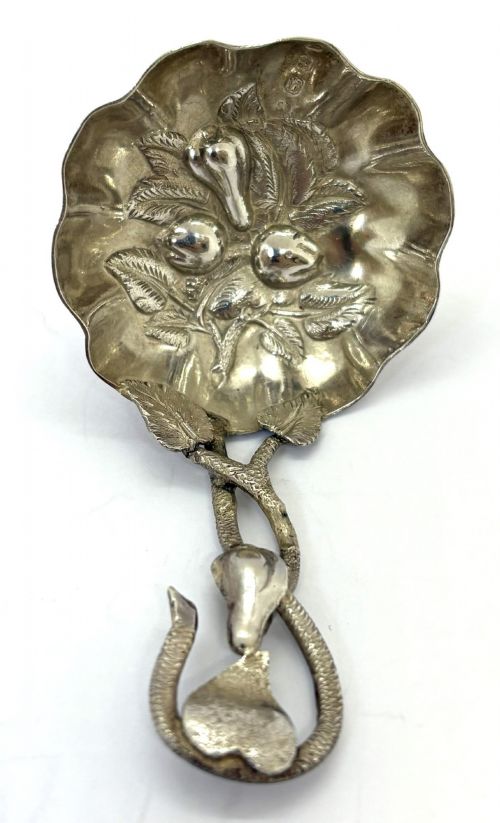


Sterling Tea Caddy Spoon
A sterling tea caddy spoon measures out dry leaf tea with precision and sits neatly among silver tea collectables from the Georgian period onward.
Sterling Tea Caddy Spoon
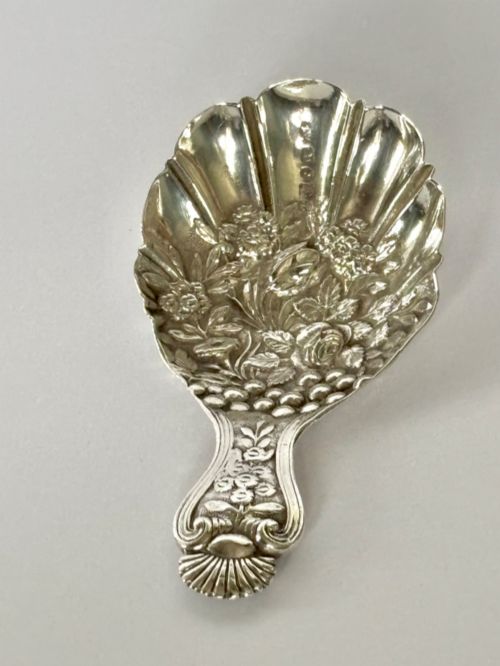
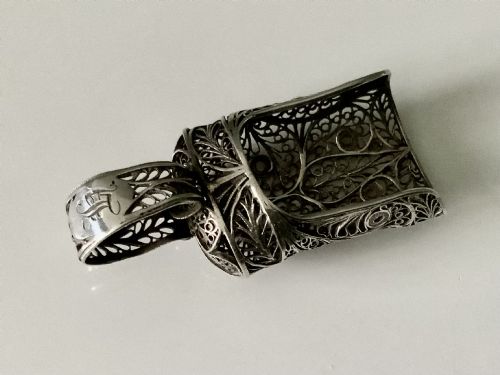
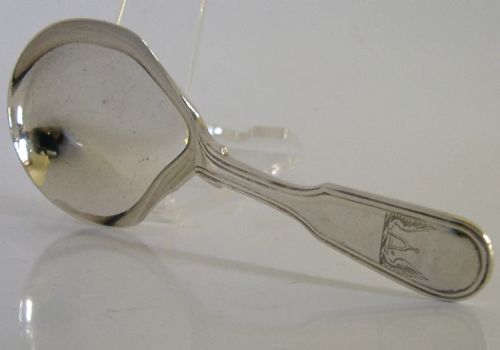
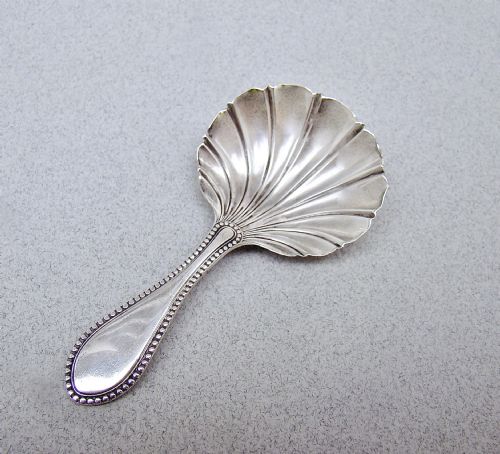
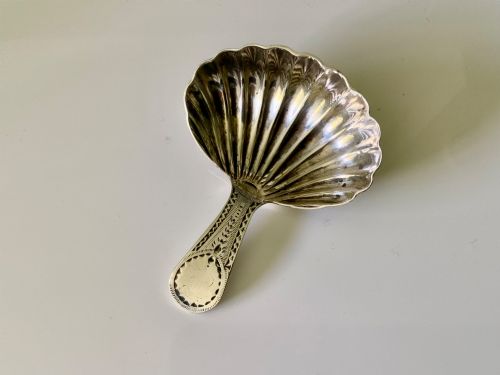
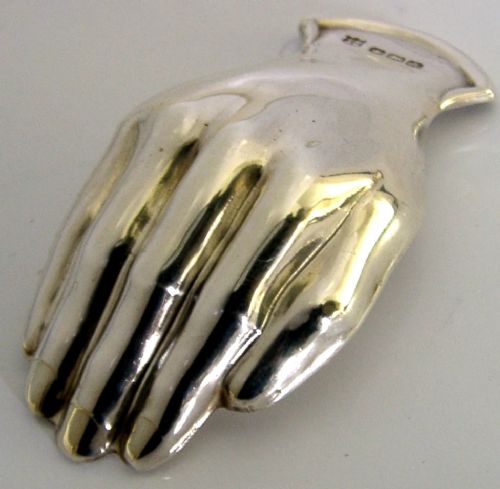
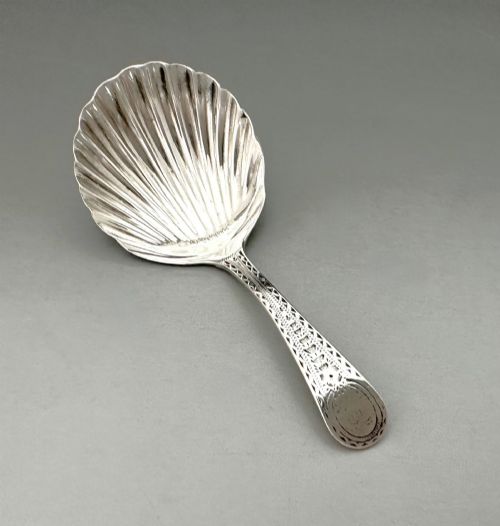
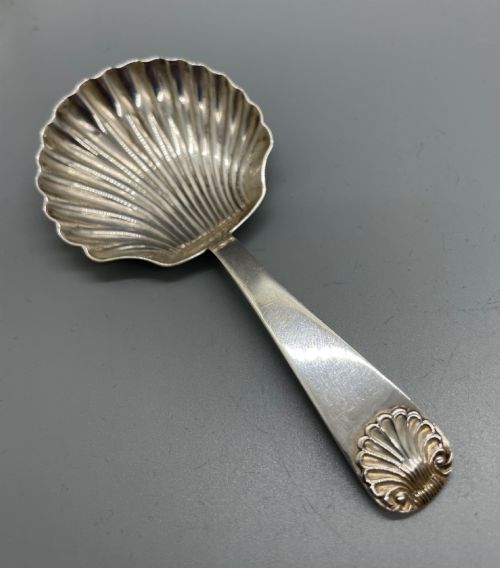
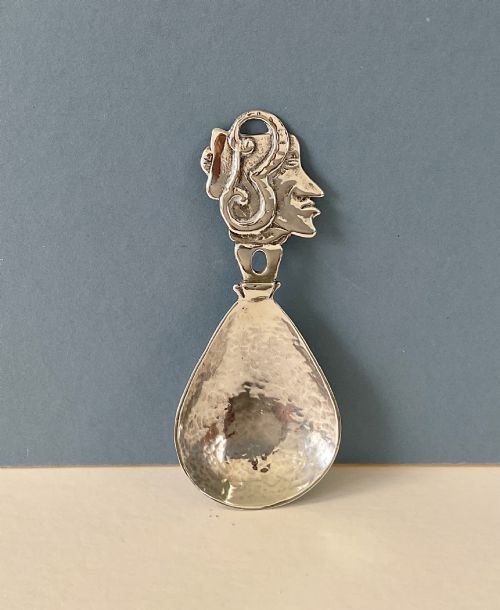
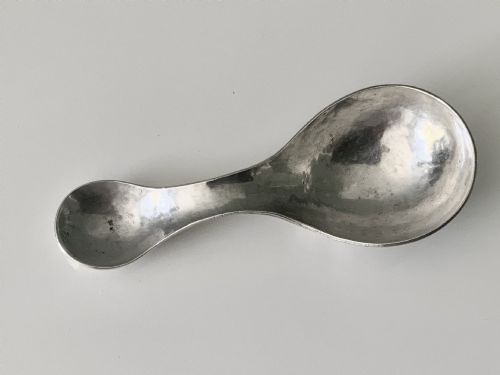
A sterling tea caddy spoon is a small, specialised implement designed to transfer loose tea leaves from a caddy into a pot. When searching this phrase, a buyer meets examples spanning the 18th Century, Georgian, Victorian, Edwardian, and mid-20th Century eras. Forms range from simple shell bowls and engraved handles to novelty shapes like hands, jockey caps, and teapot handles.
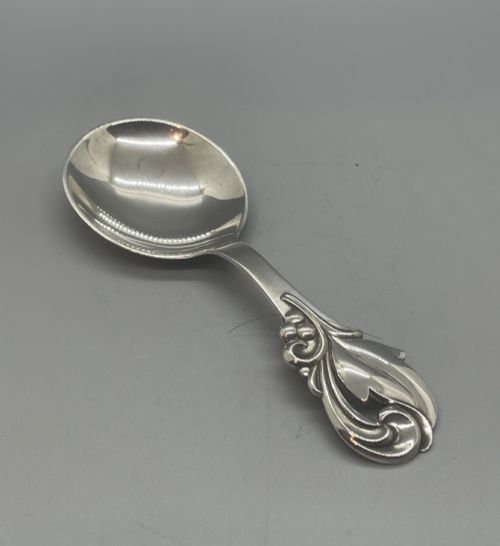
The most common versions on this page originate from Georgian workshops, alongside Victorian and Edwardian iterations. Pieces from makers such as Georg Jensen, David Andersen, and Liberty reflect later Arts and Crafts and Scandinavian design movements. Regional work from Glasgow and Ireland also appears among the standard London, Birmingham, and Sheffield hallmarked pieces.
How they were made
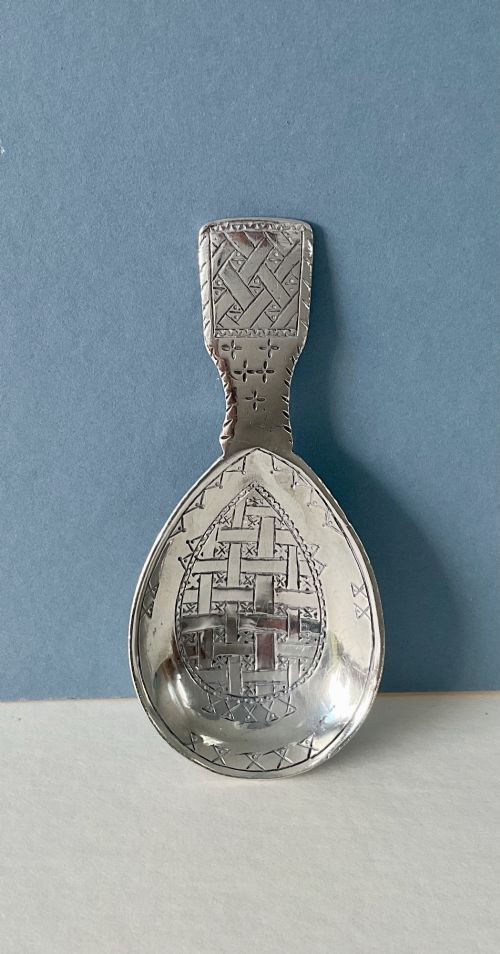
Techniques combine hand-hammering, piercing, and chasing with detailed engraving on handles and bowls. Novelty pieces utilise cast elements, such as articulated hands or stitched cap peaks, joined to functional spoon stems.
Sterling Tea Caddy Spoon Retail Price Guide 2026
Typical asking prices for sterling tea caddy spoon among the pieces listed under this phrase on Sellingantiques today, from the lower quarter to the upper quarter. They describe what is for sale here now, not the wider market.
Listings feature sterling silver, silver gilt, and enamel materials across Georgian, Victorian, and Arts and Crafts styles.
What varies in quality
Quality rests upon the crispness of the maker's mark and the clarity of the assay office punch, alongside the depth of hand-engraving on the bowl and handle. Superior pieces display substantial gauge metal that resists bending during use.
Design ambition separates standard spoons from exceptional examples, with sculptural novelty forms and detailed pierced work requiring greater skill from the silversmith than plain shell or fiddle patterns.
Martin Hall & Co·Joseph Willmore·William Neale·David Andersen·Georg Jensen·Mappin & Webb·George Unite
The Sterling Tea Caddy Spoon Glossary
- Hallmark
- A set of official marks stamped on precious metals showing the maker, assay office, and year of testing. These stamps help date a piece precisely.
- Parcel-gilt
- A finish where portions of the silver object are coated in gold while other areas remain bright silver. This creates contrast on engraved details.
- Silver-gilt
- Sterling silver completely coated with a thin layer of gold, often referred to as vermeil. It protects the base metal from tarnishing inside the tea caddy.
- Novelty spoon
- A piece shaped to represent an object, animal, or human form rather than following a standard spoon silhouette. These whimsical designs appeal directly to collectors.
- Assay office
- The official body responsible for testing the purity of precious metal items and stamping them with a hallmark. Towns like London, Birmingham, and Sheffield operated distinct offices.
Sterling Tea Caddy Spoon: Frequently Asked Questions
What is a sterling tea caddy spoon used for?
These spoons measure out loose leaf tea from a storage caddy into a teapot. Their short handles allowed them to sit inside or beside the tea container.
Collectors prize them today both as historic examples of silversmithing and as functional table accessories for afternoon tea.
How do I date an antique caddy spoon?
Dating relies primarily on the stamped hallmarks, which record the assay office, standard mark, and date letter. Style indicators such as Georgian engraving or Art Deco geometry also point to specific eras.
Comparing the maker's mark against historical records confirms the exact active period of the workshop.
What are novelty caddy spoons?
Novelty caddy spoons take unusual three-dimensional forms like jockey caps, human hands, or leaf motifs. Silversmiths produced them to showcase technical skill and appeal to fashionable tastes.
Georgian and Victorian makers excelled in this whimsical branch of silver production.
How should I care for silver caddy spoons?
Care involves gentle cleaning with a soft cloth and specialised silver polish only when necessary to remove tarnish. Frequent aggressive polishing wears down delicate hand-engraving and hallmarks.
Store them in a dry environment away from direct sunlight to preserve the finish.