

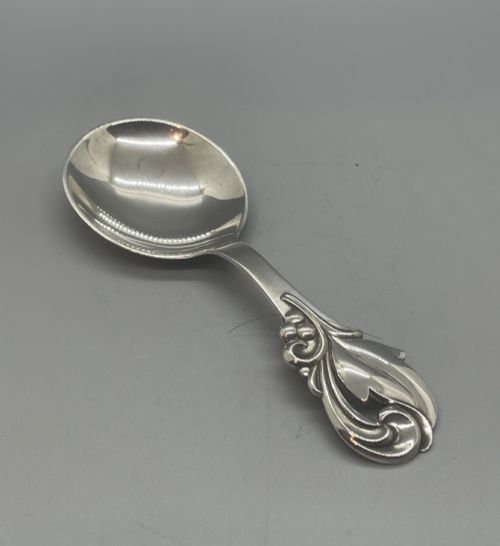
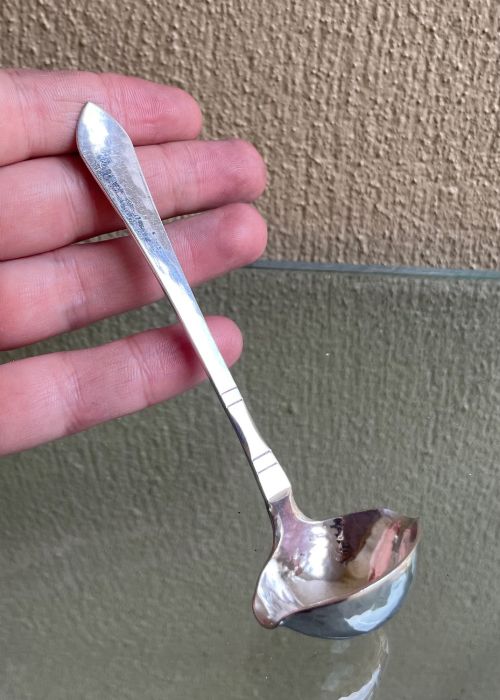
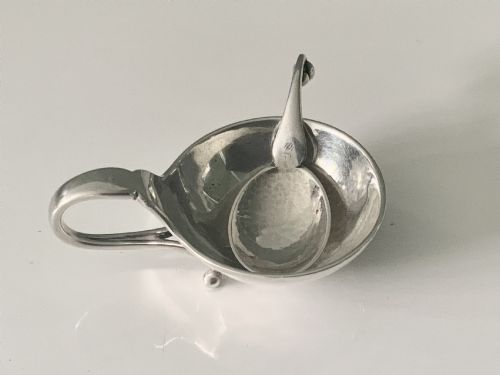


Danish Sterling Spoon
A danish sterling spoon brings modernist line and exquisite silverwork to the table, combining functional form with distinct Scandinavian character.
Danish Sterling Spoon
When you search for a danish sterling spoon, you encounter a focused selection of silver tableware spanning several decades of Nordic design. These pieces range from intimate salt cellars and caddy spoons to teaspoons and large serving spoons, reflecting the varied needs of formal and domestic dining.
The objects on this page bridge the transition from early twentieth-century decorative movements to mid-century functionalism. You are most likely to meet pieces shaped by Arts and Crafts, Art Nouveau, and Art Deco sensibilities, alongside clean Danish Modern and mid-century interpretations.
Origins vary across the decades represented, with examples emerging from the nineteen-tens through to the nineteen-sixties. Each spoon or ladle carries the aesthetic hallmarks of its production era, whether through organic foliate motifs or the stripped-back geometries of later decades.
How they were made
The primary material across these listings is sterling silver, frequently shaped into substantial forms or combined with gold gilt. This precious metal provides the durable foundation required for both delicate teaspoons and heavy serving ladles.
Surface decoration often incorporates coloured enamel to highlight specific designs, particularly on annual or commemorative pieces. Techniques such as plique-à-jour allow light to pass through translucent enamel panels, creating stained-glass effects within the metal framework.
Danish Sterling Spoon Retail Price Guide 2026
Typical asking prices for danish sterling spoon among the pieces listed under this phrase on Sellingantiques today, from the lower quarter to the upper quarter. They describe what is for sale here now, not the wider market.
Listings span six distinct decades from the nineteen-tens to the nineteen-sixties, incorporating styles from Art Nouveau to Mid-Century Modern.
What varies in quality
Quality in these silver objects rests upon the harmony of the design and the crispness of the maker's execution. Superior pieces display purposeful weight in the hand and balanced proportions between bowl and stem.
In enamelled and gilt examples, the refinement of the coloured glasswork and the preservation of the underlying gilding determine the upper tier of the range. Maker attribution also plays a decisive role, with certain workshops commanding greater attention for their signature patterns.
Georg Jensen·Evald Nielsen
The Danish Sterling Spoon Glossary
- Sterling silver
- A silver alloy containing ninety-two point five percent pure silver and seven point five percent other metals, usually copper, chosen for durability.
- Silver gilt
- Sterling silver that has been coated with a thin layer of gold on its surface, creating a rich two-tone appearance.
- Plique-à-jour
- An enamelling technique where the enamel is fired in open cells without a backing, allowing light to shine directly through the transparent colour.
- Caddy spoon
- A short-handled spoon specifically designed for measuring loose tea leaves from a caddy into a teapot.
- Salt cellar
- A small open vessel used to hold table salt, frequently accompanied by a dedicated miniature spoon.
Danish Sterling Spoon: Frequently Asked Questions
How do I clean a silver gilt spoon?
Silver gilt items require gentle handling to preserve the delicate gold layer over the sterling base. Avoid abrasive polishes and harsh chemical dips that strip away the surface finish.
Wash the piece in warm soapy water with a soft cloth, then dry it immediately with a lint-free towel to maintain its lustre.
What is a caddy spoon used for?
A caddy spoon is traditionally used to scoop loose tea leaves from a storage container. Their compact bowls and short handles made them practical accessories for nineteenth and twentieth-century tea rituals.
Today, collectors appreciate them for their varied sculptural forms and detailed handle designs.
How can I date an enamelled Christmas spoon?
Enamelled Christmas spoons often feature specific years marked directly into the design or stamped on the reverse. Examining the style of the enamel work and the accompanying hallmarks provides additional chronological context.
Earlier examples from the nineteen-thirties differ noticeably in palette and motif from those produced in the nineteen-sixties.
Can I use these spoons for daily dining?
Many solid sterling silver spoons are robust enough for regular use at the dining table. However, pieces featuring fragile enamel panels or delicate gold gilt benefit from careful handling and hand washing rather than machine cleaning.
Storing them in lined boxes prevents scratching against other cutlery.