
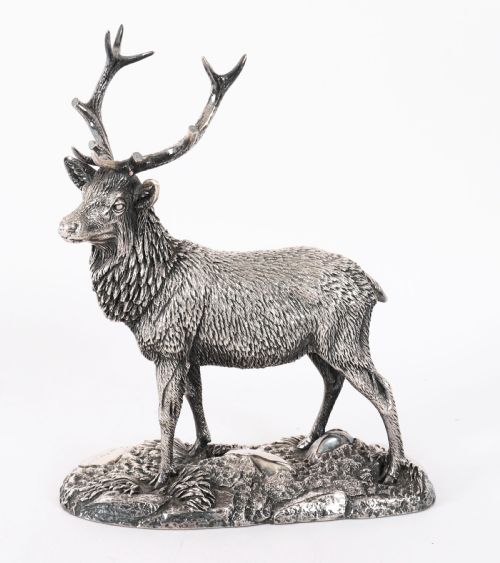
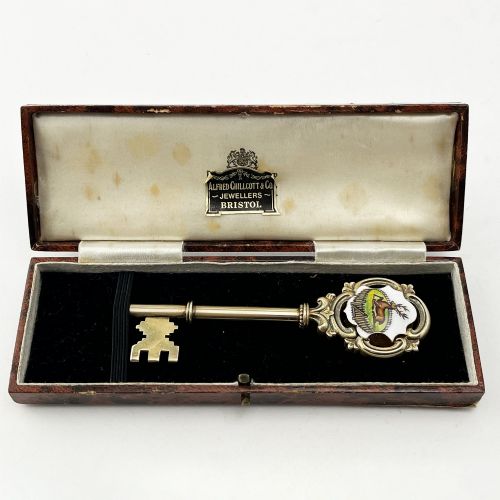


Sterling Silver Stag
These sterling silver stag pieces range from animalier sculptures and pin cushions to card cases and crested tableware.
Sterling Silver Stag
When searching for a sterling silver stag, you encounter a varied selection of antique and vintage objects spanning several centuries. The evidence shows these items appearing across the 18th, 19th, and 20th centuries, covering periods from Queen Anne and Georgian times through to the Edwardian era and later decades.
The objects themselves take many forms, including card cases, animalier sculptures, pin cushions, presentation spoons, dressing table sets, and tableware. Many examples feature engraved family crests showing stags, whilst others are modelled directly as figural figures, menu holders, and novelties.
Edwardian card cases and Georgian crested silver feature frequently alongside Victorian items and twentieth-century animalier sculptures by makers such as Tom Mackie. Buyers find both practical table silver and decorative desk accessories bearing this motif.
How they were made
The pieces are fashioned primarily from sterling silver, frequently combined with other materials such as enamel, cut glass, wood, velvet, and leatherette depending on the object type. Hollowware, boxes, and desk items utilise traditional silversmithing techniques like stamping, piercing, and hinged construction.
Figural sculptures and decorative animalier pieces rely on detailed casting and chasing work to define the antlers, texture, and muscular form of the stag. Engraved crests on spoons, bowls, and card cases are executed by hand with sharp gravers to cut precise heraldic lines into the silver surface.
Stags pop up everywhere in silver, from tiny pin cushions with velvet bellies to fierce card cases and menu holders guarding the dining table.
What varies in quality
The standard of a sterling silver stag rests heavily upon the crispness of the modelling in figural pieces and the depth of the hand-engraving in heraldic crests. Superior examples display sharply defined antler tines and realistic muscular detail rather than softened contours from worn casting moulds.
Weight and structural integrity also separate fine items from standard production, particularly in hollowware, card cases, and desk boxes where substantial gauge silver and well-aligned hinges demonstrate superior manufacturing standards.
Tom Mackie·Jonathan Douglas·J Ladyman·Berthold Muller·Grey and Co·Deakin and Francis
The Sterling Silver Stag Glossary
- Animalier
- A nineteenth-century artistic style focused on the realistic depiction of animals. Sculptures in this category capture stags and other beasts in natural poses.
- Crest
- A heraldic device belonging to a family, frequently engraved onto Georgian and Victorian silver. On these pieces, the stag motif denotes specific lineage or association.
- Pin Cushion
- A boudoir or desk accessory often formed as a figural animal. Silver frames hold upholstered padding covered in fabric or velvet.
- Card Case
- A small pocket container used in the nineteenth century for calling cards. Edwardian examples often feature embossed or engraved stag designs on the exterior.
- Animal Figure
- A solid or hollow sculptural representation of a beast. Berthold Muller and Tom Mackie produced notable figural animal pieces in metal.
Sterling Silver Stag: Frequently Asked Questions
What is an animalier stag sculpture?
An animalier stag sculpture is a three-dimensional metal figure depicting a deer in a naturalistic style. These pieces focus on accurate anatomical details, particularly in the antlers and musculature.
Such figures were popular in the nineteenth and twentieth centuries as desk ornaments and cabinet pieces. Makers like Tom Mackie and Berthold Muller produced notable figural animal works.
Why do some items have a stag crest?
A stag crest indicates that the piece was engraved with the heraldic symbol of the original owner's family. Wealthy households commissioned silversmiths to add their family crests to tableware, spoons, and card cases.
These crests help historians trace the provenance of Georgian and Victorian silver. The engraving style often reflects the specific decade in which the silver was commissioned.
How do I date an Edwardian silver card case?
Edwardian silver card cases are dated by examining the hallmarks stamped directly onto the metal surface. These assay marks indicate the specific English city, standard of silver, and year of manufacture.
Many card cases from this era feature embossed or engraved stag designs. Comparing the hallmarks against established maker's marks confirms the exact year of production between 1901 and 1910.
What were silver pin cushions used for?
Silver pin cushions served as decorative and functional accessories on dressing tables and desks. They held pins and needles securely within upholstered velvet or fabric inserts fitted inside a silver frame.
Figural designs shaped as stags were particularly popular during the Edwardian period. They combined practical utility with whimsical animal forms suited for interior display.