



Sterling Silver Spoon Fork Set
These sterling silver spoon fork set pieces are matched dining implements designed for service and ceremony, offering functional elegance for the table.
Sterling Silver Spoon Fork Set
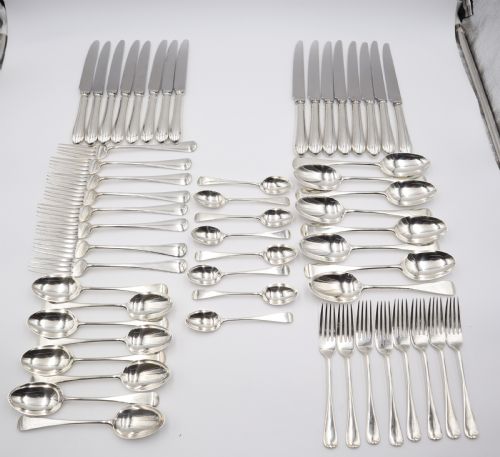
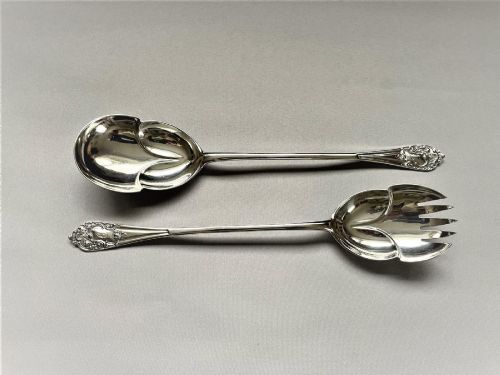
A sterling silver spoon fork set brings together matched or complementary eating implements, frequently encountered in forms designed for specific domestic roles such as christenings, salads, and formal service. Buyers searching for a sterling silver spoon fork set will discover configurations ranging from small child sets to large canteens for twelve persons.
The material record spans the Victorian, Edwardian, Georgian, and 1930 periods, showing traditional styles alongside regional British hallmarks. These pieces encompass individual place settings, boxed presentation sets, and specialised serving utensils like pickle forks and jam spoons.
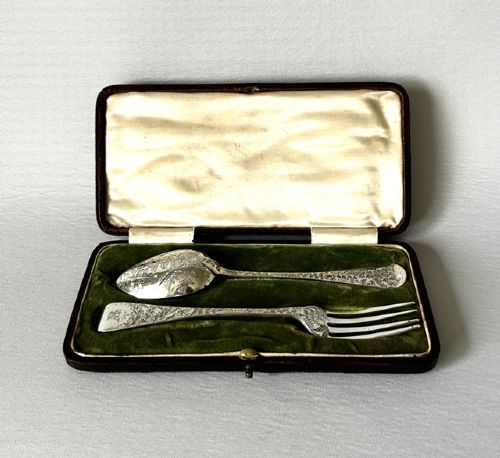
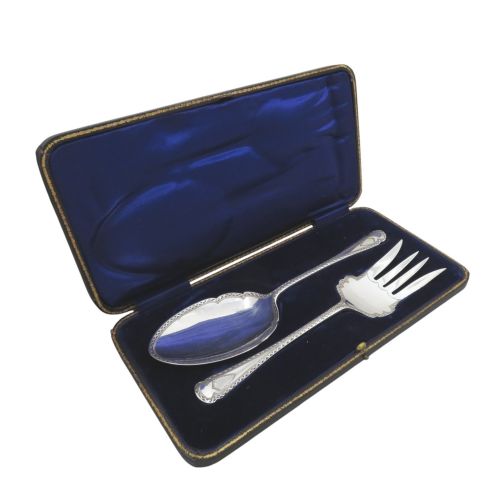
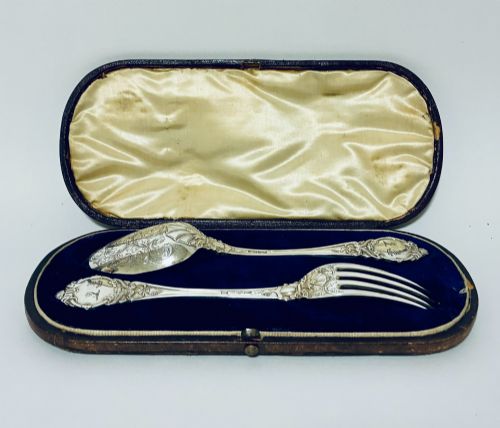
Many of these sets arrive complete with original fitted cases lined in velvet, silk, or leatherette, protecting the metalwork within mahogany or leather outer boxes. The domestic history of these items is tied to formal dining and gift-giving traditions across multiple centuries.
Materials and manufacture
The primary material across these listings is sterling silver, frequently paired with steel for cutting edges in knives, whilst presentation cases utilise wood, leatherette, velvet, and silk linings. Silversmiths employed techniques such as pattern stamping, rat tail reinforcement, and hand engraving to shape and decorate each piece.
Fitted presentation boxes often feature structured internal partitions covered in silk or velvet to cradle the silver spoons, forks, and related cutlery securely. Exterior protection typically involves mahogany timber or textured leatherette housing.
Materials documented in these sets include solid sterling silver, steel blades, mahogany boxes, and velvet or silk linings.
Defining quality and craftsmanship
Quality in a sterling silver spoon fork set rests on the weight of the silver, the crispness of decorative patterns like Fiddle or Coburg, and the structural integrity of the set as a complete unit. Superior examples display deep, clear hallmarks and retain their balanced feel in the hand.
The condition of accompanying fitted cases also influences overall desirability, particularly when original velvet, silk, and leatherette linings remain intact and clean. Sets that preserve their complete original complement without replacement items represent the higher standard of survival.
Walter And John Barnard·John Round·Cardeilhac
The Sterling Silver Spoon Fork Set Glossary
- Sterling Silver
- A standard alloy consisting of 92.5 percent silver and 7.5 percent other metals, usually copper, chosen for durability in tableware. This metal composition forms the base of the items found across the periods.
- Hallmark
- An official stamp applied by an assay office to indicate the metal standard, the maker, and the year of production. These small marks allow collectors to date pieces accurately to specific towns like Sheffield or Chester.
- Fiddle Pattern
- A traditional English cutlery handle shape featuring a narrow stem that widens gracefully toward the terminal into a flat, shoulder-notched outline resembling a violin. It remains a classic design seen across nineteenth-century silver.
- Rat Tail
- A distinctive tongue-like reinforcement extending from the underside of a spoon bowl down the neck of the handle. This functional feature strengthens the junction where bowl and handle meet.
- Christening Set
- A specialised collection of small-scale silver cutlery, often comprising a spoon and fork or matching knife, presented as a traditional gift for infants. These items frequently survive within fitted presentation boxes.
Sterling Silver Spoon Fork Set: Frequently Asked Questions
How do I clean antique silver sets?
Clean silver using a specialised non-abrasive polish applied with a soft cloth, taking care around engraved details and hallmarks. Avoid harsh dipping solutions that can strip the natural patina accumulated over decades.
Store pieces in dry conditions, ideally within their fitted velvet or silk-lined boxes, to minimise tarnishing and protect the metal from unnecessary handling.
Were these sets made for daily use?
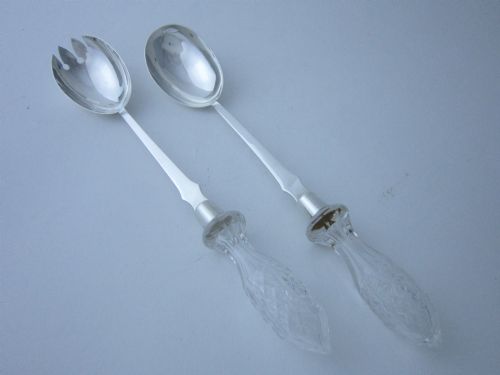
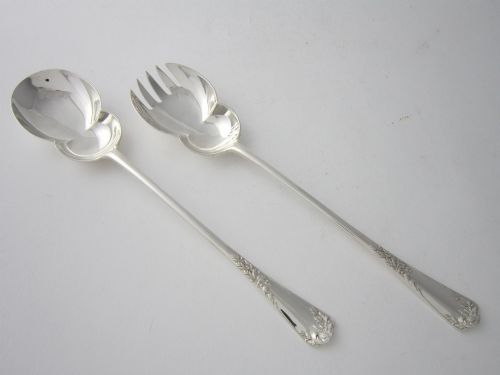
Many sets, particularly canteens and salad servers, were produced for formal dining occasions and festive family meals. Smaller christening sets served a symbolic and ceremonial purpose rather than everyday utility.
Using these pieces today requires gentle hand washing rather than mechanical dishwashing to preserve the integrity of the silver and any organic case materials.
How can I tell the period of a set?
Dating relies primarily on the assay office hallmarks stamped directly onto the silver, which record the specific year letter code and town mark. Stylistic clues such as Fiddle pattern handles or Art Nouveau decorative motifs also point toward specific eras like the Victorian or Edwardian periods.
Examining the construction of any accompanying storage box, from mahogany timber to leatherette and silk interiors, offers further contextual evidence for the date of manufacture.