
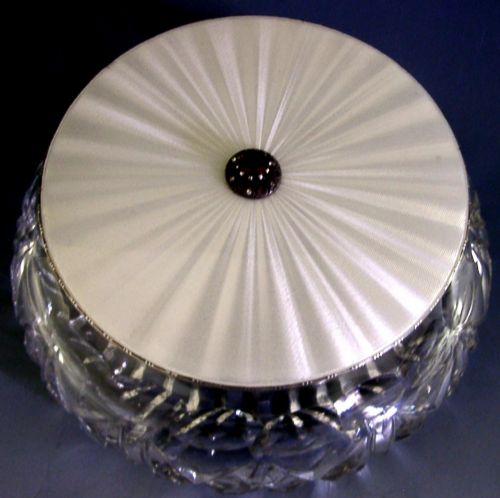


Sterling Silver Powder Jar
A sterling silver powder jar sits on a dressing table to hold cosmetics, offering a touch of period elegance to a room.
Sterling Silver Powder Jar
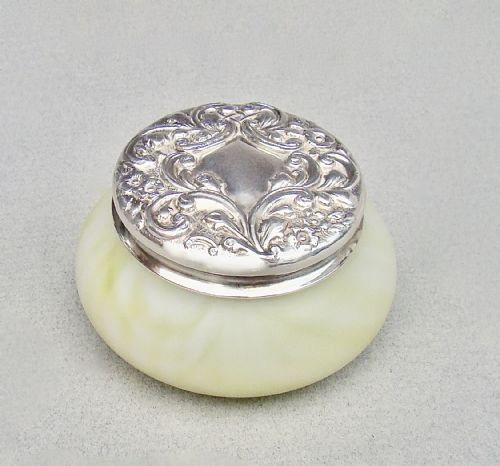
A sterling silver powder jar combines a precious metal lid with a glass or crystal body, serving as a functional dressing table accessory. These pieces span the Victorian, Edwardian, and Art Deco periods, evolving from ornate nineteenth-century designs to geometric twentieth-century styles.
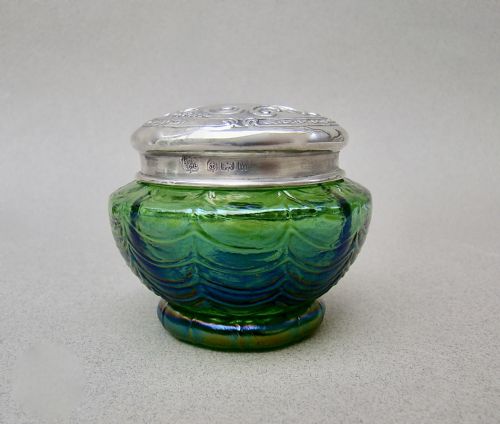
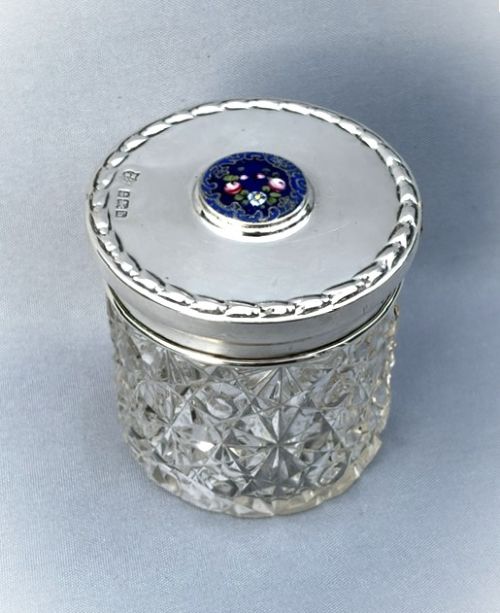
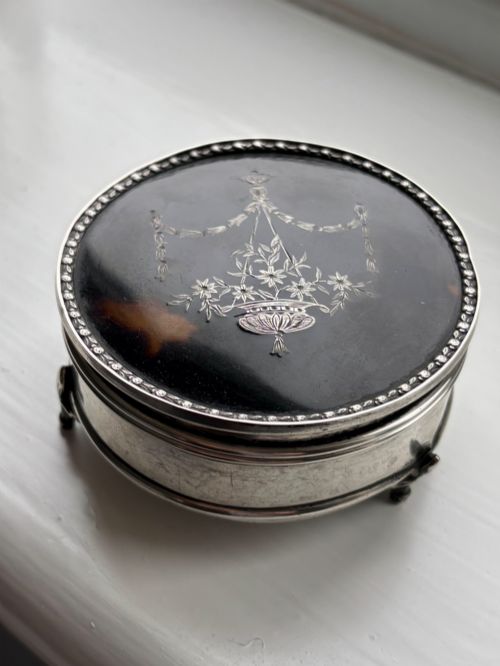
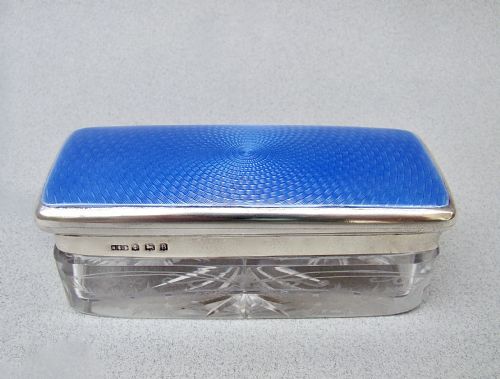
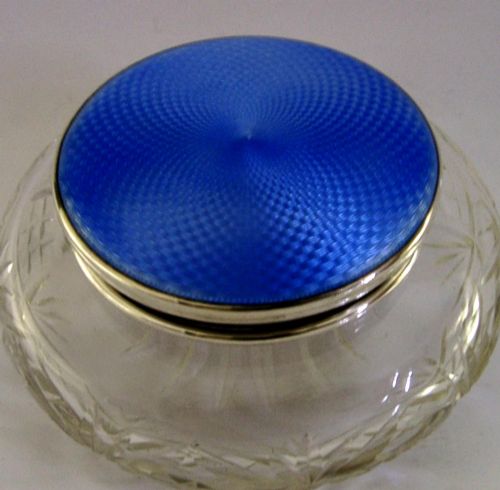
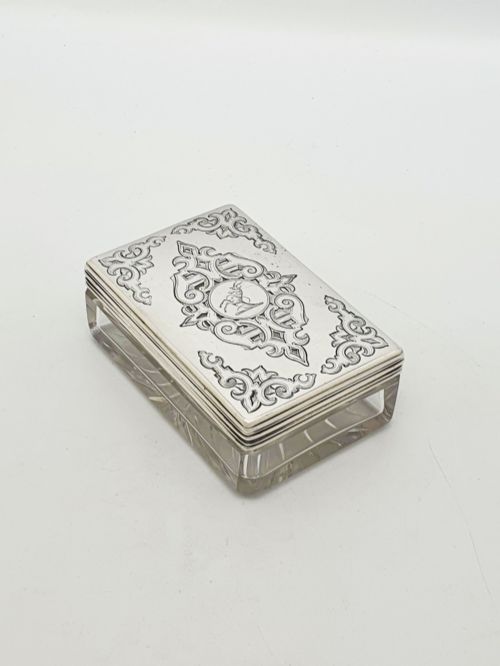
The version most commonly encountered on this page pairs a cut glass or crystal container with a sterling silver cover. Makers also produced variations incorporating enamel, guilloche enamel, and faux tortoiseshell to adorn the lids.
Beyond basic storage, these objects functioned as vanity set components or standalone dressing table boxes. Their forms range from simple round jars to heart-shaped boxes and larger bowls.
Materials and manufacturing techniques
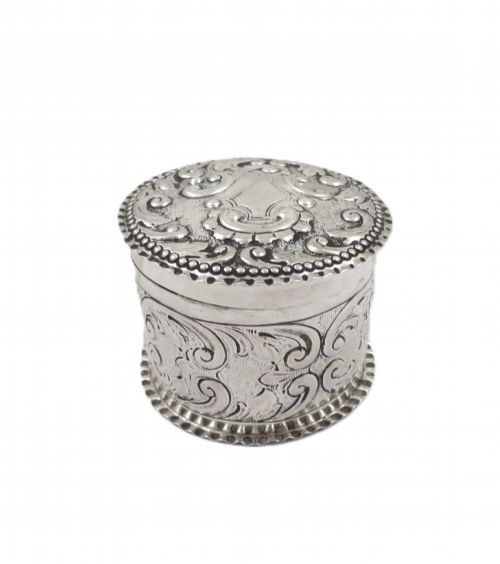
Silversmiths formed the lids using sterling silver, frequently applying techniques such as repousse decoration to create raised patterns. Workshops also added coloured, guilloche, or painted enamel directly onto the metal surfaces.
The lower vessels utilise heavy cut glass, cut crystal, satin glass, or coloured glass such as cranberry and amethyst. Artisans cut and etched geometric or floral patterns into the glass bodies to catch the light on the dressing table.
Some powder jars feature miniature hand-painted butterflies or mallard ducks swimming across the enamel lids, turning a simple container into a tiny canvas.
Evaluating design and execution
The standard of a piece rests upon the crispness of the glass cutting and the weight of the crystal. Superior examples display deep, sharp facets that refract light cleanly rather than soft, moulded contours.
On the metalwork, the quality depends on the precision of the repousse relief and the condition of the enamel. Intricate hand-painted details or complex engine-turned guilloche patterns elevate a piece above plain silver tops.
A. J. Pepper & Co·Ollivant & Botsford·Henry Clifford Davis·Goldsmiths and Silversmiths Company·A. Bromet & Co
The Sterling Silver Powder Jar Glossary
- Sterling silver
- An alloy consisting of pure silver and other metals, usually copper, meeting a specific standard of purity. This material forms the durable lids found on dressing table jars.
- Guilloche enamel
- A decorative technique where an intricate geometric pattern is engraved beneath a translucent layer of coloured enamel. This finish appears frequently on Art Deco vanity jar lids.
- Repousse
- A metalworking method in which the artisan hammers the metal from the reverse side to form a raised design on the front. This technique gives texture to Edwardian and Victorian silver boxes.
- Satin glass
- Type of glass treated with hydrofluoric acid to produce a velvety, frosted surface texture. It appears on the bodies of select lidded trinket boxes.
- Cut crystal
- High-clarity glass containing lead oxide, cut and polished with facets to maximise brilliance. It provides the heavy, sparkling base for many dressing table jars.
Sterling Silver Powder Jar: Frequently Asked Questions
How were powder jars used?
These jars sat on dressing tables to hold loose face powder, dusting powder, or cosmetic cotton. Women used the accompanying puffs to apply powder before social engagements.
They formed part of larger dressing table sets that included hairbrushes, mirrors, and trinket boxes. Their presence turned daily grooming routines into a refined ritual.
What is guilloche enamel?
Guilloche enamel involves mechanical engraving of a metal surface with precise geometric patterns before applying translucent enamel. The underlying pattern shows through the coloured glass layer.
This technique became extremely popular during the Art Deco period. It produced vibrant, light-catching lids for vanity jars and powder boxes.
How do I date a silver jar?
British silver jars typically carry hallmarks stamped into the metal. These marks identify the assay office, the maker, and a specific date letter corresponding to the year of testing.
Stylistic cues also help identify the period, such as Victorian repousse work, Edwardian floral motifs, or Art Deco geometric symmetry.
How do I care for antique silver?
Keep silver away from direct moisture and chemical sprays found in modern bathrooms. Gentle dusting with a soft cloth preserves the metal and enamel surfaces.
Avoid aggressive chemical dips, especially on pieces with enamel or faux tortoiseshell panels. Proper storage prevents unnecessary tarnishing and wear.