


Sterling Silver Overlay Glass
Sterling silver overlay glass combines precious metal with decorative vessels, offering functional elegance for collectors of vanity and tabletop items.
Sterling Silver Overlay Glass
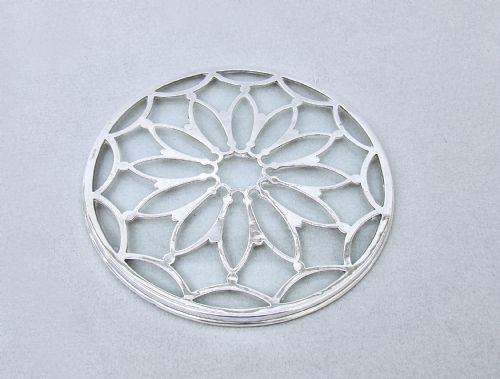
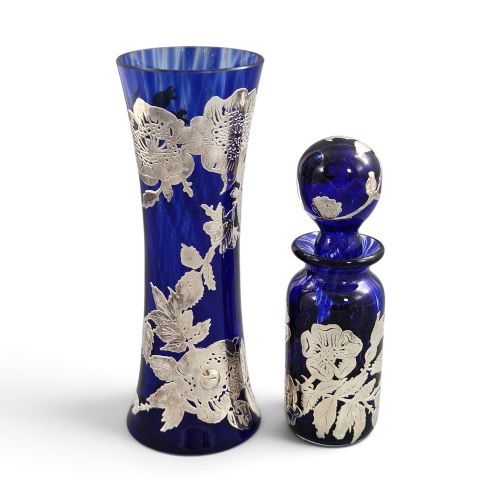
When searching for sterling silver overlay glass, collectors encounter objects combining metallic decoration fused or mounted onto various vessels. These pieces span utility and vanity items, including scent and perfume bottles, hip flasks, decanters, vases, teapot stands, coasters, vanity sets, jars, table bells, cocktail shakers, and rouge pots.
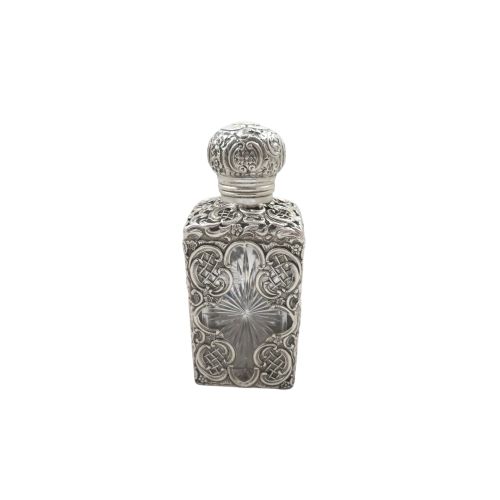
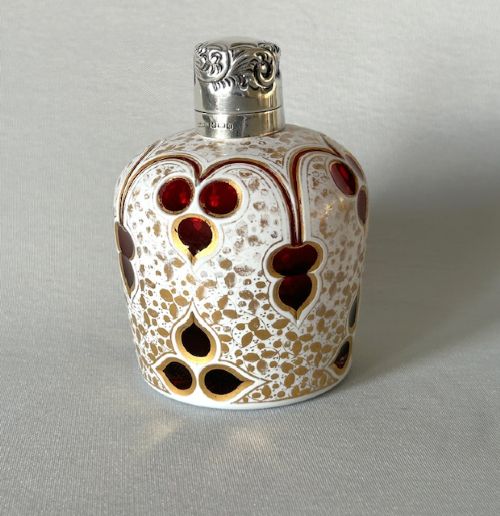
The version most commonly met on this page is the scent or perfume bottle, frequently dating from the Victorian and Edwardian periods, often exhibiting floral or organic Art Nouveau motifs. Alongside these small vanity wares, larger items such as cocktail shakers, vases, and tea service accessories appear from periods spanning the late nineteenth century through the twentieth century.
How they were made
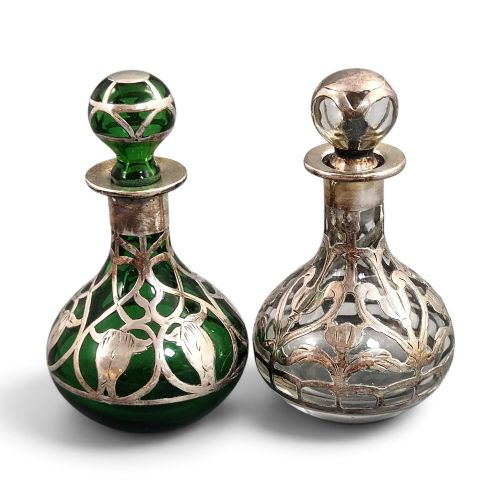
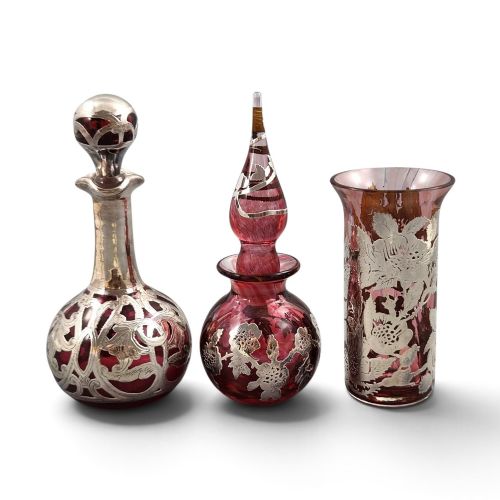
Makers utilised sterling silver, applying it directly onto glass vessels through intricate cutout metalwork or electroplating techniques that bonded the silver to the body. The underlying glass foundation typically consists of clear cut glass or coloured varieties such as green glass, ruby glass, cobalt glass, and amethyst glass.
Production methods involved blowing or moulding the glass substrate before applying the silver sheath or mounts, which were often hallmarked to indicate purity and origin. Enamel detailing frequently supplemented the metallic decoration on specific vanity pieces and vessels.
A solitary silver-mounted table bell stands ready to summon tea service or servants with an ornate figural handle.
What varies in quality
The standard of silver overlay work differs significantly according to the density and intricacy of the metal design, with heavier gauge silver indicating superior craftsmanship. Finely pierced or chased botanical patterns reflect greater artisan skill than stamped, thin foil applications.
The quality of the glass body equally determines the overall calibre of the piece, where deep colour saturation in cobalt or green glass, precise wheel cutting, and heavy lead crystal bases distinguish finer examples from standard production wares.
Harrods Ltd·Gorham·Laugharne Glass
The Sterling Silver Overlay Glass Glossary
- Sterling silver
- A silver alloy containing 92.5 percent pure silver and 7.5 percent other metals by mass. This standard is commonly stamped or hallmarked on the mounts of these vessels.
- Overlay
- A decorative technique where metalwork, in this case sterling silver, is laid over a glass body. It frequently forms naturalistic or geometric patterns across the surface.
- Cut glass
- Glassware shaped and patterned by abrasive wheels, creating faceted surfaces. It serves as a light-reflecting base beneath silver metalwork.
- Art Nouveau
- An international style of art, architecture, and applied art popular around 1900. It is characterised by organic, flowing lines and floral motifs seen on many overlay bottles.
- Vanity set
- A matching collection of dressing table accessories, such as perfume bottles, jars, and brushes. These assemblies often feature coordinated silver overlay decoration.
Sterling Silver Overlay Glass: Frequently Asked Questions
How do I clean silver overlay glass?
Clean the glass body using mild soapy water while keeping polishing agents away from the silver to prevent damage to the surrounding material.
Apply specialised silver polish carefully to the metal portions only, using a soft cloth to avoid staining or abrading the glass surface.
Are these pieces marked with hallmarks?
Many sterling silver mounts and overlays carry official assay office hallmarks indicating the year of manufacture and the purity of the metal.
Some smaller or foreign items may bear partial stamps or maker marks rather than full British hallmarks.
What glass colours are most common?
Clear cut glass and deep green glass appear frequently among Victorian and Edwardian vanity items and perfume bottles.
Cobalt blue, ruby, and amethyst variations also occur regularly, particularly in Art Nouveau and later twentieth-century studio glass pieces.
How were these items used originally?
Scent and perfume bottles stored volatile fragrances on dressing tables, while hip flasks carried personal beverages during travel.
Larger vessels like cocktail shakers, decanters, and vases served dining and entertaining functions in domestic settings.