

Sterling Silver Menu Holder
A sterling silver menu holder transforms a formal table setting, pairing practical function with the whimsical craftsmanship of the early twentieth century.

Sterling Silver Menu Holder
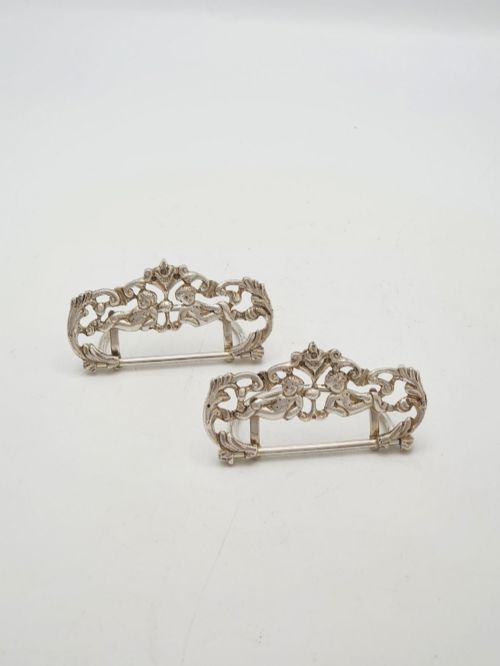
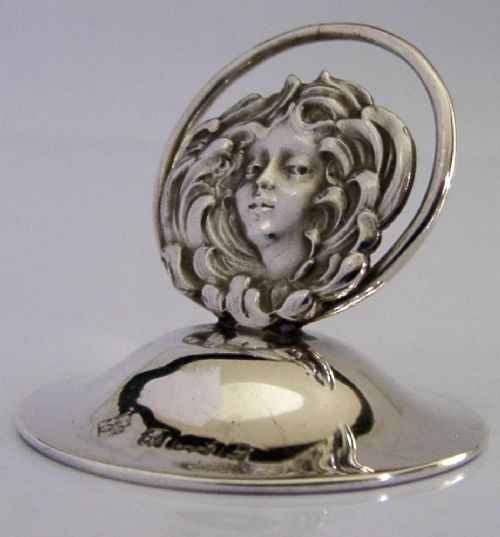
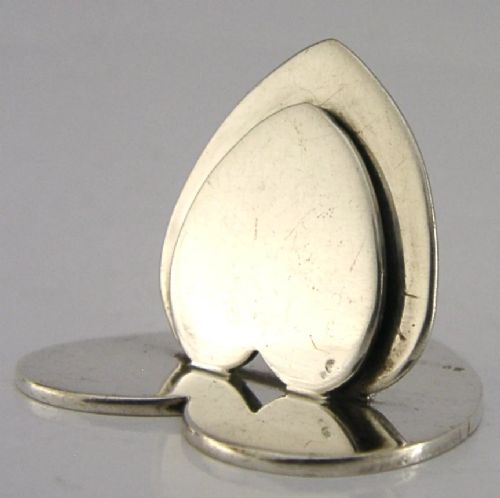
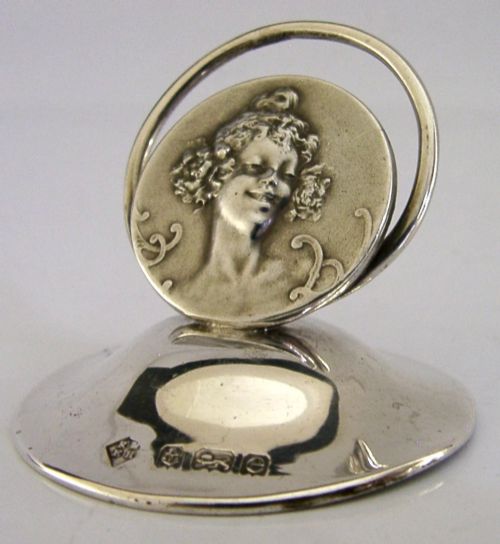
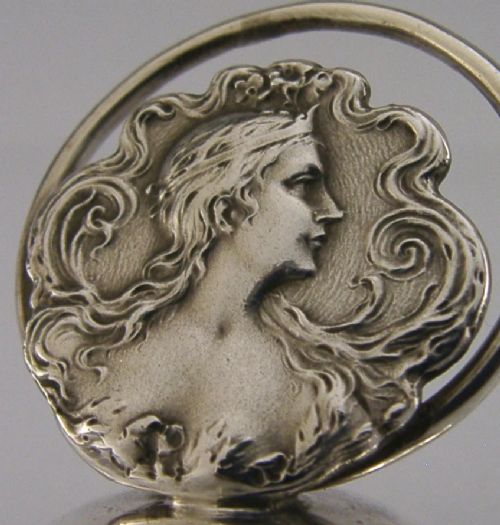
A sterling silver menu holder is a small, decorative accessory designed to uprightly display dining menus or place cards upon a dinner table. The pieces found here span the Victorian, Edwardian, George V, and George VI periods, stretching from the late nineteenth century through to the 1930s.
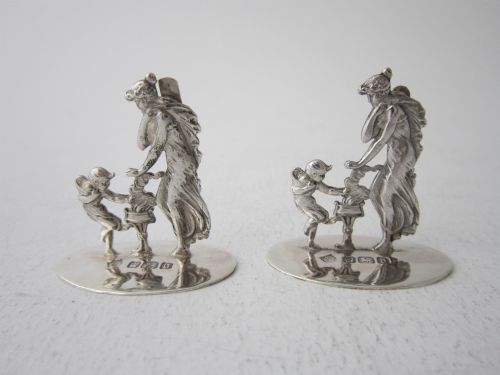
Most examples encountered on this page belong to the Edwardian era or the 1930s, reflecting a golden age of elaborate table hospitality. They frequently appear as figural subjects, animal studies, or novelty items designed to spark conversation among guests.
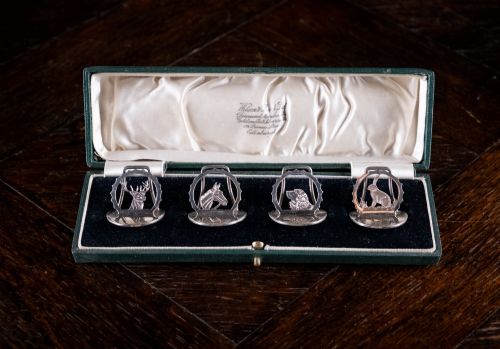
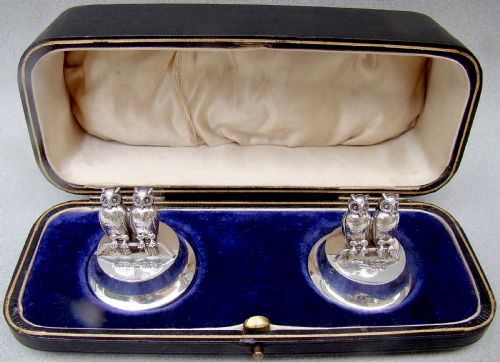
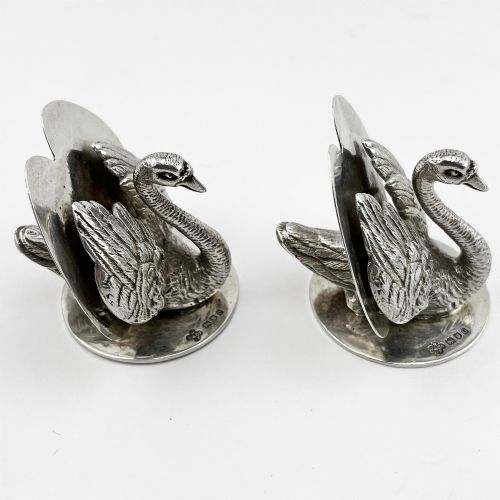
Makers produced these functional ornaments in matched pairs or larger sets, though solitary pieces also survive. Alongside standard menu card holders, many double as place card holders or combine with photo clips and napkin rings.
How they were made
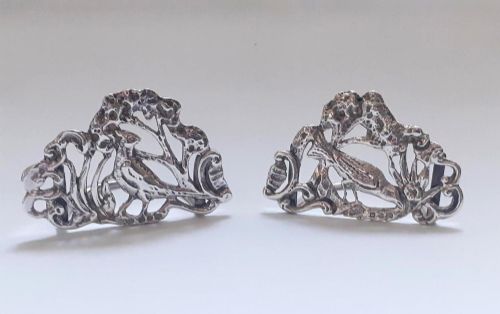
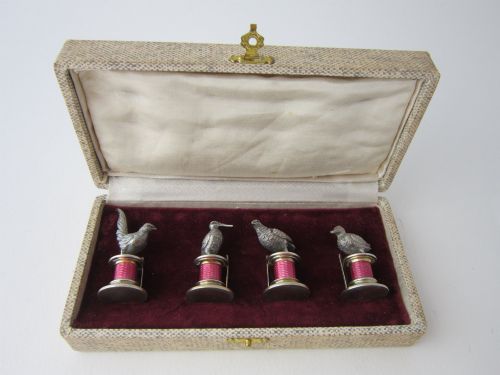
Silversmiths utilised sterling silver as the primary medium, shaping subjects through casting, stamping, and detailed hand-chasing. Figural models of animals, mythical figures, and birds demanded skilled manual finishing to define feathers, fur, and facial expressions.
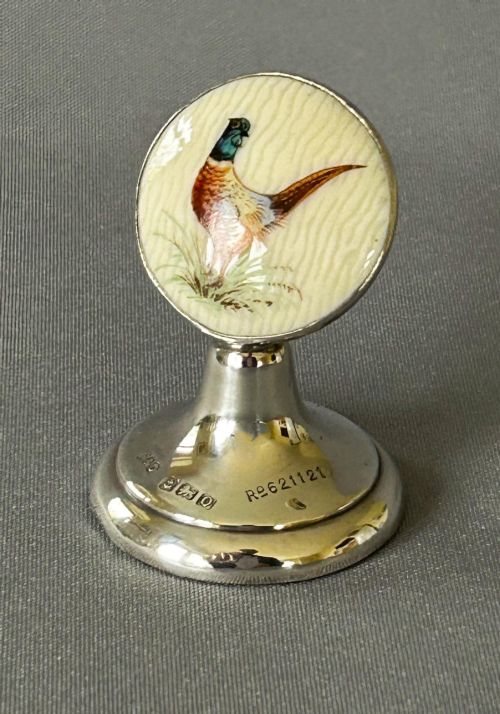
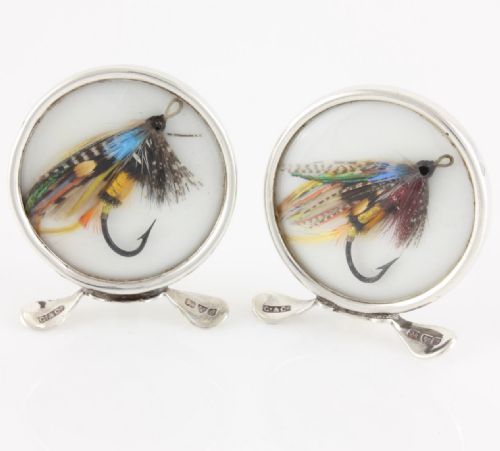
Certain examples incorporate added media to enrich the design, combining the silver framework with coloured enamel, glass, leather, silk, velvet, or feathers. Makers occasionally mounted silver motifs upon ceramic bases or paired them with weighted internal loads to ensure stability on the dining cloth.
Sterling Silver Menu Holder Retail Price Guide 2026
Typical asking prices for sterling silver menu holder among the pieces listed under this phrase on Sellingantiques today, from the lower quarter to the upper quarter. They describe what is for sale here now, not the wider market.
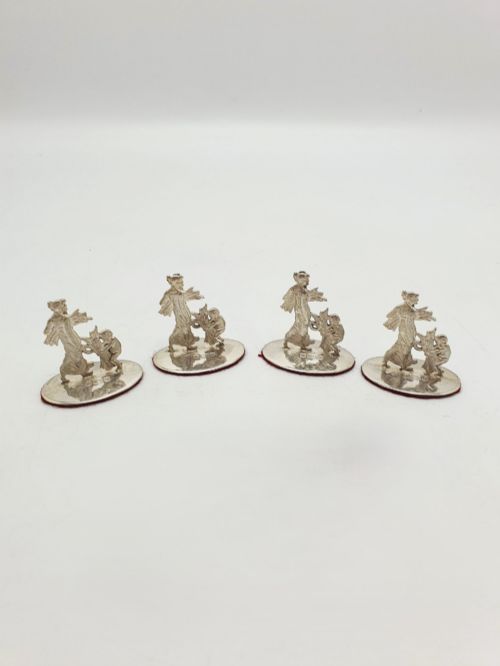
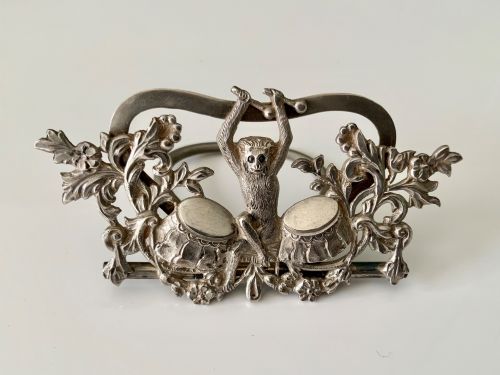
Among the menagerie of silver owls, foxes, and flying fish, a cheerful monkey caught mid-drum solo invites a smile.
What varies in quality
The degree of hand-finishing and sculptural detail marks the distinction between standard production and top-tier examples. Finer pieces exhibit crisp casting lines and realistic anatomical articulation in animal subjects, whereas lesser items rely on softer, generalised stampings.
Maker attribution and completeness heavily influence desirability, particularly when pieces retain their original fitted presentation cases or belong to matching sets of four or more. Pieces bearing polychrome enamel work or unusual figural subjects command greater attention due to the higher level of artisan labour involved.
Levi & Salaman·A. Wilcox·Grey & Co.·Sampson Mordan·Asprey·Liberty
The Sterling Silver Menu Holder Glossary
- Sterling silver
- A standard alloy consisting of 92.5 percent pure silver and 7.5 percent other metals, chosen for durability in tableware.
- Figural
- Designed in the recognisable shape of a human, animal, or object rather than abstract ornamentation.
- Guilloche enamel
- Decorative metalwork covered with translucent enamel over a mechanically engraved geometric pattern.
- Novelty
- An object shaped playfully or unexpectedly to amuse observers while retaining its primary utility.
- Assay
- The official testing of precious metal purity, resulting in hallmarks stamped onto the piece.
Sterling Silver Menu Holder: Frequently Asked Questions
How were sterling silver menu holders used?
These pieces sat upon dining tables to hold printed menu cards or guest name markers upright during formal meals. They allowed diners to easily view the evening's courses without cluttering the tablescape with flat paper.
Hosts matched the theme of the holders to the occasion, the season, or sporting interests, turning everyday dining into a curated experience.
Can I still use them for dinner parties?
Modern hosts frequently repurpose these antique silver items to hold place cards, recipe cards, or small photographs during gatherings. Their compact size makes them practical additions to contemporary tabletops.
Because many are weighted or fitted with secure slots, they hold modern card stock securely without slipping.
How do I identify the period of a menu holder?
Hallmarks stamped into the silver provide the most reliable guide to a piece's age, indicating the assay office, date letter, and maker's mark. Stylistic clues such as Edwardian naturalism or Art Deco geometric lines also point toward specific decades.
Comparing the subject matter against known production eras helps narrow down manufacture dates between the Victorian period and the 1930s.
Why are some menu holders shaped like animals?
Edwardian and George V dining culture favoured whimsy and conversation-starting novelties over austere presentation. Animals, birds, and sporting motifs reflected the countryside pursuits and playful tastes of the period.
Owls, foxes, and dogs proved especially popular subjects for silversmiths seeking to inject humour into formal dining rooms.