


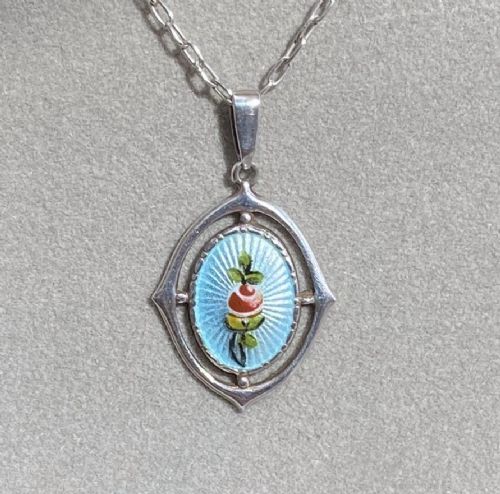
Sterling Silver Medallion
A sterling silver medallion brings the tactile weight of early twentieth-century presentation pieces and personal tokens straight to your collection.
Sterling Silver Medallion
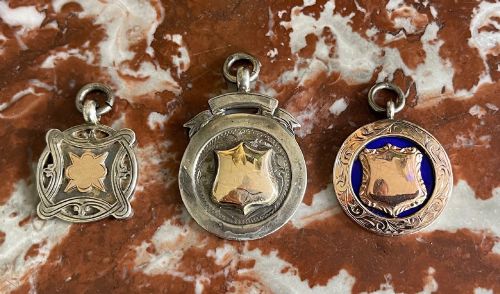
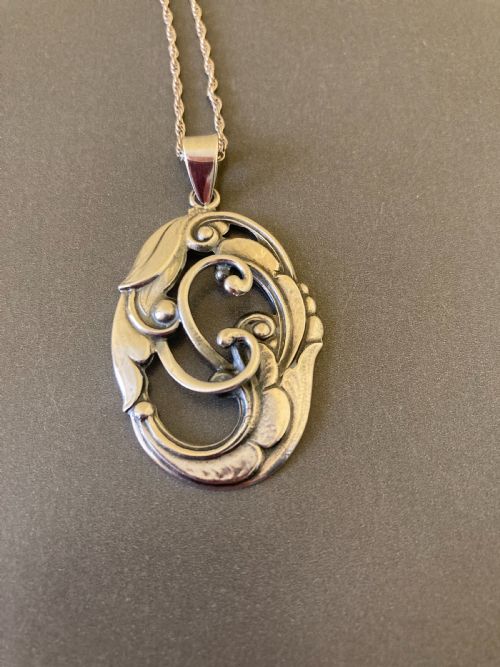
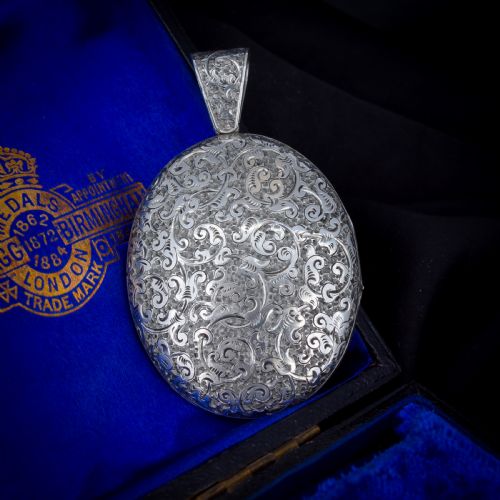
A sterling silver medallion is most commonly encountered here as a watch fob, a sports medal, or an intricate pendant. These objects bridge the gap between personal adornment and commemorative hardware, often carrying specific dates, initials, or sporting motifs from the late nineteenth century through to the 1930s.
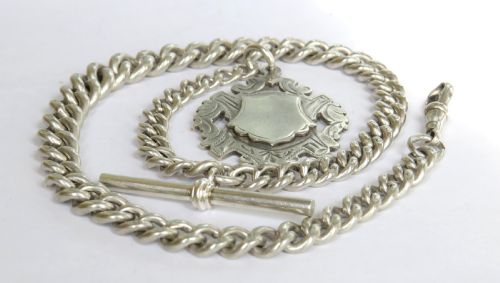
The selection ranges from Victorian Scottish cycling awards and Art Deco football medals to decorative enamelled pieces and watch chains. Makers applied these silver forms to everyday accessories as well as celebratory awards, ensuring a diverse array of survivals.
Buyers frequently find that these medallions double as pendants, adapting easily from pocket watch chains to modern neckwear. Their origins trace across British assay offices and continental workshops, reflecting regional stylistic shifts over several decades.
Materials and construction
Silversmiths relied heavily on sterling silver and silver alloys, shaping them through stamping, casting, and hand engraving. Many examples incorporate vitreous enamel or guilloché enamel work to add colour and contrast to the metallic surface.
Selected pieces feature precious accents such as gold highlights, opal doublets, or blister pearls set directly into the silver framework. These decorative additions elevate simple medallions into sophisticated items of jewellery.
Listings feature sterling silver, enamel, gold accents, opal doublets, and blister pearls across Victorian, Edwardian, Arts and Crafts, and Art Deco styles.
Factors determining quality
Quality rests primarily on the crispness of the engraving and the preservation of any applied enamel work. Crisp lettering and undamaged guilloché patterns distinguish superior items from worn or heavily polished equivalents.
The integration of secondary materials like opal doublets, blister pearls, or gold accents marks out the finer pieces in this category. Heavier gauge silver and distinct stylistic movements such as Art Nouveau or Arts and Crafts further differentiate standard utilitarian items from exceptional works.
Charles Horner
The Sterling Silver Medallion Glossary
- Sterling silver
- An alloy consisting of ninety-two point five percent silver and seven point five percent other metals, usually copper. This standard composition guarantees durability while maintaining a bright metallic lustre.
- Guilloché enamel
- A decorative technique where a precise mechanical pattern is engraved into the metal beneath a translucent layer of enamel. This creates depth and a shifting play of light across the surface.
- Watch fob
- A short strap, chain, or medallion attached to a pocket watch for adornment or ease of retrieval. They were widely used as presentation pieces for sporting and civic achievements.
- Opal doublet
- A composite gemstone made from a thin slice of natural opal glued to a dark backing material. This construction enhances the play of colour while providing structural support.
Sterling Silver Medallion: Frequently Asked Questions
How were these medallions originally worn?
Most of these pieces served as decorative watch fobs suspended from heavy silver pocket watch chains across a waistcoat. Owners also wore them as personal pendants on chains or ribbons.
Over time, many of these items transitioned entirely into standalone neckwear as pocket watches fell out of daily use.
What periods do these pieces represent?
The selection spans from the late Victorian era through the Edwardian period and into the 1920s and 1930s. This covers distinct design shifts from ornate historicism to clean geometric Art Deco lines.
Earlier examples often feature hand-engraved scrollwork, while later pieces embrace bold sporting imagery or modernist enamel work.
How can I identify the date of a medallion?
Many pieces carry engraved presentation dates commemorating specific sports matches, cycling events, or personal milestones. Assay office hallmarks stamped into the silver provide further chronological clues.
Stylistic indicators such as enamel techniques and lettering styles also help narrow down the decade of manufacture.
Can these medallions be worn as pendants today?
Yes, their original suspension loops make them straightforward to slide onto a modern chain. Their substantial silver weight allows them to hang well as statement necklaces.
Buyers frequently pair antique watch chains with these medallions to recreate historical looks.