



Antique Silver Fob Medal
An antique silver fob medal is a pocket watch accessory carrying the marks of past games and clubs, offering a tactile piece of history.
Antique Silver Fob Medal
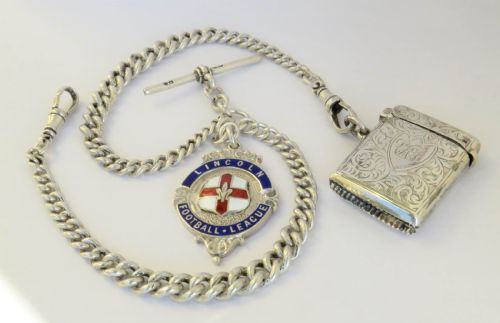
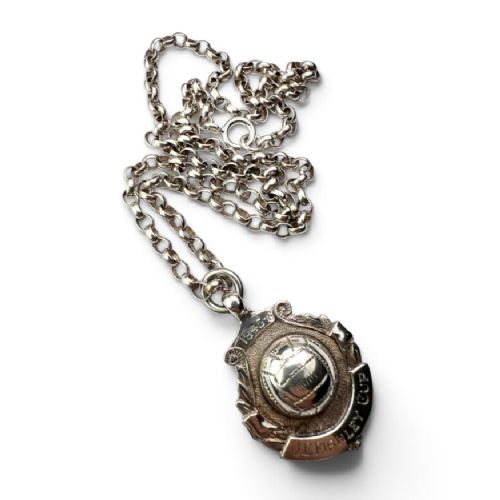
An antique silver fob medal connects directly to past sporting and competitive achievements, often worn on chains alongside pocket watches. These items serve as small historical records of local clubs, football matches, cricket games, and curling events.
The pieces appearing on this page span several distinct periods including the Victorian era, Edwardian years, and the Art Deco period. Buyers encounter forms ranging from sports medals and pendants to complete watch chains and sovereign cases.
Origins stretch across various British and Irish contexts, recording events from football and cricket to cycling and darts. Each item carries specific engraving or enamelling that tells the story of its original presentation.
Materials and construction methods
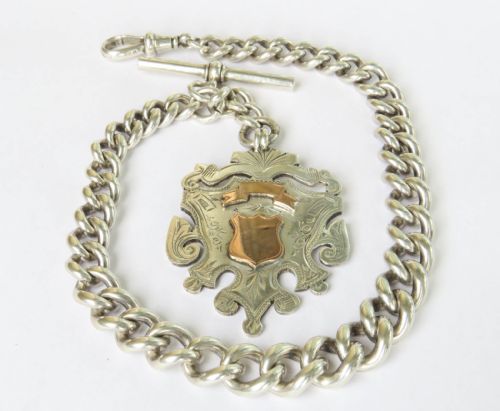
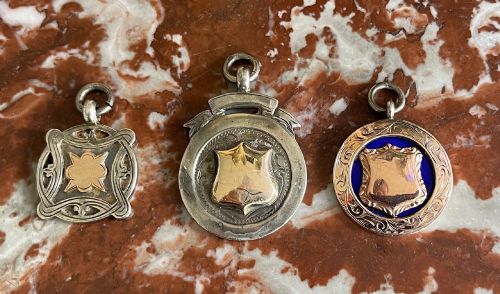
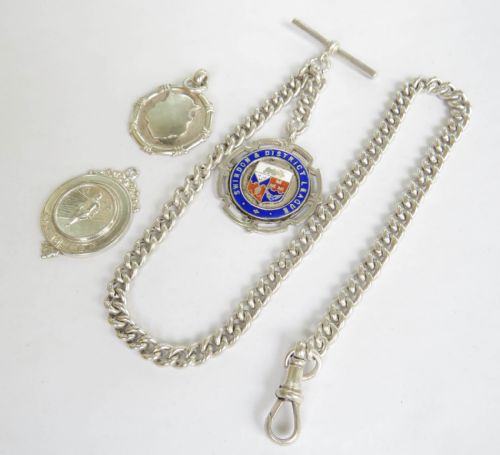
Makers utilised sterling silver and silver plate as the primary structural materials for these medals, frequently adding rose gold detail to highlight central crests and lettering. Enamel was applied to create vibrant coloured details on sporting emblems.
Techniques relied upon traditional silversmithing methods, including die-stamping for relief designs and hand-engraving for naming the recipient and the date. Metal components were joined using soldering before receiving official hallmarking.
Antique Silver Fob Medal Retail Price Guide 2026
Typical asking prices for silver fob medal among the pieces listed under this phrase on Sellingantiques today, from the lower quarter to the upper quarter. They describe what is for sale here now, not the wider market.
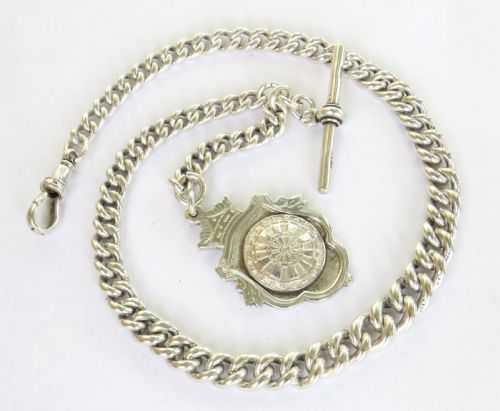
A tiny silver dartboard complete with miniature coloured enamel segments exists among the items recorded here.
Distinctions in craftsmanship and condition
Quality rests upon the clarity of the original hand-engraving and the crispness of the stamped relief work on the silver surface. Pieces with undamaged enamel and distinct maker marks stand apart from heavily worn examples.
The presence of precious metal detailing, such as rose gold accents, alongside heavier gauge sterling silver construction, indicates higher grade production from the period.
David McGregor
The Antique Silver Fob Medal Glossary
- Sterling silver
- A silver alloy containing 92.5 percent silver by mass and 7.5 percent other metals, usually copper. This standard metal forms the bulk of traditional watch fobs.
- Albert chain
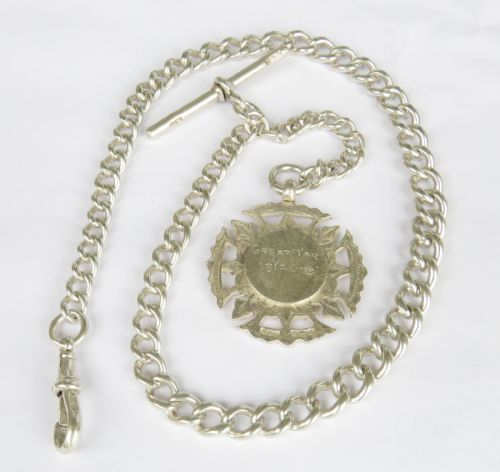
- A type of watch chain attached to a waistcoat pocket, often holding a fob medal at the centre drop. These chains come in single and double strand variations.
- Sovereign case
- A small circular container designed to hold a gold sovereign coin safely in a pocket. These cases frequently appear alongside watch chains and fobs.
- Enamel
- A glass-like substance fused to the surface of metal through firing to provide colour and decoration. It is commonly found on sports medals to display club colours.
- Hallmark
- An official stamp applied by an assay office indicating the purity of the metal, the year of manufacture, and the maker. These marks help date the silver accurately.
Antique Silver Fob Medal: Frequently Asked Questions
What is an antique silver fob medal?
An antique silver fob medal is a small pendant originally awarded for sports, games, or civic achievements during the Victorian, Edwardian, and Art Deco eras. They were typically attached to watch chains and worn across a waistcoat.
These pieces often feature detailed engravings naming the winner, the sport, and the date of the event. Many incorporate regional club motifs or enamel work.
How were watch chains used?
Watch chains secured pocket watches inside a wearer's pocket while draping across the front of a waistcoat for display. The fob medal hung from the centre point of the chain as an ornament.
Gentlemen and sportsmen used these chains daily, attaching sovereign cases, match safes, and medallions alongside their timepieces.
How do I date these pieces?
Dating relies heavily on the hallmarks stamped directly onto the silver surface, which indicate the specific assay office and year of testing. Stylistic clues such as Art Deco geometric shapes or Victorian scrollwork also help identify the era.
Inscribed dates on the reverse of the medals often record the exact year the sporting event took place.
How do I care for silver fobs?
Silver fobs require gentle cleaning with a soft cloth to maintain the metal finish without removing the aged patina. Harsh chemical dips should be avoided, particularly on pieces featuring delicate enamel work.
Storage in dry conditions prevents tarnishing and protects any gold details or attached chains from unnecessary friction.