


Sterling Silver Inkstand Set
A sterling silver inkstand set brings tangible weight and refined purpose to the writing desk.
Sterling Silver Inkstand Set
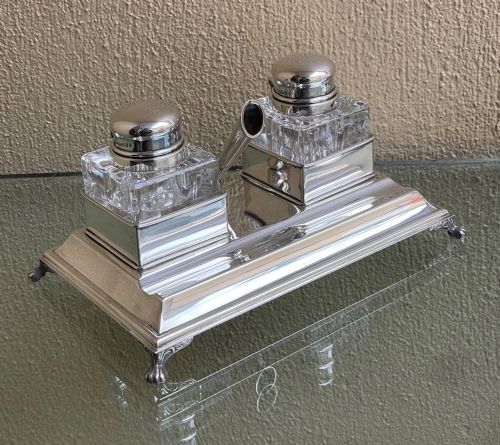
A sterling silver inkstand set comprises a tray or stand fitted with receptacles for writing materials, most commonly housing inkwells and sometimes accompanied by taper sticks or sanders. These desk accessories serve as substantial centrepieces of the writing surface, combining utility with decorative presence.
The pieces seen here span multiple eras, including Georgian, Regency, Victorian, Edwardian, and the mid-twentieth century Elizabeth II era. Buyers will encounter both simple stands holding a single cut glass bottle and grander, heavier configurations featuring chambersticks and double inkwells.
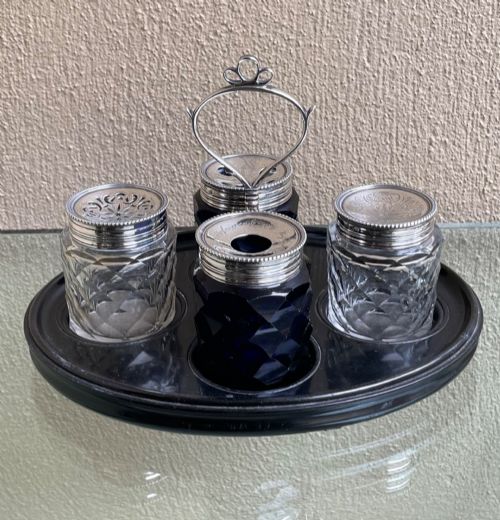
Formations vary from traditional oblong trays resting on scroll feet to capstan-shaped desk inkwells with integrated timepieces. Materials extend beyond sterling silver to incorporate contrasting elements such as cut glass, clear glass, and dark ebony wood.
Materials and construction
Silversmiths constructed these stands using solid sterling silver, often shaped through casting and hammering to create substantial desk trays and mounted rims. Ebony was utilised for specific components like handles or bases, providing a dark visual contrast to the polished metal.
Fitted glass elements, including heavy cut glass ink bottles, were fashioned to sit securely within silver collars or dedicated wells. Hallmarks stamped directly into the silver record the assay office, city of origin, and date of manufacture.
Some desk inkwells doubled as clocks, ensuring writers remained punctual while losing track of time in correspondence.
Markers of quality
Quality rests in the heaviness of the silver and the architectural ambition of the design, moving from modest single inkwells to monumental double stands with chambersticks. Superior examples display crisp chasing along the borders, substantial gauge metal that resists bending, and well-balanced proportions.
The inclusion of original, matching glass bottles with coordinated silver mounts elevates an inkstand. Finer pieces retain their complete suite of fitted accessories, such as matching taper sticks or sanders, rather than assembled replacements.
Robert Garrard
The Sterling Silver Inkstand Set Glossary
- Inkstand
- A tray or desk stand designed to hold inkwells, pens, and other writing paraphernalia. It keeps the desk organised and protects the writing surface from spills.
- Chamberstick
- A short portable candlestick fitted with a handle and a drip pan. These frequently accompanied inkstands to provide wax for sealing letters.
- Capstan
- A desk inkwell shaped like the nautical barrel used for weighing anchor. This design tapers towards the top and provides a wide, stable base.
- Hallmark
- An official stamp applied to precious metals indicating purity, maker, assay office, and year. These marks allow collectors to date the piece accurately.
- Cut glass
- Glass decorated by grinding facets or patterns into the surface using a wheel. It adds light reflection and heft to the ink bottles.
Sterling Silver Inkstand Set: Frequently Asked Questions
How were these stands used daily?
They sat permanently upon writing desks in libraries, studies, and offices to provide immediate access to ink for dip pens. The writer would dip the nib into the inkwell before writing letters or signing documents.
At night, the integrated chamberstick could be lit to provide local illumination or to melt sealing wax for dispatching letters.
How do I clean sterling silver?
Silver requires gentle cleaning with a specialist polish and a soft cloth to remove natural tarnish without abrading the metal. Care must be taken around engraved crests, hallmarks, and fitted glass or ebony components.
Regular, light maintenance preserves the polished finish and keeps the definition of the chased borders sharp.
How do I identify the period?
The hallmarks stamped into the silver provide the most reliable guide to the exact year and city of manufacture. Stylistic clues, such as the neoclassical restraint of Georgian pieces or the heavy ornamentation of Victorian examples, also point to the era of creation.
Comparing the overall form and manufacturing techniques helps confirm whether a piece belongs to the Regency, Edwardian, or later eras.