

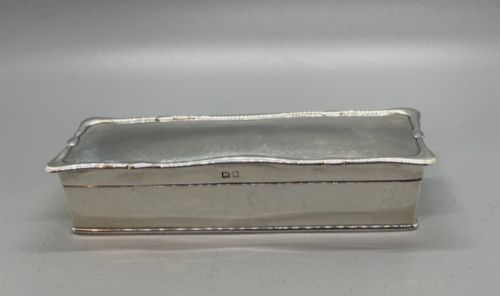
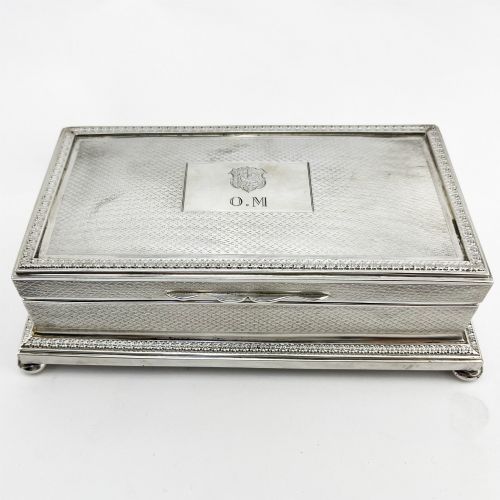
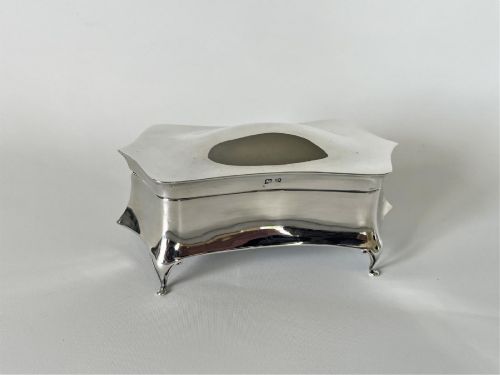
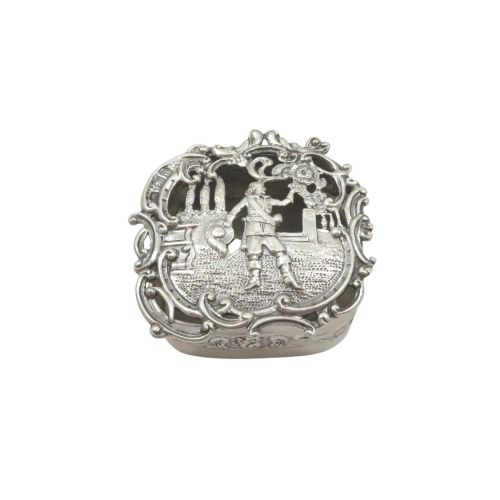

Sterling Silver Dressing Table Box
A sterling silver dressing table box brings order to vanity collections while displaying the distinct metalwork of late Victorian, Edwardian, and Art Deco makers.
Sterling Silver Dressing Table Box
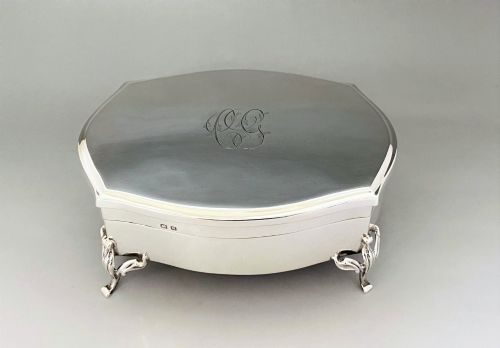
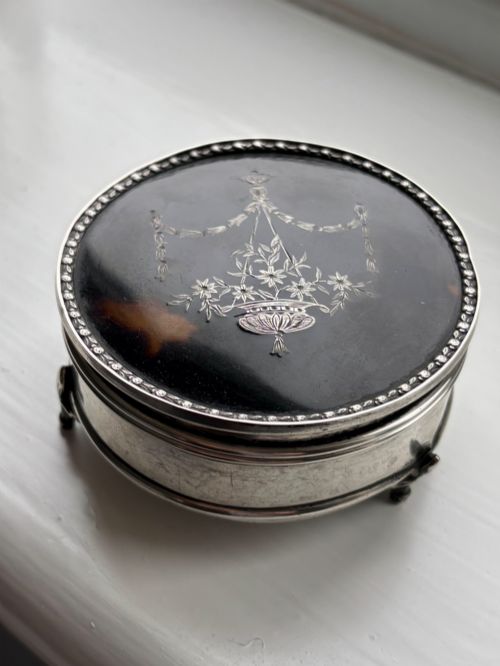
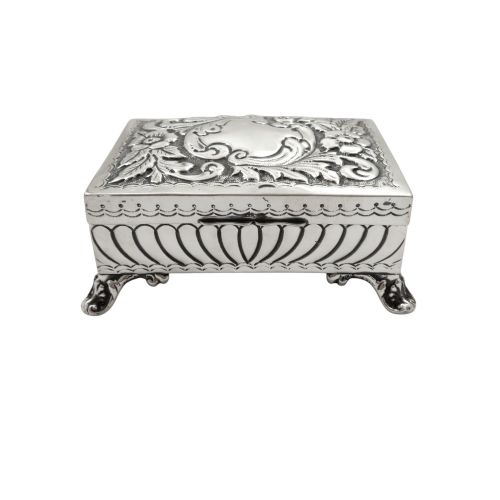
A sterling silver dressing table box serves to hold small personal items such as rings, trinkets, pins, or cosmetics on a bedroom vanity. These containers appear in various forms, including hinged caskets, lidded jars, and compact vanity pots.
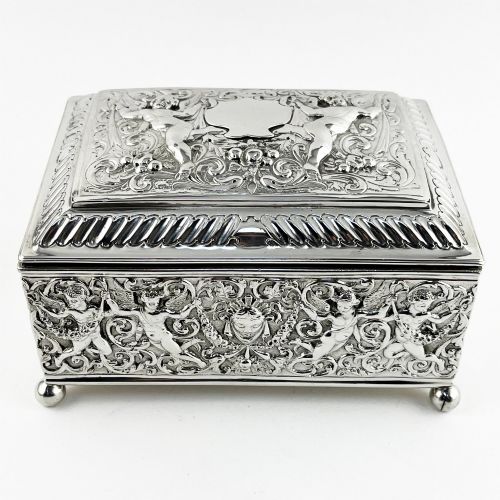
The pieces available span several eras, with Victorian and Edwardian examples showing traditional ornamentation alongside geometric Art Deco designs from the 1920s and 1930s. Common shapes range from simple round cylinders to heart-shaped boxes and substantial rectangular caskets.
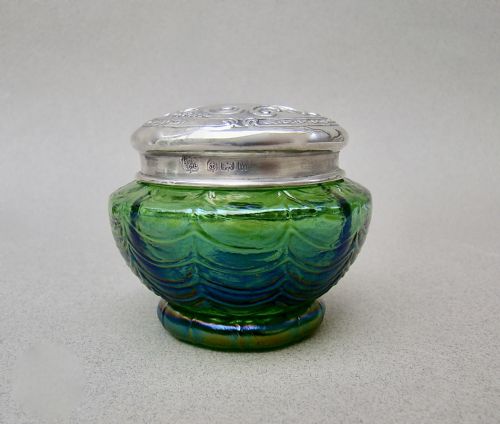
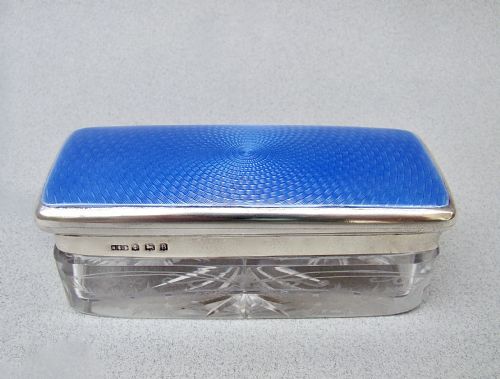
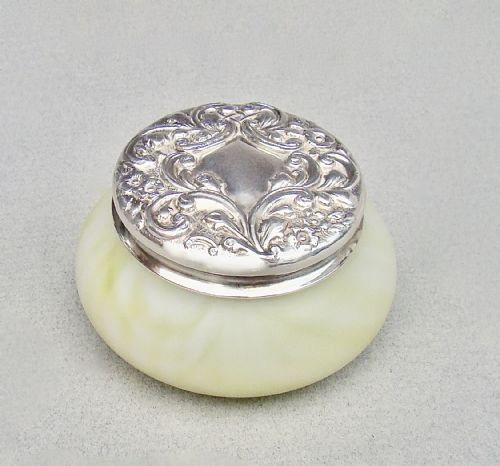
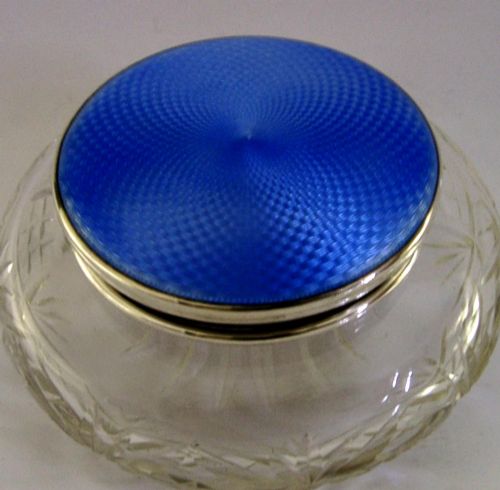
Makers utilised these vessels to complement other dressing table wares, often pairing solid silver mounts with cut glass, satin glass, or coloured enamel bodies. Collectors encounter both English workshop productions and continental European pieces on the market.
How they were made
Silversmiths formed the bodies of these containers using sterling silver sheet metal, shaping it through spinning, pressing, or hand-raising methods. Many examples incorporate glass bases, utilising thick cut glass, moulded satin glass, or coloured glass vessels fitted with matching silver lids.
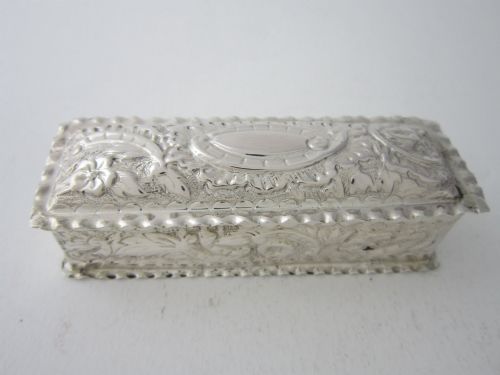
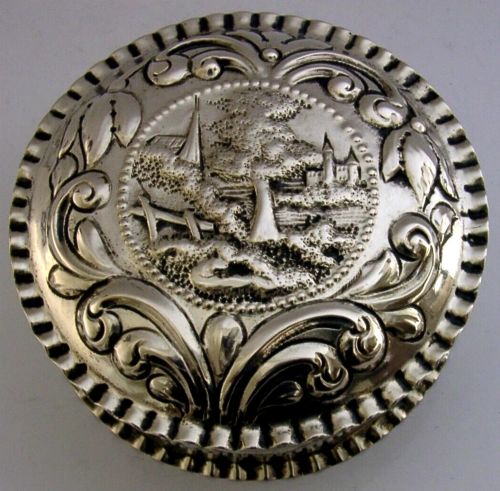
Decorative techniques include hand piercing, chased floral motifs, and cast pictorial scenes such as Reynolds angels on silver lids. Enamelling added colour, particularly guilloché enamel work featuring machine-turned patterns beneath translucent coloured glazes.
What varies in quality
The weight and gauge of the sterling silver used in the body and lid determine the physical substance of the piece, with heavier boxes providing greater structural durability. The precision of the hinge fitting and the tightness of the lid closure indicate the level of craftsmanship involved in production.
Surface decoration also dictates distinction, as finely pierced gallery work or intricate hand-chased details require higher skill than stamped ornamentation. In pieces combining glass and silver, the clarity of the cut glass and the intact condition of applied enamel work separate standard items from finer examples.
William Comyns·Mappin And Webb·Elkington And Co·Paul Storr·Asprey
The Sterling Silver Dressing Table Box Glossary
- Guilloche enamel
- Decorative metalwork technique involving an intricate mechanical pattern engraved beneath a translucent enamel coating.
- Castle top
- A descriptive term for box lids featuring a cast or engraved topographical view of a historic building or landmark.
- Pierced box
- A container featuring openwork designs created by cutting patterns through the silver sheet metal.
- Vanity jar
- A cylindrical glass container fitted with a matching sterling silver lid, designed for holding creams or powders.
- Satin glass
- Art glass treated to achieve a dull, frosted surface texture often paired with Edwardian silver mounts.
Sterling Silver Dressing Table Box: Frequently Asked Questions
What were sterling silver dressing table boxes used for?
These containers held delicate personal accessories, including rings, hairpins, trinkets, and cosmetics, keeping them secure and organised on a bedroom vanity. They sat alongside matching brushes and perfume bottles as part of a complete dressing table service.
Heavier lidded boxes also accommodated small documents, calling cards, or pocket watches when not in active use. Their soft velvet or silk interior linings protected fragile jewellery from scratches against the metal.
How do I date a silver dressing table box?
Assay office hallmarks stamped onto the sterling silver provide the most reliable guide to age, recording the specific year letter, town mark, and standard mark. Comparing the decorative style against known periods, such as the floral motifs of the Edwardian era or the geometric lines of Art Deco, narrows down the production date.
Maker marks registered with the assay offices also help establish a production window based on the active years of the firm. Combinations of glass types and fastening mechanisms further support chronological assessment.
How should I clean a silver dressing table box?
Maintenance involves gentle cleaning with a soft microfibre cloth and a specialist silver polish to remove tarnish without abrading the metal surface. Care must be taken around inset enamel panels, glass bodies, and fabric linings to avoid moisture damage.
Avoiding harsh chemical dips preserves any original patina and protects delicate hinges or applied decorative elements. Regular dusting prevents tarnish accumulation in recessed chased areas and engraved patterns.
Are glass and silver dressing table jars fragile?
The glass components require careful handling to prevent chipping along the rims where the silver collar attaches. Thick cut glass bases offer more resilience, whereas moulded satin glass or thin vanity jars demand cautious placement.
When lifting or moving the container, supporting the base rather than relying solely on the silver lid prevents accidental separation. Proper placement away from table edges ensures long-term preservation of both glass and metal elements.