

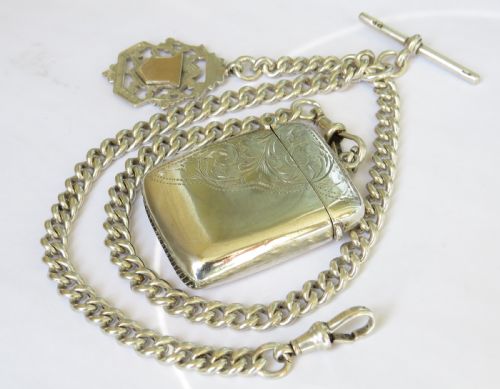

Sterling Silver Double Albert
These sterling silver double albert watch chains are sturdy waistcoat guardians designed to secure a pocket watch across the chest.
Sterling Silver Double Albert
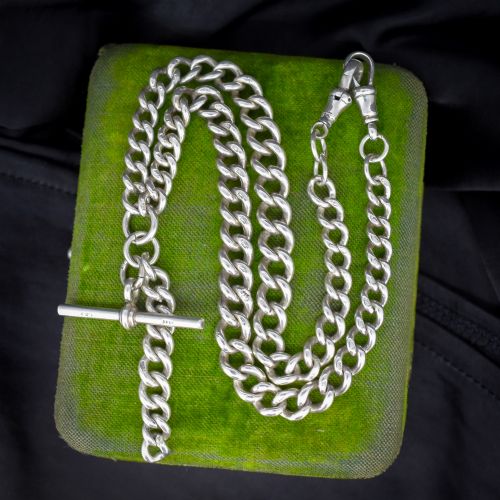
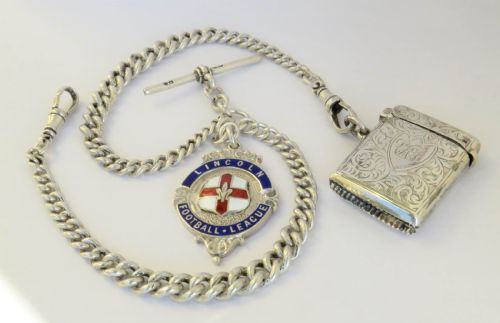
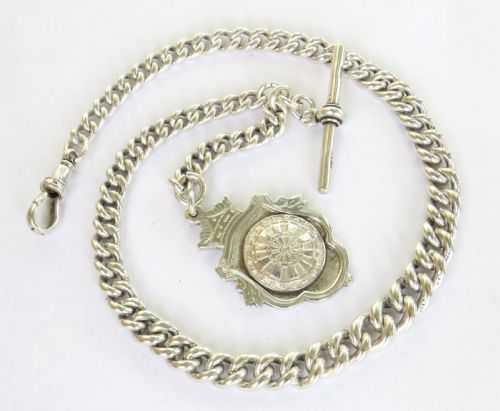
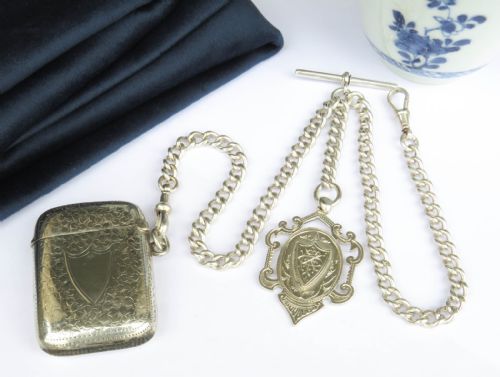
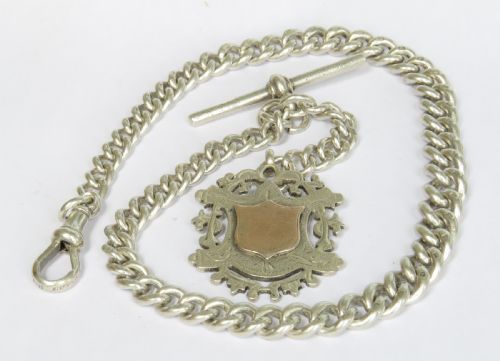
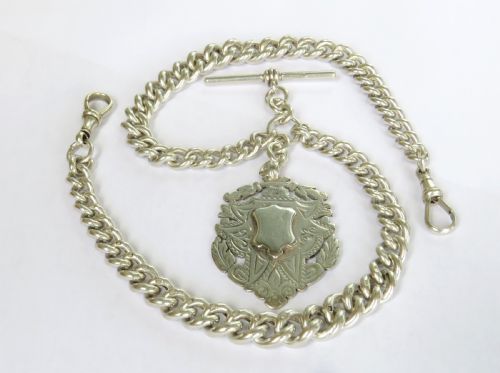
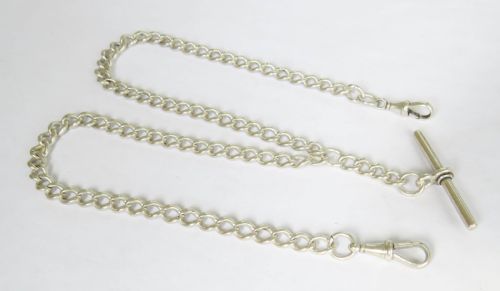
A sterling silver double albert consists of two distinct lengths of chain meeting at a central swivel connector, designed originally to span a gentleman's waistcoat buttonhole while securing a pocket watch on one side and a fob or vesta on the other. You will most frequently encounter sturdy curb link examples dating from the Victorian and Edwardian periods, alongside occasional Art Deco interpretations.
The pieces listed here span several decades from the late nineteenth century through to the nineteen-thirties, taking the form of pocket watch chains, jewellery, and associated fobs. Many survive paired with original accessories such as vestas, darts fobs, or commemorative Queen Victoria medallions.
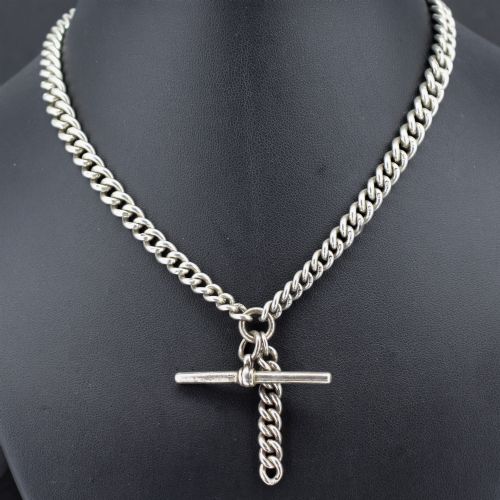
While traditional in purpose, these chains frequently function today as necklaces when worn shorter around the neck. The form relies upon substantial links that hold their weight and presence, whether cast in plain silver or embellished with gold accents and enamel work.
How they were made
The primary material is solid sterling silver, fashioned into interlocking curb links that provide both flexibility and industrial weight. Individual links are shaped and soldered by hand, creating a continuous strand capable of enduring daily pocket wear.
Makers occasionally introduced contrast through gold accents and coloured enamel details upon the attached fobs and shields. The entire assembly relies on secure swivel clasps and T-bars designed to anchor firmly through buttonholes.
Sterling Silver Double Albert Retail Price Guide 2026
Typical asking prices for sterling silver double albert among the pieces listed under this phrase on Sellingantiques today, from the lower quarter to the upper quarter. They describe what is for sale here now, not the wider market.
Materials documented across the inventory include sterling silver, solid silver, gold, rose gold, gold accents, and enamel.
What varies in quality
Quality rests upon the heft and gauge of the silver links, separating light daily wear pieces from heavy duty examples designed for maximum presence. Substantial gram weights indicate superior metal density and durability across the span of the chain.
The degree of original detail in the accompanying fobs, vestas, and gold accents elevates certain pieces above standard utility chains. Well-preserved hallmarks and crisp link edges denote careful preservation and superior initial manufacture.
The Sterling Silver Double Albert Glossary
- Double Albert
- A watch chain featuring two distinct strands that meet at a central ring, designed to pass through a waistcoat buttonhole. This arrangement allowed the wearer to display a pocket watch on one side and a decorative fob on the other.
- T-bar
- The small horizontal metal bar attached to the centre of an albert chain. It slips securely through a waistcoat buttonhole to anchor the entire chain in place.
- Vesta
- A small pocket-sized container designed to hold matches, frequently suspended as a fob from Victorian and Edwardian watch chains. These match safes often feature engraved decoration matching the style of the primary chain.
- Curb link
- A type of chain composed of uniform, slightly flattened interlocking links that lie flat against the clothing. This robust construction forms the predominant style found in heavy duty watch chains.
- Hallmark
- An official stamp struck into precious metals indicating purity, origin city, and the year of assay. These marks provide reliable dating for Victorian and Edwardian silver pieces.
Sterling Silver Double Albert: Frequently Asked Questions
How do I wear a double albert today?
You can wear a sterling silver double albert traditionally across a waistcoat or vest, threading the T-bar through the centre buttonhole. Alternatively, many modern wearers remove the t-bar and wear the chain simply as a choker or necklace.
The substantial weight of the curb links and the presence of attached vestas or fobs give these pieces a distinct look when worn against modern clothing.
How can I tell the age of a watch chain?
Age is primarily determined by examining the assay hallmarks stamped onto the individual links, the T-bar, and any attached fobs. These tiny stamps reveal the exact year of manufacture and the town where the silver was tested.
Stylistic shifts, such as moving from ornate Victorian engraving to streamlined Art Deco geometry, also help narrow down the production era.
Were these chains only made of silver?
While sterling silver is the predominant material seen across Victorian and Edwardian examples, makers also utilised gold, rose gold, and contrasting gold accents. Enamel work frequently appears on the decorative fobs suspended from the chains.
Solid silver versions range from standard weights to heavy duty variations intended for daily utility.